Thinking Mali

By Johan Galtung

The first prognosis for the French invasion was a quick victory given their superior weaponry; and then the real war starts: guerilla. France is up against two very strong forces, Tuareg nationalism and Muslim islamism; cooperating and in conflict. They both easily mingle with others – they are parts of them – to better target the French.

No Western country likes coffins coming home; train and equip locals to do the job, deal with semi-legitimate regimes, stretch UN resolutions: AfPak, Libya. US AFRICOM wants 4000 soldiers deployed in 35 African countries this year for anti-terror training. Some pass on weapons, some shoot in the air, some fight, deepening fault-lines like race–once slavers-slaves!–in Mali. The West gets desperate; the patience at home is limited. Time has come for state terrorism from the air, killing “strongholds”; maybe predator drones from Djibouti?

Next in line: terrorism by both, hostages, “Special Operation Commands”, extrajudicial executions. Long-lasting; AfPak, Libya.Read More »

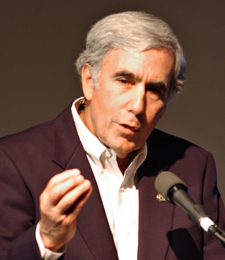
Forget ‘normal’ politics

By Richard Falk

Political life is filled with policy choices that are made mainly on the basis of calculations of advantage, as well as reflecting priorities and values of those with the power of decision. In a constitutional framework of governance the rule of law sets outer limits as to permissible outcomes. The legitimacy of the decision depends on adhering to these procedural guidelines, and the fact that if the societal effects turn out badly it can be corrected by altering the ‘law.’

Of course, all sorts of special interests behind the scene manipulate this process, and the public debate mirrors these pressures. The results of highly contested policy choices usually reflect the power structure (class, race, ideology) more than they do the outcome of rational detached assessments of the public good.

At present, the national public good in the United States is being held hostage to the lethal extremism of the gun lobby as led by the National Rifle Association (NRA), Read More »

Obama – Fulfill your promise of nuclear disarmament!

Richard Falk and David Krieger

This article was originally published by Truthout.

Any great and important goal requires boldness to be achieved. Leadership itself requires boldness and persistence. Shortly after assuming office in 2009, President Obama demonstrated this boldness in a widely acclaimed speech in Prague. To rousing applause, he said, “So today, I state clearly and with conviction America’s commitment to seek the peace and security of a world without nuclear weapons.”

Unfortunately, in the next breath, he reversed direction, offering a familiar reassurance to the military-industrial-governmental complex: “I’m not naïve,” he said. “This goal will not be reached quickly — perhaps not in my lifetime. It will take patience and persistence.” Before finishing this coded message to the security establishment back home, he reversed direction once again, declaring, “But now we, too, must ignore the voices who tell us that the world cannot change. We have to insist, ‘Yes, we can.’”

In a matter of seconds, less time than it would take to launch America’s civilization-destroying (or omnicidal) nuclear arsenal, the new President seemed to engage in a debate with himself. America has a commitment to zero nuclear weapons. However, it won’t happen quickly. But, on the other hand, the world can change and it can happen. It was perhaps an unintended glimpse of the incoherence that results from trying to blend Obama the visionary with Obama the realist. Read More »

The world’s freedom – up or down?

By Jonathan Power

The Cold War ended and the good times began – the big powers stopped using their veto in the UN Security Council, the number of wars fell dramatically, human rights improved all over the world including in Russia and the number of democracies increased substantially.

Where have all the flowers gone? The veto has returned. The number of civil wars has started to rise again. The number of democracies has begun to decrease. Perhaps better human rights practices are still holding their ground – in China they are improving slowly, including a more open press and more freedom for academics in the universities, but in Russia after some opening up under the presidency of Dimitri Medvedev freedoms are now retreating under Vladimir Putin. The Arab Spring continues its uncertain course with Egypt awash with uncertainty. Only in Tunisia does freedom seem secure.

Freedom House has a long history of measuring progress on some of the key human rights indicators- democracy, freedom of the press and the courts. It has produced some interesting results in its new report.Read More »

Slavery, colonialism and the church

By Johan Galtung

From Liverpool-UK, 31 Jan 2013

The uncontested center of the world slave trade, 40%, well documented in the International Slavery Museum in the port where slave ships docked.

The trade was triangular: from Liverpool (Bristol, London) with Manchester textiles, metals, beads, alcohol and guns for slave traders in the Bay of Guinea; with slaves from there to the Caribbean, the Middle Passage; and from there with sugar, coffee and cotton grown by slaves back to England.

To stealing people, 2/3 young men ages 15-25, and killing their societies, they added stealing raw materials in return for cheap manufactures. Hand in hand they went; from the beginning by the Portuguese in 1502 till the slave trade was forbidden in England in 1807–continued in other ways, also today.

We talk about millions of slaves landed in the arch from Rio to Washington with the point of gravity in the Caribbean, and some south of Rio, north of Washington and around the coast to the Pacific side of Latin America. An unspeakable crime against humanity.

Another unspeakable crime to remember, the shoa, has its Holocaust Memorial Day on 27 January; but somebody else’s, Germany’s, enemy of England, comes easier. No Slavery Memorial Day, no Colonialism Memorial Day. Nor any memorial to the 10 million killed in King Leopold’s Congo, in Antwerp, the port for shipping guns to Africa in return for rubber. More easily understood than manufactured goods converted into slaves converted into commodities.
Read More »

Zero Dark Thirty – ZD30 – and American exceptionalism

By Richard Falk

ZD30 is the film narrative that tells the dramatic story of the special forces operation that on May 2, 2011 located and killed Osama Bin Laden in a compound on the outskirts of the Pakistani city of Abbottabad, which is not far from Islamabad.

It is directed by the prominent director, Kathryn Bigelow, who had won big Hollywood awards for her brilliant 2008 film, Hurt Locker, about the impact of combat experience in Iraq on the American soldiers taking part. She knows her craft, and ZD30 is captivates an audience due to its screenplay, virtuoso acting, taut plot, vividly contoured characters, insight into the mentality of CIA operatives and their bosses, and the evidently realistic portrayal of grisly torture scenes.

These filmic virtues have been displaced by a raging controversy as to whether ZD30 endorses torture as a valued and effective tool against extremist enemies of the United States and seems to imply that torture was instrumental in the successful hunt for Bin Laden.

Certainly President Obama claimed and received much credit in the United States for executing this mission, and it has received very little critical scrutiny. It is hard to calculate the impact of this strike that killed Bin Laden on the 2012 election, but it many believe it made a crucial difference, at least psychologically, and particularly in relation to the outcome in swing states and with respect to the last minute decisions reached by independent voters.Read More »

The French in Mali are being counterproductive

By Jonathan Power

Are we in Mali being caught up in the fallout from the reaction to the reaction of 9/11? It very much looks like it. First, the destruction of the World Trade Center. Then the first reaction – the bombing of the Taliban in Afghanistan, the subsequent war and the loose talk about “the clash of civilizations”.

Then the second reaction – anger and hostility from one end of the Islamic world to the other. Although the dust has now settled on that, thanks not least to Al Qaeda overstepping its mark and killing Muslims, there is in some parts a residual hostility- a sea in which the few remaining Islamic militants can swim.

But these militants by and large have not done well. Since 9/11 there has not been one successful attack on the USA. Read More »

The Arab-Muslim awakening – and Greater Israel?

By Johan Galtung

The Middle East-North Africa–MENA–is Arab-Muslim with a growing Jewish island in its midst. Former colonial territory – under Sunni Ottoman Turks for four centuries+ and the secular West, England-Italy-France, for half a century–now under Jewish colonialism and US imperialism. They have controlled MENA through dictatorships, condoning violence and corruption as long as they support US-Israel policies in the area.

The Arab awakening is against the violence and corruption in favor of democracy, against corruption in favor of growth and jobs, and against US-Israel domination. There is also a Muslim awakening – to believe that Islam tolerates imposed secularism is incredibly naive. But there are many Islams; like there are Christianities and Judaisms.

How do USA-Israel react, and what would be a positive reaction to their reaction–keeping in mind that this is old colonial territory?Read More »

The second anniversary of the Tahrir Square Rising

By Richard Falk

The rising in Tahrir Square two years ago electrified the world and achieved the impossible: forcing the departure of Hosni Mubarak, the harsh and corrupt dictator of Egypt for the prior 30 years. What inspired the world was the spontaneous spirit of unity, a movement guided by exhilarating visions of democracy and freedom and hope, generating a new kind of populism that dispensed with ideology and leaders, a sense that the people of Egypt had acted creatively and bravely to recover their country from the clutches of neoliberal predators and their domestic collaborators. Even the armed forces had seemed mainly to welcome these developments, partly because of their own fears that Mubarak harbored dynastic dreams. Although the Jasmine Revolution in Tunisia preceded Tahrir Square, it was the developments in Egypt that made it plausible back in 2011 to speak about and to dream of the ‘Arab Spring.’

A year later in 2012 there was still some afterglow from the drama of Tahrir Square, but there were also growing signs of disunity. It was becoming clear that Muslim Brotherhood, as well as the Salafis, enjoyed the benefits of grassroots organizing and support, which translated into electoral dominance. It was also evident that the Supreme Council of the Armed Forces (SCAF) that was providing governmental authority was not clearly committed to the values and practices of constitutional democracy and human rights. Read More »

China’s growing presence in Africa

By Jonathan Power
Writing from Dar es Salaam

Go Into the casino in Tanzania’s capital, Dar Es Salaam and what strikes you? The overwhelming number of players is Chinese. If the Chinese are not quite everywhere in Africa their numbers, their investments and their trade has mushroomed over the last ten years. If one compares Chinese and US investment in Tanzania there is no contest despite Tanzania being one of the US’s favourites.

Overlooked is that China has been in Africa twice before. Read More »
