TFF PressInfo # 373: What Obama should do in Hiroshima on May 27

By Jonathan Power

We were standing in Hiroshima looking at a stone wall. All there was to see was a shadow of a man. It had been etched into the wall at the moment of his obliteration by the blinding light of the first atomic bomb. Olof Palme, prime minister of Sweden, stared hard at it.

An hour later he gave a speech as head of the Independent Commission on Disarmament of which I was a member. “My fear”, he remarked, “is that mankind itself will end up as nothing more than a shadow on a wall.”

President Charles de Gaulle of France once observed, “After a nuclear war the two sides would have neither powers, nor laws, nor cities, nor cultures, nor cradles, nor tombs.”

What if, contrary to the received wisdom, it was shown that nuclear weapons played no role in the surrender of Japan at the end of World War 2, as has been their justification?

Perhaps the terrible acts of Hiroshima and Nagasaki are no worse, despite their two hundred thousand deaths, than many other scathing memories of war waged against mainly civilian populations. Then we would have to start a big rethink of the value of nuclear arsenals.

Nuclear deterrence, many thoughtful generals have long concluded, is nonsense on stilts and long has been. Read More »

Another dimension to the Holocaust

By Jonathan Power

May 3rd 2016

Tomorrow [May 4th] is Israel’s Holocaust Remembrance Day. The Holocaust was committed by a nation whose church attendance was then high and whose creation of the most sublime sacred music ever written was etched deep into the minds of most people. Yet only the rare Catholic bishop and Protestant pastor spoke out against Hitler.

Today Germans admit the guilt of their nation. School children are taught every detail of the Holocaust’s evil – not least about Adolf Eichmann, the personification of Nazi extermination policy.

At the end of World War II, Adolf Eichmann, the chief organiser of the eradication of the Jews in the concentration camps went into hiding. Later he got himself, with the aid of sympathetic clergy, to Argentina.

For the next 10 years he worked in several odd jobs in the Buenos Aires area – from factory foreman, to junior water engineer and professional rabbit farmer.

In June 2006, old CIA documents about Nazis were released. Read More »

Peace State Iceland – Meaning what?

By Johan Galtung
May 2, 2016

Dear Members of the Iceland Allthing Foreign Affairs Committee,

I have been asked to come to Iceland to answer that question; thanks indeed for inviting me to address you. And to apologize, as a Norwegian, for our occupation of Iceland 1262-1386 instead of sending mediators to help settle your civil war. Our century long colonization does not become better because Denmark colonized you five centuries, 1386-1918; and more deeply. But you are now your own, with a wonderful language and literature; right now with a problematic economy and polity.

Reykjavík has a very good name internationally as the venue of the 11-12 October 1986 summit meeting of the Cold War superpowers. The meeting of US President Ronald Reagan and the Soviet Secretary General Mikhail Gorbachev at Höfdi did not by itself end with an agreement. But it was the beginning of the end of the Cold War three years later, and as such made world history.

So why not build on that, making a Reykjavik Mediation Center, RMC, politically and internationally independent, and on Iceland’s location between West and East, USA and Russia? Look at the map.

For Reykjavík to invite USA and Russia, with Kiev and Donetsk. Maybe also Brussels, in the sense of NATO and EU. Issue: the conflict in and around Ukraine–meaning “at the border”, between two nations, Catholic-Ukrainian and Orthodox-Russian; with much hatred and violence.

Very dangerous, some speak of a Third World War coming. Inviting them would be a signal of world concern, offering a venue for open talks without conditions. Iceland has little mediation capacity today, but Icelanders would be present and learn from the occasion.

Add to this an invitation to the UN to station UN Peacekeeping Forces in Iceland, using the vast vacant lands between Keflavík and Reykjavík for training. That would add peace as a source of income to fisheries and tourism, and lift Iceland out of its Third World economy.

A peace state helps itself by helping others. Nevertheless, two problems:

First, a peace state can neither be allied to a state that killed more than 20 million in 37 countries since WWII nor member of an offensive alliance. Either the USA and NATO become more defensive or Peace State Iceland has to distance itself, gradually, carefully; keeping good relations. Iceland’s security would be better served by using Keflavík for UNPKF than for USA-NATO, and by solving conflicts.

Second, if you want to help solving conflicts start with your own. Read More »

TFF PressInfo # 372: Drop the Just War theory and abolish nuclear weapons!

By Mairead Maguire

Press Release 19th April, 2016

Nobel Peace Laureate, Mairead Maguire, co-founder of The Peace People and TFF Associate, says from Rome:

“I believe we are at an important and hopeful turning point in human history – from violence to nonviolence and from war to peace”

Laity and religious meeting in Rome appeal to Pope Francis to share with the world an encyclical on nonviolence and just peace and for the church to no longer use or teach ‘Just War theory’

It was a joy for me to join eighty people from around the world meeting in Rome 11-12th April, 2016, to contribute to the important discussion ‘Nonviolence and Just Peace Contributing to the Catholic Understanding of and Commitment to Nonviolence’.

Members of the three day event co-hosted by the Pontifical Council for Justice and Peace and the International Catholic Peace Movement Organization, Pax Christi, strongly called on Pope Francis ‘to share with the world an encyclical on nonviolence and Just Peace; and on the Church to ‘no longer use or teach ‘just war theory’; and continue advocating for the abolition of war and nuclear weapons’.

The statement of Appeal to the Pope also said:

‘We believe there is no ‘just war’. Too often the ‘just war theory’ has been used to endorse rather than prevent or limit war. Suggesting that a ‘just war’ is possible also undermines the moral imperative to develop tools and capacities for nonviolent transformation of conflict’.

The gathering in Rome consisted of lay people, theologians, members of religious congregations, priests and bishops from Africa, the Americas, Asia, Europe, the Middle East, and Oceania and the welcoming address was given by Cardinal Turkson of the Pontifical Council for Justice and Peace, who read a Statement from Pope Francis.

The Final Statement Read More »

A nonkilling, nonviolent world is not unrealistic – We can choose!

By Mairead Maguire

Address by Mairead Maguire, Nobel Peace Laureate and TFF Associate, to Rome Conference on NATO
Friday 29th January, 2016.

Dear Friends,
I believe we, the human family, have no less a task before us, than transforming our thinking and mind-sets of violence and war, and moving to a demilitarized Europe and World. Einstein once said that everything has changed but our thinking. However, there is hope as indeed our thinking is changing and there is a growing consciousness that violence, whether it comes from State or non-state actors, is wrong, violence does not work, violence is not the way.

However, around the world, we, the people, are in danger of being overpowered and dis-spirited by increasing violence, militarism and war. Many people can see that many Political Leaders can no longer imagine a just peace, and under the guise of allegedly ‘just wars’ and unbounded preparation for war, they are leading us into repeated cycles of violence profoundly counter to the spirit of love and friendship residing in the heart of humanity.

But there is Hope and it resides with the People, who are great and are mobilizing and uniting across the Globe to bring about much needed change, and rejecting violence and war.

The World Health Organization has said that ‘Violence is a preventable disease’ and people are not born violent, rather we all live in cultures of violence. This can be changed through nonviolent peacemaking and the pursuit of ‘just peace’ and nurturing of cultures of peace. Using active nonviolence, based on love of enemies and nonkilling, can bring about a real peace that is just, inclusive and sustainable.

In Northern Ireland we faced violence from all sides, for over thirty years, as we lived in a deep ethnic/political conflict. This violence only ended when everyone acknowledged that militarism and para-militarism could not solve our human problems, and only through unconditional, all inclusive dialogue and negotiations could we reach a political agreement based on nonviolence, forgiveness, compromise and co-operation.

We spoke to ‘our enemies’ and made peace with them, because we recognized that without Peace nothing is possible, and with Peace, everything is possible.

We also began to tackle the root causes of our violence, by making painful policy changes.

Today in Belfast, it is good for all its citizens to live in a City at Peace, but we all acknowledge that our Peace process is a work in progress and we continue to work on justice forgiveness and reconciliation.

We meet at a time when, I believe, Europe is facing a cross-roads and hard choices regarding policies and priorities have to be made by all. Today’s refugees, migrant challenge, has shown the best and the worst of European values, via television beamed onto our screens to the world.

The best have been the compassionates response Read More »

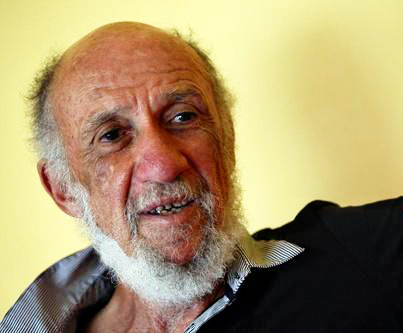
TFF PressInfo # 371: If Obama visits Hiroshima (Part 2)

By Richard Falk

Part 1

In Prague, Obama significantly noted that “..as the only nuclear power to have used a nuclear weapon, the United States has a moral responsibility to act.” [emphasis added]

In the 1996 Advisory Opinion of the International Court of Justice (ICJ) on the legality of the threat or use of nuclear weapons, the judges unanimously concluded that there was a legal responsibility to seek nuclear disarmament with due diligence. The language of the 14-0 ICJ finding is authoritative: “There exists an obligation to pursue in good faith and bring to a conclusion negotiations leading to nuclear disarmament in all aspects under strict and effective international control.”

In other words, there is a legal as well as a moral responsibility to eliminate nuclear weapons, and this could have made the Prague call for a world without nuclear weapons more relevant to present governmental behavior.

The Prague speech while lauding the NPT never affirmed the existence of a legal responsibility to pursue nuclear disarmament. In this respect an official visit to Hiroshima offers Obama a golden opportunity to reinvigorate his vision of a world without nuclear weapons by bringing it down to earth.

Why is this? Read More »

Review of “The Need for a New Economic System”

Review of John Avery’s book by Dorothy Guyot

A Scientist Presses for Action on Many Fronts: A review of the book

The Need for a New Economic System
By John Scales Avery
Selected Works Volume 1, 291 pages
Irene Publishing
Sparsnäs, Sweden 2015

The Need for a New Economic System by John Scales Avery is an important book for everyone concerned over the future of humanity. The urgent voice of the book stems from Dr. Avery’s seeing the discontinuity between the loving care that people bestow on their children and their failure to reduce the harm to their children from a destructive economic system, climate change, resource depletion, and war.

This book of advocacy demonstrates the need for solutions to problems created under the present economic system. Political-economic analyses of the causes of the problems and of solutions are outside of the scope of the book. Scattered through the book are a few general policy suggestions. At the center is Avery’s assessment sector by sector of the critical problems that must be solved to avert disasters.

The book first demonstrates the impossibility of sustaining growth economies on our finite planet. The central three chapters analyze the damage from climate change and war. Globalization, population growth, and the food crisis are the last problems Avery analyzes.

He builds toward his conclusions by sketching the nineteenth century cooperative movement and Gandhian economics. The concluding chapter revisits the problems to advocate change.

The premise of the book is that when people face up to the extent and nature of world problems, people can act creatively and effectively.

John Avery is thinker and writer. Read More »

John Avery’s CV

John Scales Avery

John Scales Avery received a B.Sc. in theoretical physics from MIT and an M.Sc. from the University of Chicago. He later studied theoretical chemistry at the University of London, and was awarded a Ph.D. there in 1965.

He is now Lektor Emeritus, Associate Professor, at the Department of Chemistry, University of Copenhagen.

Fellowships, memberships in societies
Since 1990 he has been the Contact Person in Denmark for Pugwash Conferences on Science and World Affairs. Member of the Danish Peace Commission of 1998. Technical Advisor, World Health Organization, Regional Office for Europe (1988- 1997). Chairman of the Danish Peace Academy, April 2004-.

You’ll find a lot about this eminent scholar at Wikipedia. Avery is also a leading peace researcher and activist – “Since 1990, Avery has been the Contact Person for Denmark the Pugwash Conferences on Science and World Affairs. In 1995, Avery was part of a group that shared in the Nobel Peace Prize for their work in the 1990s in organizing the Pugwash Conferences on Science and World Affairs.

In 1998, Avery was elected to the Danish Peace Commission. During the years 1988-97, Avery was the Technical Advisor at the World Health Organization, Regional Office for Europe. In 2004, Avery became the Chairman of the Danish Peace Academy.

In his usual humble and plain style John tells the story of his life – his personal life, his scholarly life and his peace life – here.

Publications
Dr. Avery seems to have ben writing day and night throughout his life – here is his amazing list of books, chapters and articles on world affairs.

In early 2016, Irene Publishing – run by TFF Associates Jørgen Johansen and Majken Jul Sørensen – published Avery’s Collected Essays as well as The Need For A New Economic System.

John joined TFF as TFF Associate in March 2016.

Remembering the 1916 Rising

By Mairead Maguire
Nobel Peace Laureate, Co-Founder Peace People, Ireland and TFF Associate

When the President of Ireland, Michael D. Higgins, the Irish Military, Government Members, and many Irish people gathered in Dublin, on Easter Sunday 27th March, 2016 to remember the Easter Rising of l9l6, some of his challenging words were addressed to the young generation.

He encouraged them ‘to imagine and to dream‘ and he said ‘we wish them well as they make music and continue to dream’. The Leaders of l9l6 had political hopes and dreams. President Higgins said ‘For the leaders of l9l6, their political hopes and aspirations for what a free Irish Republic might be, were linked to a rich Irish culture which they cherished and promoted.

Within that vision, their ancient Irish language and culture, informed by our history and migration, was central to everything for which they hoped and fought.’

I believe the men of l9l6 had a democratic right to their dreams of Irish self-determination and to work for Irish Freedom, but the violent method by which they fought for freedom was ethically and morally wrong. Read More »

Mairead Corrigan Maguire’s CV

Mairead Corrigan Maguire
Nobel Peace Laureate

Co-founder, Peace People – Northern Ireland l976.

Mairead Corrigan Maguire was awarded the l976 Nobel Peace Prize for her actions to help bring about peace and an end to the violence arising out of the ethnic/political conflict in her native Northern Ireland. She shares the award with Betty Williams.

Mairead was the aunt of the three Maguire children who died as a result of being hit by an Irish Republican Army getaway car after its driver was shot by a British soldier. Mairead responded to the violence facing her family and community by organizing, together with Betty Williams and Ciaran McKeown, massive peace demonstrations appealing for an end to the bloodshed, and a nonviolent solution to the conflict.

Together, the three co-founded the Peace People, a movement committed to building a just and nonviolent society in Northern Ireland. The Peace People organized each week, for six months, peace rallies throughout Ireland and the UK. These were attended by many thousands of people, mostly women, and during this time there was a 70% decrease in the rate of violence.

Since receiving the award, Mairead has dedicated her life to promoting disarmament and peace, both in Northern Ireland and around the world.

Working with community groups throughout Northern Ireland, political and church Leaders, she has sought to promote dialogue and conflict resolution, in order to bring about a nonkilling, nonviolent society and world.

Mairead has visited many countries, amongst others, North/South Korea, Afghanistan, Gaza, Iran, Syria, Lebanon, Congo, Iraq, and other countries in violent conflict in order to be in solidarity with all people working for peace, justice and disarmament.

A graduate of Irish School of Ecumenics, Mairead – a pacifist – works with inter-church, inter-faith and secular organizations. And she is a councillor with the International Peace Council and Co-Chair of Nobel Womens’ Initiative.

She is a Patron of the Methodist Theological College, and Northern Ireland Council for Integrated Education. She has worked extensively in the Middle East believing that peace is possible and as we are all interconnected as the Human Family, sharing one common Mother Earth, we can all do something for peace and justice for all.

Mairead is author of The Vision of Peace: Faith and Hope in Northern Ireland which is also available in Urdu.

Mairead joined as TFF Associate in March 2016.