Demands in US-Iran nuclear talks as political Kabuki theatre

By Gareth Porter

In the final phase of the negotiations with Iran, the US-led international coalition is still seeking Iran’s agreement to allow the International Atomic Energy Agency (IAEA) to visit any military facilities it deems suspicious and to interview a selected list of Iranian nuclear scientists.

Such measures are not necessary to ensure that Iran is adhering to its commitments under the agreement, but they are necessary to manage the political threat from the pro-Israel extremists in the Senate to sabotage the whole agreement.

To fend off that threat, the Obama administration made the spurious claim that it had succeeded in getting Iran to agree to the demand for IAEA inspection of any site it found suspicious. In fact, Iran had agreed only that IAEA would have “enhanced access through agreed procedures” – as reflected in the wording of the joint statement of the P5+1 and Iran on 2 April.

Iran’s supreme leader Ali Khamenei and senior military officials have vehemently ruled out both IAEA inspection of military sites on demand and interviews with Iranian scientists.

IAEA Director General Yukiya Amano claimed on 12 May that Iran’s acceptance of the Additional Protocol as part of a comprehensive nuclear deal meant that Iran had accepted inspections of its military sites on demand. “In many other countries from time to time we request access to military sites when we have the reason to, so why not Iran?” Amano said. “If we have a reason to request access, we will do so, and in principle Iran has to accept it.”

But that was a brazen misrepresentation of the Additional Protocol. That agreement allows unrestricted IAEA access to sites that have already been designated previously by state as related to the nuclear fuel cycle. For all other sites, IAEA access under the Additional Protocol clearly depends on the approval of the state in question. Article 5 (c) of the agreement, provides that, if the signatory state is “unable to provide such access,” it “shall make every effort to satisfy Agency requests without delay through other means”.

Now the New York Times has further muddied the waters by reporting on 31 May that the Iranian rejection of those demands had “prompted concern that Iran might be backtracking from understandings sketched out in earlier talks”.

The Times tries to support the US demand by asserting that “experts” say “wide-ranging inspections are needed to guard against cheating”. That is a reference to the argument that opponents of a nuclear deal with Iran have been making for years that Iran is likely to try a “sneakout” route to nuclear weapons, using covert supplies of enriched uranium or plutonium and a covert enrichment facility.

The main figure to make that argument isRead More »
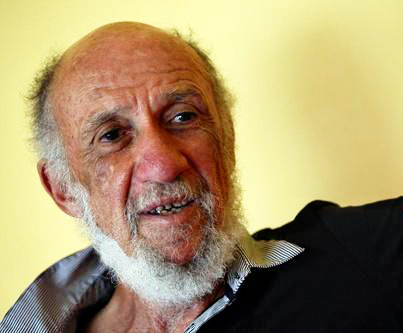
America at its best is – strange

By Richard Falk

America even at its best is a strange place, alive with contradictions, a Teflon political culture that has an unshakable faith in its innocent and virtuous national character and its overall impact on the world, impervious to the ghosts of slavery and of ethnic cleansing of native Americans that should be tormenting our sleep and darkening our dreams, comfortable with its robust gun culture, and with its promiscuous reliance on rogue drones engineered to kill on command and on the brutal happenings that take place in black sites immorally situated in countries whose leaders agree to avert their gaze from the dirty work taking place.

Looked at from a short distance this is not a pretty picture.

Yet there are still those rare moments when this unsavory national profile seems not to be telling the whole story. For instance, I felt heartened by a recent news item reporting that the conservative Nebraska Legislature voted to abolish capital punishment, and in doing so went so far as to override the governor’s veto. That’s right, Nebraska!

Unfortunately, the welcome Nebraska move may not survive the backlash in the making. The Republican state governor, Pete Ricketts, vows to overturn the new law: “My words cannot express how appalled I am that we have lost a critical law to protect law enforcement and Nebraska families.” He is supported in this lethal passion by a pro-capital punishment legislator Read More »

TFF PressInfo # 325 – Hur Västvärlden bröt sina löften till Ryssland

Av Jonathan Power, TFF Associerad

TFF PressInfo # 325

Lund, 5 juni 2015

Man undrar om västvärlden förlorat sitt sinne för historia – såväl i fråga om Mellanöstern som om Östeuropa.

Jonathan Power, en av de mest respekterade kolumnisterna inom utrikespolitik – förr på International Herald Tribune, nu på ett konsortium av ledande tidningar i alla världsdelar – visar vägen genom NATO-ländernas förnekelser:

Att Bill Clinton 1994 beslöt att inte låtsas om de löften som Västs ledare i slutet av det kalla kriget gav sina sovjetiska/ryska kollegor.

Det var oetiskt och – som Power med viktiga hänvisningar hävdar – en politisk tabbe av historiska proportioner.

Hans berättelse förklarar varför Väst inte heller är oskyldigt i fråga om den aktuella Ukrainakrisen – i sin tur åstadkommen genom en annan tabbe: försöket att byta regim i Kiev och få in Ukraina i det kärnvapenbaserade NATO.

Blankt förnekande sin egen inblandning börjar politiskt korrekta västmedier, politiker och Natohöjdare lämpligt nog sin historia med att Ryssland annekterade Krim som en blixt från klar himmel.

Power säger: ≫Historien kommer inte att se välvilligt på NATOs farliga och kontraproduktiva utvidgning≪.

Jan Öberg

Rysslands Europablickande drömmare har räknat in Pusjkin, Lenin, Gorbatjov och, tills rätt nyligen, president Vladimir Putin. Alla har de sett sitt lands framtid som en del av ≫det europeiska huset≪.

Men historiens tilldragelser har inte varit nådiga mot Ryssland. Napoleons invasion, revolution, två världskrig, Stalins kommunism och – senast – Natos utvidgning; allt detta har krossat drömmen gång på gång.

I slutet av kalla kriget, i och med överenskommelsen om en grundstadga mellan Nato och Ryssland (Founding Act on Mutual Relations, Cooperation and Security between NATO and the Russian Federation), såg det ut som om jättekliv mot detta mål togs. Till att börja med skulle Ryssland få säte vid NATOs bord, senare skulle de få komma med i NATO och ännu senare i Europeiska unionen. Somliga förutsåg att detta skulle inträffa inom en tioårsperiod, andra trodde på tjugo år.

Men sedan – pang! – sprack drömmen när president Bill Clinton, Read More »

The Value of Values to Build a World for the Common Good

By Kamran Mofid

Lecture at World Congress of Faiths, Annual General Meeting, London School of Economics, University of London, May 20, 2015

Thank you for inviting me to speak to you today, and for giving me the opportunity to share with you my journey for the common good, a journey which I began many years ago, when as a young man I left Iran for England in 1972 in my search for life’s bigger picture.

Friends, I very much like to set the scene by reading a short statement, giving you a brief background to my presentation, my abstract, if you will:

First:

This presentation is dedicated to the youth of the world, our children and grand- children, who are the unfolding story of the decades ahead. May they rise to the challenge of leading our troubled world, with hope and wisdom in the interest of the common good to a better future

Second:

Our country, the United Kingdom, like all nations of the world, despite many good works, deeds and actions by so many individuals, organisations, civil societies and more, is facing a number of major socio-economic, political, ecological, moral, ethical and spiritual crises.

However, I wish to argue that:

Our crises can only be addressed, reversed and resolved, and our goals can only be achieved, if we change direction, adopt new values and become concerned with life’s bigger questions. We must reconnect ourselves with nature and with our true human and spiritual values. Moreover, as members of the household of humanity, we must provide security, sanctuary and constructive engagement for all of our human family. Sustained by the bounty of all, called by the Sacred, and animated into action by the Spirit of peace, Justice, and Reverence for All Life, we must be guided by values and take action in the interest of the common good, empowering each other to build a better world, for all of us.

Continued here.

Meanwhile – with great narratives unfolding

By Johan Galtung

The decline and fall of the US Empire’s grip on the world; of the West; of the state system–with the rise of the TNC-IGO-NGO system, regions, nations, local authorities; the rise of the East and the South; of China–many details cross an editor’s desk; inspiring some rethinking:

Thus, in a pile of quotes not to be forgotten, from Balfour 1917:

“it being clearly understood that nothing shall be done which may prejudice the civil and religious rights of existing non-Jewish communities in Palestine, or the rights and political status of Jews in any other country“.

Very prescient thinking, not clearly understood. Time to rethink?

Bin Laden’s bookshelf has been presented to the media (Sy Hersh claims he was captured and imprisoned by the Pakistani ISI; the USA did not find him but was told and given access): he practices Sun Tzu’s doctrines; know your enemy, know yourself. “The US Intelligence Community does not endorse any of the publications in the list”. Of course not, US leaders have probably not even read them, a Chomsky, a Blum. It might have made them rethink deeply failed policies.Read More »

Is the Middle East something America owns and can lose?

By Richard Falk

I was appalled by the embedded colonialism of a recent issue of The Economist [June 6-12, 2015], boldly proclaiming its mood of geopolitical angst on its cover titling its featured story “Losing the Middle East.” Any glimmer of doubt about the intent of the magazine’s editors is removed by displaying a somewhat bedraggled American flag on the cover accompanied by the sub-title “Why American must not abandon the region.”

The rationale offered for this political imperative within this most revered journal of intelligent establishment guidance strikes me as even more appalling than this provocative packaging giving the plot away before we even begin reading the story.

What The Economist proposes

The argument set forth rests on the colonialist assumption that the Middle East is America’s to lose, although not quite, as the lead editorial ends with an enigmatic distinction:

“The idea has taken root that America no longer has what it takes to run the Middle East. That it ever could was an illusion. But America has a vital part to play. If it continues to stand back, everyone will be worse of — including the Americans.”

We are never told whether the catchall ‘everyone’ includes the people of the region,Read More »

“Getting Away With Murder”

By Johan Galtung

“Getting Away With Murder” is the title of Susan George’s (as usual) brilliant analysis of the banking situation after the US banking 9/11, the 2008 crash (published by Transnational Institute in Amsterdam. If the West had freedom of the press the analysis by a leading expert on these matters, and her suggestions for remedies, would have been on media everywhere with detailed interviews. But, alas.

Picking one point among many: the operation of the European Central Bank to extend credits; at a generous 1%. In a Union of 28 states, we might imagine, it would go directly to member states with problems. Not at all, directly to banks, from them to states; at, for instance, 6%. In other words, the more miserable the situation in a country, the more banks and their top boards, CEOs and some functionaries will be thriving. This is EU oligarchs feeding EU oligarchs, not direct credit to states to cover pensions and salaries of civil servants (yes, there are still servants around, and many of them are civil).

At the same time most, not all, of the problems in the GIPSI countries – Greece-Italy-Portugal-Spain-Ireland – can be traced to their oligarchs having enriched themselves at the expensive of the rest. Protected by their media, in Greece by media fighting Syriza and Tsipras, let alone his brilliant finance minister – among other things simply too bright for the ECB-IMF-EU. The commentariate focus on what they understand, leather jacket, motorbike, no tie, not on his important words. What a shame, what a disgrace to EU public, to democracy; transforming it into oligarchy. Bancocracy.

All of this adds up to non-oligarchs paying for the misdeeds of oligarchs. Read More »

Greece versus Germany, the unplayable game

By Jonathan Power

The Greek clash with the EU continues. Jean-Claude Junker, the European Union Commission’s president, has publically taken umbrage at the Greek prime minister’s attack on him. In parliament at the end of last week Alexis Tsipras said Junker’s latest proposals were “absurd” and “irrational, blackmailing demands”.

Junker likes to think that he is a moderating voice in the confrontation between Greece, the EU and the IMF. But there is no middle way as long as Germany insists the EU be as hard as nails.

The blunt truth is that Germany has neither the facts nor history on its side.

Joseph Stiglitz, a Nobel laureate in economics and one of the key policy makers in the Clinton Administration’s “Goldilock’s economy”, pointed out this weekend that “Greece has met its creditors’ demands more than half way. Yet Germany and Greece’s other creditors continue to demand that the country sign on to a program that has proven to be a failure, and that few economists ever thought could, would, or should be implemented.”

He continues: “The fact is (under the reforms of the last government) the swing in Greece’s fiscal position from a large primary deficit to a surplus was almost unprecedented…….The demand that the country achieve a primary surplus of 4.5% of GDP is unconscionable.”

The European Central Bank, prodded by Germany, has cut off the Greek banks’ access to the unlimited cheap liquidity that other Eurozone banks enjoy Read More »
