Joint Declaration by International Law Experts on Israel’s Gaza Offensive

By Richard Falk
July 28, 2014
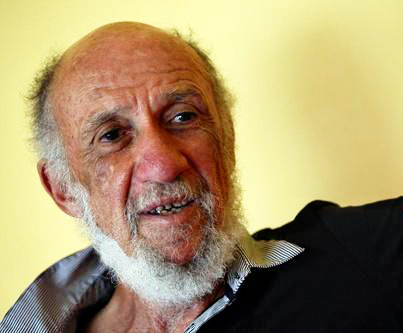
Richard Falk

Prefatory Note
Posted here is a Joint Declaration of 142 (as of now) international law experts from around the world who are listed below as endorsers. I am among the endorsers, and the text was initially drafted by Chantal Meloni who has served as rapporteur.
We welcome additional signatures that can be sent to me at falk@global.ucsb.edu with affiliation noted for identification, and names will be periodically added to the text.
I view this as an important expression of professional judgment and individual conscience relating to Israeli behavior in Gaza commencing on 8 July that has already taken so many innocent lives and caused such widespread devastation. Please join us and spread the word!

The International Community Must End Israel’s Collective Punishment of the Civilian Population in the Gaza Strip

As international and criminal law scholars, human rights defenders, legal experts and individuals who firmly believe in the rule of law and in the necessity for its respect in times of peace and more so in times of war, we feel the intellectual and moral duty to denounce the grave violations, mystification and disrespect of the most basic principles of the laws of armed conflict and of the fundamental human rights of the entire Palestinian population committed during the ongoing Israeli offensive on the Gaza Strip. We also condemn the launch of rockets from the Gaza Strip, as every indiscriminate attack against civilians, regardless of the identity of the perpetrators, is not only illegal under international law but also morally intolerable. However, as also implicitly noted by the UN Human Rights Council in its Resolution of the 23th July 2014, the two parties to the conflict cannot be considered equal, and their actions – once again – appear to be of incomparable magnitude.

Once again it is the unarmed civilian population, the ‘protected persons’ under International humanitarian law (IHL), who is Read More »

TFF PressInfo: It’s doable: Peace Israel-Palestine (1)

By Jan Oberg, TFF director

Jan Oberg

Lund, Sweden July 25, 2014

Violence is a dead end

Look at the violence in Gaza today, DR Congo (6 million dead), Iraq, Libya, Afghanistan, Somalia etc: Isn’t it obvious that the world needs a completely new approach to conflicts?

We’ll never rid the world of conflicts, conflicts is part of human and social life. Conflict-prevention is a meaningless term.

But we can rid the world of most of its violence. If we want, if we educate each other and if economic and other interests stopped supporting killing as a tool in conflict-management.

Unrealistic? Hopelessly idealistic? Well, look at the places above and try to find the realism and hope there.

Look at the conflict not at the parties and the violence

It requires almost no intellectual effort to take sides in a conflict between A and B. If both parties use violence, that means endorsement of the violence – the justification both need: “They threaten and kill us, therefore we threaten and kill them.”

Those who support a conflict party who use violence also support violence. As long as violence continues, there will be no process towards peace – only more hate, traumas, suffering, wish for revenge and destruction.

Violence – not the conflict – becomes the main thing and tit-for-tat the rule of the game, with an increase in the violence for each round. Scorpions in a bottle, feeding each other.

Both those who are outside a conflict and debate it – for instance, 99% of the media debates – and the conflicting parties on the ground feed on violence. If A did not use violence against B, how would B justify its own killings?

Gaza today – both parties lose

This is where we are in Gaza today when reports tell that around 800 civilians have been killed without any positive effect, both losing.

It’s not about evil, it’s about desperation coupled with traumas coupled with a lack of insight and education.

This wrong-headed attitude is indicative of conflict and peace illiteracy: among the parties, our media and our decision-makers. Innocent people on both or all sides normally pay the price for it.

The world needs a completely different approach. It’s embedded in the UN Charter and called peace by peaceful means.Read More »

Structural violence re-explored

By Johan Galtung

Johan Galtung

The essay “Galtung’s Structural Violence and the Sierra Leone Civil War c. 1985-1992” by Philip Leech [TMS-Analysis 14 Jul 2014],–of all the commentators the deepest–is a very welcome opportunity to clarify and develop further some of the underlying thinking. By and large his comments, based on Peace by Peaceful Means (PBPM, SAGE, 1996); the concepts have been developed further in A Theory of Peace) are very positive. I focus on the questioning and critical, and not on Sierra Leone, having no direct mediation experience. Leech is familiar with the conflict.

Leech says repeatedly something that meets with my full agreement: “No theoretical concept can tell the whole story”. Indeed, how could a string of words match the ever evolving complexity of reality? A sharp edge–by a Marx (means vs modes) or a Toynbee (challenge vs response)–may reveal some deep aspects but never “the whole story” which, in addition, is revised all the time–with new sharp edges.

In my efforts toward nothing less than a new culture to come to grips–diagnosis, prognosis, therapy–with conflict, violence and peace, structural violence is only one component. Read More »

Time for BDS to oppose Israeli war crimes

By Jake Lynch

Jake Lynch - Photo Jane Dempster. Source: The Australian

“This is not war – it’s a massacre”. The slogan has appeared on placards at demonstrations around the world, calling for an Israeli ceasefire in Gaza. The ‘Dahiya doctrine’, named after the suburb of south Beirut where it was first applied, is in operation: an attempt to turn the population against an armed group – Hamas, in this case – by destroying civilian infrastructure. That is why the civilian death toll – including children – has mounted so rapidly.

Pitted against Israel’s hi-tech killing machine are rockets with all the efficacy of a peashooter. These are indiscriminate by nature, and firing them therefore also constitutes a war crime. It can be of little comfort…

Continue reading at Transcend News Service here.

Here is a background to the case from 2012

No exit from Gaza: A new war crime?

By Richard Falk

Richard Falk

Prefatory Note July 17, 2014 written before the ground invasion

This is a modified version of a post published online, July 15, 2014, at the recently established very informative website, Middle East Eye; as the casualty totals continue to mount while the world looks on in stupefied inaction, the attacks go on.

At the very least, from a humanitarian perspective, there should be a global outcry demanding that children, mothers, and those sick and disabled be allowed to leave the Gaza Strip until current hostilities end. Yet this is a gap in international humanitarian law, refugee law, and the moral sensibilities of the combatant states.

• As the hideous Israeli assault on Gaza, named Operation Protective Edge, by the IDF enters its second week, overdue international appeals for a ceasefire fall on deaf ears. The short lived July 15th ceasefire arranged by Sisi’s Egypt had many accompanying signs of bad faith from its inception, including the failure to allow Hamas to participate in the process, insultingly conveying the proposed terms of the ceasefire through public media.

The vague terms depicted, alongside the failure to take any account of Hamas’ previously announced conditions, suggest that this initiative was not a serious effort to end the violence, but rather a clever ploy to regain moral credibility for Israel thereby facilitating the continuation and even intensification of its violent military campaign that was never defensive in conception or execution.

Rather than being a real effort to end the violence, such a ‘ceasefire’ seems best understood as a sophisticated for form of escalation produced by a descent into the lower depths of Israeli hasbara. Such an Israeli tactic was facilitated by the active complicity of the Egyptian government that shares with Israel an undisguised wish to destroy Hamas.

Cairo regards Hamas as an offshoot of the Egyptian Muslim Brotherhood, an organization that has been criminalized and viciously repressed, and has collaborated with Tel Aviv ever since Sisi took over control of the Egyptian government.

Throughout Protective Edge Bibi Netanyahu has been telling the world Read More »

TFF PressInfo: Use Malaysia’s MH17 to make peace instead

By Jan Oberg, TFF director

Jan Oberg

Tragic misuse of a tragedy

The government of Ukraine as well as the separatists, NATO/U.S. and very many leading Western mainstream media seem all to know who has caused the tragedy. Putin believes it was caused indirectly by the West.

Given the fact that very few, if any, people or institutions can know who did it with enough details, data and precision to accuse anyone, the MH17 tragedy has been misused to an extent that can itself only be termed tragic.

The misuse is tragic because it is a catastrophe for close to 300 people, their relatives and friends. Silence – of both verbal and military weapons – and empathy would have been appropriate.

Anyone pointing fingers and calling it a terrorist act at this point is irresponsibly or should present convincing evidence.

Secondly, the blame game makes the necessary road to peace and security even more difficult.

An All Party Peace Process should come out of MH17 and the civil war

It would have been so much more civilised to use the MH 17 tragedy to say:Read More »

Some people are exceptional

By Jan Oberg

Jan Oberg

July 20, 2014 – 12 days after Israel launched Operation Protective Edge, after Shejaiya and after 400 people on the Palestinian side have been killed.

Some people condemned what they called a planned Serb genocide on Albanians in Kosovo.

Some people were very upset about the siege of Sarajevo. And the massacre at Srebrenica.

Some people believed that the Yugoslav Army occupied Croatia and tried to create a Greater Serbia.

Some people condemned what was then called ethnic cleansing.Read More »

Three elections, three reactions: Ukraine, Egypt and Syria

By Farhang Jahanpour

On Friday 27 June, Ukraine’s new president Petro Poroshenko signed a trade and economic pact with the European Union. It was the same deal that his predecessor, Viktor Yanukovych, was prepared to sign in November 2013 provided that he could also maintain economic links with Russia, but he eventually backed out from signing it due to US and EU insistence that he had to choose between the two.

That event led to violent street demonstrations that forced Yanukovych to flee, pushing his troubled country towards upheaval and a virtual civil war.

On Thursday 26 June, President Obama requested $500 million from Congress to train and arm what the White House called “appropriately vetted” members of the Syrian opposition to fight against President Bashar Assad.

This is despite the fact that the insurgents fighting in Syria have morphed into Al-Qaeda-affiliated Jabhat al-Nusra and even into ISIS, the Islamic State in Syria and Sham or greater Syria that has overrun parts of both Syria and Iraq and has been even disowned by Al-Qaeda for being too violent!

A week earlier, during a tour of the Middle East, US Secretary of State John Kerry met with the new Egyptian President, the former Army Chief, General Abdel Fattah el-Sisi, pledging American help and support for his government. Officials accompanying Kerry on the trip told reporters that Washington had quietly restored all but about 78 million dollars of the 650 million dollars of US aid to Egypt earlier this month.

Kerry told reporters in Cairo after meeting Sisi that he was “absolutely confident” that all of the aid would soon be restored. (1) Washington has provided Cairo with an average of about 1.3 million dollars in military aid annually over the past three decades as part of the Camp David Accord signed by the late President Muhammad Anwar Sadat and the late Israeli Prime Minister Menachem Begin at Camp David under President Jimmy Carter.

As it happens, there have been elections in all the three countries in June, and it is useful to study the circumstances surrounding those elections and the West’s reactions to those elections.Read More »

What was history about? Look at the Histomap

By Johan Galtung

Johan Galtung

John B. Sparks made a histomap in 1931—updated in 2010 (Metro Books) – a long, vertical chart covering “peoples and nations for 4,000 years”.

Time, history, is on the vertical axis, listing when of events and where in the space of peoples and nations. The chart starts with the Chinese, the Indians, Amorites (Babylon), Aegeans (Minoans and Mycenaeans), Hittites (Anatolia), Iranians and Greeks, goes on to the Romans, the British, the Huns (Mongols) and ends with Latin America, Europeans West and East (the EU is absent), the Middle East, sub-Sahara Africa, Russians and Americans, Asia as India, China and Japan; each part proportionate to their significance at the time. Debatable.

But let us focus on something crucial: the shape of the “peoples-nations” bubbles in world history, from a beginning to an end?

By and large exactly like that: a birth somewhere in this Einsteinian timespace, and a death. Two points, and between them: growth-maturity/flourishing-decline and fall. Expansion to a maximum, and contraction to a minimum. The law of anything organic? Given that they often thought they were forever, gifted with eternal life, history is about great expectations, glories–and great traumas.Read More »

Netanyahu’s ugly Gaza game

By Stephen Zunes

The murder by unknown assailants of three Israeli teens who were members of an Israeli settlement in the occupied West Back would normally have been treated by both sides as simply another senseless loss of innocent young life experienced too often by Israelis and Palestinians alike. But the right-wing Israeli government took advantage of the tragedy to whip up ultra-nationalist sentiments, engage in a new wave of repression in the occupied West Bank, launch heavy mortar attacks and air strikes against civilian targets in the besieged Gaza Strip, and now to threaten all-out war.

This latest round of violence came on the heels of failed peace negotiations in which the Palestine Authority agreed to unprecedented concessions, including accepting a settlement in which their state would be demilitarized and would encompass just 22 percent of historic Palestine, militias would be dismantled, Israeli and international forces could guard all borders, Jerusalem would be shared as both nations’ co-capital, 80 percent of Israeli colonists would be allowed to stay in their illegal settlements, and the Palestinians would renounce the right of return of refugees expelled from their homes during Israel’s 1947-49 war of independence.Read More »