“They can choose to focus on the worst in others, criticizing, building on paranoia and worst case analysis, “security”. Or choose to focus on the best, with cooperation as dominant mode, conflict as recessive. They can cooperate for mutual and equal benefit like in good trade, exploring each others’ comparative political-cultural advantages. They can do it.”
Coming from Malaysia, the two neighbors are incredibly different. Indonesia, richer in ancient cultures, larger in territory, an archipelago of thousands of islands, has GDP/capita 3,500 and Malaysia 11,500; three times+ more. Products of brutal Western colonialism, Dutch for Indonesia, English for Malaya, which became Malaysia. Exploited, robbed, impoverished. Both hoped that World War II, fought for democracy-human rights, would end that in 1945, but got wars to keep colonialism instead–till 1949 and 1957, respectively.
Both had been occupied for 3 1/2 years by Japan going south to beat the US-imposed boycott, heading for oil resources in Indonesia (Malaysian oil not yet discovered). There was a difference: Indonesia’s future leader, Soekarno and his no. 2 Mohammad Hatta had lived in Japan, made friends and met the Dutch returning to “their” colony fighting as a free country – no such freedom in Malaya.
So, why the difference? It is almost like a social experiment.
The key is the local Chinese minority, in Malaysia used by the English against the Malay majority, as exploited workers in the tin mines, and as capitalists with their gangs in Penang and Singapore; in Indonesia also in the army and in the PKI, Indonesian Communist Party, the largest outside the Soviet bloc. Hard working, well organized, clever with money, they attracted much of the same hatred and violence as Jews in Germany and Armenians in Turkey – both ending with genocides.
So also in Indonesia, the massacre of 1965-66; planned by US think tanks and the CIA with the Indonesian government. Standard CIA tactic: rumors of imminent coup from the left, perhaps organizing some–the coup against Gorbachev 1991–and then a massive, well prepared, coup from the right. Half a million or so killed, General Suharto in power for three decades, giving USA the free access to the economy they wanted. Pillaging started and lasted; like under Yeltsin in Russia.
Riots came in 1969 to Malaysia, but the reaction was totally different: the New Economic Policy. Forty percent of Muslim Malays lived in misery, 35 percent of the economy was in English, and 20 percent in local Chinese hands. Majority Chinese from Singapore had left in 1965 and now Malaysia has a GDP/cap 55,200 by far no. 1 in ASEAN – some are still in the 1,000s.
The Malaysian government did not turn on the Chinese but lifted the bottom Malays up by positive discrimination – like across race and gender faultlines elsewhere. Read More »
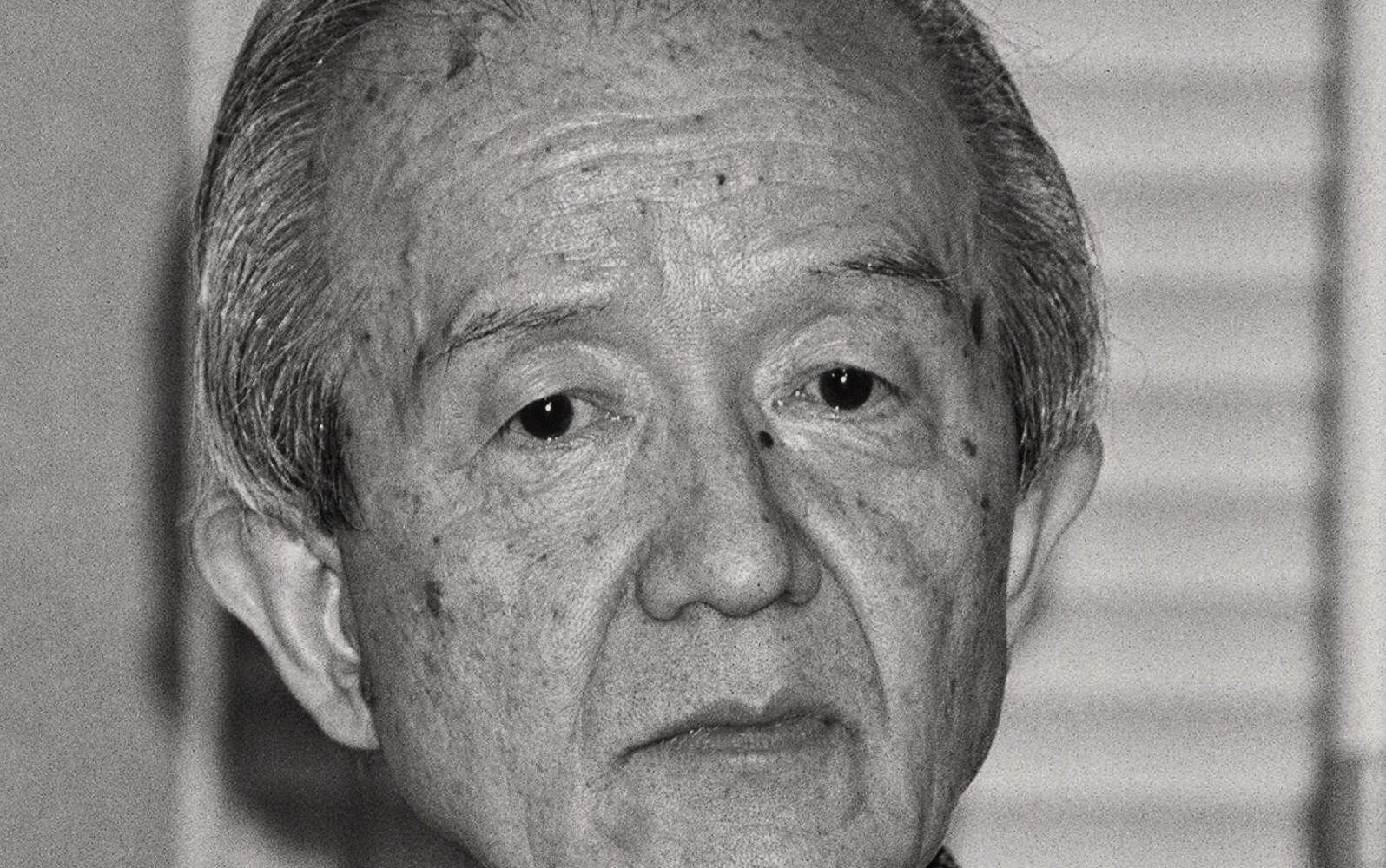
TFF wants to express its gratitude to Yoshikazu Sakamoto who served for many years as TFF Associate.
Prefatory Note
This post is dedicated to my remembrance of Yoshi Sakamoto who died recently. Yoshi was a deeply valued friend and an important public intellectual in Japan who exerted a strong influence on the post-war generation. His political orientation, rejecting extremes of right and left, while questioning the militarist premises of the Cold War and Japan’s willingness to become America’s Asian poodle, gave him a distinctive political profile.
I am sharing these words of appreciation, and hope that anyone from Japan who comes across this text will contact me, especially if they have a way of putting me in touch with either Yoshi’s family or Japanese media. I would like to believe that ‘an American appreciation’ of Professor Sakamoto would be of interest to those who knew and admired him.
I first met Yoshi in the mid-1960s when he came to visit me at Princeton, expressing his concern about the Vietnam War and knowing of my anti-war activism. We bonded quickly and marched in a peaceful demonstration in New York City a few days later, and somehow managed to keep in fairly consistent contact until Yoshi’s death on October 2nd.
Prime Minister Narendra Modi may have been the toast at the high tables from BRICS and ASEAN to G-20 and the East Asia Summit, but nearer home, in the neighbourhood, few are impressed by his 56-inch chest. The stark truth that India does not draw much water in the region was driven home unmistakably during the 18th SAARC Summit in Kathmandu.
Kuala Lumpur
IAIS-International Institute of Advanced Islamic Studies & IIUM-International Islamic University of Malaysia
Yes, Islam and Christianity are on old Buddhist lands; with Muslim-Buddhist clashes in Sri Lanka, Myanmar.
Occident is the big space of the three Abrahamic religions Judaism-Christianity-Islam, with the secularisms of the first two, excluding each other. Indonesia-Philippines are in the Occident.
Orient is a big space spanned by Buddhism, which does not exclude others, not even violent state power; hence more complex. There are pure Buddhist countries: Sri Lanka, Thailand, Myanmar, Cambodia, Laos, Vietnam; and mixed Buddhist countries, with other non-exclusive world views: in China with Daoism-Confucianism, in Japan with Kami shinto-Confucianism, and in Korea with Confucianism and Christianity.
When Nehru was taking a train on his return to India after studying abroad he read of the Japanese victory over Russia in the 1904-05 Russo Japanese War. At that moment he had an epiphany, realizing the hitherto unthinkable, that the British Empire was vulnerable to Indian nationalism. An earlier understanding of the colonial reality by native peoples generally subscribed to the postulates of hard power primacy making it futile or worse to challenge a colonial master, although throughout history there were always pockets of resistance.
This soft power attribute of colonial hard power by way of intimidation and a façade of invincibility is what made colonialism efficient and profitable for so long at the great expense of colonized peoples.
A traditional colonial occupation assumes that the foreign domineering presence, while oppressive and exploitative, refrains from ethnic cleansing or genocide in relation to the indigenous population.
When settler versions of colonialism emerged in relation to the Western Hemisphere and regions occupied by traditional peoples that were without either population density or some kind of industrial capability, the occupier managed to achieve enduring control Read More »
Malaysia has recently experienced maximum insecurity for two extra-territorial sovereign territories: Malaysian Airlines flights MH370 to Beijing and MH17 from Amsterdam. Flights are subject to air traffic rules, but sovereignty was deeply insulted for MH17–possibly also for MH370–and so was the security of the close to 600 on board: dead, possibly killed. The finding so far is that MH17 was hit by “numerous high energy objects”, which–looking at the photos of the cabin wall–aka “machine gun fire”; rather than “hit by a BUK rocket”. MH370: a race to locate the wreckage, by submarines, surface vessels; between China to find, and Australia to destroy, any evidence of crimes?
Intentional destruction of planes entails identification of the perpetrators whoever they are; arraigning them into court and if found guilty punishing them for mass murder. Taking place in international space both should be international, like the International Civil Aviation Organization and the ICC-International Criminal Court. For MH17 Malaysia used Netherlands for the investigation and may prefer Malaysia for the adjudication; two unfortunate decisions. We are dealing with one, possibly two, cases of aggression on civilian planes, themselves incapable of aggression; hence no case for self-defense. The cases are clearly criminal.
So much for space. Conventional borders are on land, sea (EEZ-Exclusive Economic Zone aka Economic Exclusion Zone, between EEZs) and in the air; traditionally defended by land, sea, air military forces against insults by other states, and by police for insults by individuals such as smuggling, drugs, kidnapping, illegal immigration and fishing. The borders are territorial, and the military is focused on national territory. Check out: are there problems anywhere, even conflicts, disputed claims? How will they evolve? Diagnosis, prognosis, and if needed, therapy; standard peace research approaches.Read More »
No matter what you may think of Putin and Russia this is simply not the way international politics should be conducted, particularly not at the personal level. If it wasn’t an offence to children, one would aptly characterise it as childish behaviour.
Western leaders ignored a brilliant opportunity to meet face-to-face with Vladimir Putin and move forward towards mutual understanding instead of signalling that they want a new Cold War.
Western leaders tell us that Russia is a ”threat to the world”. That obviously serves other purposes because you don’t bully someone you genuinely fear.
The G20 Brisbane should be remembered for its show of Western leaders’ personal display of weakness and conflict illiteracy.
Pummelled Putin punching bag
CNN reports that, during the meeting, Putin took ”pummelling” and was treated as a ”punching bag” by Western leaders from he set foot on Australian soil where his Australian host had sent a deputy minister of defence to receive him.
The Guardian reports that the Russian president approached Canadian Prime Minister Harper with his hand outstretched. Harper reluctantly shook it, then said “Well I guess I’ll shake your hand, but I only have one thing to say to you: you need to get out of Ukraine.” ”Bold words” – media called it.
Footage shows Putin sitting alone at a lunch table – like a naughty school boy put in the corner as by his teachers.
President Obama said that we are ”opposing Russia’s aggression in Ukraine which is a threat to the world as we saw in the appalling shoot down in the MH-17”.Read More »
Islam, Christianity and Buddhism are religious cultural powers, deep, defining the ends and means of human lives. All three promise life after death – eternal salvation in paradise, eternal dissolution in nirvana – if rules are observed. Unlike Judaism and Hinduism, all three are universal, for all humans at all times. So, they caught on across faultlines, way beyond Arabia, Palestine, Nepal-India into other, even enemy, economic-political-military realities.
Arabia was Muslim; Islam expanded from Iberia to Delhi by 1192. Palestine became Muslim-Jewish; Christianity became the religion of the Roman Empire in 313; from 395 divided into Orthodox East and Catholic West, from around 1500 divided into Catholic South and Protestant North. Casteless Buddhism was evicted from Hindu Nepal-India to neighbors; a thousand years later it is rooted all over East Asia.
Three religions became three civilizations of three vast regions. Three successes? Yes, but at a price. The price was schisms inside all three, faultlines with hatred, violence, wars. What went wrong?Read More »
The Soviet Army invaded Afghanistan in December, 1979 and withdrew, exhausted and demoralised, 10 years later. In Moscow a joke had long circulated: “Why are we still in Afghanistan?” Answer: “ We are still looking for the people who invited us.”
The same is true for the Americans and NATO who are now moving through the exit door. They came to obliterate Al Qaeda after 9/11, 2001.
There was certainly no invitation issued by the Afghan government, then controlled by the militant Taliban. The US was angry that Afghanistan sheltered Al Qaeda and didn’t have the time of day to discuss an invitation.
After an air and ground campaign it savaged Al Qaeda. Its rump, including its leader, Osama bin Laden, fled to the barely accessible mountains of Pakistan. Ordinary Afghans had never really liked al-Qaeda and they certainly never equated their home-grown Islamist movement, the Taliban, with the Arab-led extremists.
Yet the US and its allies were not prepared to declare victory and leave. They changed the goalposts Read More »



 TFF Associates Blog 2011-2017