
Commenting on PressTv on July 22, 2016 after yet another tragedy in the Mediterranean.
But how much did the media cover that in comparison with the Nice tragedy – and Hollande’s killing of 120 innocent civilians as revenge for Nice (which at the time was not known to have any connections to ISIS or similar)?
Category: Jan Oberg
Horror in Nice and elsewhere
Jan Oberg comments on Iranian PressTV (July 19, 2016) some 11 minutes into this program.
“The War On Terror is history’s most stupid and counterproductive. If the terrorism problem has increased about 80 times since 2001 we should be intellectual and decent enough to ask ourselves: What are we doing wrong? Nobody asks this question and it will end us up in hell.”

Turkey’s coup – One more problem for NATO
By Jan Oberg
Commenting on Russia Today
July 16, 2016
TFF PressInfo # 383 – Fearology and militarism but the real enemy is us

By Jan Oberg
Published on July 8, 2016, the day of the NATO Summit in Warsaw. It’s the 5th in the TFF Series “The New Cold War”
Russia and NATO have offensive capacities and MIMACs (Military-Industrial-Media-Academic Complex) but NATO’s is a much larger potential threat to Russia than the other way around
Why does an alliance with such an overwhelming superiority shout and scream and see ghosts on the horizon when, in reality, there are none?
Why does it seem to be intellectually unable to see things from the side of its opponent? Is the show of strength in reality a sign of weakness?
*
A threat consists of two main things: An intention to do something negative to you + a capability to actually carry it through – thus I + C.
Whenever NATO S-G Stoltenberg – a person who has gone through a serious personality change – speaks, he says nice things like: NATO does not seek confrontation and none of its moves are directed at Russia. NATO countries just have to protect themselves against Russia which they see as a threat.
Typically the talk is about an actor, a country, a leader – not about issues or trends that challenge the Alliance and certainly not that its own war adventures have weakened it in moral and legitimacy terms.
On their own side, NATO leaders buy none of – similar – Russian peace rhetorics. If you ask them why, they would say: Because as long as the Russians have offensive capabilities, there is also a risk that good/defensive official motives may – within weeks – be turned into an offensive, aggressive stance and we will be attacked. Can’t trust them!
But NATO itself excels in offensive projects, plans and capabilities – such as forward positioning, bases, long-range bomber and fighter planes, Ballistic Missile Defense and nuclear weapons – nuclear weapons are by definition never defensive because of their unlimited destructive capacity and because they can, by definition, not be used on one’s own territory.
To put it crudely: If you have no aggressive intentions directed at anyone – then scrap your offensive capabilities including long-range, particularly destructive and nuclear weapons and preserve only what can be used for defense – i.e. if you are attacked.
Why should you scrap the offensive elements? Because, no matter what you say about your intentions, the other side will see you as potential aggressive because you offensive weapons can reach them: If you don’t plan to come to our territory, then why do you have systems that can reach our territory and create unspeakable destruction on our people and culture??
Upholding offensive arsenals is a clear indicator of the possibility that officially stated defensive intentions can change to the opposite – how should NATO otherwise feel threatened by today’s Russia?
The eternal but non-credible threat needed by MIMAC
There are good-hearted people who believe that countries have competent experts who along a series of indicators measure and judge which security challenge are waiting in the future – and a series analyses of the threat towards their country on this or that time horizon.
The probability of each threat is also evaluated – to help politicians with limited budgets to allocate money to guard against some ‘realistic’ but not all possible/thinkable threats.
The – again very good-hearted – people believe that politicians and the industry then decide about the appropriate national defence, the necessary minimum of what we call a (military) defence policy and other measures to meet the challenges.
Unfortunately, as has been known since the last 50 years – except to politicians and the media – this description of security politics has nothing to do with reality.
Here is how it works, instead.Read More »
TFF PressInfo #381: Much stronger than during the First Cold War. Why is NATO so irrational?
By Jan Oberg
The third article in the TFF series on The New Cold War
We are witnessing a remarkable increase in tension between the US/NATO and Russia these years – and it can not only be explained by whatever we choose to think happened in Ukraine and Crimea. We find a totally new effort on both sides to use social and other media to tell how dangerous “they” are to “us”. There is a clear tendency to “fearology” – to instill fear in the citizens on both sides about the capabilities and intentions of the other side.
We find deeply concerned articles about the possibility of war between the two parties – a quarter of a century after the Berlin Wall tumbled.
Why is the new tension rising in Europe between US/NATO and Russia so manifestly dangerous and – with the exception of the Cuban Missile Crisis worse than during the First Cold War?
On a series of indicators, the political Western world – US/NATO/EU and Christian (Orthodox, Protestant, Catholic with sects) – is becoming weak relative to other players in the global society.
The West has engaged in a series of wars that turned into very costly fiascos – from what followed from Sykes-Picot which turned 100 in May 2016 over Vietnam to the destruction of Afghanistan, Iraq, Libya and Syria.
The West is still the largest economic bloc and the 28 NATO members cover about 70% of the world’s mind-boggling US $ 1700 billion military expenditures. Africa as a continent, BRICS countries – China in particular – are making progress, also in fields where the West has failed; for instance, China has lifted 400 million Chinese out of poverty in a couple of decades. The wealthy West has done nothing of the sort over centuries but produced a grotesquely, perversely unequal income distribution.
Take a look at the graphs linked to this summary page from SIPRI. They will tell you how world military expenditures in constant prices have risen since 1996 even though the Warsaw Pact had been dissolved. In 2015, the US alone stands for 36% of the world’s military expenditures, China for 13% and Russia for4%.
President Obama stated recently that the US military is stronger than the next 8 – here is what he said in his State of the Union Address on January 12th, 2016:
“I told you earlier all the talk of America’s economic decline is political hot air. Well, so is all the rhetoric you hear about our enemies getting stronger and America getting weaker,” Obama said in his last annual State of the Union address Jan. 12, 2016. “Let me tell you something: The United States of America is the most powerful nation on Earth. Period. Period. It’s not even close. It’s not even close. We spend more on our military than the next eight nations combined.”
In spite of these fact that prove the overwhelming and increasing superiority of today’s NATO, we see a constantly increasing propaganda coming out of NATO circles to the effect that NATO is getting weaker and that Russia a formidable, unreliable power just waiting for the next opportunity to invade some country in the West.
Let’s take a look back in time.Read More »
TFF PressInfo # 379: The Brexit Shock – Now all is up in the air!
By Jan Oberg
The UK, Europe and the rest of the world will be affected. But there has been no planning for this anywhere. It’s now all up in the air what this Brexit vote will be the starting point of. All we can safely predict is that we are in for interesting times!
Why did it happen?
Arrogant corporate and other elites continuously enriching themselves against all common social sense and ignoring the legitimate needs and concerns of ordinary citizens, women in particular – so, class and gender.
So too that more highly educated people tended to vote for Remain and older people voting Leave – more interesting sociological analysis here.
Interestingly, the whole art world supported Remain – and now fear for the effects of Brexit on Britain’s cultural development.
An EU that has failed to create a new, better way of doing politics, merely growing its original democratic deficit – so, lack of real democracy.
An EU that has had a woefully inadequate, cynical response to a refugee crisis caused by leading EU member states’ warfare – so, (mis)management and lack of leadership.
Significantly, the leading Muslim Association of Britain, MAB, supported Remain with the argument that ”Exit from the EU runs the risk of perpetuating rifts in British society, which would increase levels of hate crimes against British Muslims.” So, Islamophobia.
A general sense (but sometimes denial) of insecurity about the future all over the Western world, Read More »
“Peace, Conflict, Democracy”
The West leaves, a multi-polar world comes
Jan Øberg Part 1/3
The New Cold War – discussion at CCTV
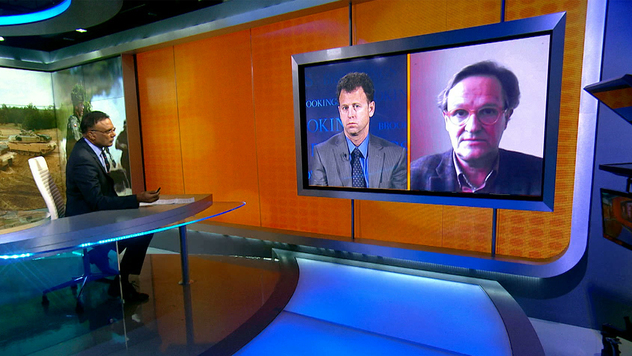
On June 15, 2016 – Jan Oberg participated in a discussion on CCTV America – the global Chinese channel in the US with up to 75 million viewers – with Michael O’Hanlon of the Brookings Institution, a discussion lead by Anand Naidoo. See it here.
Comment on US implementation of Iran nuclear deal
June 10, 2016
Jan Oberg comments on why the US continues, soon a year later, to drag its feed. It’s lack of trust that still stands in the way.
Danmark skal heller ikke bombe i Syrien – 6 artikler

Af Jan Øberg
Posted on 18 April, 2016 on Jan Oberg’s blog
Den 19. april 2016 havde Folketinget 2. behandling af forslaget om også at bombe og indsætte specialstyrker i Syrien.
Jeg mener at sagen er fundamentalt vigtig for Danmark, danskerne og vor fremtidige rolle og ‘image’ ude i verden.
Desuden finder jeg at beslutningsgrundlaget, mediedækningen og den offentlige debat giver anledning til den største bekymring.
At gå i krig er den vigtigste beslutning en regering kan tage og en befolkning bakke op om. Men det er som om dette at deltage i krig stort set rager både ministre, folketingsmedlemmer, journalister og befolkning en forårsblomst.
Med en vis fortvivlelse skrev jeg derfor 6 artikler med forskellige temaer og producerede en video, der også foreslår hvad vi kunne gøre i stedet.
Jeg ville have disse ting sagt og spredt inden beslutningen blev taget.
Herunder findes de én for én som jeg har skrevet dem med en lille kommentar til publiceringsprocessen, som også i et vist omfang vidner – for mig i hvert fald – om mærkelige prioriteringer hvad angår tidspunkt og længde.
Alt andet lige bliver redaktionerne ikke oversvømmet af kvalificerede, kritiske og konstruktive artikler af denne type – men det er dog kun meget korte ting, man kan få ind. Om overhovedet…
1. Dansk krigsdeltagelse i Syrien vil være landsskadelig
Politiken 16. april 2016. Problemfri publicering.

Den 19. april skal folketinget have 2. behandling af forslaget om at Danmark skal deltage i krigen over Syrien og endog have specialstyrker på landjorden.
Det vil i så fald være sjette krigsdeltagelse siden 1999 – Serbien, Afghanistan, Irak 2003-2007, Libyen, Irak igen.
Der synes desværre at være flertal for krigspolitikken uanset det faktum at samtlige krige har været fiaskoer på deres egne præmisser og ud fra et fredsskabende synspunkt.
Politikere og andre mennesker, der støtter det krigsførende Danmark gang på gang, må vel efterhånden kunne blive stillet til ansvar for deres holdning til massedrab på uskyldige. Kan det være rigtigt at dette er så uproblematisk som den ringe offentlige debat tyder på at det er så let at beordre mord på andre mennesker?
Internationale rapporter gør gældende at den vestlige verden kan have dræbt op til 4 millioner muslimer siden 1990.Read More »
 TFF Associates Blog 2011-2017