1. Despite the almost universal condemnation of PM Netanyahu’s speech, even by some of his supporters in the United States and Israel, it seems that Republican senators are not going to give up. One can only describe the letter by 47 Republican Senators to Iranian leaders as madness and even treason. Senator Tom Cotton who leads this initiative is deeply ignorant about the substance and about Iran.
2. They go against the wishes of President Obama and his negotiators and write to the supreme leader of Iran whom they have described as America’s worst enemy and worse than the ISIS with only one purpose: to torpedo the agreement. One should truly wonder at the honesty and sanity of such individuals.
3. Thankfully there are more moderate and thoughtful Americans who believe in the long-term interests of their country and the world, rather than being obsessed by the manufactured crisis by a foreign government or trying to score party points. (See links below).Read More »
On March 3, 2015, The Telegraph and a few other major news surces broke the quite extraordinary story that the chairman of the Nobel Peace Prize Committee – the body that decides who is awarded the Prize – former Norwegian PM Thorbjoern Jagland had been demoted; it’s the first time it has ever happened.
It was during his chairmanship the will of Alfred Nobel was ignored most systematically – e.g. by awarding the world’s allegedly most prestigious prize to President Obama, the EU and Chinese human rights (but pro-war) Liu Xiaobo.
It’s about 7 years ago that a small group of Scandinavian scholars decided to investigate how this prize is managed. The basic research can be found in a book by Norwegian lawyer and author, Fredrik S. Heffermehl, The Nobel Peace Prize: What Nobel Really Wanted which was the first major result of the group’s work. It documents how this prize is “prestigious” only for those who either a) have never read Alfred Nobe’s will; b) don’t believe it should be interpreted with respect for his motives and goals and c) have very little knowledge about peace and peace research.
Nobel’s formulation in his will is short and clear – the Peace Prize shall go “to the person who shall have done the most or the best work for fraternity between nations, for the abolition or reduction of standing armies and for the holding and promotion of peace congresses.” He calls such people “champions of peace”. More here.
Thus, the Nobel Peace Prize is not a do-good prize, not a human rights or environmental prize and not a pro-war prize. But it is a reward work for disarmament, anti-militarism and the abolition of warfare and people – be it politicians, scholars, activists – who are pro-peace, champions of peace. The legal challenges that the Nobel Peace Prize Watch has raised over the years can be found here.
The Nobel Peace Prize Watch
Over the years, the criticism of the Nobel Peace Prize Committee’s work has increased. Seven years ago, I cannot remember that any journalist who interviewed me about the Prize had read the will. Now about 75% of them seem to have before they call.
Fredrik Heffermehl, Oslo, and Tomas Magnusson, Gothenburg, have now established the Lay Down Your Arms Association which was incorporated and registered in Gothenburg, Sweden in 2014 with a Scandinavian and an International Advisory Board. The Association’s first project has been to set up the Nobel Peace Prize Watch where you can acquaint yourself with the Prize, its history, background, the criticism over time, etc.Read More »
What is terrorism? Why do we talk much more about that than other types of deaths? Why is the word misused? What has nuclear weapons – that politicians and media hardly ever talk about – got to do with terror? Why should we all be careful not to exaggerate the phenomenon of terror?
10 x more terrorism than before 9/11
Tell you what: I’ve been critical of the ”war on terror” since September 12, 2001 and particularly since 10/7 when the war on Afghanistan started. If the War on Terror was the answer to 9/11, the U.S. and its friends asked the wrong questions.
Because, what has been the result?
According to U.S. statistics at the time, in the years up to the horrific crime in New York, about 1,000-1,500 people were hit by terror per year worldwide; 1/3 of whom died, the rest were wounded. Most of it happened in South America, some in Europe; small groups such as Baader-Meinhof.
Almost 3,000 were killed on 9/11, many nationalities, far from only American citizens. (About 30,000 die annually from shooting each other).
Today? About 18,000 were killed in terror in 2013.
Although data may not be directly comparable or definitions be the same, the difference between 1,500 and 18,000 cannot be explained by methodological and other variations.Read More »
NO to being included in the Denmark of the Government and Parliament
Written in the wake of the official Danish reactions to the tragic, horrific murders in Copenhagen of a Danish film director and a Jewish Danish guard outside the synagogue in Copenhagen on Saturday February 14 – a crime committed by a 22 years old Danish Muslim with a heavy criminal record and one foot in Denmark and one in a Palestinian refugee camp in Jordan.
I’m a Danish citizen. I’ve worked for the UN Charter norm of peace by peaceful means for 40 years. Have been a member of the Danish government’s Commission for Disarmament and Security all through the 1980s. I’ve worked in war and conflict zones in Somalia, all parts of Yugoslavia, Burundi, Iraq, Georgia, Iran.
I have friends and colleagues in many countries and cultures. I know things can be seen in more than one way – and how the West may also be perceived from the outside.
I will use my freedom of expression and wisdom of expression and our democracy to struggle against the warring Denmark which Prime Minister Helle Thorning-Schmidt insists that we Danes shall all be united around.
Denmark is not only a victim. It has also caused many victims.
It has violated international law and participated in mass murders on the Iraqi and other people, innocent people. On the initiative of then prime minister Fogh Rasmussen it has fought a cultural battle (kulturkamp) not with but against other cultures – related to the Muhamad caricatures. His government was also responsible for dragging Denmark into being an occupation power during four dark years in Iraq – and thus co-responsible for today’s situation there. Likewise in Afghanistan and Libya.
Over a couple of decades Denmark has developed a political xenophobia which I would never have thought even remotely possible a couple of decades ago because of basic values such as welfare for all, solidarity, equality, peoples’ colleges, philosopher poet Grundtvig, disarmament, the compassion for the Jews in October 1943, the fundamental belief in human dignity and tolerance.
The Danmark which the Prime Minister demagogically includes ”all we Danes” in and insists that we all be united around in her misplaced, all-motherly manner, is not the Denmark I want to be included in.
If so, I am not a Dane these days.
I want a Denmark for peace by peaceful means – and in that struggle we dissidents may meet, however few or many we seem to be.
But I draw my line at a national(istic) forced inclusion in the warring, xenophobic and segregated Denmark that has been created the last few years.
The world is full of unnecessary violence and human suffering. Do you know anyone who’d like it to continue like that?
If we educate ourselves and look outside the box, we can create a better world for all. Peace and security can be learnt, making conflict illiteracy and most of the violence a thing of the past.
Below is how – not in a column of 800 words but in a twice as long mini text book. It’ll enable you to think new thoughts and take the first steps into a hitherto closed but beautiful landscape.
Here we go:
Conflict happen. They are basically a good thing. There is no human community without conflict – and if there were it would be a dictatorship, or utterly boring. But how good are we – citizens, media and politicians – at dealing with conflict? Why do we often see violence where it could have been avoided and large violence where only a little, applied early, could have stopped large and long wars?
First a couple of ‘credos’ based on a few decades of experience:
• Conflicts are usually much more complex than presented by the parties and those who intervene in them; many have existential dimensions too.
• If we could learn to analyse and understand conflicts and reduce early, over-emotional side-taking – like we have medical expertise investigating diseases and treating patients instead of condemning them – we would have a more peaceful and just world with much less suffering.
• Conflicts is a problem standing between parties – their solution is not located only in individuals but in changing everybody’s goals, attitudes, behaviour and visions of the future.
• Conflicts can be solved/managed better if we address them sooner rather than later.
• The moment violence has been introduced we face a much bigger problem: the original issue plus the humiliation, anger and wish for revenge. Read More »
Let’s be cautiously optimistic; the meeting did not break down and a ceasefire document was signed. But that is a minimum in this extremely tense situation. One would have hoped for more than what seems to be a revision of the first Minsk agreement.
What are the next steps for this ceasefire agreement to lead to a peace plan, the two things being vitally different?
First, what no one talks about, it seems: A rather large UN peace-keeping and peace-making force with a unit of some 8.000-10.000 robust military from countries completely neutral to this conflict. The classical three legs: military, civil police and civil affairs, perhaps 20.000 in all.
Why the military component? Because the OSCE can monitor and report but it cannot enforce. And because the parties don’t trust each other. And why should this agreement be more durable than the first without it?
If on the 16th of February some shots are again fired by a madman on either side, hell will break lose and accusations fly. And if this agreement doesn’t hold either, we are close to a large-scale war and the U.S. will pour in its weapons (if not before).
My answer is simple: the issues surrounding the horrific attack on Charlie Hebdo disappeared so fast because the general Western reaction was ill-considered/phony and therefore unsustainable. But there is actually still quite a lot to be discussed.
Secondly, European politicians and media chose – quite uniformly for a professed pluralist society – to not discuss the possible causes. The more convenient interpretation was that the perpetrators were just madmen and people like that should be hunted down and eliminated (like IS in Syria and Iraq).
Without causal analysis we can more easily go straight for more “security”, intelligence, surveillance and more police and military in the streets – in short, symptom treatment.
Further, when we deny human beings any motives we de-humanise them and then they don’t deserve to be heard or treated as humans. Evil is always ‘the other.’
The attack on Charlie Hebdo was not an attack on the entire Western culture, democracy or freedom of expression as such. The perpetrators would hardly know such a concept.
It was an attack at one weekly magazine for what it had misused freedom of expression to do.
Misused?
Freedom and wisdom of expression can be combined. There are at least 4 reasons why we should be proud of the principle of freedom of expression and therefore be wise enough to not misuse it or make it a weapon against others. Read More »
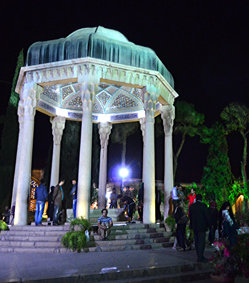
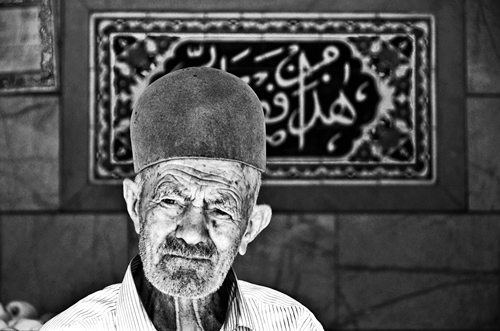
It’s a civilization of its own, very diverse and immensely rich, proud and hospitable.
It’s a country for lovers of history, architecture, religion, classical or contemporary art, literature, films, nature and landscapes – and, most of all, fellow human beings.
The Iranians are easy to get in contact with anywhere you go, also no animosity against Westerners. They are eager to talk politics and culture and if you are open yourself you’ll soon find yourself at a family table. And the food is high quality, things taste nature more than industry.
You’ll get much more value for your foreign currency in Iran than in most other countries.
It is safe – as safe as any European country and much safer than the rest in the Middle East. It is comparatively cheap. You may obtain your tourist visa at the local embassy but also upon arrival. (Special procedure for U.S. citizens, though).
By just going there you’ll get a more balanced view of Iran than you can possibly get from your media.
You’ll build people-to-people bridges and gain mutual respect and – for sure – make friends. And – who knows? – make a little peace too.
So, we’ve put together just a few of links to a diversity of aspects of what the visitor is likely to experience – just to wet your appetite…
I visited Iran for a third time in December last year, participating in the international UN-endorsed conference, WAVE – World Against Violence and Extremism.
I gave interviews to some ten agencies and media but the longest was this exclusive one by a passionate and very professional 24-year old Iranian journalist, Kourosh Ziabari, for the esteemed Iran Review.
The distorted image of Iran
TFF has been engaged with an in Iran the last three years. We believe that the general image in Western media – covering almost only Iran’s nuclear program, human rights violations and Iran as a threat to the world – is neither objective nor fair.
It conveniently omits the harmful effects on the Iranian society of Western policies since the days of the US-UK coup d’etat against the democratically elected President of Iran, Dr. Mossadegh, in 1953.
Whether intended or not, this type of media coverage risks contributing to deeper conflict and legitimise future violence – rather than mutual understanding and peace.
It is therefore imperative to go there and see for yourself. More about that in the next TFF PressInfo.
What TFF tries to do in Iran
TFF has these aims with its work in Iran:
a) Fact-finding: to simply learn first-hand about its history, culture, people and how they think on all levels; by traveling around and interviewing people, as many and different as possible.
b) To influence the image in the West of IranRead More »
Eleven points as a reflection on the terror in Paris and – not the least – the reactions to it*:
1. What was this an attack on?
Was that attack an attack on freedom of speech as such, on democracy, even on the whole Western culture and lifestyle, as was maintained throughout? Or was it, more limited, a revenge directed at one weekly magazine for what some perceive as blasphemy?
2. Is freedom of expression practised or curtailed for various reasons?
How real is that freedom in the West? Just a couple of days before the Paris massacre PEN in the U.S. published a report – Global Chilling – finding that about 75% of writers report that they are influenced by the NSA listening and abstain from taking up certain subjects or perspectives? Self-censorship, in other words. Finally, most of the political leaders marching in Paris on Sunday January 11 have clamped down on media, such as Turkey and Egypt.
I must admit that I have experienced limitations in the practise of that freedom in my own work with Western media and it is decades ago I draw the conclusion that things like political correctness, ownership, commercial/market considerations and journalists’ need for good relations with power – e.g. to obtain interviews – play a role.
I’ve been on the ground in conflict zones and returned home to see reports so biased to tell very little of what I’ve seen myself. And we’ve recently seen lots of cases from the U.S. academic world where there’s been a clampdown on certain views, pulications, courses and professors – not the least in relation to the Israel-Palestine conflict. Or, you look at the proportions between government fund available for peace research and military research in virtually every Western society; free research is a vital element in the self-understanding of the West. But how much of do we have?
3. Freedom doesn’t mean duty.
Is freedom of expression really 100% irrespective of how much the practise of that freedom is hurtful, offending, humiliating or discriminatory against other peoples, religions and cultures? Even if you can express your opinions freely it is not always what we should do.
I can still abstain from making a remark about somebody’s religious or political beliefs because I see no point in offending that person in regard to something he or she holds dear, even part of the identity. But, sure, I have the right to do so.
Using a right to the maximum isn’t necessarily the wisest or most mature thing to do. I draw the distinction between issues that touch personal identity – e.g. religion, nationality, gende – and other issues. It is neither fun nor wise to make satire on what people are.
One must indeed ask in the – chilling – times we live: What happened to words such as solidarity, respect, empathy and to the values of common humanity? There can be no rights without duties as Mohandas K. Gandhi briliantly expressed it.
4. Are anti-Semitic cartoons OK now?
Why is it so important to some media people and Je Suis Charlie people to accept or practise disdain, blasphemy, ridicule or depict (even naked) Muhamad when we know that Read More »


 TFF Associates Blog 2011-2017