TFF PressInfo: It’s doable: Peace Israel-Palestine (1)

By Jan Oberg, TFF director

Jan Oberg

Lund, Sweden July 25, 2014

Violence is a dead end

Look at the violence in Gaza today, DR Congo (6 million dead), Iraq, Libya, Afghanistan, Somalia etc: Isn’t it obvious that the world needs a completely new approach to conflicts?

We’ll never rid the world of conflicts, conflicts is part of human and social life. Conflict-prevention is a meaningless term.

But we can rid the world of most of its violence. If we want, if we educate each other and if economic and other interests stopped supporting killing as a tool in conflict-management.

Unrealistic? Hopelessly idealistic? Well, look at the places above and try to find the realism and hope there.

Look at the conflict not at the parties and the violence

It requires almost no intellectual effort to take sides in a conflict between A and B. If both parties use violence, that means endorsement of the violence – the justification both need: “They threaten and kill us, therefore we threaten and kill them.”

Those who support a conflict party who use violence also support violence. As long as violence continues, there will be no process towards peace – only more hate, traumas, suffering, wish for revenge and destruction.

Violence – not the conflict – becomes the main thing and tit-for-tat the rule of the game, with an increase in the violence for each round. Scorpions in a bottle, feeding each other.

Both those who are outside a conflict and debate it – for instance, 99% of the media debates – and the conflicting parties on the ground feed on violence. If A did not use violence against B, how would B justify its own killings?

Gaza today – both parties lose

This is where we are in Gaza today when reports tell that around 800 civilians have been killed without any positive effect, both losing.

It’s not about evil, it’s about desperation coupled with traumas coupled with a lack of insight and education.

This wrong-headed attitude is indicative of conflict and peace illiteracy: among the parties, our media and our decision-makers. Innocent people on both or all sides normally pay the price for it.

The world needs a completely different approach. It’s embedded in the UN Charter and called peace by peaceful means.Read More »
TFF PressInfo: Use Malaysia’s MH17 to make peace instead

By Jan Oberg, TFF director

Jan Oberg

Tragic misuse of a tragedy

The government of Ukraine as well as the separatists, NATO/U.S. and very many leading Western mainstream media seem all to know who has caused the tragedy. Putin believes it was caused indirectly by the West.

Given the fact that very few, if any, people or institutions can know who did it with enough details, data and precision to accuse anyone, the MH17 tragedy has been misused to an extent that can itself only be termed tragic.

The misuse is tragic because it is a catastrophe for close to 300 people, their relatives and friends. Silence – of both verbal and military weapons – and empathy would have been appropriate.

Anyone pointing fingers and calling it a terrorist act at this point is irresponsibly or should present convincing evidence.

Secondly, the blame game makes the necessary road to peace and security even more difficult.

An All Party Peace Process should come out of MH17 and the civil war

It would have been so much more civilised to use the MH 17 tragedy to say:Read More »

Some people are exceptional

By Jan Oberg

Jan Oberg

July 20, 2014 – 12 days after Israel launched Operation Protective Edge, after Shejaiya and after 400 people on the Palestinian side have been killed.

Some people condemned what they called a planned Serb genocide on Albanians in Kosovo.

Some people were very upset about the siege of Sarajevo. And the massacre at Srebrenica.

Some people believed that the Yugoslav Army occupied Croatia and tried to create a Greater Serbia.

Some people condemned what was then called ethnic cleansing.Read More »

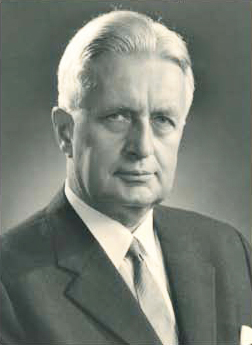
Aage Bertelsen (1901 – 1980) – Danish educator for peace

By Jan Oberg & Johan Galtung*

Lund and Kuala Lumpur, July 2014

Introduction

He was a tall man and a great man, a visionary, pacifist, civil resister, educator and philosopher. He took life more seriously than most and he could be playful and fun like a child. His life’s guiding principle was ”Engage in your time!” and while he wrote and talked a lot he also did it. His name was Aage Bertelsen, he was born in Denmark in 1901 and died on August 15, 1980.

Bertelsen’s imprint on history is two-fold. First, with his wife Gerda he was a prime mover of one of the groups, the Lyngby Group, which organised the rescue of altogether 7.220 Danish Jews into safety in Sweden in October 1943 during the German occupation of Denmark – more here. The Lyngby Group – Lyngby is north of Copenhagen – got about 1.000 of these in safety by organising their nightly transport onboard small fisher boats over the Sound between Denmark and Sweden.

In this he deserves a place in international contemporary history for its humanity, civil courage and as an example of non-violent struggle against occupation.

Secondly, Bertelsen was an educator of and for peace. His life work educational efforts included his family and friends, his pupils over 22 years at the Aarhus Cathedral School in Aarhus, Denmark, the general public as well as national and international leaders.

He lived in pre-Internet times and very little is publicly available today about this renaissance man. From two rather different, but compatible, perspectives we’ve taken it upon us to remind the world about him – friends and colleagues of his as we happen to be.

Headmaster Aage Bertelsen in 1961 Photo: Elfeldt, Copenhagen


Why now, over 30 years after his death? Read More »

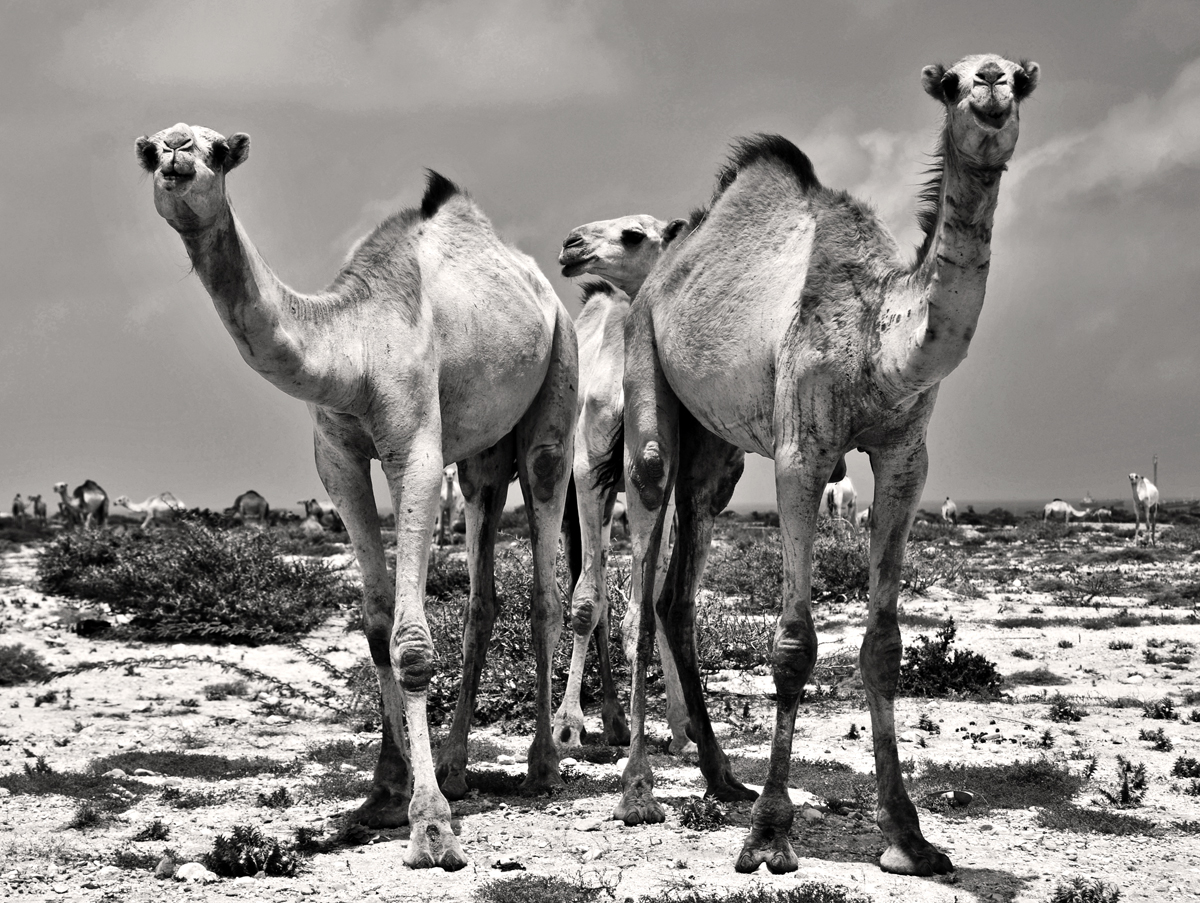
TFF PressInfo – Somaliland – A Peace and Photo Mission

By Jan Oberg

Lund, Sweden, July 1, 2014

This PressInfo is about place you’ve probably never visited nor know a lot about: Somaliland.

TFF today publishes the report from a mission there in May 2014 – to the capital Hargeisa, the harbour town of Berbera and to Burao.

With the report in photos and texts we seek to alert you to this indeed unique and interesting country.

Somaliland declared itself an independent state out of Somalia in 1991 and is still not recognised by a single government in the world.

But against all odds Somaliland has made considerable progress.

It isn’t easy to develop when you are marginal to the aid and investment sources, have no foreign embassies and can’t be a member of inter-national organisations. Read More »

TFF PressInfo: If militarism continues, humankind is doomed

By Jan Oberg

Both NATO and the EU has just announced that their members will now invest more in the military. It’s indicative of the lack of creativity in both organisations, it is self-defeating and counter-productive.

But have you seen it put on top of any agenda and debated? You haven’t, it is so normal – and the argument is that we are threatened. That’s called fearology: Making tax payers pay even more by making them scared.

The military sector is a parasite on society

The military sector produces much less employment than the civilian per invested dollar. It’s a huge burden on the economy because it swallows creativity, research and development badly needed to solve humankind’s real problems.

Weapons don’t belong to a market, there is no competition – the state is the only buyer – and thus tax payers must cover the systematic cost overruns.

We are told that there is economic crisis and we must cut down on hospitals, schools and human care everywhere. But this we can afford?

But what if the military did solve our problems?Read More »

TFF PressInfo: Democracy’s crisis – 10 points

By Jan Oberg

Democracy is a core feature of Western society, normally understood as representative parliament – i.e. in free elections citizens vote for people to represent their interests for a parliament consisting of parties of which some form the government and some the opposition.

It’s not always included in the definitions that democracy requires a reasonable level of knowledge and information, freely available. For instance, one often hears that India is the world’s biggest democracy but 26% of the people are still illiterate (287 million people).

So the ”world’s largest democracy” also has the world’s largest population who can’t read and write. In comparison, China illiterate citizens make up about 3% and is regularly called a dictatorship.

Also, in a society where the persons running for office are – or have to be – extremely wealthy to pay for their campaign and where large corporations make multi-million dollar contributions to certain candidates (presumably not out of altruism), falls outside a reasonable definition of democracy – even though they may also not be dictatorships; there are many stations in-between the two.

Are young people giving up parliamentary democracy?

When I was in my high-school years – a few decades ago – and wanted to contribute to changing society for the better, the most natural thing to do – and the finest – was to join a political party. Not so today. My students in peace studies around the world often ask me at the end of a course and it is time to say goodbye whether I can help them somehow in making their career. Their career dreams may be to work for the UN, for human rights, the environment or starting their own NGO with a peace profile or set up their own consultancy firm for a better world.

Significantly, over all these years, only one single student asked me what I thought about contributing to peace and development by becoming a politician.

As is well-known, people today engage in social issues mainly through civil society and the use of social media as their primary tool. This is good from most perspectives and holds fascinating prospects for de facto global citizenship and action, but it does something to the old type of representative democracy.

When we talk about global crisis, people think much more of the environment, identity issues or warfare than of democracy being in crisis. I think it is in fundamental crisis for the the following reasons.Read More »

TFF PressInfo: EU elections – To perform rather than live democracy

By Jan Oberg

Lund, Sweden, June 3, 2014

Fears has been expressed in Europe about the recent EU parliament voting pattern. Instead of the fear and denouncing the winners we should ask: What causes such an outcome?

My short answer is this: Democracy itself is in deep crisis. It has become performance or ritual rather than something genuinely lived.

Two things stand out – one, the increase in votes going to nationalist, populist, right-wing and anti-Muslim parties as well as Euro-skeptics – particularly in Denmark, France, Greece and Britain.

Secondly, the voter turnout has fallen from 62 per cent in 1979 to 43% in 2009 and this year it increased only 0.09% in spite of the EU Commission’s attempt to increase it.

So while people struggle around the world for democracy, only 43% of the EU citizens find it meaningful to go and vote every 4th year. How tragic for an EU that tries to promote democracy everywhere, even by military force.

It is understandable that the two mentioned factors is a combination that make many in Europe – the seat of two world wars, NATO and some of the most armed and two nuclear-weapons states – concerned. Perhaps the rest of the world should be at least as concerned? Other countries such as Hungary and Spain have, on different dimensions, moved in a worrying authoritarian political direction.Read More »

TFF PressInfo – Why Obama’s speech should make us think

By Jan Oberg

Lund, Sweden – May 29, 2014

In a speech by the President of the United States of America – read by millions in all corners of our world in minutes – rest assured that every single word has been weighed with utmost care.

With this in mind, Obama’s speech can be analysed as both offending to the rest of us and – exceptionally – weak.

It caused no enthusiasm among the future army officers he spoke to and no enthusiasm among leading Western media.

I will argue that

• Intellectually and morally the speech doesn’t have the basics – full of contradictions and imbued with unbearable self-praise.

• While there is a recognition of ”mistakes” such as ”our” war in Iraq and a potential step-back from interventionism, there is neither an adequate analysis of the past nor of what the future may need in terms of leadership.

• Little had I anticipated that my analysis in the TFF PressInfo on ”Psycho politics in the age of imperial decline” just a few days ago would be confirmed so quickly and so strongly. Read More »

TFF PressInfo: Psyko-politik i tiden för imperiets nedgång

Av Jan Öberg

Lund , Sverige – 23 maj 2014

Tiden för rationell politik, om begreppet någonsin funnits, är över .

”Realpolitik” har blivit en blandning av marknadsförda ord, propaganda och ledare som gör uttalanden som gränsar till absurd teater. Tunnare och tunnare länkar till Realiteten.

Detta är vad som händer när man förnekar nedgången.

Alla imperier går ner. Det amerikanska imperiet är på nedgång. Makrohistoriker (se t.ex. British Arnold Toynbee’s 12–volymarbete 1934-1961) berättar att det finns många skäl till att imperier faller:

• militarism med konstant krigföring;

• överutvidgning – försöka kontrollera mer än vad du kan hantera;

• förlust av legitimitet i andras ögon;

• strukturella ekonomiska kriser;

• moraliskt förfall;

• förlust av intellektuell och teknisk innovation;

• andra maktstrukturer ökar i styrka över tid och göra saker på nya, kreativa sätt .

Efter 1945 ansågs USA vara starkt på en rad olika maktdimensioner: militär, ekonomi, politik, legitimitet, kultur, innovation. Idag är de bara nummer ett på den militära dimensionen. När alla andra indikationer går ner, blir militären en stor börda som bara accelererar nedgången.

USA är på tillbakagång och i förnekelse. Så är även de flesta av dess allierade och sympatisörer .

Deras utrikes politiska beslutsfattare verkar tro att allt är bra och de kan ändå leda och forma världen enligt deras intresse och världsbild. Det är fortfarande i grunden en missionär .

Här är några delar av vad den består av:Read More »