
Chantal Mutamuriza
Born 1971 in Burundi
Chantal joined TFF in 2003 as Associate and Liaison for TFF’s project in Burundi
Category: AA ARTICLES BY ASSOCIATES

Reflections on the Cuban Missile Crisis at fifty
By David Krieger
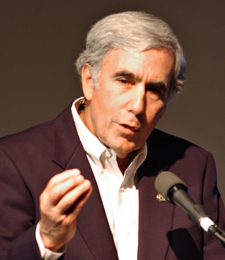
Fifty years ago this month, the world teetered on the precipice of a nuclear war between the US and Soviet Union during the 13-day Cuban Missile Crisis. We were fortunate to have survived that crisis, thanks largely to the restraint shown by President Kennedy and Premier Khrushchev.
Now, fifty years later, there is no immediate crisis such as that in 1962 over Soviet nuclear-armed missiles being placed in Cuba. There are, however, still some 19,000 nuclear weapons in the arsenals of nine nuclear-armed nations: the US, Russia, UK, France, China, Israel, India, Pakistan and North Korea. Approximately 95 percent of these weapons are in the arsenals of the US and Russia. Some 2,000 of them are kept in a state of high alert, ready to be immediately launched upon an order to do so at any moment of any day or night. Read More »
Apollo’s curse and climate change
By Richard Falk

The fertile mythic mind of ancient Greece gave us a tragically relevant tale, told in different versions, of how the Greek god Apollo laid a curse of the beautiful and humanly captivating Cassandra. According to the myth Apollo was so moved by Cassandra’s beauty and presence that he conferred the gift of prophesy enabling her to apprehend accurately the future. Yet the gift came with a rather large macho string attached: he expected in return that Cassandra would agree to become his love partner, but she by tradition was sufficiently attached to her virginity and pride as to refuse Apollo’s crude entreaty.
Angered by such defiance, Apollo laid upon this innocent young woman a lethal curse: she would continue to foretell the future but she would never be believed. Such a twin destiny drove Cassandra insane, surely a punishment of virtue that was perversely exacted. Or are we as mortals expected always to cast aside our morals and virtue whenever the gods so demand?
The sad story of Cassandra is suggestive of the dilemma confronting the climate change scientific community. Read More »
German intransigence is destroying Europe
By Jonathan Power

The Germans are at it again. As Mario Monti, Italy’s prime minister, quipped: for Germany “economics is a branch of moral philosophy”- i.e. punish the sinners. Unless the southern nations- Italy, Spain, Portugal and Greece- admit their past wickedness and purge themselves until it hurts, even tortures them, they will never recover. Forgotten are such German sins as its own banks investing heavily in the Spanish housing boom which when it bust dragged down the whole economy, taking government revenues with it or being the first country in Europe the agreed 3% limit on budget deficits. Read More »
Peace, human rights and development in multi-polar and evolving world
By Johan Galtung

Keynote Speech at the UN Human Rights Council SOCIAL FORUM – Oct 1, 2012
Your Excellencies!
The title for this Sixth Social Forum – in the context of the 10 Articles of the UN Declaration on the Right to Development of 4 December 1986 – is very well chosen. The focus is on people-centered development – as opposed to system – centered economic growth. And on globalization, a challenging process involving all states and regions, nations and civilizations, humans and nature – as opposed to a globalized market with only three free flows, of capital, goods and services, not labor; increasing the global economic gap.
And this in the context of rampant poverty, widening domestic inequalities, economic crises due to the disconnect between real and finance economies and greedy speculation, rising unemployment and popular unrest. Yesterday’s map dividing the world in developed and developing countries makes little sense when many of the developed are de-developing, declining, and many of the developing, emerging, on the way up–like BRICS–pass them on their way down. A new world.
Permit me Twelve Theses addressing this serious situation.Read More »
Notes from three weeks in China
By Richard Falk
After three weeks in China I have returned to the United States yesterday before departing for Turkey and Rhodes later today. I mention this to explain my failure to post during this period or to comment or monitor comments on the blog.
This failure was not due to a lack of access to the Internet or even finding time during a busy travel schedule. It was due to my lack of skill in circumventing what is known as ‘The Great Firewall of China’ that blocks entry to most blogs, Facebook, Youtube, Twitter, as well as assorted other sites. Sophisticated Chinese know how to circumvent, and the authorities do not seem to mind, as the blockade is apparently intended to limit access on the part of ordinary Chinese. This is true of the Chinese media generally, which is highly regulated, especially TV, giving only official views, although the English language dailies, which are quite informative are more objective, and do not read as propaganda.Read More »
A day of peace for the Americas
By Johan Galtung
From Puebla, México – Universidad de las Americas, 21 Sep 2012
Today is the 2012 day of peace as resolved by the UN General Assembly (Resolution 55/282, 2001; following resolution 56/37, 1981). A day of cease-fire and nonviolence, but open to all peace themes.
And that brings us straight to the key problem in the theory and practice of peace:
Are we thinking of the negative peace of cease-fire and no violence (as distinct from nonviolence), or are we thinking of the positive peace of cooperation for mutual and equal benefit, empathy for emotional harmony, reconciliation of past traumas, and resolution capacity for endless agenda of future conflicts?Read More »
The self-destruction of Pakistan
By Jonathan Power
Patience is wearing thin. “Pakistan be damned”, one influential British policy maker said to me. Professors Paul Kapur and Sumit Ganguly write this month in Harvard University’s “International Security”, that “The Pakistan-jihad nexus is as old as the Pakistani state. From its founding in 1947 to the present day Pakistan has used religiously motivated militant forces as strategic tools.” But now the policy has become “dangerous and potentially catastrophic”, they add.Read More »
Mohammad and the wild, marginal men of the Muslim world.
By Jonathan Power
The wild demonstrations that last week burst out in many places in the Middle East, Pakistan, Afghanistan, Sudan and other places will not be the last and neither were they the first to protest Western insults of the prophet Mohammad. Much more serious were the ones that erupted in 1988 following the publication of Salman Rushdie’s novel, “The Satanic Verses”, and seven years ago the protests and threats that followed the publication of satirical cartoons in a Danish paper, mocking Mohammad.Read More »
Embassy protests and Middle East unrest in a context
By Stephen Zunes
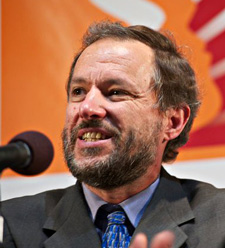
It seems bizarre that right-wing pundits would be so desperate to use the recent anti-American protests in the Middle East—in most cases numbering only a few hundred people and (except for a peaceful Hezbollah-organized rally in Lebanon) in no cases numbering more than two or three thousand—as somehow indicative of why the United States should oppose greater democracy in the Middle East. Even more strangely, some media pundits are criticizing Arabs as being “ungrateful” for U.S. support of pro-democracy movements when, in reality, the United States initially opposed the popular movements that deposed Western-backed despots in Tunisia, Egypt, and Yemen, and remains a preeminent backer of dictatorships in the region today.
Meanwhile, Mitt Romney falsely accused President Obama Read More »

