
Category: AA ARTICLES BY ASSOCIATES
Turkey, backwards or forwards?

By Jonathan Power
March 29th 2016.
In the 1970s there was a cult film, “Midnight Express”, directed by the young Oliver Stone. It was based on the story of an American who was sentenced to 30 years in a Turkish prison for smuggling drugs. It showed in stark reality the total lack of any semblance of human rights or normal human behavior by the Turkish authorities. It was that impression of Turkey that many of us carried forward, even as Turkey in fact was profoundly changing.
Even today some hold on to what is now a discredited viewpoint, particularly in France, a country that has long made it clear it will obstruct any move to bring Turkey into the European Union. Anti-Turkey feeling exists elsewhere, particularly in Germany which has far more Turkish immigrant workers than any other nation. However, the truth is the Turkey of today is unrecognizable from that of the 1970s. Not least it has become a democracy, albeit a not perfect one.
And yet there are appalling signs that Turkey is winding the clock back. Having been rebuffed in 2010 by Europe in its attempt to enter the EU, despite all the previous promises made to it that entry would be welcomed (the US has long supported this), it has started to go backwards to its more authoritarian and less humanistic ways. This is grist for the mill for those who have long held a “Midnight Express” view of Turkey.
The true picture of Turkey has to be a subtle one. On the one hand Read More »
World economy, what next?

By Johan Galtung
Washington, DC
The Big View is the West doing badly, euro and pound down with miserable growth rates; US $-growth rate better but erratic; China, India, Islam growing, Latin America (CELAC) getting its act together and probably growing. This matters for essentially bankrupt USA: China, India, Islam, CELAC are huge powers with huge minorities inside the USA: they could move in, take over. Last week’s prediction about Trump’s foreign policy came true the next day (Washington Post 22 Mar 2016): less wars, not affordable, less NATO, let Europe do it, no nation-building, building our own. He was then branded “isolationist” with US incapacity for a third option: foreign policy by peacefare.
Diagnosis
Any economy has two key faultlines: high vs low class, with inequality by exploitation; real vs finance economy, with crises by speculation. LEAP Press Review (noreply@leap2020.net 17 Feb 2016) traces “something Big was about to happen” to February 2006: no more M3 published (money printing); Iran’ stock market based on the euro, Iraq following (invasion). Before that, the Rest manufacturing, beating the West. Slow in coming, but then quickly; leaving the USA with agriculture and speculation, maybe to be followed by a Brexit UK.
Martin Wolf (Financial Times, english@other-news.info 24 Feb 2016) points to the world exhausting “monetary policy 1,2”-lower interest, printing money-and calls for nº 3: more spending, less saving to beat the “chronic demand crisis”. A non-starter: given the inequalities and crises, people will save for worse to come and for their children, not spend unnecessarily, and not accumulate debts to their children.
Joseph Stiglitz (above) puts it this way: “Banks choose financial speculation over lending /for/ economic growth”. The money supply “stimulated sharp increases in-financial-sector profitability”.
Rune Skarstein, the leading Norwegian global economist, focuses on the slipping locomotive effect from the Chinese economy;Read More »
TFF PressInfo # 369 – A Sunni-Salafist-Zionist Coalition Changing Middle East?

By Jan Oberg
Please try Google “Gulf states want nuclear weapons against Iran – Israel “ and only one Western mainstream media will appear, an excellent article by The Telegraph’s Raf Sanchez in Jerusalem.
The only other media carrying the story is Russia Today and Vigilant Citizen and MintPress News also carries the story and offers a wider background
What is this about?A new coalition?
So the usual Western media filter, meaning it must be interesting. And it is a quite sensational story: Saudi Arabia and Israel are up to a nuclear mischief against a country that has just been prevented from acquiring nuclear weapons by means of a huge legally binding document, UN Security Council endorsement and extremely tight monitoring mechanism. What’s it about?
It’s about Israel’s defence minister Moshe Ya’alon saying in public at the recent Munich conference that Arab states are “not willing to sit quietly with Iran on the brink of a nuclear bomb”.
He thinks that Iran was liable to break the agreement as their economic situation improves with the lifting of international sanctions. Ya’alon is quoted as saying that “I speak about the Gulf states and North African states too…For them, Iran and the Muslim Brotherhood are the enemy. Iran is the bad guy for us and for the Sunni regimes. They are not shaking hands [with Israelis] in public, but we meet in closed rooms.”
So not only Jordan’s monarchy and Egypt’s dictatorship but also Gulf and North African states: A coalition lead by Saudi Arabia and Israel – Israel as the only nuclear weapons power in the region and Saudi Arabia as the most likely next nuclear weapons state.
For much too long the world’s attention has been on Iran’s imagined nuclear weapons, not on the dozens or hundreds real nukes that Israel possesses as a non-member of which is the Non-Proliferation Treaty (NPT).
One can say that Israel and Saudi Arabia lost the political battle against the nuclear deal with Iran concluded with the five permanent UNSC members and Germany last year – and now will do their utmost to use Iran’s non-nuclear weapons status as a pretext for others going nuclear against, predominantly, Iran.
Propaganda hysteria dominates in an age where knowledge plays a diminishing role
The problem for them, however, is that Iran will be difficult to sell as a real threat – but we live of course in Read More »
TFF PressInfo # 368: Reflections after Brussels
Lund, Sweden, March 29, 2016
Recommended reading…
The general post-Brussels mainstream media discourse has shown the same profile as virtually all others since September 11, 2001:
• Emphasis on who did it, the circumstances where it happened and how the crime was carried out;
• The fate of the victims, the mourning of the nearest relations and the memorial;
• Much larger coverage than more devastating attacks outside the West.
• Absence of relevant and intellectually challenging questions related to the big WHY – Why do some people hate us so intensely, willing to die for it?
• And absence of discussions about possible historical causes and action-reaction perspective – the only reason offered is that they are evil people/Muslims and evil acts must be met with force – Francois Hollande who never misses an opportunity to puff himself up talks about all of Europe being hit – 35 people killed out of 508 million to be precise.
• The underlying, tacit ‘narrative’ of course is that we Europeans are simply innocent victims – more important, that is, than the roughly 1 million Iraqis who died thanks to the European participation in 13 years of sanctions and an illegal war and occupation led by the US. And, as is well-known, victim psychology often legitimates disproportionate responses – to be seen.
• Finally, the complete loss of perceptive proportions in a war that has resulted so far in 350.000 dead Syrians, 4,6 million Syrian refugees and 6,6 million Syrian internally displaced and destruction of yet another Middle Eastern country and its culture – among other things thanks to arms trade to all fractions and thousands upon thousands of bombing sorties – the far majority of which orchestrated by the US/NATO/EU countries over the last 5 years.
We believe there are different perspectives that deserve our attention – based on complex analyses, a moral standpoint and an intense desire to help stop this – for all self-defeating – vicious spiral.
We invite you to browse these and share them in your circles:Read More »
Reflections on the Brussels attack
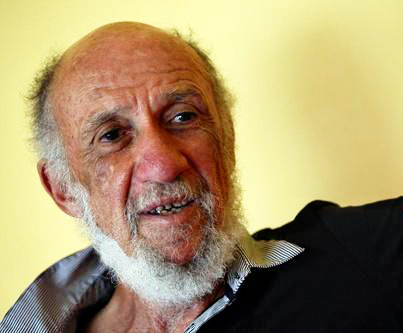
By Richard Falk
Prefatory Note
A much abbreviated version of this post was published in Al Jazeera English on March 24, 2016. Although the essential analysis is the same, the reasoning here is greatly elaborated. The themes addressed and the policies proposed are advanced in a tentative spirit. Debate and reflection are urgently needed with respect to the political violence that is being unleashed in various forms in the West and non-West.
This latest terrorist outrage for which ISIS claimed responsibility exhibits the new face of 21st century warfare for which there are no front lines, no path to military victory, and acute civilian vulnerability. As such, it represents a radical challenge to our traditional understanding of warfare, and unless responses are shaped by these realities, it could drive Western democracies step by step into an enthused political embrace and revived actuality of fascist politics.
Already the virulence of the fascist virus dormant in every body politic in the West has disclosed its potency in the surprisingly robust Trump/Cruz run to become the Republican candidate in the next American presidential election.
Perhaps, the most important dimension of this 21st century pattern of warfare, especially as it is playing out in the Middle East, is the will and capacity of violent extremists to extend the battlefield to those perceived to be their enemies, and to rely on acutely alienated Europeans and North Americans to undertake the suicidal bloody tasks.
The British Independent struck the right note in its commentary, Read More »
Iranian elections: Another milestone in reformist advance

By Farhang Jahanpour
Since the latest Iranian elections held on 26th February 2016 for the 290-seat parliament (Majles) and the 88-member Assembly of Experts there have been many negative comments about the election results from the usual suspects.
Some people who are fundamentally hostile to Iran, criticize everything that Iran does, regardless of outcome. When the leading Iranian reformist candidate Mohammad Khatami won a landslide election in 1997 and initiated a series of important reforms at home and advocated a dialog of civilizations and even made a remarkable offer to the United States to reach a grand bargain over all the issues of contention, some pro-Israeli groups dismissed him, saying that he had no power.
However, when President Mahmud Ahmadinezhad made a number of outrageous comments, not only were his statements taken out of context and exaggerated, it was said that he posed an existential threat to Israel and the West.
Some people are at least honest about their real motives. During the controversial election in 2009 when Ahmadinezhad was declared the winner over the reformist candidate Mir-Hoseyn Moussavi, some American neoconservatives and Israeli commentators openly said that they preferred Ahmadinezhad because they could demonize him more easily.
“Just because Moussavi is called a moderate or a reformist doesn’t mean he’s a nice guy. After all he was approved by the Islamic leadership,” said Ephraim Inbar, director of the Begin Sadat Center at Bar Ilan University. “If we have Ahmadinejad, we know where we stand. If we have Moussavi we have a serpent with a nice image.” The then Mossad Chief, Meir Dagan, told a panel of Israeli lawmakers: “If the reformist candidate Moussavi had won, Israel would have had a more serious problem, because it would need to explain to the world the danger of the Iranian threat.”
Recently, the staunchly anti-Iranian lobby, The Israel Project (TIP), produced a promotional video showing the leader of the terrorist group, the Mojahedin-e Khalq, denouncing the latest Iranian elections. This is despite the fact that before some right-wing pro-Israeli groups had decided to promote this terrorist group as a popular opposition group, in 2011 TIP director Josh Block had described the group as a terrorist organization. (1) Nevertheless, now his organization calls upon the same group to denounce the Iranian elections.
However, despite all this negative propaganda, the results of the latest Iranian elections exceeded all expectations. The elections set another milestone in the desire of the Iranian people for change and reform following the 2013 presidential election that resulted in the victory of the centrist candidate Hassan Rouhani.
Ever since the victory of the Islamic revolution, the government has held flawed, but competitive and relatively free and fair elections. In order to appreciate the significance of the election results, we should look at some of the obstacles that had been placed on the path of the reformists and moderates.
The right-wing Guardian Council, formed by six clerics appointed by Iran’s Supreme Leader Ayatollah Ali Khamenei and six appointed by the head of the judiciary, who is himself appointed by Khamenei, has the job of vetting all the candidates who run for high office in Iran. In the absence of organized political parties, anybody can declare himself or herself a candidate in presidential or parliamentary elections, and normally many unqualified people do so.
Therefore, there is a need for a vetting organization, but the criticism against the Guardian Council is that it does not act in a fair and impartial manner.
During the recent elections,Read More »
The USA – What Next?
By Johan Galtung
March 21, 2016 Washington, DC
Nobody knows. But under US presidentialism presidents matter; close to a dictatorship for one administration. That is where democracy–for, by if not of the delegates, it seems–enters; with a painstaking nomination process, like nothing in the rest of the world. And then the elections in November, after party conventions in July.
There are three parties in the USA: Democrats, Republicans; and Democrats in the South, loyal to the party leadership DNC and vice versa, Southern Baptist conservative, traditionally for blacks, women, working class, minorities (Southern Republicans are white Anglo men). Very different from Yankee democrats up in the North producing Bernie.
So we get a South-North gradient Hillary-Bernie, with exceptions. However, there is also an age gradient for both genders even if more for men: the older the more Hillary, the younger the more Bernie. If, likely, Hillary is nominated, Bernie will leave an imprint on US politics and many states in the North, and more so as time passes. But socialism, age and vague foreign policy rule him out as president.Read More »
Merkel’s selfie – and what about terrorists coming in as refugees?
Jan Oberg’s comments on the Merkel selfie, lack of EU refugee management and answers what to do if there are terrorists coming among the refugees
Short comments on the situation in Europe
March 28, 2016
Jan Oberg’s comments on the EU, the Pope, refugees and the weakening of the US Empire
 TFF Associates Blog 2011-2017