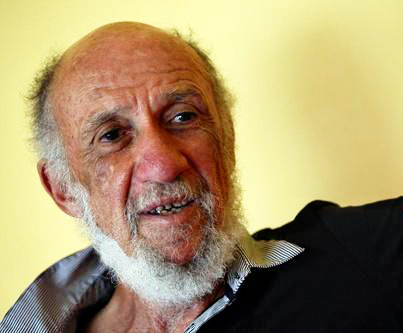
Wibisono, UN Special Rapporteur on Occupied Palestine, resigns

By Richard Falk

This post appeared on January 5th under a different title in the Electronic Intifada. It is published here in a slightly modified and extended form.

Makarim Wibisono announced his resignation as UN Special Rapporteur on Occupied Palestine, to take effect on March 31, 2016. This is position I held for six years, completing my second term in June 2014.

The prominent Indonesian diplomat says that he could not fulfill his mandate because Israel has adamantly refused to give him access to the Palestinian people living under its military occupation in the West Bank and Gaza Strip.

“Unfortunately, my efforts to help improve the lives of Palestinian victims of violations under the Israeli occupation have been frustrated every step of the way,” Wibisono explains.

His resignation reminds me in a strange way of Richard Goldstone’s retraction a few years ago of the main finding in the UN-commissioned Goldstone report, that Israel intentionally targeted civilians in the course of Operation Cast Lead, its massive attack on Gaza at the end of 2008.

At the time I responded to media inquiries by saying that I was shocked, but not surprised. Shocked because the evidence was overwhelming and the other three distinguished members of the UN fact-finding commission stuck by the finding. Yet I was not surprised because I knew Goldstone – a former judge of the South African constitutional court – to be a man of strong ambition and weak character, a terrible mix for public figures who wander into controversial territory.

In Wibisono’s case I am surprised, but not shocked. Surprised because Read More »
The West should get out of the Middle East

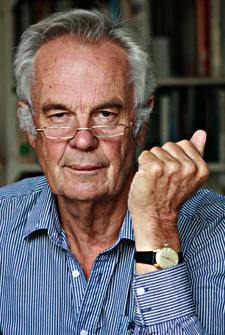
By Jonathan Power

The year’s first major atrocity – Saudi Arabia’s execution by beheading on Sunday of 47 people, including an important Shia ayotallah who led Shia protests against discrimination by the Sunni majority but never committed an act of violence.

Even the Islamic State doesn’t behead 47 in one day. Although beheading is swift it strikes most of us as being grotesque as well as medieval. The Saudis are aware of their image in the outside world but nevertheless persist, as if they want to tell the rest of the world: “Back off. Our Wahhabi (ultra puritanical) morality is our morality. We are a belief system unto ourselves.”

They exported the political convictions that have evolved out of Wahhabism to Afghanistan (with money for guns along with the theology), first to fight the Russians, then to arm the Taliban and later to allow them to “ignore” that the Taliban was giving refuge to Al-Qaeda.

Over the last three years rich Saudis, for lack of policing, have been allowed, in effect, to fund IS.

Saudi Arabia not only has a political and judicial system capable of repulsive acts it is also got a foreign policy that the West should have no part of. Along with Israel itRead More »

Twenty pious wishes for 2016: Mind the minds

By Johan Galtung

According to UNESCO, wars start in the minds of men. Well, something–like unsolved conflicts and unconciled traumas–passes minds on the way to war. But UNESCO got the unintended focus on male humans right.

Minds matter, above all pre-programmed minds. This New Year 2016 editorial minds minds and mind-sets, the set minds. For peace culture.

1. A case: New York Times editorial 30 Dec 2015, “The Importance of Retaking Ramadi”. Being the capital of a governorate–IS uses them as building blocks–this was a major military victory. However, the mind-set of the writer confuses retaking space with retaking minds. Sunni Arab minds. “Liberated” by a Shia army and infidel US bombs? They might even be against both. The military come and go. Minds often stay.

2. Can we map minds? Well, to standard world maps with 200 states at least add maps of 2000 nations, showing those who would like to be more together, like in federations and confederations, and less, more apart, like in states. Nations are more cultural. Closer to “mind”.

3. The military have maps of hardware capability; “hammers in search of nails”. An example of intention: Pentagon had in the early 1960s “Project Camelot” to map with public opinion data revolutionary ideas. At least add maps of capacity for doing good to others, not only harm.Read More »

ISIS and the Sykes-Picot backlash

By Richard Falk

Part 1

One of the seemingly permanent contributions of Europe to the manner of organizing international society was to create a strong consensus in support of the idea that only a territorially delimited sovereign state is entitled to the full privileges of membership. The United Nations, the institutional embodiment of international society recognizes this principle by limiting membership in the Organization to ‘states.’

Of course, there is an enormous variation in the size, population, military capabilities, resource endowments, and de facto autonomy among states. At one extreme are gigantic states such as China and India with populations of over 1 billion, while at the other are such tiny countries such as Liechtenstein or Vanuatu that mostly rely on diplomacy and police rather than gun powder and armies for security.

All four of these political entities have the same single vote when it comes to action in the General Assembly or as participants at global conferences such at the recently concluded Paris Summit on climate change, although the geopolitics is supreme in the Security Council and the corridors outside the meeting rooms.

From the point of view of international law and organizational theory we continue to live in a state-centric world order early in the 21st century. At the same time, the juridical notion of the equality of states that is the foundation of diplomatic protocol should not lead us astray.

The shaping of world order remains mainly the work of the heavyweight states that act on the basis of geopolitical calculations with respect for international law and morality displayed only as convenient. Yet the political monoculture of territorial states remains formally the exclusive foundation of world order, but its political reality is being challenged in various settings, and no where more so than in the Middle East.

This is somewhat surprising. It might have been Read More »

The common roots of our faiths: Return to our collective consciousness – Iran and Christmas

By Farhang Jahanpour

While Christians celebrate Christmas on Dec. 25th, the Persians celebrate one of their oldest and most festive celebrations on Dec. 21st, the eve of winter solstice, the longest night and the shortest day of the year. In Iran this night is called “Shab-e Yalda”, the night of the birth or nativity of the sun, or Mithra the Sun-god.

According to Orthodox Christians, the Armenians and the Eastern churches, Jesus Christ was born on January 6, and the celebration of his birthday on December 25th, may in fact be born out of the Persian Mithraic influence. In ancient Persian mythology, Mitra (Mithra, Mehr), the God of love, friendship, and light, or the sun-god, was miraculously born from a rock by a river or stream on this longest night of the year.

In his fifth volume of the collected works, Symbols of Transformation, Carl Jung, the famous Swiss psychiatrist, has extensively discussed the influence of Mithraism on Christianity and has portrayed its images and symbols. In praise of the Mithraic sun-god, Jung states:

“The sun. . . is the truly ‘rational’ image of God, whether we adopt the standpoint of the primitive savage or of modern science. In either case Father-God from whom all living things draw life; he is the fructifier and the creator, the source of energy into our world. The discord into which the human soul has fallen can be harmoniously resolved through the sun as a natural object which knows no inner conflict . . . It shines equally on the just and the unjust, and allows useful creatures to flourish as well as the harmful. Therefore the sun is perfectly suited to represent the visible God of this world, i.e., the creative power of our own soul, which we call libido, and whose nature it is to bring forth the useful and the harmful, the good and the bad. That this comparison is not just a matter of words can be seen from the teachings of the mystics: when they descend into the depths of their own being, they find “in their heart” the image of the sun, they find their own life-force which they call the “sun” for a legitimate and, I would say, a physical reason, because our source of energy and life actually is the sun. Our physiological life, regarded as an energy process, is entirely solar (para. 176).”

Soon, Mithraism spread its wings from Persia to the ancient-civilized world in Rome and many European countries. Consequently, in Europe as in Persia, Read More »

Despair and hope for 2016

Richard Falk

W.H. Auden wrote these suggestive lines in the poem ‘Lament for a Lawgiver’ that can be found in his Age of Anxiety:

‘The gods are wringing their great worn hands

for their watchman is away, their world engine

Creaking and cracking…’

If we pause to look about the world, we will observe many signs of creaking and cracking.

Among the most alarming forms of creaking and cracking is the appalling failure of political leadership. Where are the Roosevelts, DeGaulles, Chou En-Lais, Sukarnos, Titos, and Nehrus? Is the dumbing down of political leadership a consequence of the reordering of the world economy in ways that constrain and corrupt the role of governments?

Or has the technology of control, surveillance, and destruction become so overwhelming as to make the moral and political imagination seem irrelevant, giving exclusive historical agency to those who propose doing nothing while the fires ravaging the earth burn out of control?

Or even propose pouring more and more oil on the fires? In this respect, should we not regard the ‘climate denier’ as the true hero of our time, he that worships that which destroys, and so distresses the wearying gods.

Or should we blame the structures that have evolved to constitute modernity, especially the fragmenting impact of the sovereignty of states as reinforced by the passions of tribalizing nationalisms?

This optic of the national tribalized self that controls our visionary capabilityRead More »

Edward Said’s humanism versus the US State Department’s Anti-semitism

By Richard Falk

Prefatory Note
This post consists of my written text for a public presentation on the theme of “Edward Said’s Humanism and the Rejection of the State Department’s Definition of Anti-Semitism” at a conference at Fresno State University, Nov. 6, 2015 bearing the title “Universities at the Crossroads: The Assault on Academic Freedom,” which was the last event of the “Edward Said Lecture Series” organized by Professor Vida Samiian of the Department of Linguistics at FSU. My talk as given departed considerably from this text.

In these remarks, I will present the following analysis:

(1) The most ardent Zionist forces have longed tried to conflate criticism of Israel and Zionism with hatred of Jews, the traditional understanding of anti-Semitism, but this effort has intensified recently, and even has been endorsed by the US Government and is currently under consideration by the University of California and elsewhere;

(2) Examine the definition of anti-Semitism adopted by the U.S. State Department, and discuss briefly why it has pernicious implications for academic freedom, and indeed even for an understanding of the genuine nature of anti-Semitism;

(3) Show why Edward Said despite his intense opposition to anti-Semitism would nevertheless be vulnerable to allegations of being an anti-Semite if the State Department definition were to be applied to his writings and activities;

(4) And finally to point out that according to the imperatives most influentially expressed by Noam Chomsky and Said, the ‘responsibility of the intellectual’ would perversely require them to be ‘anti-Semitic’ according to this pernicious wider conception.

My personal experience with this theme of anti-Semitism and Israel can be summarized by recalling two different occasions:

The first was in Greek Cyprus more than a decade ago at a meeting of the Inter-Action Council (composed of ex-heads of states) devoted to conflict resolution in the Middle East. I had been invited as a resource person. At a session devoted to Israel/Palestine the Israeli ambassador to Greece spoke at some length, insisting that it was anti-Semitic to express strong criticisms of Israel and Zionism. As the only other Jew at the table I felt it to be almost a duty to clarify what I believed to be a mischievous manipulation of ideas.

In my intervention I explained that Zionism was a project or ideology, Israel was a state, and that Jews were a people or persons. I attempted to explain that to disagree with Zionism or to criticize Israeli policies and practices as a state was not at all anti-Semitic, but to exhibit hostility, hatred, and discrimination against Jews as a people or as individuals was indeed anti-Semitism. Recall that Hitler did not persecute Jews for being Zionists, but for being Jews, for partaking of a race or ethnicity.

After the meeting recessed, several participants thanked me for my comments, indicating that only a Jew could offer this kind of clarification, which they found persuasive.

In contrast, the Israeli ambassador and his NGO sidekick Read More »

Could it be the world is getting better?

By Jonathan Power

We have much to be glum about as we come to the end of 2015 – the latest is the killings of cafe sojourners and music fans in Paris.

But we are brainwashed with bad news. “If it bleeds it leads”. One plane crash is worth more airtime than news that we are winning the fight against early death.

The World Health Organization has some telling facts. Over the last two decades infant deaths have fallen by a half. Measle deaths by three-quarters and both tuberculosis and maternal deaths by a half. AIDs-related illnesses have been cut by over a quarter. In 1960 one in five children died before the age of 5. Today it is one in 20, and falling.

Developing countries have caught up far more quickly in health than in wealth. For instance, Vietnam has the same health as the US had in 1980 but at present the same income per head as the US had in 1920.

Despite the Great Recession of the last seven years poverty has plummeted. Although most of that drop has happened in China and India it has also happened in most Third World countries.

Population growth is slowing. The amount of children in the world today is the most there is likely to be. Read More »

Anglo-America, EU, West: A prognosis of decline

By Johan Galtung

Thanks dear Oxford students for the Xmas gift, challenging the cult of Cecil Rhodes–colonialist, classist, racist. He was also an Aryan supremacist, like Hitler but for the Anglo-Saxon variety, against the German (and often criticized in this column).

The commemorative plaque has been removed. The statue may follow.

Maybe also the “Rhodes Scholarship”, as ‘certificate of excellence?’

Much will join Cecil Rhodes and another racist, Woodrow Wilson, down the drain. Like Western economic supremacy. In 1980 the G7 (USA-Canada-UK-Germany-France-Italy-Japan) had 62% of Gross World Product, BRICS had 15%. In 2015, only 35 years later, G7 is halved and BRICS doubled; at 31% in 2020, a comfortable lead for BRICS is predicted; 34% against 29% (International Spectator). West “Out-competed”.

But what happens is deeper than share of GWP. Or USA losing wars. Or decreasing US political clout. With only US cultural power left.Read More »

A Christmas message in dark times

By Richard Falk

Here in the United States, I react against the avoidance of the word ‘Christmas’ during this holiday season. I would undoubtedly feel differently if I were living in Turkey or India. The legions of ‘the politically correct’ determined to avoid offending those, especially Jews, who are not Christians, will carefully express their good wishes with such phrases as ‘happy holidays!’

This is okay except it obliterates the vibrant symbolism of Christmas as a seminal occasion that has over the centuries transcended for most of us its specific religious roots and meanings. It has an ecumenical resonance that calls for bright lights, ornamented trees, celebration, and wishes for peace on earth and good will toward all, bringing together those of diverse faith or no faith at all.

When I was growing up in New York City Christmas was ‘Christmas’ regardless of whether one was Christian or not, and implied no religious dedication whatsoever.Read More »