Our 30 years with peace – And what happened to world peace? Part II

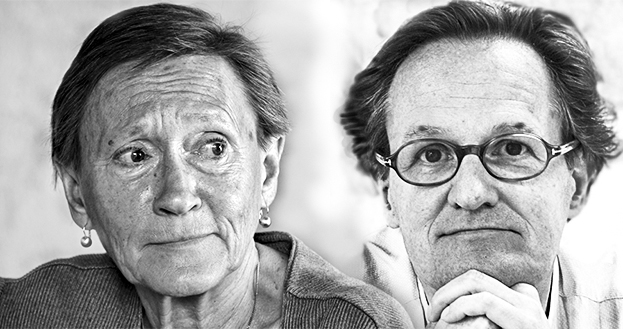
By Christina Spannar and Jan Oberg, TFF founders

Part 1 here

TFF was established on September 12, 1985. We think that it’s 30th Anniversary is a fitting occasion to reflect on what has happened in the big world and in our lives with the foundation.

It is also a piece of Lund’s research history in general and of peace research and education in particular.

Part 2

Weak aspects of TFF

• Being outside many networks and institutions – it has become more and more difficult to influence the world if you are small, independent and don’t accept governmental and corporate funds.

• A perception that the interest/commitment of TFF is out of sync with the sentiments of times, of the Zeitgeist. In spite of that we maintain the fundamental belief that peace is essential and that we can forget about the rest if major wars or nuclear exchanges take place.

• Too ‘academic’/theoretical to forge deeper, permanent links with public opinion and movements.

• Too ‘radical’ or ‘idealistic’ to be interesting to governments and most mainstream media.

• A constant very hard work load – resting on a small international group and on the founders in Sweden – vulnerability also in the perspective of us having gotten 30 years older.

• The struggle for funds getting more and more tough and we are much more vulnerable than, say, ten years ago. Being all-volunteer, we still have to pay the bills for what enables us to do things: the Internet, computers, travels to conflict areas, insurance, bank fees, fund-raising, phones, sending out mails, using social media, etc. 
The generosity of yesterday has been replaced by a ”stingy” attitude of being entitled to get things free in the affluent Internet-based society. This attitude implies that it is not my responsibility to finance peace, somebody else does (and the somebody else is never me). Few citizens seem to recognise that they are the taxpayers who de facto finance all the weapons and wars. 
The far majority of those who support us are idealists without particular means – while wealthy people for peace a far and few between.

TFF’s stronger sides

• We are still here, operating with amazing TFF Associates around the world who share the commitment to ‘peace by peaceful means’.

• We have remained faithful over all these years to the original ideals, not succumbing to go mainstream/politically correct to achieve more funds or appearing acceptable to the masters of war, i.e. government – neither by the way in Sweden nor Denmark.Read More »

Our 30 years with peace – And what happened to world peace? Part I

By Christina Spannar & Jan Oberg, TFF founders

Part I

TFF was established on September 12, 1985. We think that it’s 30th Anniversary is a fitting occasion to reflect on what has happened in the big world and in our lives with the foundation.

It is also a piece of Lund’s research history in general and of peace research and education in particular.

Motivation

The 1980s was a decade of gross changes in Europe, the struggle against nuclear weapons in particular.

Lund University was predominantly about education and single research projects – while TFF could be more of an experimental playground. We wanted to do truly free research and not negotiate with higher levels at, say, the university what to do where, in which countries to work and what to say to the media.

Peace has always been controversial and there were – and remain – enough examples of places that become ‘mainstream’ and routine – rather than experimental and radically ’alternative.’

What we did not know back in 1985 was that Lund University wanted to get rid of all inter-disciplinary academic endeavours – women, environmental, human rights and peace studies – and closed down the Lund University Peace Research Institute of which Jan had been the director since 1983, in November 1989.

Being a private undertaking

The HQ is the first floor of a two-family house in a villa area of Lund. Visitors, board members etc. have held seminars there, eaten and often stayed with us. Board members were colleagues and personal friends and new board members were recruited from Associates who were also personal friends, like-minded colleagues or mentors one way or the other.
Our children and other friends were often involved in the things TFF did – including printing newsletters in the basement, gathering them, putting them in envelopes and fix address labels.

Goals

The permanent top priority has been to promote the UN Charter norm that ‘peace shall be created by peaceful means’ (Article 1).
This was promoted through traditional book-based research and later field work – i.e. conflict analyses and mediation and peace plans – in conflict zones, but also through intense public outreach/education such as newsletters, media participation, press releases – and, from 1997, the Internet and then social media.

Secondly, we wanted to integrate theory and practice. While it is good to do basic research in the laboratory, what is peace research really worth if it is never applied to real life’s tough situations?

The first five years we did book projects like everybody else in the trade. But in September 1991 TFF went on its first peace mission to former Yugoslavia. It is safe to say that we were among the first to embark on that in-the-field philosophy and practice it – with all the problems and risks that it entailed.

Foundation and management

The word ‘foundation’ does not mean that we had an endowment to start out with – and funding has been a constant problem every day and year ever since. And getting worse over time.
But it meant flexibility and – being and remaining small – quickly adapting to a changing world.

Being our own and not part of Lund University was another advantage – and a drawback in terms of finding funds. TFF had to build its own reputation from scratch rather than piggyback on that of the university’s. It was quite tough but also more rewarding in the long run.Read More »

Latin America’s big setback

By Jonathan Power

It was Charles de Gaulle, France’s Second World War statesman, who said, “Brazil has a great future, and always will”. Under the benign presidency of the ex car metal worker, Luis “Lula” Inacio da Silva, the adage seemed to be banished. But now under his successor, Dilma Rousseff, the tag has stuck once again. Brazil is back to its old ways, albeit with a difference.

An economy going down hill, incompetent economic mismanagement and massive corruption are frightening investors away. Brazil is now suffering its biggest recession since the 1930’s Great Depression. The difference is that this time the safety net of financial support built for the very poor by Lula remains intact.

Brazil, Latin America’s largest economy, is having it especially bad but most of the other countries are doing not so well. The 2004-2013 decade was exceptional. Inflation which for the region was 1,200% came down to single digits and a strengthening of the tax base as economies grew facilitated a well-financed expansion of social spending.

Countries built up large foreign exchange reserves. This allowed them to have extraordinary access to external financing. There was an investment boom as economies grew at more than 5% a year, and some, like Brazil, Peru, Panama, Uruguay and Paraguay, exceeded 6%.

Even the great recession of 2009, triggered by the collapse of major US banks, only caused a brief slowdown thanks to the resilience of their economies.Read More »

The Korean peninsula: A view of the future

By Johan Galtung

Seoul

There was a big conference in 1972 in Kyoto, well over 40 years ago; that was my first effort, with thousands, millions of others. On the agendas for these countless encounters the U-word, “unification”, loomed high.

In Kyoto, I made a distinction between unifying the Korean nation by opening the border for projects beyond unifying families, and unifying the two states. Which one are we talking about?

The second is problematic if it means one state–and one president!–less. Could wait; from a human point of view unifying the nation has priority. Building on that a Korean Community with two states could emerge; building on that a Korean Federation with capital neither in Seoul nor in Pyongyang; building on that, maybe one day a unitary state.

I rejected any idea of one collapsing and the other taking over – “the German model”. Unification is symmetric, neutral, a nuclear-free UN-monitored Korean peninsula with non-provocative, defensive defense.

As such ideas emerged, about forty concrete cooperation projects were elaborated. One of them was a Peace Railroad running through the Koreas, connecting my wife’s Japan and my own Norway, in Western Europe. Could have happened but did not. China did it: the Silk Railroad to Madrid.

An important point became increasingly clear. The real conflict was not between North and South Korea, but between the USA and North Korea: the USA denying North Korea a peace treaty and normalization, hating the Democratic People’s Republic of Korea-DPRK for not having capitulated; working 60+ years for its collapse. Read More »

Reading Claudia Rankine on race

By Richard Falk

We white people have lots to learn about racism in America no matter how progressive our attitudes toward race. I realized this some years ago when I found Toni Morrison’s Beloved so grimly illuminating in depicting the cruelty experienced after the abolition of slavery by our African American fellow citizens left in a malicious shadow land of unknowing, a reflection of white indifference.

It made me abruptly realize that I had never effectively grasped the intensities of hurt and pain of even close black friends afflicted or threatened with affliction as a result of societal attitudes of hatred and fear that lie just below the surface, behavior socially conditioned to be ‘politically correct.’

White consciousness was preoccupied with the condemnation of hideous events that capture national attention, but remain largely unaware of the everyday racism that is the price African Americans of talent and privilege pay for ‘success’ when penetrating the supremacy structures of society that remain predominantly white.

I recall some years ago being picked up at the airport in Atlanta by a couple of white undergraduates assigned to take me to the University of Georgia where I was to give a lecture. On the way we got onto the subject of race, and they complained about tensions on their campus. I naively pointed out that the stars of their football and basketball teams were black, and since white students were fanatic collegiate sports fans at Southern universities, wouldn’t this solve the problem. I assumed that these black athletes who won games for the college would be idolized as local heroes.

The students taking me to the lecture agreed with my point, but claimed that the black athletes refused to socialize with whites, displaying an alleged ‘reverse racism’ that the white student body resented. In explaining this pattern of multi-culturalism to me, whether accurate or not I have no idea, these young Southerners did not pause to wonder whether this reluctance by campus blacks, including the sports stars, to mingle socially might have something to do with the history of race relations in the South, and not just the history but an of nasty earlier experiences of racism as well, and not just in the South, but throughout whole of the country, and that this was their reason for choosing to be racially aloof!

It is with such thoughts in mind that reading Claudia Rankine’s Citizen: An American Lyric (Greywolf Press, 2014) became for me a revelatory experienceRead More »

Living in the 21st Century

By Richard Falk

The following post is more personal than is my natural mode of communicating on this website. I hope it causes no offense. It is confessional to the extent of acknowledging my own surroundings of digital devices that while liberating in some respects are repressive in others. To sustain our freedom under these ‘postmodern’ conditions requires the rechristening of meditative intelligence (as distinct from the instrumental rationality that acted as wet nurse of the ‘modern.’

Ever since I read Claudia Rankine’s Citizen I have been haunted by the suggestive resonance of its opening line:

“When you are alone and too tired even to turn on any of your devices, you let yourself linger in a past stacked among your pillows.”

Of course, Rankine allows this quietness to evoke her anguishing memories of past subtle racist slights that are the hurtful daily experiences of embedded racism that has for centuries undermined the normative pretensions of ‘civilization,’ not only here in the United States, but globally. Recently, a series of police atrocities throughout America has reminded us ever so forcefully that the election of an African American as president did not mean the end of racism, but alarmingly, an ugly new beginning, an apt occasion for the emergence of Black Lives Matter. (You may listen to Rankine here, Editor)

It is the first part of Rankine’s sentence that speaks so simply, yet so responsively, to the circumstance of our 21st century reality, our struggles with loneliness while treasuring the self-discoveries that are uniquely dependent on reflective solitude.

What Rankine is telling us is that digital modernity has diminished our capacity to be creatively alone and sufficiently sensitive to the arts of self-discovery.Read More »

TFF PressInfo # 342 – The iron fist inside a velvet glove

By Jonathan Power

“1789 is an historic date but it is not an historic example”. The French Revolution, violent to its fingertips, began with the highest motives, led by the most inspired and determined of people, but descended step by step into its own self-created inferno where the revolution consumed its own children.

Violence begets violence and, as Martin Luther King said, “The means and the ends must cohere. We will never have peace in the world until men everywhere recognize that ends are not cut off from means, because the means represents the ideal in the making, and the end in process. And, ultimately, you can’t reach your good ends through evil means, because the means represents the seed and the end the tree.”

According Erica Chenoweth and Maria Stephan, writing in the August, 2014, edition of Foreign Affairs, “Between 1900 and 2006 campaigns of nonviolent resistance against authoritarian regimes were twice as likely to succeed as violent movements. Nonviolent resistance also increased the chances that the overthrow of a dictatorship would lead to peace and democratic rule. This was true even in highly authoritarian and repressive countries, where one might expect nonviolent resistance to fail.”

Critics of nonviolence are always swift to cite cases when non-violent campaigns were counterproductive – the student protests in Beijing’s Tiananmen Square in 1989 and the failure of the Arab Spring where non-violent protests were hijacked by extremists, as in Syria, or were self-sabotaged by their leaders who had no strategy for the long term, as in Egypt.

More recently in Ukraine the ferment unleashed by those protesting against the rule of President Viktor Yanukovych while achieving its aim of toppling him has been compromised by the infiltration of extreme rightists which, in turn, worked to provoke Russian military intervention in the east.

All such criticisms are right. But Read More »

Jimmy Carter: A life up and down

By Jonathan Power

“ The lives of all politicians end in failure”. So said Enoch Powell, a maverick former cabinet minister in the British government.

Of recent US presidents Jimmy Carter has not been alone in failure. Think of George W. Bush (Iraq war). Bill Clinton (Monica Lewinsky and a wasted last term). George H.W. Bush (messing up the economy and laying the foundation along with Clinton for the great economic crash of 2007). Ronald Reagan (missing the chance with Soviet president Mikhail Gorbachev to create the nuclear-free world that he offered). Jimmy Carter (driving out the Soviet army and thus initiating the war in Afghanistan, laying the groundwork for both Al-Qaeda and ISIS). Richard Nixon (Firing up the Vietnam War and had to resign in disgrace).

And now Barack Obama. Despite some important achievements he has allowed his flawed policy on Ukraine to lead to a dangerous confrontation with Russia.

Back to Jimmy Carter who, according to the man himself, appears to be dying.

I had a tangential responsibility for his election. Read More »

TFF PressInfo # 335 Greek debt and West-Russia-China-Japan

By Johan Galtung

The game is dirty and has lasted 70 years. It came with the idea of development as imitating, but not catching up, with the West, for all states, including the deluge of states due to decolonization.

The formula for big profit is simple: give credit to a country poor enough not to be able to pay it off quickly, yet not so poor that it cannot go on servicing the loan for years. To be worthwhile the project must be capital-intensive, like (air)ports and highways to the (air)ports for import-export, assembling cars–something for the rich. Investment to lift up people in misery, or ravished nature, makes no sense: the poor need very little capital and can only pay back in labor, whereas nature pays back but is not capitalized.

Ideally, the country asks for more credit to service the first, and a second, third loan is then offered at higher interest. Till the debt is non-sustainable; the debtor country is then squeezed dry.

Then comes the time for debt relief, provided the profit made on investment in debt exceeds the debt forgiven.

From Agence France Presse comes a study: Germany made € 100 billion on the Greek crisis since 2010 – amounting to 3% of the GDP – on the difference between interests paid to German banks and the interest they paid; from German banks to ECB 1%, to German banks from debtors, say, 6%.

Germany’s share of the total bailout package to Greece – with the latest for payment due August 20 – is € 90 billion, meaning a € 10 billion profit if Greece cannot be squeezed further. The money flowing into Greece is to keep banks, not people, afloat. And to benefit USA, France and the Netherlands, but to a lesser extent than Germany.

This is the way the Third World has been treated by the USA-based IMF and the World Bank; what is new is EU treating a fellow EU member like a Third World country (or worse).

Next in line is Ukraine, Read More »