TFF PressInfo # 306: Islam is not the problem. But keep your own house in order

By Jonathan Power

February 3rd 2015

The beheading of a Japanese journalist does not represent Islam. Saddam Hussein did not represent Islam. Bashar al-Assad does not represent Islam. Muammar Gaddafi of Libya did not represent Islam. The regular beheadings in Saudi Arabia for “crimes” such as adultery don’t represent Islam.

Likewise, the US dropping nuclear bombs on Hiroshima and Nagasaki didn’t represent Christianity. Nor did the torture practiced in Northern Ireland. Nor did the Buddhist-led atrocities against the Tamils of Sri Lanka represent Buddhism.

Nevertheless, it is probably true that in the late twentieth century a high percentage of the world’s violent conflicts took place inside the Muslim world or against non-Muslims. But that does not mean they were supported by a majority of Muslims. Indeed, I would surmise that they were approved by less than 1% of Muslims.Read More »

TFF PressInfo # 305: A theory of China

By Johan Galtung

Johan Galtung

2 February 2015 at the Penang Institute, Penang

A theory serves comprehension, prediction and identification of conditions for change. Seven such historical-cultural pointers will be indicated for China; using the West in general, and the USA in particular, for comparisons. The presentation draws on countless dialogues in China over 40 years, since 1973.

* China: in time, as dynasties; West: in space as empires.

Look at a histomap combining world history and geography, time and space: China shows up through 4,000 years as relatively coherent dynasties with complex transitions – and the West as empires–birth-growth-peaking-decline-fall, like the Roman, UK and now US empires – duration vs bubbles that burst; as China-centric vs hegemonic.Read More »

Bringing peace in Pakistan

By Jonathan Power


January 27th 2015

It looks like the recent slaying of 130 school children by rabid Islamic extremists finally has brought a halt to the long time policy of Pakistan facing both ways. Pakistan, because of policies developed over decades by its all-powerful army and its intelligence service, the ISI, has long played both ends against the middle.

On one end is the West, especially the US, trying to tug Pakistan into its orbit, so that it becomes a strategic partner in defeating the Afghan Taliban and its associates, and bringing peaceful democracy to Afghanistan. At the other end is what has been seen as the need to encourage and support the Islamic warriors in their effort to wrest a good slice of Kashmir away from India and, besides that, to make sure that Afghanistan under American tutelage doesn’t fall into the reach of Indian influence and thus threaten Pakistan’s deepest interests.

This clash of policies hitherto has been settled, say many, in favour of the militants, with the ISI for decades giving them arms, training and direction.Read More »

Pope Francis, Salman Rusdie, and Charlie Hebdo

By Richard Falk

Richard Falk

Prefatory Note
This post is a much modified piece published a few days ago in AlJazeera English, and republished elsewhere on line. As many have now done it tries to enlarge the context in which the Charlie Hebdo events are understood beyond a highlight film clip in ‘the war on terror.’ The alleged link between the Chouachi brothers and Al Qaeda of the Arabian Peninsula (AQAP) allows the attack on Charlie Hebdo to be experienced as the French 9/11, and with this a return of France to a status of post-colonial geopolitical relevance.
Without grasping the relevance of how the dominant treat the dominated within our societies and throughout the world, we are consigning ourselves to many repetitions of the private and public horrors experienced in France on January 7, 2015.

There is some common ground, but not much. The killings in Paris last week were horrifying crimes that expose the vulnerability of democratic societies to lethal vigilante violence, whether facilitated from outside or as a spontaneous expression of homegrown psychopathic alienation. Beyond this naked, morbid reality associated with the murder of the Charlie Hebdo cartoonists, police officers, and the supermarket hostages there is nothing but darkness, and in that darkness some dangerous monsters lurk.

We can be again thankful for the moral clarity of Pope Francis who a few days ago in the impromptu setting of a plane taking him from Sri Lanka to Manila shined a light upon the darkness. Unlike those who so ardently wielded the slogan “Je suis Charlie” the Pope understood that free speech without limits is an invitation to indulge the worst negative impulses that will then operate as viruses destroying the vital organs of the body politic.

What Pope Francis underscored was the impossibility of reconciling dignity with hurtful insults,Read More »

The irrelevance of liberal Zionism

By Richard Falk

Richard Falk

January 4, 2015

Frustrated by Israeli settlement expansion, excessive violence, AIPAC maximalism, Netanyahu’s arrogance, Israel’s defiant disregard of international law, various Jewish responses claim to seek a middle ground. Israel is criticized by this loyal opposition, sometimes harshly, although so is the Palestinian Authority, Hamas, and activists around the world. Both sides are deemed responsible in equal measure for the failure to end the conflict.

With such a stance liberal Zionists seek to occupy the high moral ground without ceding political relevance. In contrast, those who believe as I do that Israel poses the main obstacle to achieving a sustainable peace are dismissed by liberal Zionists as either obstructive or unrealistic, and at worst, as anti-Israeli or even anti-Semitic.

Listen to the funding appeals of J Street or read such columnists in the NY Times as Roger Cohen and Thomas Friedman to grasp the approach of liberal Zionism.

These views are made to appear reasonable, and even just, by being set off against such maximalist support for Israel as associated with AIPAC and the U.S. Congress, or in the NY Times context by comparison with the more conservative views of David Brooks (whose son currently serves in the IDF) who published a recent ‘balanced’ column lionizing Netanyahu, “The Age of Bibi” [Jan. 2, 2014].

Of all the deformed reasoning contained in the column, perhaps the most scandalous was comparing Netanyahu to Churchill, Read More »

The year 2015 – What are we in for?

By Johan Galtung

Johan Galtung

Three, maybe four dramatic, global processes are unfolding.

First, the West–particularly USA, Israel, France – fighting very violently and counter-productively to keep their grip on the world.

Second, Eurasia, spearheaded by Russia-India-China in BRICS (Brazil, Russia, India, China, South Africa) expanding and consolidating, successfully and nonviolently.

Third, Islam expanding and consolidating, partly by conversion to Islam, partly through the dream of a new caliphate, partly violently.

Fourth, Latin America and Africa in the old Third World expanding and consolidating, spearheaded by Brazil-South Africa in BRICS.

If you want to live drama, you have chosen the right year.

The basic conflict is the first against the other three; the declining against the emerging. After some time conflicts among the three will show up, particularly Islam with the other two.

Economically right now Read More »

TFF PressInfo # 304: Wisdom of expression

By Jan Oberg

Jan Oberg

My answer is simple: the issues surrounding the horrific attack on Charlie Hebdo disappeared so fast because the general Western reaction was ill-considered/phony and therefore unsustainable. But there is actually still quite a lot to be discussed.

Secondly, European politicians and media chose – quite uniformly for a professed pluralist society – to not discuss the possible causes. The more convenient interpretation was that the perpetrators were just madmen and people like that should be hunted down and eliminated (like IS in Syria and Iraq).

Without causal analysis we can more easily go straight for more “security”, intelligence, surveillance and more police and military in the streets – in short, symptom treatment.

Further, when we deny human beings any motives we de-humanise them and then they don’t deserve to be heard or treated as humans. Evil is always ‘the other.’

The attack on Charlie Hebdo was not an attack on the entire Western culture, democracy or freedom of expression as such. The perpetrators would hardly know such a concept.

It was an attack at one weekly magazine for what it had misused freedom of expression to do.

Misused?

Freedom and wisdom of expression can be combined. There are at least 4 reasons why we should be proud of the principle of freedom of expression and therefore be wise enough to not misuse it or make it a weapon against others. Read More »

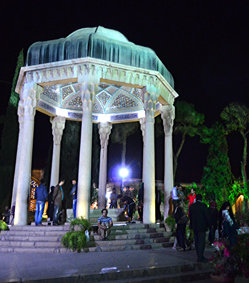
TFF PressInfo # 303: Visit Iran in 2015 and see it for yourself

By Jan Oberg & Farhang Jahanpour

January 23, 2018

It’s a civilization of its own, very diverse and immensely rich, proud and hospitable.

It’s a country for lovers of history, architecture, religion, classical or contemporary art, literature, films, nature and landscapes – and, most of all, fellow human beings.

The Iranians are easy to get in contact with anywhere you go, also no animosity against Westerners. They are eager to talk politics and culture and if you are open yourself you’ll soon find yourself at a family table. And the food is high quality, things taste nature more than industry.

You’ll get much more value for your foreign currency in Iran than in most other countries.

It is safe – as safe as any European country and much safer than the rest in the Middle East. It is comparatively cheap. You may obtain your tourist visa at the local embassy but also upon arrival. (Special procedure for U.S. citizens, though).

By just going there you’ll get a more balanced view of Iran than you can possibly get from your media.

You’ll build people-to-people bridges and gain mutual respect and – for sure – make friends. And – who knows? – make a little peace too.

So, we’ve put together just a few of links to a diversity of aspects of what the visitor is likely to experience – just to wet your appetite…

UNESCO World Heritage sites in Iran

Rick Steves – the most surprising country…

Life in the streets of Tehran

Scenary and landscapes

Why is Rumi the best-selling poet in the U.S.?

Tehran’s longest avenue

Persian cuisine

Isfahan – beauty and history

Panoramic views of Shiraz

Classical music

Dick Davis, author, “The Face of Love: Hafez and the Poets of Shiraz

Love and Pomegranates – Artists and Wayfarers on Iran

Life in Iran – An Australian journalists explorations

The luxurious Iranians

Yazd – centre of Zoroastrian culture

UNESCO world heritage – Tabriz Basar complex

Teahouses and coffee shopsRead More »

Misunderstood fundamentalism

By Jonathan Power

January 20th 2015

In his book “Faith and Power” Edward Mortimer, the former foreign affairs columnist for the Financial Times, when writing about Rishid Rida, the great Islamic intellectual of the first half of the twentieth century, asked himself if Rida was “fundamentalist” since he was an admirer of the militant Wahhabi puritans of Saudi Arabia. “I do not think so”, concluded Mortimer, “although I must admit that the precise meaning of this word when used in the context of Islam eludes me.”

At a time when the West is again aroused – because of the attack on Charlie Hebdo – by the actions of extreme Islamic fundamentalists we should note that it is astonishingly difficult to define fundamentalism either in Islam or Christianity. If it means “an effort to define the fundamentals of one’s religion and a refusal to budge from them once defined then surely anybody with serious religious beliefs of any sort must be fundamentalist in this sense”.

In Christianity there are many strains of fundamentalism. The Catholic Church, which abhors Enlightenment liberalism, is clearly fundamentalist when it comes toRead More »

TFF PressInfo # 302: Interview with “Iran Review” – and a word about intellectual freedom

By Jan Oberg

Jan Oberg

Lund, Sweden, January 21, 2015

I visited Iran for a third time in December last year, participating in the international UN-endorsed conference, WAVE – World Against Violence and Extremism.

I gave interviews to some ten agencies and media but the longest was this exclusive one by a passionate and very professional 24-year old Iranian journalist, Kourosh Ziabari, for the esteemed Iran Review.

The distorted image of Iran

TFF has been engaged with an in Iran the last three years. We believe that the general image in Western media – covering almost only Iran’s nuclear program, human rights violations and Iran as a threat to the world – is neither objective nor fair.

It conveniently omits the harmful effects on the Iranian society of Western policies since the days of the US-UK coup d’etat against the democratically elected President of Iran, Dr. Mossadegh, in 1953.

Whether intended or not, this type of media coverage risks contributing to deeper conflict and legitimise future violence – rather than mutual understanding and peace.

It is therefore imperative to go there and see for yourself. More about that in the next TFF PressInfo.

What TFF tries to do in Iran

TFF has these aims with its work in Iran:

a) Fact-finding: to simply learn first-hand about its history, culture, people and how they think on all levels; by traveling around and interviewing people, as many and different as possible.

b) To influence the image in the West of IranRead More »