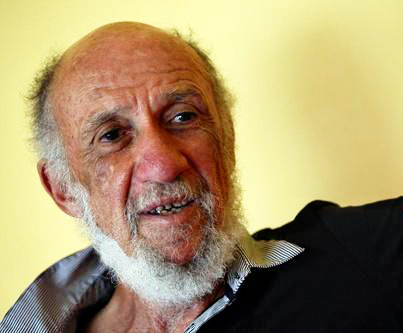
Remembering Yoshikazu Sakamoto 1927-2014 – also former TFF Associate

By Richard Falk

Richard Falk

TFF wants to express its gratitude to Yoshikazu Sakamoto who served for many years as TFF Associate.

Prefatory Note

This post is dedicated to my remembrance of Yoshi Sakamoto who died recently. Yoshi was a deeply valued friend and an important public intellectual in Japan who exerted a strong influence on the post-war generation. His political orientation, rejecting extremes of right and left, while questioning the militarist premises of the Cold War and Japan’s willingness to become America’s Asian poodle, gave him a distinctive political profile.

I am sharing these words of appreciation, and hope that anyone from Japan who comes across this text will contact me, especially if they have a way of putting me in touch with either Yoshi’s family or Japanese media. I would like to believe that ‘an American appreciation’ of Professor Sakamoto would be of interest to those who knew and admired him.

I first met Yoshi in the mid-1960s when he came to visit me at Princeton, expressing his concern about the Vietnam War and knowing of my anti-war activism. We bonded quickly and marched in a peaceful demonstration in New York City a few days later, and somehow managed to keep in fairly consistent contact until Yoshi’s death on October 2nd.
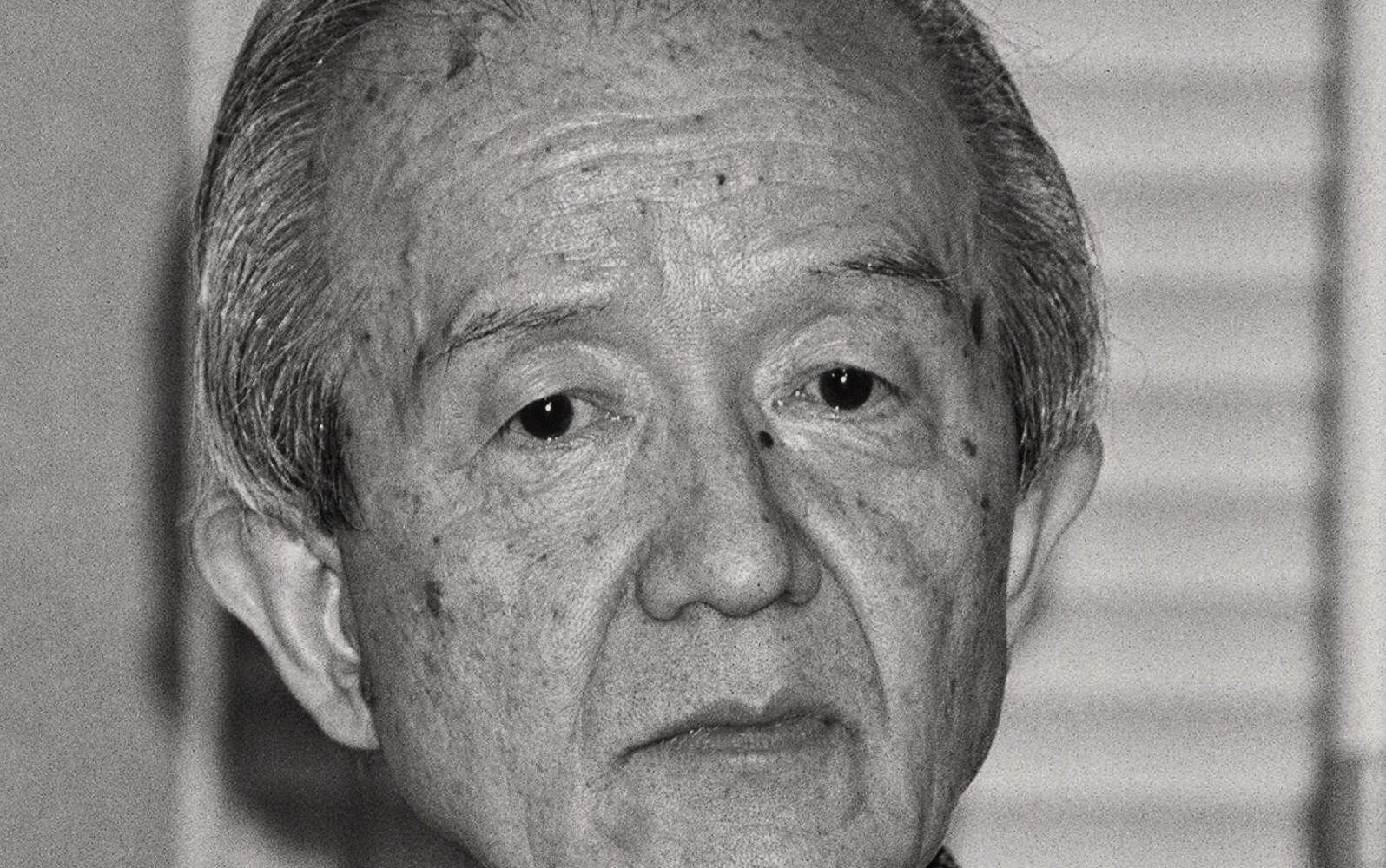

Yoshikazu Sakamoto 1927 - 2014
Read More »

Neigbours ditch India, bat for China

By Shastri Ramachandaran

Prime Minister Narendra Modi may have been the toast at the high tables from BRICS and ASEAN to G-20 and the East Asia Summit, but nearer home, in the neighbourhood, few are impressed by his 56-inch chest. The stark truth that India does not draw much water in the region was driven home unmistakably during the 18th SAARC Summit in Kathmandu.

Continued here…

Blowback of the foreign jihadists?

By Jonathan Power

Over 15,000 foreign jihadists from 80 countries are believed to be fighting alongside militants in Syria, the CIA says. The Syrian war is estimated to have mobilized more European Islamists than all the foreign wars of the last 20 years combined.

What to do when the jihadists try to return home?

Many of them might be trained to wage jihad against their home countries. The danger is, as Daniel Byman and Jeremy Shapiro write in the current issue of Foreign Affairs, “the returned fighter seasoned by battle acquires a new authority among his old friends and followers on social media – a street cred that allows him to recruit and radicalize others and send them into the fray.”

On the other hand because of the use of social media where the returnee sometimes brags about his exploits and adventures it becomes easy for the intelligence services both to track him down and know who he is trying to reach.

The threat posed by returning jihadists is too often hyped by both Western politicians and the media. Read More »

Civilization clashes Occident-Orient?

By Johan Galtung

Johan Galtung

Kuala Lumpur
IAIS-International Institute of Advanced Islamic Studies & IIUM-International Islamic University of Malaysia

Yes, Islam and Christianity are on old Buddhist lands; with Muslim-Buddhist clashes in Sri Lanka, Myanmar.

Occident is the big space of the three Abrahamic religions Judaism-Christianity-Islam, with the secularisms of the first two, excluding each other. Indonesia-Philippines are in the Occident.

Orient is a big space spanned by Buddhism, which does not exclude others, not even violent state power; hence more complex. There are pure Buddhist countries: Sri Lanka, Thailand, Myanmar, Cambodia, Laos, Vietnam; and mixed Buddhist countries, with other non-exclusive world views: in China with Daoism-Confucianism, in Japan with Kami shinto-Confucianism, and in Korea with Confucianism and Christianity.

The world religioscape started with Read More »

Why foreign military intervention usually fails in the 21st century

By Richard Falk

Richard Falk

When Nehru was taking a train on his return to India after studying abroad he read of the Japanese victory over Russia in the 1904-05 Russo Japanese War. At that moment he had an epiphany, realizing the hitherto unthinkable, that the British Empire was vulnerable to Indian nationalism. An earlier understanding of the colonial reality by native peoples generally subscribed to the postulates of hard power primacy making it futile or worse to challenge a colonial master, although throughout history there were always pockets of resistance.

This soft power attribute of colonial hard power by way of intimidation and a façade of invincibility is what made colonialism efficient and profitable for so long at the great expense of colonized peoples.

A traditional colonial occupation assumes that the foreign domineering presence, while oppressive and exploitative, refrains from ethnic cleansing or genocide in relation to the indigenous population.

When settler versions of colonialism emerged in relation to the Western Hemisphere and regions occupied by traditional peoples that were without either population density or some kind of industrial capability, the occupier managed to achieve enduring control Read More »

Obama’s report card

By Jonathan Power

Will the real Barack Obama be allowed to stand up? The New York Times’ columnist and Nobel Prize winner for economics, Paul Krugman, writes in “Rolling Stone, “Obama has emerged as one of the most consequential presidents in American history”.

You wouldn’t know this if you observed the swing towards the Republicans in the recent Congressional elections – the same Republican Party that has implemented a scorched-earth policy against many of Obama’s initiatives.

The truth is he’s made more of a go of it than much of the media has reported.

He came into power inheriting the worst financial crisis since the Great Depression of the 1930s. He has emerged as the only full-bloodied KeynesianRead More »

Malaysian Territories: Security and Sovereignty

By Johan Galtung

Johan Galtung

Kuala Lumpur

Malaysia has recently experienced maximum insecurity for two extra-territorial sovereign territories: Malaysian Airlines flights MH370 to Beijing and MH17 from Amsterdam. Flights are subject to air traffic rules, but sovereignty was deeply insulted for MH17–possibly also for MH370–and so was the security of the close to 600 on board: dead, possibly killed. The finding so far is that MH17 was hit by “numerous high energy objects”, which–looking at the photos of the cabin wall–aka “machine gun fire”; rather than “hit by a BUK rocket”. MH370: a race to locate the wreckage, by submarines, surface vessels; between China to find, and Australia to destroy, any evidence of crimes?

Intentional destruction of planes entails identification of the perpetrators whoever they are; arraigning them into court and if found guilty punishing them for mass murder. Taking place in international space both should be international, like the International Civil Aviation Organization and the ICC-International Criminal Court. For MH17 Malaysia used Netherlands for the investigation and may prefer Malaysia for the adjudication; two unfortunate decisions. We are dealing with one, possibly two, cases of aggression on civilian planes, themselves incapable of aggression; hence no case for self-defense. The cases are clearly criminal.

So much for space. Conventional borders are on land, sea (EEZ-Exclusive Economic Zone aka Economic Exclusion Zone, between EEZs) and in the air; traditionally defended by land, sea, air military forces against insults by other states, and by police for insults by individuals such as smuggling, drugs, kidnapping, illegal immigration and fishing. The borders are territorial, and the military is focused on national territory. Check out: are there problems anywhere, even conflicts, disputed claims? How will they evolve? Diagnosis, prognosis, and if needed, therapy; standard peace research approaches.Read More »

Putin’s Media?

By Jonathan Power

Moscow, November 18th 2014.

The English language “Moscow News” newspaper doesn’t worry much about censorship. It goes for the jugular on a regular basis. But it is doubtful if President Vladimir Putin gives it a thought. Its audience is almost entirely expatriate businessmen, diplomats and journalists.

For the Russian-language papers and broadcasting channels it is a different story. Over recent years the state has taken over more and more. Still there are chinks of light- sizeable ones, although admittedly Putin could shut these off if he wanted to. One of these is the internet, which suffers only from the censorship of a handful of personal sites and would be impossible to stifle completely given the way “close-downs” can be circumvented.

A contributor to The Moscow News made a good point: Read More »

The Future of Mediation

By Johan Galtung

Johan Galtung

Ludwigsburg, German Mediation Congress

Dear Colleagues; the future of mediation is to make ourselves redundant by spreading a conflict solution culture at all levels of social organization, enabling people to handle conflicts themselves. There will be counter-forces from professional mediators to monopolize the job and countercounter-forces from others to become ever better, to be ahead. The latter will win.

Model: the health professions.

Incredible gains were made in human health enabling people to take better care of their bodies: protection against contagious diseases through hygiene, washing hands, brushing teeth; keeping fit with adequate food, water, moving-walking –but care with jogging, unnatural, in the direction of a hospital– against the climate through adequate clothing and housing; against sepsis in wounds adequate cleaning: a minimum of health education. More than the complexities of surgery this gave us 25 more years of life.

For children and adolescents: watch the pathogens bringing illness from the outside as micro-organisms and violent encounters, shocks, excessive heat and cold, fire. After that come structural diseases–malignant tumors, cardiovascular, mental disorders–also rooted in the inside, with genetic predispositions. Too little adequate food and exercise; too much smoking, alcohol and other drugs can be handled with some will to get better. Equally important: an overload of stress and strain, problems and conflicts not handled: our task. Physicians have shared with people washing hands and brushing teeth as hygiene; it is our task to share conflict hygiene with everybody.Read More »

TFF PressInfo # 292: Brisbane – A show of Western weakness

By Jan Oberg

Jan Oberg

No matter what you may think of Putin and Russia this is simply not the way international politics should be conducted, particularly not at the personal level. If it wasn’t an offence to children, one would aptly characterise it as childish behaviour.

Western leaders ignored a brilliant opportunity to meet face-to-face with Vladimir Putin and move forward towards mutual understanding instead of signalling that they want a new Cold War.

Western leaders tell us that Russia is a ”threat to the world”. That obviously serves other purposes because you don’t bully someone you genuinely fear.

The G20 Brisbane should be remembered for its show of Western leaders’ personal display of weakness and conflict illiteracy.

Pummelled Putin punching bag

CNN reports that, during the meeting, Putin took ”pummelling” and was treated as a ”punching bag” by Western leaders from he set foot on Australian soil where his Australian host had sent a deputy minister of defence to receive him.

The Guardian reports that the Russian president approached Canadian Prime Minister Harper with his hand outstretched. Harper reluctantly shook it, then said “Well I guess I’ll shake your hand, but I only have one thing to say to you: you need to get out of Ukraine.” ”Bold words” – media called it.

Footage shows Putin sitting alone at a lunch table – like a naughty school boy put in the corner as by his teachers.

President Obama said that we are ”opposing Russia’s aggression in Ukraine which is a threat to the world as we saw in the appalling shoot down in the MH-17”.Read More »