Get out of Afghanistan

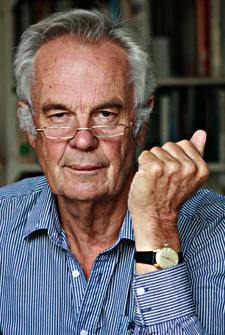
By Jonathan Power

August 29, 2017

It’s the most repeated maxim in all the reporting on Afghanistan: “The Americans have the watches, the Taliban have the time”.

Dead right! This is America’s longest war ever, 16 years and counting. President Donald Trump, admitting he was reversing his campaign call for pulling out, has now decided to stay in, sending to Afghanistan another 3,900 troops to reinforce the 8,400 there now.

Trump doesn’t claim it will do the job of defeating the Taliban. In fact he lays out no long term strategy at all. It’s not difficult to imagine that in a decade the same stalemate will exist.

President Barack Obama, blind-sided by the generals, he confided later, pumped up the numbers to 100,000. Before very long, Obama came to realize that even if he did a Lyndon B. Johnson and sent in half a million troops it would end up as it did in Vietnam with stalemate.

He ordered the troop numbers down to their present total, the minimum to secure Kabul and provide training for the Afghan army. Unanswered was why, after 16 years and more than $120 billion dollars spent, the Afghan army wasn’t trained already. (One could ask the same question in Iraq.)Read More »

Charlottesville Through a Glass Darkly

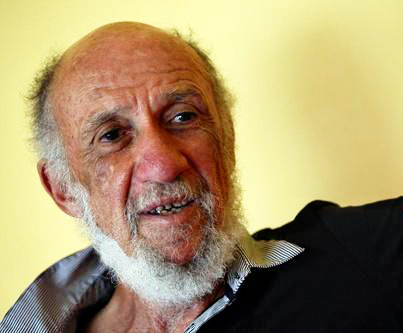
By Richard Falk

I suggest that Zionists fond of smearing critics of Israel as ‘anti-Semites’ take a sobering look at the VICE news of the white nationalist torch march through the campus of the University of Virginia the night before the lethal riot in Charlottesville.

In this central regard, anti-Semitism, and its links to Naziism and Fascism, and now to Trumpism, are genuinely menacing, and should encourage rational minds to reconsider any willingness to being manipulated for polemic purposes by ultra Zionists.

We can also only wonder about the moral, legal, and political compass of ardent Zionists who so irresponsibly label Israel’s critics and activist opponents as anti-Semites, and thus confuse and bewilder the public as to the true nature of anti-Semitism as racial hatred directed at Jews.

There must be less incendiary ways of fashioning responses to the mounting tide of criticism of Israel’s policies and practices than by deliberately distorting and confusing the nature of anti-Semitism.

To charge supporters of BDS, however militant, with anti-Semitism dangerously muddies the waters, trivializing hatred of Jews by deploying ‘anti-Semitism’ as an Israeli tactic and propaganda tool of choice in a context of non-violent expressions of free speech and political advocacy, and thus challenging the rights so elemental that they have long been taken for granted by citizens in every funcitioning constitutional democracy.

It is worth recalling that despite the criticisms of BDS during the South African anti-apartheid campaign, militant participants were never, ever smeared, despite being regarded as employing a controversial approach often derided as counterproductive in politically conservative circles.

And of course it is not only Zionists who have eaten of this poisonous fruit. Read More »

Please, Sounds Not Noise

By Jonathan Power

Everyone has their favourite sounds – a ball on a cricket bat on a summer’s afternoon, birds singing, waves breaking on the beach, the coffee pot perking on the stove, children playing scoobydoo.

Mine are the quiet sounds of the English Lake District – William Wordsworth’s:

“A flock of sheep that leisurely

pass by one after one;

the sound of rain and bees

murmuring; the fall of rivers,

wind and lakes, smooth fields;

white sheets of water, and pure sky.”

Noise is less and less sweet sounds. It is cars and trucks, airplanes and builders, canned music in cafes, a symphony playing an atonal concerto. Read More »

Welcoming the Fascists to Charlottesville

By David Swanson

Here is the original: Welcoming the Fascists to Charlottesville

August 10, 2017

I have mixed emotions about the fact that I’ll be missing the latest big fascism rally here in Charlottesville, because I’ll be elsewhere participating in kayak trainings for an upcoming Flotilla to the Pentagon for Peace and the Environment.

I’m delighted to miss the fascism and the racism and the hatred and the gun-toting lunacy. I’m sorry to miss being here to speak against it.

I’m hopeful that there might be something resembling a disciplined nonviolent and nonhateful opposition presence, but strongly suspect that a small number of violent and hateful opponents of racism will ruin that.

I’m thrilled that taking down a racist war monument has gone mainstream. I’m depressed that, even though the legal delay in taking it down is based on its being a war monument, one side wants it down for being racist, the other side wants it up for being racist, and everybody is perfectly happy to pack the town with war monuments.

I dread the possibility of hearing that the racists again chanted “Russia is our friend!” meaning that they believe without evidence that Russia corrupted the U.S. election and they are grateful for it, but I’m hopeful that they have moved on to other bizarre chants — though my hope is minimal that anyone might chant “Russia is our friend” and mean by it that they’d like to build peace and friendship between Americans and Russians.

As I’ve written in the past, I think ignoring the racists and their rallies is wrong, and I think confronting them with a hostile shouting match is wrong. Speaking out in favor of love and sanity and understanding is right. We will again this week see some of each of those approaches. We’re also likely to see another abuse of power by a militarized police force. (Remember when Americans used to think of the police as the most prominent violent racists? When was that, about a month ago?)

The inclination to ignore the racists and hope they’ll fade away into history like trials by ordeal or dueling is strong. Judging by popular social norms and their dwindling membership, the KKK seems to be on the way out. Why give them or their suit-and-tie allies any attention that could help promote them?

Well, for one thing, violent racism is not on the way out if we’re judging by presidential elections, hate crimes, police crimes, the prison system, the choice of communities to run gas pipelines through, or many other factors. And the only way my comment on “social norms” in the previous paragraph makes any sense is if we write off the generally accepted bombing of seven dark-skinned Muslim nations as somehow non-racist.

A truly nonviolent approach toward people who believe they are taking a stand for justice as they perceive it is not a protest but an invitation. Not long ago, in Texas, a group planned an anti-Muslim protest at a mosque. A violent anti-anti-Muslim crowd showed up. The Muslims from the mosque placed themselves between the two groups, asking their would-be defenders to leave, and then inviting the anti-Muslim demonstrators to join them at a restaurant to talk things over. They did so.

I’d love to see skilled mediators and others of good will and good heart extend an invitation to the racists visiting Charlottesville to come unarmed to discuss in small groups, without cameras or audiences, what it is that divides us. Might some of them recognize the humanity of those they scapegoat if some of us recognized the injustices they’ve faced or the unfairness they perceive in affirmative action or in the acceptability of “whites” only as a topic for insults, not as a source of pride in the manner permitted all other racial and ethnic groupings?

We live in a country that has made its biggest social project war, a country that has concentrated its wealth beyond medieval levels, a country that consequently experiences incredible levels of unnecessary suffering exacerbated by awareness of its unnecessity and unfairness. Yet what we have of social supports for education, training, healthcare, childcare, transportation, and income is distributed in non-universal, divisive manners that encourage us to fight among ourselves. The KKK members who came to Charlottesville last month, and most of the racists who will show up this week, are not wealthy. They’re not living off the exploitation of workers or prisoners or pollution or war. They’ve just chosen a particularly harmful object for their blame, as compared with those who blame the Republicans or the Democrats or the media.

When they come to condemn us for seeking to remove a statue, we shouldn’t look down at them like grand generals astride monster-sized horses. We should welcome them to explain themselves.

Continue reading here…

Nuclear sabre rattling with North Korea

By Jonathan Power

Does President Donald Trump (aka “Fire and Fury”) know what a nuclear war would be like?

I ask the question because President Roland Reagan confessed he did not until he decided to look at some movies (once an actor, he was a cinema man), like “On the Beach” that depicted a nuclear war. The exercise changed his thinking and he became an anti-nuclear weapons militant. Together with Soviet President Mikhail Gorbachev they cut their nuclear stockpiles sharply.

They also came near an agreement to destroy all their nuclear weapons.

The blasts at the end of the Second World War in Hiroshima and Nagasaki can now be repeated hundreds of thousand times. The remains would not just be the broken arches of the Caesars, the abandoned viaducts and moss-covered temples of the Incas, the desolation of one of the pulsating hearts of Europe, Dresden, but millions of square miles of uninhabitable desolation and a suffering which would incorporate more agony than the sum of past history.

It would be a time when the living would envy the dead and it would be a world which might well have destroyed the legacy of law, order and love that successive generations have handed over the centuries to one another.Read More »

How CIA and Allies trapped Obama in the Syrian Arms Debacle

By Gareth Porter

July 27, 2017

Last week a Trump administration official decided to inform the news media that the CIA program to arm and train anti-Assad Syrian forces had been terminated. It was welcome news amid a deepening U.S. military commitment reflecting the intention to remain in the country for years to come. As my recent article in TAC documented, the net result of the program since late 2011 has been to provide arms to al Qaeda terrorists and their jihadist and other extremist allies, which had rapidly come to dominate the military effort against the Assad regime.

Continue reading here…

End of Nuclearism or the End of the World: Utopian Dreams, Dystopian Nightmares

By Richard Falk

We are living amid contradictions whether we like it or not, driving expectations about the future toward opposite extremes.

Increasingly plausible are fears that the ‘sixth extinction’ will encompass the human species, or at least, throw human society back to a technology of sticks and stones, with a habitat limited to caves and forests.

This dark vision is countered by gene-editing designer promises of virtual immortality and super-wise beings programming super-intelligent machines, enabling a life of leisure, luxury, and security for all.

Whether the reality of such a scientistic future would be also dark is a matter of conjecture, but from a survival perspective, it offers an optimistic scenario.

On political levels, a similar set of polar scenarios are gaining ground in the moral imagination, producing national leaders who seem comfortable embracing an apocalyptic telos without a second thought.

The peoples of the world, entrapped in a predatory phase of global capitalism, are using their democratic prerogative to shut down dissent, rationality, and science. Read More »

Living in Dystopian Times

By Richard Falk

Prefatory Note
The text below is drawn from a talk given at the Spring Festival of the Arts in Beirut, Lebanon on 15 June 2017. Comments welcome.

How can we understand the present unfolding world order, with special reference to its relevance for developments in the Middle East? In my view a fundamental reversal of political expectations has taken place that calls for a new assessment of what is going on, and where the region and the world seem to be heading.

Twenty-five years ago there were three widely held beliefs about future trends on a global level: the assured preeminence of the United States; the continuing globalization of the world economy; and the expanding democratization of national governance arrangements.

It was also assumed that these trends were more or less descriptive of regional realities, including the Middle East.

Each of these trends that seemed so descriptive 25 years ago now seems to be completely out of touch with what is happening around us that is very disappointing when compared with earlier expectations, no where more so than in the Middle East.

These disillusioning changes of perception are contributing to a growing anxiety about what the future portends for all of us.

In addition to these changes of expectation as to international behavioral patterns, there exist a cluster of deeper tensions that concern the very nature of the human condition, extending to challenges directed at the sustainability and quality of life on the planet.

One unfortunate consequence of the preoccupation with these disturbing recent international political realities is that much needed attention is diverted away from these more fundamental issues of an ecological, technological, and cultural character.

As an American, I am especially conscious of the enormous and costly diversionary impact that the Trump presidency is having in weakening the understanding and planning needed if humanity is to have any realistic chance of coping with these emerging threats of great magnitude that have never been confronted in the past.

The most serious menace posed by Donald Trump, who is most accurately regarded as the first right-wing populist tweeting demagogue of the digital age, is his extraordinary talent to shift the conversation from the awkwardly significant to the banal trivial.

He is exerting a great influence on public discourse not only in America but in the world, especially by diluting our perceptions of crucial issues affecting the human species as a whole, including climate change as connected to the related decline of biodiversity, automation, robotics, artificial intelligence, and the destabilizing effects of these technologies of the digital age especially when applied to security arrangements and the broad spectrum of societal policies bearing on individual and collective human wellbeing.

Under the weight of these threats it is not surprising that a dystopian moment is beginning to dominate the cultural imagination.

It discloses itself through a fascination with post-apocalyptic films and an interest in older literary dystopias such as Huxley’s Brave New World, Orwell’s 1984, and Margaret Atwood’s The Handmaiden’s Tale. These books that imagined a future that is in some respects our present are being widely read and discussed as if guidebooks to a set on conditions that were not anticipated.

Within the American political space the fragility of American democracy was prefigured in Sinclair Lewis’s It Can’t Happen Here as well in scary premonitions of the imminence of digital age fascism put forward in the recent radical feminist post-apocalyptic novel, The Book of Joan (2017) by Lidia Yuknavitch.

Also indicative of the foreboding quality of the prevailing Zeitgeist is a bestselling booklet that is a collection of identifying markers of tyranny by the prominent historian, Timothy Snyder, with a deliberately provocative title and a pedagogical rationale, On Tyranny: Twenty Lessons from the Twentieth Century (2017).

This ‘dystopian moment’ is reinforced by the absence of positive scenarios of the future, and the dismissal of the utopian imagination as worse than irrelevant because it allegedly created receptivity to promises that when translated into political reality produce totalitarian nightmares.

In effect, utopias, correctly understood, have themselves become in these dark times a disguised form of dystopia.

A recovery of societal confidence is a key precondition of envisioning a better future. Its loss is one dimension of the crisis confronting humanity at this time, and these days such failures of moral and political imagination are generally overlooked in the public sphere that is obsessively focused on the latest daily episode in the Trump political soap opera.

Naomi Klein reminds us in a recent interview, “Trump is not the crisis but the symptom of the crisis.” The point is that we must make the effort to grasp the social and political forces that gave rise to Trump and Trumpism. Klein also insisted that the negativity of progressive thinking in recent decades has had little political traction because it fails to present a positive alternative to the angry negativity of right-wing populism that targets the established order.

Klein’s new book has the title No Is Not Enough: Resisting Trump’s Shock Politics and Winning the World We Need.

Her text impressively couples a necessary critique of Trump’s pernicious leadership with an affirmative vision of how to move the political process in emancipatory directions. Read More »