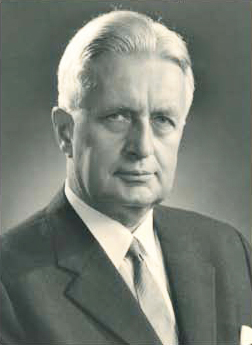
What was history about? Look at the Histomap

By Johan Galtung

Johan Galtung

John B. Sparks made a histomap in 1931—updated in 2010 (Metro Books) – a long, vertical chart covering “peoples and nations for 4,000 years”.

Time, history, is on the vertical axis, listing when of events and where in the space of peoples and nations. The chart starts with the Chinese, the Indians, Amorites (Babylon), Aegeans (Minoans and Mycenaeans), Hittites (Anatolia), Iranians and Greeks, goes on to the Romans, the British, the Huns (Mongols) and ends with Latin America, Europeans West and East (the EU is absent), the Middle East, sub-Sahara Africa, Russians and Americans, Asia as India, China and Japan; each part proportionate to their significance at the time. Debatable.

But let us focus on something crucial: the shape of the “peoples-nations” bubbles in world history, from a beginning to an end?

By and large exactly like that: a birth somewhere in this Einsteinian timespace, and a death. Two points, and between them: growth-maturity/flourishing-decline and fall. Expansion to a maximum, and contraction to a minimum. The law of anything organic? Given that they often thought they were forever, gifted with eternal life, history is about great expectations, glories–and great traumas.Read More »
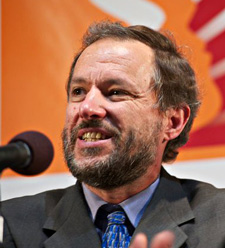
Netanyahu’s ugly Gaza game

By Stephen Zunes

The murder by unknown assailants of three Israeli teens who were members of an Israeli settlement in the occupied West Back would normally have been treated by both sides as simply another senseless loss of innocent young life experienced too often by Israelis and Palestinians alike. But the right-wing Israeli government took advantage of the tragedy to whip up ultra-nationalist sentiments, engage in a new wave of repression in the occupied West Bank, launch heavy mortar attacks and air strikes against civilian targets in the besieged Gaza Strip, and now to threaten all-out war.

This latest round of violence came on the heels of failed peace negotiations in which the Palestine Authority agreed to unprecedented concessions, including accepting a settlement in which their state would be demilitarized and would encompass just 22 percent of historic Palestine, militias would be dismantled, Israeli and international forces could guard all borders, Jerusalem would be shared as both nations’ co-capital, 80 percent of Israeli colonists would be allowed to stay in their illegal settlements, and the Palestinians would renounce the right of return of refugees expelled from their homes during Israel’s 1947-49 war of independence.Read More »

Tormenting Gaza

By Richard Falk

Prefatory Note:
The Israeli military operation, code name Operation Protective Edge by Israel, being carried out in the Gaza Strip continues, and seems poised to mount a ground attack that will further intensify the suffering of the Palestinian people, and lend additional credibility to the accusation of ‘collective punishment,’ both a grave breach of international humanitarian law and a crime against humanity.
The article below is a somewhat edited re-publication of an opinion piece published in AlJazeera English several days ago at the start of Operation Protective Edge.

For the third time in the last six years Israel has cruelly unleashed the full fury of its military machine against the defenseless 1.7 million people of Gaza, inflicting heavy civilian casualties and further devastation on the long besieged and impoverished Gaza Strip.

With cynical disregard of the realities of this latest one-sided confrontation between Israel and Palestine, instead of condemning such recourse to massive violence as ‘aggression’ that violates the UN Charter and fundamental international law principles, the reaction of Western diplomats and mainstream media has so far perversely sided with Israel, citing the bland rationalization repeatedly stressed by Netanyahu that ‘every nation has the right to defend itself.’

And so it does, but not by way of aggression!

From the UN Secretary General to the President of the United States, the main insistence has been that Hamas stop must all rocket attacks while Israel is requested ever so politely to show “maximum restraint.”Read More »

Does Ukraine have a future?

By Jonathan Power

When one sets out to answer the riddle about the future of Ukraine the answers that come depend to some extent on how far back one goes, but even if history casts a long shadow it is the events of the last half year, shaped by young demonstrators, mobs and militias, that dominate the narrative.

One can go back to the time of Rus’ when in the tenth century the Orthodox Church made Ukraine and Russia one. Or one can go back to the Soviet Union of which Ukraine was an important part.

One can go back to the end of the Soviet Union when three men, including Boris Yelstin, had a drunken cook-out in the woods and decided to give Ukraine its independence.

One can go back to the Orange Revolution ten years ago when true democracy won out only to be undermined by crude politicking and corruption.

Or one can go back to February this year when politically innocent protestors – rather like those in Egypt – gathered in large numbers in Kiev’s main square – only to be out-maneuvered by fascist-inclined militants who violently precipitated the final, violent, showdown that ousted a democratic elected president, Viktor Yanukovych, who could have been voted out next January when his legal term expired. As in Egypt the hardliners markedly increased their influence, the last thing the “innocent” expected.Read More »

Aage Bertelsen (1901 – 1980) – Danish educator for peace

By Jan Oberg & Johan Galtung*

Lund and Kuala Lumpur, July 2014

Introduction

He was a tall man and a great man, a visionary, pacifist, civil resister, educator and philosopher. He took life more seriously than most and he could be playful and fun like a child. His life’s guiding principle was ”Engage in your time!” and while he wrote and talked a lot he also did it. His name was Aage Bertelsen, he was born in Denmark in 1901 and died on August 15, 1980.

Bertelsen’s imprint on history is two-fold. First, with his wife Gerda he was a prime mover of one of the groups, the Lyngby Group, which organised the rescue of altogether 7.220 Danish Jews into safety in Sweden in October 1943 during the German occupation of Denmark – more here. The Lyngby Group – Lyngby is north of Copenhagen – got about 1.000 of these in safety by organising their nightly transport onboard small fisher boats over the Sound between Denmark and Sweden.

In this he deserves a place in international contemporary history for its humanity, civil courage and as an example of non-violent struggle against occupation.

Secondly, Bertelsen was an educator of and for peace. His life work educational efforts included his family and friends, his pupils over 22 years at the Aarhus Cathedral School in Aarhus, Denmark, the general public as well as national and international leaders.

He lived in pre-Internet times and very little is publicly available today about this renaissance man. From two rather different, but compatible, perspectives we’ve taken it upon us to remind the world about him – friends and colleagues of his as we happen to be.

Headmaster Aage Bertelsen in 1961 Photo: Elfeldt, Copenhagen


Why now, over 30 years after his death? Read More »

Harsh incivility in defence of Israel

By Richard Falk

Blog despair

Richard Falk’s blog “Global Justice in the 21st Century”

Once again I feel deeply frustrated by the lack of civility in the flow of comments on this website, especially relating to Israel-Palestine, and the broader relations between Islam and Judaism. And again I feel that those who seem to have chosen as a vocation the validation of Israeli behavior however far it strays from international law and minimal ethical standards are determined to personalize the debate via the submission of defamatory and demonizing comments.

There are also disingenuous attempts to engage me in senseless discussion where a cascade of questions will follow upon whatever responses I try to provide to the initial inquiry. I have been down that weary road before, and don’t intend to be so foolish as to attempt once more to explain what is self-evident to those committed to unconditionally justifying whatever Israel chooses to do or to claim.

My interest is in dialogue, not argument or polemics. And I must say Read More »

TFF PressInfo: “The human price of the war on Iraq” Hearing Statement

Comments by Hans-C. von Sponeck
Former UN Assistant Secretary General, UN Humanitarian Coordinator for Iraq & TFF Associate


Hearing at the UK House of Commons, London June 10, 2014

Intro
1. HoC/HoL have repeatedly held Iraq hearings as have British NGOs such as CASI (Campaign Against Sanctions on Iraq) and Stop the War Coalition/UK. In Europe these are considered models for responsible public action.

2. My contribution at this hearing is not about the crimes of dictatorship or the details of Iraqi suffering. For both well researched data is available. The objective of my participation is to make two detailed observations about externally-driven Iraq politics during the period 1990-2014.

Observation 1

3. Today’s tragic Iraq reality can only be understood if the additive impact of the years before and the years following the US/UK Governments’ illegal invasion and occupation is fully taken into account.Read More »

Seven Roads to Happiness

By Johan Galtung

… Would be the title in English of a book this author just published in Norwegian, Syv veier til lykke (Oslo: Kolofon 2014); with excellent photos by Aase Marie Faldalen. And, very befitting for a book with that title: the book quickly made it to the Top 10 on a best-seller list, of course as No. 7. There will be translations but have a peek here and now.

Why does a peace researcher, concerned with peace theory and practice, write a “how-to” book about happiness, well-being? Read More »

Five Palestinian futures

By Richard Falk

For years, perhaps going back as far as the Madrid Peace Conference of 1991, influential international debate on the future of Palestine has almost exclusively considered variations on the theme of a two-state solution. The American Secretary of State, John Kerry, stampeded the Palestinian Authority and Israel into negotiations that ‘failed’ even before they started a year ago. At least Kerry was prudent enough to warn both sides that this was their do or die moment for resolving the conflict.

It was presumed without dissent in high places anywhere that this two-state outcome was the one and only solution that could bring peace. Besides the parties themselves, the EU, the Arab League, the UN all wagered that a resolution of the conflict required the establishment of a Palestinian state. Even Benjamin Netanyahu became a reluctant subscriber to this mantra in his 2009 speech at Bar-Ilan University, although always in a halfhearted spirit.Read More »

Preparing the path to a just peace for Palestine/Israel

By Richard Falk

June 14, 2014

After several past failures to reconcile Fatah and Hamas under the single Palestinian umbrella of the Palestinian Liberation Organization, a unity government was formed and its ministers sworn in on June 2nd in Ramallah. This supposedly interim government of ‘technocrats’ without party affiliations will be presided over by the Prime Minister of the Palestinian Authority, Rami Hamdallah.

Hamas was reported unhappy with the composition of the government, withholding its approval until the last minute, but in the end went along. Additional to the diplomatic and long-term benefits of Palestinian unity, the people of Gaza could stand to gain in the short-term, especially if Egypt can now be persuaded to open its border for the passage of fuel and other necessities. Cairo’s aversion to Hamas’ Brotherhood past would be diluted in view of the PA, not Hamas, having become the legitimated governing authority for all Palestinians, including those living in Gaza. The urgent needs of the Gazans may help explain why the two Palestinian factions finally set aside the bitterness of the past, at least for now.

It is too soon to assess the wider implications of this political move that angers the Israeli government and has been greeted with hostile caution in Washington and Europe. Read More »