
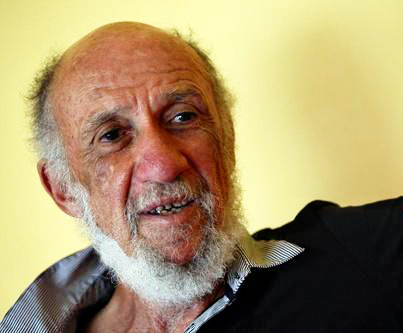
By Richard Falk
Exactly a year ago, for 51 days between July 7 and August 26 Israel carried out its third major military assault (2008-09; 2012; 2014) on Gaza in the past six years.
This last one, code named Operation Protective Edge by Israeli Defense Forces, was the most vicious, killing 2,251 Palestinians, of which 1,462 were civilians, and included 299 women and 551 children, as well as injuring 11,231, a number that includes 3,436 children, 10% of whom have permanent disabilities, and another 1,500 have been orphaned.
Israel also suffered casualties: 73 killed of whom 67 were military personnel, and 1,600 injured.
Additional to the human casualties, 18,000 Palestinian housing units were destroyed, along with substantial damage to Gaza’s electricity and sanitation systems, 500,000 Palestinians (almost 1/3 of Gaza’s population) were forcibly displaced during the military operations and 100,000 remain so a year later, and 73 medical facilities and ambulances were destroyed or damaged.
Due to the Israeli blockade, the aftermath of this onslaught has prevented a normal recovery, extending the period of suffering endured by the entire Gazan population. The magnitude of the Palestinian losses, as well as the comparison with Israeli losses, and the comparative ratio of civilians to military killed on the two sides, by itself suggests that the essential character of this Israeli undertaking is best understood as ‘state terror’ directed at Gaza’s population as a whole.
Such conclusions are reinforced by Israel’s provocations during the month prior to the launch of the attack and by the refusal of its government even to consider frequent proposals by Hamas to establish long-term internationally supervised ceasefire proposals.
This one-sided impression of the events is not conveyed by the much anticipated UN Report of the Commission of Inquiry (COI) set up by the Human Rights Council to investigate violations of international human rights and international humanitarian law in July of 2014 that were occurring during Operation Protective Edge.
The Commission wasRead More »
 TFF Associates Blog 2011-2017