By chance I was reading César Vallejo’s poem, “Black Stone on a White Stone,” in a translation by Geoffrey Brock, and was struck by the opening stanza:
I’ll die in Paris in the pouring rain
a day I have a memory of already.
I’ll die in Paris—I won’t try to run—
a Thursday perhaps, in Autumn, like today.
Without being literal, I was reminded that I could appraise my death while alive, and not leave a final reckoning to some solemn memorial event in which speakers are challenged to find humorous anecdotes to lighten the occasion, otherwise uttering honorific platitudes quite unrelated to the experiential core of my being.
I had been thinking quite a bit recently about ‘lost causes.’
Recently I gave a lecture at Columbia University on this theme, inspired by Edward Said’s seminal late essay “On Lost Causes” (1997) in which he ties together the ‘nobility of failure’ as portrayed in literature with his own unswerving dedication to the Palestinian struggle for a just peace. On that occasion, Read More »
Considering the year that is about to end is a time to pause long enough to take stock of what went wrong. In the United States not much went right aside from Barack Obama’s surprising initiative to normalize relations with Cuba after more than 60 years of hostile and punitive interaction. Although the sleazy logic of domestic politics kept this remnant of the worst features of Cold War diplomacy in being for a couple of extra decades, it is still worth celebrating Obama’s move, which when compared to the rest of his record, seems bold and courageous.
As well, Obama exhibited a strong commitment to doing more than previously on climate change, using his executive authority to circumvent Congressional unwillingness to act responsibly. Obama’s immigration reform proposals also seem on balance to be positive, although whether they will be implemented remains an open question.
Drifting Toward Cold War II: Remembering World War I
There are several signs of a worsening global setting that seemed to gain an ominous momentum during 2014. Perhaps, worst of all, is a steady drumbeat of anti-Russian rhetoric backed up by Western sanctions, that seems almost designed to produce Cold War II. Read More »
There are reports that the Palestinian Authority will seek a vote in the Security Council on a resolution mandating Israel’s military withdrawal from Occupied Palestine no later than November 2016. Such a resolution has been condemned by the Israeli Prime Minister as bringing ‘terrorism’ to the outskirts of Tel Aviv, and this will never be allowed to happen.
The United States is, as usual, maneuvering in such a way as to avoid seeming an outlier by vetoing such a resolution, even if it has less stringent language, and asks the PA to postpone the vote until after the Israeli elections scheduled for 2015.
Embedded in this initiative are various diversionary moves to put the dying Oslo Approach (direct negotiations between Israel and the PA, with the U.S. as the intermediary) on track.
The French want a resolution that includes a revival of these currently defunct resolutions, with a mandated goal of achieving a permanent peace within a period of two years based on the establishment of a Palestinian state, immediate full membership of Palestine in the UN, and language objecting to settlement activity as an obstruction to peace.
Overall, European governments are exerting pressure to resume direct negotiations, exhibiting their concern about a deteriorating situation on the ground along with a growing hostility to Israeli behavior that has reached new heights since the merciless 51-day onslaught mounted by Israel against Gaza last summer.Read More »
TFF wants to express its gratitude to Yoshikazu Sakamoto who served for many years as TFF Associate.
Prefatory Note
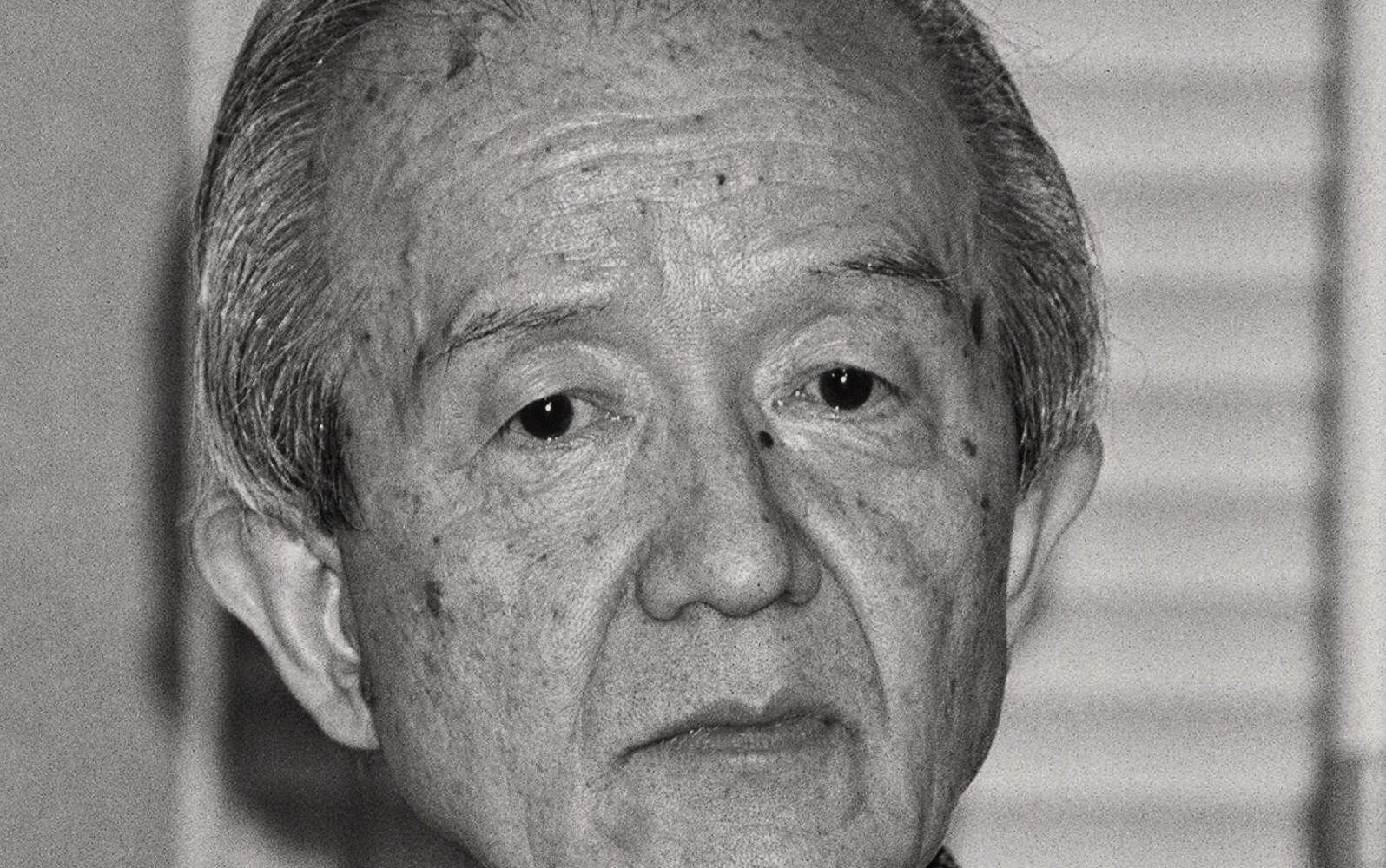
This post is dedicated to my remembrance of Yoshi Sakamoto who died recently. Yoshi was a deeply valued friend and an important public intellectual in Japan who exerted a strong influence on the post-war generation. His political orientation, rejecting extremes of right and left, while questioning the militarist premises of the Cold War and Japan’s willingness to become America’s Asian poodle, gave him a distinctive political profile.
I am sharing these words of appreciation, and hope that anyone from Japan who comes across this text will contact me, especially if they have a way of putting me in touch with either Yoshi’s family or Japanese media. I would like to believe that ‘an American appreciation’ of Professor Sakamoto would be of interest to those who knew and admired him.
I first met Yoshi in the mid-1960s when he came to visit me at Princeton, expressing his concern about the Vietnam War and knowing of my anti-war activism. We bonded quickly and marched in a peaceful demonstration in New York City a few days later, and somehow managed to keep in fairly consistent contact until Yoshi’s death on October 2nd.
When Nehru was taking a train on his return to India after studying abroad he read of the Japanese victory over Russia in the 1904-05 Russo Japanese War. At that moment he had an epiphany, realizing the hitherto unthinkable, that the British Empire was vulnerable to Indian nationalism. An earlier understanding of the colonial reality by native peoples generally subscribed to the postulates of hard power primacy making it futile or worse to challenge a colonial master, although throughout history there were always pockets of resistance.
This soft power attribute of colonial hard power by way of intimidation and a façade of invincibility is what made colonialism efficient and profitable for so long at the great expense of colonized peoples.
A traditional colonial occupation assumes that the foreign domineering presence, while oppressive and exploitative, refrains from ethnic cleansing or genocide in relation to the indigenous population.
When settler versions of colonialism emerged in relation to the Western Hemisphere and regions occupied by traditional peoples that were without either population density or some kind of industrial capability, the occupier managed to achieve enduring control Read More »
Prefatory Note The post below is a modified version, especially the ending, of a piece published online two days ago in AlJazeera English. While appreciating the importance of the European moves to endorse Palestinian statehood, it seeks a more definitive repudiation of the Oslo Approach.
It calls for an end to the U.S. role as exclusive intermediary and the presumed outcome of a peace process being two states without indicating the character of the Palestinian state. So far, the two-state mantra has been cut back to allow Israel to retain at least the unlawful settlement blocs and to insist on arrangements that uphold their security against unforeseen threats, while granting not a word of acknowledgement to Palestinian security concerns.
My own strong belief is that unless the two peoples are treated with full equality in seeking a solution, the result will not be sustainable or just even in the unlikely event that some sort of agreement is reached.
Oslo is dead! Long live Oslo! The UK House of Commons Supports Diplomatic Recognition of Palestine
On October 13 the House of Commons by an overwhelming vote of 274-12 urged the British government to extend diplomatic recognition to Palestine.
It was a welcome move, but only in some respects. The new center-left Swedish Prime Minister, Stefan Lofven, in his inaugural speech to Parliament indicated on October 3rd the intention of the Swedish government to recognize Palestinian statehood.
He explained that such a move mentioned in the platform of his party is in accord with promoting a two-state solution, and more significantly, that is to be “negotiated in accordance with international law.” The call for adherence to international law in future diplomacy is actually more of a step forward than is the announced intention of future recognition, which has so far received all the media attention and incurred the wrath of Tel Aviv.
To bring international law into future negotiations would amount to a radical modification of the ‘peace process’ that came into being with the Oslo Declaration of Principles in 1993.
The Israel/United States view was to allow any agreements between the parties to arise from a bargaining process, which is a shorthand for acknowledging the primacy of power, taking account of ‘facts on the ground’ (that is, the unlawful settlements) and diplomatic leverage (allowing the United States to fake the role of ‘honest broker’ while at the same time making sure that Israel’s interests are protected).
I suspect that this hopeful language suggesting the relevance of international law was inserted without any awareness of its importance or relevance. Such an interpretation is in line with Swedish official explanations of their initiative as a way of helping ‘moderate’ Palestinian leaders gain control of diplomacy, thereby facilitating the eventual goal of mutual coexistence based on two states.
It was presumed by Stockholm without any supportive reasoning, and against the weight of evidence and experience, that a Palestine state could emerge from a reinvigorated diplomacy. No mention was made of the settlements, separation wall, road network that have cut so deeply into the Palestinian remnant, which as of the 1967 borders was already 22% of historic Palestine, and less than half of what the UN partition plan had offered the Palestinians in 1947, which at the time seemed unfair and inconsistent with Palestinian rights under international law.Read More »
Prefatory Note The post below is a somewhat revised version of a text published by The Nation. I should also point out that in these proceedings in Brussels under the auspices of the Russell Tribunal I served as a member of the jury.
In a special session of the Russell Tribunal held in Brussels on September 24th, Israel’s military operation Protective Edge was critically scrutinized from the perspective of international law, including the core allegation of genocide. The process featured a series of testimonies by legal and weapons experts, health workers, journalists and others most of whom had experienced the 50 days of military assault.
A jury composed of prominent individuals from around the world, known for their moral engagement with issues of the day that concerned their societies, and also the wellbeing of humanity, assessed the evidence with the help of an expert legal team of volunteers that helped with the preparation of the findings and analysis for consideration by the jury, which deliberated and debated all relevant issues of fact and law, above all the question of how to respond to the charge of genocide.
It should be acknowledged that this undertaking was never intended to be a neutral inquiry without any predispositions. It was brought into being because of the enormity of the devastation caused by Protective Edge and the spectacle of horror associated with deploying a high technology weaponry to attack a vulnerable civilian population of Gaza locked into the combat zone that left no place to hide.
It also responded to the failures of the international community to Read More »
It is misleading to describe ‘world order’ as consisting exclusively of sovereign territorial states. This misimpression is further encouraged by the structure of the United Nations, whose members are states, and only states. The UN was established in 1945 in the aftermath of World War II, reflecting a West-centric orientation that emerged at the time, quickly morphing into the Cold War rivalry between the two states that were geopolitically dominant and ideologically antagonistic: the United States and Soviet Union.
Even in the UN, however, this surface allegiance to statism is misleading. The geopolitical dimension was highlighted in the UN Charter by conferring a veto power on five winners in the recently concluded war, which amounted to the grant of a right of exception with respect to international law.
But there are differences in hard and soft power that make the interactions among states within the UN exhibit more inequality than is suggested by this still prevailing Westphalian myth of the equality among sovereign states. Some states contribute far more to the UN budget than others, and their views carry more weight; others are richer, bigger, more informed about some issues, are better at lobbying for support, and some play above their diplomatic weight by clever political maneuvers. And there are several kinds of non-states active behind the scenes that exert varying degrees of influence depending on the subject-matter.
Global policy is mainly shaped outside the UN by a bewildering array of formal and informal actors that participate in a bewildering variety of ways in international life. The world economy is substantially controlled by business oriented alignments such as the World Economic Forum that meets annually in Davos, Switzerland, or the gatherings of economically powerful states grouped together as the G-7, later becoming the G-8, and more recently the G-20 to accommodate shifts in trade and investment patterns, and give recognition to such new alignments as the BRICs.
As such, the shorthand designation of world order by reference to the 1648 Treaties of Westphalia that brought the Thirty Years War to an end serves as a convenient starting point for understanding the way authority and power are deployed in the world.
Yet it must be supplemented by the recognition that Read More »
The 50-day Israeli military operation that killed over 2100 Palestinians, wounded another 11,000, and undoubtedly traumatized the entire Gazan population of 1.7 million also took the lives of 70 Israelis, of which 65 were soldiers. This last violent encounter has ended without a clear victory for either side.
Despite this, Israel and Hamas are each insisting that ‘victory’ was achieved. Israel points to the material results, tunnels and rocket sites destroyed, targeted assassinations completed, and the overall weakening of Hamas capacity to launch an attack. Hamas, for its part, claims political gains, becoming far stronger politically and psychologically in both Gaza and the West Bank than before the fighting began, refusing to give in on the basic Israeli demand of the ‘demilitarization’ of Gaza, as well as further tarnishing Israel’s international reputation.
The UN Human Rights Commission has taken what for it is an exceptional step of appointing a commission of inquiry to investigate allegations of war crimes. The fact that William Schabas, a renowned expert on international criminal law, especially on the crime of genocide, was selected to chair the investigation is of great symbolic significance, and potentially of major relevance to the ongoing legitimacy struggle being successfully waged by the Palestinian people. Read More »

 TFF Associates Blog 2011-2017