ISIS, militarism and the violent imagination

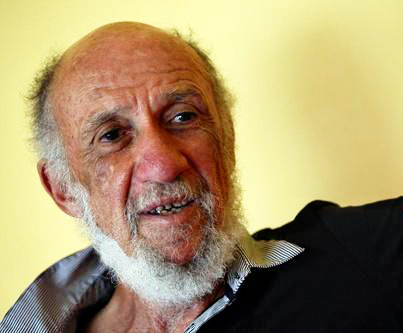
By Richard Falk

Richard Falk

Before ISIS

The beheading of American and British journalists who were being held hostage by ISIS creates a truly horrifying spectacle, and quite understandably mobilizes the political will to destroy the political actor who so shocks and frightens the Western sensibility, which is far from being free from responsibility for such lurid incidents.

Never in modern times has there been a clearer example of violence begetting violence.

And we need to ask ‘to what end?’ Political leaders in the West are remarkably silent and dishonest about what it is that they wish to achieve in this region beset since 2011 by a quite terrifying outbreak of political extremism, whether from above as in the cases of Syria, Egypt, and Israel or from below as with ISIS and al-Nusra.

It is difficult to recall that at the start of 2011, just three years ago, progressive voices around the world were inspired by the Arab upheavals, especially in Egypt and Tunisia, that burst upon the political scene unexpectedly.

These extraordinary events appeared to repudiate the prevailing patterns of authoritarian, exploitative, and corrupt collaboration between oppressive domestic elites, neoliberal economic forces, and the regional imperial juggernaut that had kept this humanly disastrous reality stable for so long. Yet even during that time of optimism about the Arab future, a closer scrutiny of what was happening disclosed many reasons to be worried. It is helpful to look to this recent past to have some comprehension of the perplexing present.

A Revolutionary Spirit Without Revolutionary Action

The goals of these upheavals were far too ambitious to be realized by such limited challenges directed at the established order. These movements were essentially confined to getting rid of a hated ruler. Read More »

Russell Tribunal Session on Palestine

By Richard Falk

Richard Falk

Prefatory Note

On September 24 a special session of the Russell Tribunal will examine war crimes allegations against Israel arising from the 50-day military operation that commence on July 8th.

The Tribunal has developed a record of examining the criminality of state actors that enjoy impunity internationally because they are insulated from accountability by what I have called a ‘geopolitical veto’ in this case exercised by the United States and several major European countries.

Where governments and the UN fail to implement international law, there exists a right of peoples to play a residual lawmaking function. It is somewhat analogous to the residual role that the General Assembly is empowered to play when the Security Council is unable or unwilling to perform its primary role in relation to international peace and security.

To fill this normative vacuum the Russell Tribunal has long played made an honorable contribution to what might be called ‘the empowerment of legal populism.’ I encourage attentiveness to this event, including publicizing its occurrence and disseminating the results of its deliberations.

As the announcement below indicates, I am proud to be a member of the jury for the session along with a series of truly distinguished and qualified high profile international personalities known both for their professional achievement and for their principled stands as ‘citizen pilgrims’ dedicated to a humane future shaped by global justice.

Israel’s Crimes in Gaza during Operation Protective Edge – Extraordinary session of the Russell Tribunal

24-25 September – Brussels – Albert Hall, BrusselRead More »

Two Types of Anti-Semitism

By Richard Falk

Richard Falk

Contrary to much conventional thinking that treats ‘anti-Semitism’ as exclusively a form of ethnic hatred, there is a second kind of attitude that is alleged to be ‘anti-Semitism’ because it is critical, often justifiably so, of Zionism and Israel’s policies and practices.

This second type of supposed anti-Semitism is a tactic deployed to discredit critics of Israel by insisting that criticism of Israel and hatred of the Jewish people should not be distinguished. These two distinct types of anti-Semitism actually work at cross purposes, and although there may be situations of overlap, it is a dangerous confusion to lump them together.

It is rather unusual for even the harshest critics of the behavior of the U.S. Government to be castigated as anti-American except sometimes in the midst of international security crises, but even then such accusations usually reflect the outlook of red neck patriots or extremists who identify with the right wing of American politics.

Also, such accusations, although unpleasant, lack the sting of anti-Semitism, which carries with it an implicit secondary allegation of indifference to the Holocaust, to the Nazi genocide, and to the long history of persecution directed at the Jewish people. In my view this labeling of Israel’s critics as ‘anti-Semites’ is a short-sighted form of unsavory state propaganda, generally implemented overseas by hard core Zionist groups, and partly responsible for an emergent backlash that is being expressed by hatred and hostility toward Jews.

This is a highly sensitive subject matter that is almost certain to be treated emotionally in a manner shaped by strong ideological alignments for or against the way in which Israel has behaved since its contested establishment in 1948 and in relation to attitudes toward close connections between the Zionist movement and the Jewish people.

Type I anti-Semitism is a form of virulent racism,Read More »

The United States and the Outlaw State of Israel

By Richard Falk and Akbar Ganji

Richard Falk

Prefatory Note

The following post, was previously published as a co-authored two-part article by Akbar Ganji and myself in AlJazeera English on August 20-21, 2014; its basic premise is that the persistent defiance of international law by a sovereign state should carry delegitimizing consequences; the geopolitical grant of impunity to Israel evident throughout the aggressive military operation being carried out against an essentially helpless civilian population in Gaza suggests that neither the UN, nor governments in the region, nor leading governments in the world possess the political will to challenge such a frontal assault upon the authority of international law.

We write from two very distinct backgrounds as members of civil society devoted to human rights and the global rule of law, and invite others to join in reflecting upon how civil society can bring law to bear more effectively on the behavior of the Israeli government, and in the process, help empower the people of Palestine in their quest for national self-determination and the fulfillment of their rights under international law so long denied. We try to make this central argument by positing the idea of ‘Outlaw State’ as a descriptive designation that might have some influence in civil society mobilizations of the sort associated with the global solidarity movement backing the Palestinian struggle and supporting such militant nonviolence as animating the BDS Campaign.

Israel has become an outlaw state. In his book, The Law of Peoples, John Rawls defines (pp. 5 and 90) an outlaw state as one that systematically violates the universal principles of human rights, and commits aggression against other nations.

Israel is guilty of repeated such violations as well as several massive acts of aggression, making it reasonable and responsible to identify it as an outlaw state. Such a pattern of behavior also contradicts the most basic principles of international law as embodied in the UN Charter pertaining to the use of international force, and obstructs the fundamental promise in the Preamble of the Charter “to save succeeding generations from the scourge of war.

It has become appropriate for the international community and global civil society to act accordingly.Read More »

Three hard questions for Hamas

By Richard Falk

Richard Falk

There is no doubt that Hamas has exhibited extraordinary resilience under the most difficult of conditions that have bedeviled its period of political leadership in the Gaza Strip that started in 2007.

It also seems clear as persuasively argued by Sandy Tolan in a valuable Common Dreams article – “Blown Chances in Gaza: Israel & U.S. Miss Many Chances to Avoid War”, Aug. 13, 2014 that Hamas pursued multiple initiatives starting in 2006 designed to achieve calm and quiet in its relations with Israel, and that these initiatives, including back channel reassurance about peaceful intentions, were rebuffed without even being acknowledged by either Israel or the United States.

It also seems the case that Israel acted to provoke the three most sustained military onslaughts directed at Gaza since 2008, and in each has relied on disproportionate force, inflicted numerous civilian casualties, and acted in a manner defiant of international humanitarian law.

For these reasons Israel deserves to be treated as an ‘outlaw state’ for reasons set forth by Akbar Ganji and I argued in a two-part article appearing in the online pages of AlJazeera English [“The Outlaw State of Israel,” Aug. 20,21, 2014].

And yet Hamas also has some explaining to do if it wishes to be more widely accepted throughout the world as entitled to full respect as a legitimate political actor. Read More »

Strange regional alignments in the Gaza Massacre

By Richard Falk

Richard Falk

Prefatory Note

My post below, an earlier version of which was published in AlJazeera English as an opinion piece. It was written before I had the opportunity to read an illuminating assessment of the regional and global turmoil that culminated for now in the massacre carried out by Israeli armed forces in Gaza. I highly recommend “The Tragedy of Great Power: The Massacre of Gaza and the Inevitable Failure of the Arab Spring” written by the learned Islamic jurist and scholar, Khaled Abou El Fadl, a distinguished professor at UCLA School of Law, with the link to the article below:

What makes Professor El Fadl profound essay particularly valuable is his ability to fit the regional pieces together in a convincing manner, showing how and why governments that rule in Saudi Arabia and the UAE, encouraged the overthrow of Egypt’s elected government headed by Mohamed Morsi in mid-2013 and more recently encouraged Israel to destroy Hamas.

He also shows that Hamas is not accurately perceived as a byproduct of the Egyptian Muslim Brotherhood, but has its own “very distinct pedagogies, objectives and methodologies.” In depicting the forces of resistance and transformation as opposed to the geopolitics of counterrevolution as constituting the core struggle taking place throughout the region it becomes clear why the alignments in the Middle East are assuming their current configurations.

It is telling and provocative for Professor El Fadl to situate the Palestinian Liberation Organization (and by implication, the Palestinian Authority) as de facto allies of Sisi’s Egypt, Saudi Arabia, and the UAE as well as being existential partners of the United States and Israel in subjugating the region to Western goals.

What has developed further since the end of the Cold War rivalry that long dominated the region should be considered a geopolitical protection racket that gained political salience in the aftermath of the Arab Spring. The upheavals of 2011 shook the foundations of the old order, and led to renewals throughout the region of Faustian Bargains by which various authoritarian regimes receive protection, including help with the destruction of any political actor, whether Islamic or not, that dares to challenge this established order composed of ultra-rich native elites claiming dynastic privileges conferred by colonial powers then seeking native collaborators to manage exploited and oppressed populations.

While these elites appease Israel, the masses in the same political space remain passionately and symbolically dedicated to the Palestinian struggle as became evident in the September 9, 2011 attack by several thousand Egyptians on the Israeli Embassy shortly while the heroic memories of the overthrow of Hosni Mubarak were still fresh.

Of all the complexities surrounding the reaction of the world to the horrifying spectacle of Israel’s severe criminality in Gaza none is more perplexing than the complicity of most governments throughout the Arab world.

What makes their political posture particularly bewildering is the degree of ethnic, religious, cultural, and historical commonality that creates such close ties of identity among the peoples of the region. And no single issue has been as unifying over the decades for these people than has their long intensely felt opposition to the injustice, suffering, and exploitation that the Palestinian people have endured for the past century as a result of the encroachments of the Zionist movement on their lands. Read More »

Palestinian Open Letter to UNSG Ban Ki-moon on Gaza

By Richard Falk

Richard Falk

Prefatory Note
Below is the text of an Open Letter to the UN Secretary General Ban Ki-moon alleging his inappropriate responses to the carnage and massacres taking place in Gaza, and by his behavior undermining respect for and the authority of the United Nations and international law.

Given such a performance, the challenge posed to the highest ranking UN official is to revise his past comments on the Israeli attack or to resign his office. The peoples of the world, and not just the Palestinians, have a paramount interest in holding morally, legally, and politically accountable the UN and those who lead and represent the organization in response to such breaches of the peace and acts of aggression in accordance with law and justice, and never more so than when such unlawful behavior is directly responsible for a grave humanitarian catastrophe of the kind that has befallen the civilian population of Gaza since July 8.

Instead of supporting Israel spurious claim of acting in self-defense, Mr. Ban Ki-moon should have been using his office to insist on an immediate ceasefire accompanied by the unconditional lifting of the blockade imposed on Gaza since mid-2007 that has constituted the essence of the collective punishment of the 1.8 million people encaged in the Gaza Strip without even a sanctuary for children, women, the disabled, the elderly, non-militants to escape from the combat zone by crossing the border or finding safety within Gaza itself.

The shelling of UN facilities being used to shelter those desperately seeking safety exemplifies Israeli criminal conduct during this savage military operation.

Please read the text below, prepared by Badil (an NGO devoted to Palestinian refugee rights that enjoys a world reputation for the quality of its work and the dedication of its staff) and endorsed by a large number of Palestinian civil society actors; please disseminate this text as widely as possible, and call independently for a response by the Secretary General, as well as further action if a response is not forthcoming.

Open letter to Mr. Secretary-General, Ban Ki-moon: stand for law and justice or resign!

5 August 2014

For humanity and the little remained credibility of international law:

UN Secretary-General, Ban Ki-moon, stand for law and justice or resign!

Secretary-General Ban Ki-moon,

We, the under signed Palestinian human rights and community-based organizations are extremely disappointed by your performance, notably by your biased statements, your failure to act, and the inappropriate justification of Israel’s violations of IHL, which amount to war crimes.

Until today, you have taken no explicit and tangible measures to address the recent Israeli attacks in the occupied Palestinian territory (oPt) since 13 June. Moreover, your statements have been either misleading, because they endorse and further Israeli false versions of facts, or contrary to the provisions established by international law and to the interests of its defenders, or because your words justify Israel’s violations and crimes.

You have undeniably assumed a biased position toward the current attack on Gaza and Israeli violations in the West Bank by failing to clearly condemn Israeli unlawful actions in the OPT, while, on the other hand, not hesitating to accuse – sometimes mistakenly – Palestinian combatant in Gaza of violations of international law.

This bias can be noted in the following excerpts:Read More »

When BBC calls, don’t answer…

By Richard Falk

Richard Falk

That is, don’t answer, if you are a certified critic of Israeli policies and practices.

The siren lure of big time media is partly a romancing of the ego, partly a rare moment to intrude a moment or two of truthfulness into the endless spinning of the Israel’s narrative that stresses its extravagantly humane response to Hamas flurries of rockets and alleged human shield tactics.

Four times in the past week I have received invitations to be a guest on BBC programs dealing with Israel’s military operations in Gaza. Each time the female producer, with charming British intonation, expressed her strong interest in arranging my participation at such and such a time.

And each time I agreed, although Read More »

Cruelties of ceasefire diplomacy

By Richard Falk

Richard Falk

Prefatory Note

The post below is a revised text of an article published in AlJazeera America on July 26, 2014. Devastation and violence has continued in Gaza, with Palestinians deaths now numbering over 1000 (overwhelmingly civilians) and Israeli deaths latest reported at being 43 (almost all military personnel).

Such casualty figures and disparities raise questions of state terrorism in a stark manner. Also, it should be appreciated that if Israel were to do what it is required by international law to do there would be no rockets directed at its population centers – lift the blockade, negotiate peace on the basis of the 2002 Arab proposals and Security Council 242. Yet this would require Israel to give up once and for all its expansionist vision embedded in the settlement phenomenon and the version of Zionism embraced by its leaders and reigning political parties.

The best that the UN has been able to do is to call for an “immediate and unconditional ceasefire” to allow the delivery of humanitarian aid at an emergency meeting of the UN Security Council; such an unseemly balancing act is not what the UN Charter had in mind by aligning the international community in opposition to states that break the peace and act aggressively in disregard of international law; a victimized people deserves protection, not some sort of display of deforming geopolitical symmetry.

So far, the diplomatic effort to end the violence in Gaza has failed miserably, Read More »

Joint Declaration by International Law Experts on Israel’s Gaza Offensive

By Richard Falk
July 28, 2014

Richard Falk

Prefatory Note
Posted here is a Joint Declaration of 142 (as of now) international law experts from around the world who are listed below as endorsers. I am among the endorsers, and the text was initially drafted by Chantal Meloni who has served as rapporteur.
We welcome additional signatures that can be sent to me at falk@global.ucsb.edu with affiliation noted for identification, and names will be periodically added to the text.
I view this as an important expression of professional judgment and individual conscience relating to Israeli behavior in Gaza commencing on 8 July that has already taken so many innocent lives and caused such widespread devastation. Please join us and spread the word!

The International Community Must End Israel’s Collective Punishment of the Civilian Population in the Gaza Strip

As international and criminal law scholars, human rights defenders, legal experts and individuals who firmly believe in the rule of law and in the necessity for its respect in times of peace and more so in times of war, we feel the intellectual and moral duty to denounce the grave violations, mystification and disrespect of the most basic principles of the laws of armed conflict and of the fundamental human rights of the entire Palestinian population committed during the ongoing Israeli offensive on the Gaza Strip. We also condemn the launch of rockets from the Gaza Strip, as every indiscriminate attack against civilians, regardless of the identity of the perpetrators, is not only illegal under international law but also morally intolerable. However, as also implicitly noted by the UN Human Rights Council in its Resolution of the 23th July 2014, the two parties to the conflict cannot be considered equal, and their actions – once again – appear to be of incomparable magnitude.

Once again it is the unarmed civilian population, the ‘protected persons’ under International humanitarian law (IHL), who is Read More »