What a good idea, this day! To reflect, take stock, to enjoy peace, to deplore non-peace.21 sep day of peace
And the first reflection is this: peace is the normal condition of humanity, just like health. There is so much plain, simple, decent behavior around, so much mutual aid, a helping hand, companionship, friendship, good neighborhood when bad luck strikes at its worst. And we sense mutuality, unquestioning reciprocity; not always but mostly.
Go to an airport, stay close to where they come out, arrival, and are met by their nearest–watch the embraces, the warmth, the eyes glittering, the smiles, laughter. There we are. Harmony, resonance–with the occasional deep, joint sadness, sorrow; something has struck.
Go to a restaurant, not too stiff, formal–more ordinary eatery. And you see it again, the pleasure, food, drinks, togetherness, the shared pleasure – the jokes, the smiles.
Most of the time – then some incident, issue arises.Read More »
A shorter version of this article was published by IPS
The Origins
When all of a sudden ISIS (Islamic State in Iraq and Sham) emerged on the scene, and in a matter of days occupied large swathes of mainly Sunni-inhabited parts of Iraq and Syria, including Iraq’s second city Mosul and Saddam Hussein’s birthplace Tikrit and called itself the Islamic State, many people, not least Western politicians and intelligence services, were taken by surprise.
This feeling of shock and repeated reversals in the past has been due to widespread ignorance or the willful neglect of history, and general unwillingness by politicians and pundits to look at the reality as it is or to explore the root causes of the issues in the Middle East from a historical, religious and ethnic point of view.
Most politicians have been afflicted by short-termism and they stumble from one crisis to the next without an overall strategy and without the ability to look beyond their noses.Read More »
Contrary to much conventional thinking that treats ‘anti-Semitism’ as exclusively a form of ethnic hatred, there is a second kind of attitude that is alleged to be ‘anti-Semitism’ because it is critical, often justifiably so, of Zionism and Israel’s policies and practices.
This second type of supposed anti-Semitism is a tactic deployed to discredit critics of Israel by insisting that criticism of Israel and hatred of the Jewish people should not be distinguished. These two distinct types of anti-Semitism actually work at cross purposes, and although there may be situations of overlap, it is a dangerous confusion to lump them together.
It is rather unusual for even the harshest critics of the behavior of the U.S. Government to be castigated as anti-American except sometimes in the midst of international security crises, but even then such accusations usually reflect the outlook of red neck patriots or extremists who identify with the right wing of American politics.
Also, such accusations, although unpleasant, lack the sting of anti-Semitism, which carries with it an implicit secondary allegation of indifference to the Holocaust, to the Nazi genocide, and to the long history of persecution directed at the Jewish people. In my view this labeling of Israel’s critics as ‘anti-Semites’ is a short-sighted form of unsavory state propaganda, generally implemented overseas by hard core Zionist groups, and partly responsible for an emergent backlash that is being expressed by hatred and hostility toward Jews.
This is a highly sensitive subject matter that is almost certain to be treated emotionally in a manner shaped by strong ideological alignments for or against the way in which Israel has behaved since its contested establishment in 1948 and in relation to attitudes toward close connections between the Zionist movement and the Jewish people.
Type I anti-Semitism is a form of virulent racism,Read More »
The Nuclear Age – risk of omnicide and our new responsibilities
Nuclear weapons came into the world and were used for the first time in 1945. Their specific feature as weapons of mass destruction and “omnicide” – able to kill us all – has changed what it means to be alive on this earth and to be responsible for its existence.
Until nuclear weapons, human beings could not decide whether or not to end project humankind and project planet earth.
Today we know that the arsenals and missile projection methods are such that a few decision-makers, or a technical malfunction, could blow up enough of the world to make the living – if any – envy the dead.
We live in the Nuclear Age. It means living with the permanent daily threat of extinction.Read More »
Look at the violence in Gaza today, DR Congo (6 million dead), Iraq, Libya, Afghanistan, Somalia etc: Isn’t it obvious that the world needs a completely new approach to conflicts?
We’ll never rid the world of conflicts, conflicts is part of human and social life. Conflict-prevention is a meaningless term.
But we can rid the world of most of its violence. If we want, if we educate each other and if economic and other interests stopped supporting killing as a tool in conflict-management.
Unrealistic? Hopelessly idealistic? Well, look at the places above and try to find the realism and hope there.
Look at the conflict not at the parties and the violence
It requires almost no intellectual effort to take sides in a conflict between A and B. If both parties use violence, that means endorsement of the violence – the justification both need: “They threaten and kill us, therefore we threaten and kill them.”
Those who support a conflict party who use violence also support violence. As long as violence continues, there will be no process towards peace – only more hate, traumas, suffering, wish for revenge and destruction.
Violence – not the conflict – becomes the main thing and tit-for-tat the rule of the game, with an increase in the violence for each round. Scorpions in a bottle, feeding each other.
Both those who are outside a conflict and debate it – for instance, 99% of the media debates – and the conflicting parties on the ground feed on violence. If A did not use violence against B, how would B justify its own killings?
Gaza today – both parties lose
This is where we are in Gaza today when reports tell that around 800 civilians have been killed without any positive effect, both losing.
It’s not about evil, it’s about desperation coupled with traumas coupled with a lack of insight and education.
This wrong-headed attitude is indicative of conflict and peace illiteracy: among the parties, our media and our decision-makers. Innocent people on both or all sides normally pay the price for it.
The world needs a completely different approach. It’s embedded in the UN Charter and called peace by peaceful means.Read More »
John B. Sparks made a histomap in 1931—updated in 2010 (Metro Books) – a long, vertical chart covering “peoples and nations for 4,000 years”.
Time, history, is on the vertical axis, listing when of events and where in the space of peoples and nations. The chart starts with the Chinese, the Indians, Amorites (Babylon), Aegeans (Minoans and Mycenaeans), Hittites (Anatolia), Iranians and Greeks, goes on to the Romans, the British, the Huns (Mongols) and ends with Latin America, Europeans West and East (the EU is absent), the Middle East, sub-Sahara Africa, Russians and Americans, Asia as India, China and Japan; each part proportionate to their significance at the time. Debatable.
But let us focus on something crucial: the shape of the “peoples-nations” bubbles in world history, from a beginning to an end?
By and large exactly like that: a birth somewhere in this Einsteinian timespace, and a death. Two points, and between them: growth-maturity/flourishing-decline and fall. Expansion to a maximum, and contraction to a minimum. The law of anything organic? Given that they often thought they were forever, gifted with eternal life, history is about great expectations, glories–and great traumas.Read More »
He was a tall man and a great man, a visionary, pacifist, civil resister, educator and philosopher. He took life more seriously than most and he could be playful and fun like a child. His life’s guiding principle was ”Engage in your time!” and while he wrote and talked a lot he also did it. His name was Aage Bertelsen, he was born in Denmark in 1901 and died on August 15, 1980.
Bertelsen’s imprint on history is two-fold. First, with his wife Gerda he was a prime mover of one of the groups, the Lyngby Group, which organised the rescue of altogether 7.220 Danish Jews into safety in Sweden in October 1943 during the German occupation of Denmark – more here. The Lyngby Group – Lyngby is north of Copenhagen – got about 1.000 of these in safety by organising their nightly transport onboard small fisher boats over the Sound between Denmark and Sweden.
In this he deserves a place in international contemporary history for its humanity, civil courage and as an example of non-violent struggle against occupation.
Secondly, Bertelsen was an educator of and for peace. His life work educational efforts included his family and friends, his pupils over 22 years at the Aarhus Cathedral School in Aarhus, Denmark, the general public as well as national and international leaders.
He lived in pre-Internet times and very little is publicly available today about this renaissance man. From two rather different, but compatible, perspectives we’ve taken it upon us to remind the world about him – friends and colleagues of his as we happen to be.
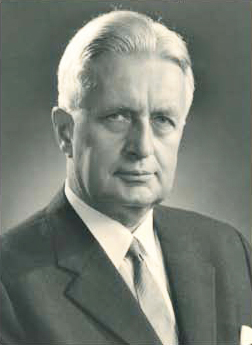
Headmaster Aage Bertelsen in 1961 Photo: Elfeldt, Copenhagen
Why now, over 30 years after his death? Read More »
Comments by Hans-C. von Sponeck
Former UN Assistant Secretary General, UN Humanitarian Coordinator for Iraq & TFF Associate
Hearing at the UK House of Commons, London June 10, 2014
Intro
1. HoC/HoL have repeatedly held Iraq hearings as have British NGOs such as CASI (Campaign Against Sanctions on Iraq) and Stop the War Coalition/UK. In Europe these are considered models for responsible public action.
2. My contribution at this hearing is not about the crimes of dictatorship or the details of Iraqi suffering. For both well researched data is available. The objective of my participation is to make two detailed observations about externally-driven Iraq politics during the period 1990-2014.
Observation 1
3. Today’s tragic Iraq reality can only be understood if the additive impact of the years before and the years following the US/UK Governments’ illegal invasion and occupation is fully taken into account.Read More »
… Would be the title in English of a book this author just published in Norwegian, Syv veier til lykke (Oslo: Kolofon 2014); with excellent photos by Aase Marie Faldalen. And, very befitting for a book with that title: the book quickly made it to the Top 10 on a best-seller list, of course as No. 7. There will be translations but have a peek here and now.
Why does a peace researcher, concerned with peace theory and practice, write a “how-to” book about happiness, well-being? Read More »
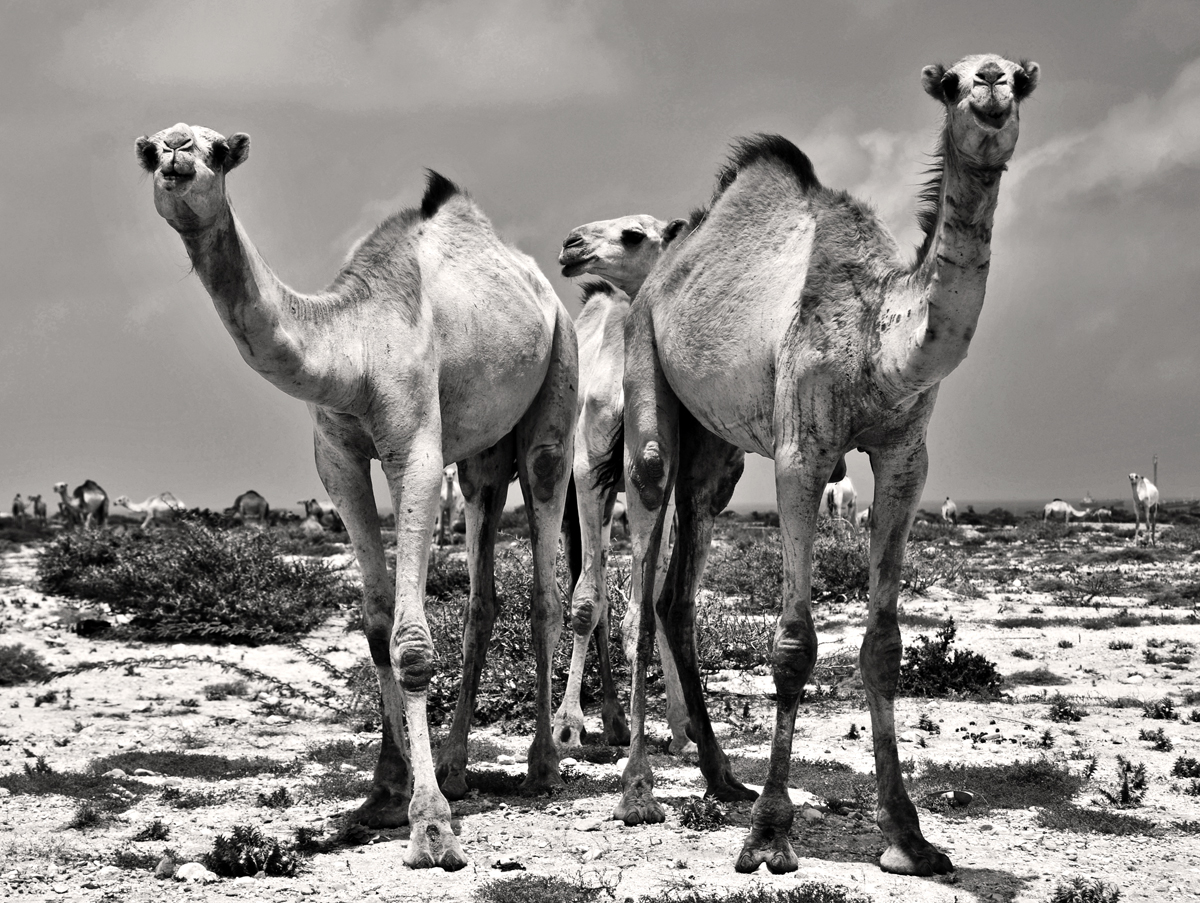
This PressInfo is about place you’ve probably never visited nor know a lot about: Somaliland.
TFF today publishes the report from a mission there in May 2014 – to the capital Hargeisa, the harbour town of Berbera and to Burao.
With the report in photos and texts we seek to alert you to this indeed unique and interesting country.
Somaliland declared itself an independent state out of Somalia in 1991 and is still not recognised by a single government in the world.
But against all odds Somaliland has made considerable progress.
It isn’t easy to develop when you are marginal to the aid and investment sources, have no foreign embassies and can’t be a member of inter-national organisations. Read More »




 TFF Associates Blog 2011-2017