TFF 30th Anniversary Benefit Event

Lund, Sweden, September 5, 2015
Updated September 5 and our apologies if you’ve received this before.
We want to catch all and miss no one over all these years.
Dear friend!

We are happy to invite you to the TFF 30th Anniversary Benefit Event !
September 11-12, 2015

Live Lectures by videostream
Exciting lectures on world affairs and peace over two days – See program below.

This is not an invitation to visit the foundation in person.
It is an online, live video streamed event that you will be able to follow from anywhere in the world
Here is the link and it’ll also be shown via Facebook, Twitter and on our website.
And all the lectures will be available later as videos on our own video channels.

Open House at the foundation
Saturday September 12 at 14:00-17:00
It’s at Vegagatan 25 in Lund, Sweden – deadline for your registration September 7.

1. Lectures on-site with live streaming

We’ll shortly tell you the links where you may see it all and where videos will later be available.

Lecture program

Friday September 11

Live, video streamed:

16:00
September 11: Alternatives to the devastating War On Terror – Jan Oberg

17:00
TFF 30 Perspectives – TFF Associates and Board on the better world we dream of – And cheers!

Saturday September 12

Live, video-streamed 10:00-18:00

10:00
Iran And the Nuclear Issues – Gunnar Westberg

11:00
Integration – Why and how? Example: Afghan Youth In Sweden – Christina Spännar, Sweden

12:00
Nuclear abolition is necessary and possible – Gunnar Westberg, Sweden

13:00
West and East: Ukraine and New Cold War? – Jan Oberg

14:00
Human Rights And War Crimes – Jonathan Power, UK/Sweden

15:00
Women, Self-Esteem and Violence – Annette Schiffmann, Germany

16:00
Yugoslavia – What Should Have Been Done? – Jan Oberg (in Memoriam Håkan Wiberg), DK/Sweden

17:00
Media and Peace – Sören Sommelius, Sweden

18:00
Burundi’s Crisis And Possible Ways Out – Burundi expert

2. Open House hours 14-17
Buffet, drinks, coffee and tea, cakes and other sweets.
You must register your visit by September 7 at the latest at TFF30@transnational.org or call 0046 738 525200.

3. Peace with peaceful means
The day is devoted to the – ongoing – struggle for ”peace by peaceful means“ as the UN Charter puts it. Gandhi said that the “means are goals in-the-making”. To realize that noble goal remains the mission of TFF. Today we show you how and promote all related activites with the help of social media and new video technologies.

4. This is a Benefit Event – Your support to TFF please!

TFF is unique in being totally independent of government and corporate funds. It’s people-financed. No one related to TFF has a salary; we’re all-volunteer.
This provides for truly free research and permit us to be critical and constructive and practise our freedom of expression. Not everyone can boast that today!
Wars, nuclear and conventional arms, bombing raids and occupations etc. are financed by your tax money. Sadly and unfairly, no tax funds go to realise the UN norm above.

We think that people who believe that peace is better than violence should also pay something to the research, education and activism in favour of that UN norm.
If you can come to Lund on our big day or sit somewhere following our rich lecture program, we urge you strongly to make a donation. Every day over 30 years, TFF has given the world something useful.

You can do it right in the middle of our homepage – click the “Give” button or under the headline “Support” in the right-hand column where many options exist, including PayPal. It easy, fast and secure!
Cash – but no cheques – can also be donated at the event.* *

Thank you so much!

5. Videos
We’re proud to present the first two short videos – 3 more to come – in which the founders talk about various aspects of 30 years in the service of peace on the basis of questions asked by board member Annette Schiffmann. Watch, comment and subscribe!

The First

The Second

6. Brand new Online Magazine
The announced online magazine launched to mark our Anniversary is now here!

“Transnational Affairs – TFF Magazine for conflict-resolution, non-violence and peace-building”

Excited as we are, we’ll be back to you soon with more details!

Yours truly

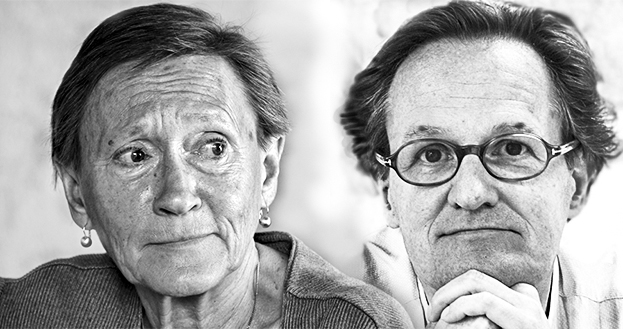
Christina & Jan
Founders

* If you are able to come in person, you must register to TFF30@transnational.org or call 0046 738 525200 by Tuesday September 8 at the latest.

* * This does not apply to you if you have already made a donation in 2015.

Japan revisited – 70 years later

By Johan Galtung

70 years have passed since Japan capitulated to the Allies 15 August 1945. The key early postwar Japanese politicians, diplomats, academic advisers etc. have now retired and give highly interesting accounts, revealing some of the tricks and lies of the state system.

That may also apply to them if trying to relieve themselves of bad conscience. However, leaving that aside, the focus here is on how I myself, conventionally knowledgeable of Japan, revisit, and revise.

More particularly, on three aspects of Asia-Pacific history:

• I thought, “Asia for Asians” meant “Asia for Japan”; but what happened?

• Japan pre-1945; the economic-military-cultural-political legacy?

• Japanese atrocities particularly in Korea and China; apologies?

Only Japan in the whole world fought all Western colonial powers: Russia 1904-05, Germany WWI, USSR WWII, English-French-Dutch December 1941, USA after Pearl Harbor. For that, they all hated Japan. Other Asians, not China, fought their own: India-Malaya-Burma the English, Vietnam the French (and Japan-USA-China), Indonesia the Dutch-Portuguese.

Japan “advanced”, filling gaps left by West, occupied, extracted resources. Nevertheless, for those who experienced this for the longest time, Taiwan since 1895 and Korea since 1910, with obvious shortcomings, it was an inclusion in an expanding Japan, very different from Western colonization. Read More »

From Security to Peace: A paradigm shift

By Johan Galtung

Look at the trauma ; the issues of the past. Iran, one of the world’s oldest civilizations was greatly humiliated by the CIA-MI6 coup in 1953, and now by a “deal” singling out Iran as the problem. And USA, the most powerful, was humiliated by the Khomeini revolution. And so on, all the way down. Something must, and can be, done.

One useful approach is an international truth commission about what really happened; better an exchange of their narratives with dialogue; best a violent party wishing what happened undone.

The peace formula says, Go beyond!, eg., by building togetherness across the have-have not faultline; a Middle East nuclear-free zone. In addition, security through peace for Israel, not the unfeasible opposite. The formula says: clear past traumas, open for future projects. Not in the same document, different experts negotiate, but parallel.

Continue reading here…

Aesthetics as One Road to Peace?

By Johan Galtung

The eminent historian of Central and South India, William Dalrymple, had a remarkable article in The New York Review of Books (June 25, 2015): “The Renaissance of the Sultans”. Being a fan myself, this editorial column is very much based on that eye-opener.

The focus is on one Sultan, Ibrahim Adil Shah II, of the central Indian kingdom of Bijapur, between Mumbai and Goa; we are talking about early 17th century. The Sultan is described as “an erudite scholar, a lute player, poet, singer, calligrapher, chess master and aesthete”. How different from Western rulers with military-political skills; how similar to many Chinese rulers, emperors, mandarins with poetry, calligraphy and more as indelible part of their legitimacy.

However, the point of the story, as told by Dalrymple on the basis of the impressive works he reviews, goes far beyond describing what must have been a remarkable ruler. That ruler himself also goes beyond, even beyond this statement that “the two most beautiful things in the world are a lute and a beautiful woman”. He has a theory:

“Bringing together Hindu and Muslim traditions in an atmosphere of heterodox learning, and uniting Persians, Africans and Europeans in a cosmopolitan artistic meritocracy, Ibrahim presided over a free-thinking court in which art was a defining passion. For Ibrahim was literally obsessed with the power of art. In his poems he dwells on its ability to bring people together, and on the way that art, and particularly music, acted on the body and was capable of moving an individual to tears, or ecstasy, or a deep melancholic sadness”.

How true. We notice that he is not only bridging geographical gaps but also gaps in the body, seeking to reconcile “the old Greek medical ideas of the humors of the body” with Hindu ideas of reaching the human spirit through aesthetic appreciation.

Moreover, “through music and art he believed that his people could learn to look at each other with mutual understanding: They speak different languages, But they feel the same thing, The Turk and the Brahmin.”

Well, they hardly feel “the same thing”; but they feel, and good art engenders good feelings, visible to each other.

Nevertheless, art bringing people together Read More »

The nemesis of race

By Johan Galtung

We have been revisited, not only Charleston SC, not only the USA; the whole world by the shocking massacre in the iconic Emanuel Church. It hit this aging Norwegian male deep in the heart; once a young man, sociology professor at Columbia University, NY, as American as any with that passport, deeply involved in the desegregation conflict in Charlottesville, VA. Like millions others now trying to come to grips with this enormity of history moving backward to comprehend, searching for “how could it have been avoided”; any solution anywhere?

Using an old tested method, “what does this remind me of”, Anders Behring Breivik, a fellow Norwegian, came up. On 22 July 2011, first a bomb at a government building killing seven, then a massacre of young laborites at an island, killing 69 more. Having researched the case, I see him located in a triangle with his pure, blond and blue-eyed Norway of believers in true Christianity in one corner, threatened by Muslim invasion; the traitors to that society–the Labor government, the laborites in the second, and in the third corner those who stand up, do something against the Muslim menace: Israel, the hard Zionists.

Obsessed, it worked in and on him till the calling comes, only I have understood this, it falls upon me to do the unspeakable, to unleash history from its shackles by forcing people to see the Truth, starting with the enemy in our own camp, not Muslims, the traitors.

The psycho-pathology driving him was not childhood traumas but conflict polarization, Read More »

TFF PressInfo # 326 – Outrageus attempt at killing a deal with Iran

By Jan Oberg

Internal elite power games in Washington are now putting Middle Eastern and global stability and peace at stake.

Here is the latest attempt at killing a deal with Iran that, to the sensitive reader with a minimum of knowledge of foreign policy and of the Iranian civilization, is little but one long argument for warfare on Iran in nobody’s interest – certainly also not in the interest of the citizens of Israel. 

Is it just because it is summer time that intellectuals, media commentators and diplomats as well as friends and allies of the US conveniently keep generally silent at such irresponsible statements – and the many before it?

Don’t they understand that the nuclear issue as such – not proliferation but possession – is humanity’s most important and that Iran has been the object of revengeful harrassment since 1953 and punished for years for not having nuclear weapons?Read More »

Pope Francis: Spiritual, Liberating Theology

By Johan Galtung

What a gift to humanity, this Pope!

To choose global climate change as a major theme of his papacy is in the spirit of the times. What is revolutionary, and he uses that word often, is the focus on the poor. Climate change–including the long trend global warming over and above some lulls and local variations–has a clear class address, goes beyond making him the spiritual world leader.

The Pope talks about filth covering the earth, and about greed stimulated by corporate capitalism and consumerism as major causes underlying the technicality of CO2 release. The Pope also mentions the freshness of the gospels, including the unambiguous stand of Jesus for the poor in Matt 6:24–God vs Mammon–Matt 13:12–our economic system, and Matt 19:20-24 about giving one’s riches to the poor.

Pope Francis follows in his footsteps. Simply beautiful.

But there is more to it: a general theological discourse from the same continent as this non-Italian Pope: Liberation Theology. Gustavo Gutiérrez, Leonardo Boff, Miguel d’Escoto–Peruvian, Brazilian, Nicaraguan, from the major parts of the Latin Americas–now in their 80s have been rehabilitated. D’Escoto was foreign minister of the Sandinista government and one-year president of the UN General Assembly.

However, the rehabilitation has moved on, into the Caribbean, to the Latin American country that made world history, Cuba, and to the two Castros. Read More »

The Value of Values to Build a World for the Common Good

By Kamran Mofid

Lecture at World Congress of Faiths, Annual General Meeting, London School of Economics, University of London, May 20, 2015

Thank you for inviting me to speak to you today, and for giving me the opportunity to share with you my journey for the common good, a journey which I began many years ago, when as a young man I left Iran for England in 1972 in my search for life’s bigger picture.

Friends, I very much like to set the scene by reading a short statement, giving you a brief background to my presentation, my abstract, if you will:

First:

This presentation is dedicated to the youth of the world, our children and grand- children, who are the unfolding story of the decades ahead. May they rise to the challenge of leading our troubled world, with hope and wisdom in the interest of the common good to a better future

Second:

Our country, the United Kingdom, like all nations of the world, despite many good works, deeds and actions by so many individuals, organisations, civil societies and more, is facing a number of major socio-economic, political, ecological, moral, ethical and spiritual crises.

However, I wish to argue that:

Our crises can only be addressed, reversed and resolved, and our goals can only be achieved, if we change direction, adopt new values and become concerned with life’s bigger questions. We must reconnect ourselves with nature and with our true human and spiritual values. Moreover, as members of the household of humanity, we must provide security, sanctuary and constructive engagement for all of our human family. Sustained by the bounty of all, called by the Sacred, and animated into action by the Spirit of peace, Justice, and Reverence for All Life, we must be guided by values and take action in the interest of the common good, empowering each other to build a better world, for all of us.

Continued here.

The year 2015: First third report

By Johan Galtung

In my columns, “The Year 2015-What Are We in For?”, I identified four unfolding, dramatic processes: the West will continue fighting unsuccessfully and violently to keep their world grip; Eurasia will expand and consolidate successfully and nonviolently; Islam will expand and consolidate partly violently; Latin America and Africa will expand and consolidate, spearheaded by Brazil, South Africa, BRICS.

A third of the year 2015 has now passed; let us take stock.

Headlines in the International New York Times tell the story:

18-19 April 2015: “U.S. is said to risk losing economic leadership”; “–a divided nation shedding hard-won clout”, “We’re withdrawing from the central place we had on the world stage”.

And for the UK: 29 April: “Britain’s drift from the world stage looms over the vote”.

These are statements about leadership, about being the center as a model to emulate; controlling world stage politics; not about economic growth. Losing leadership and drifting away may actually increase growth: control is a costly, non-productive endeavor for most businesses. Sensing that may accelerate the decline as world power.Read More »

Apartheid and the Palestinian National Struggle

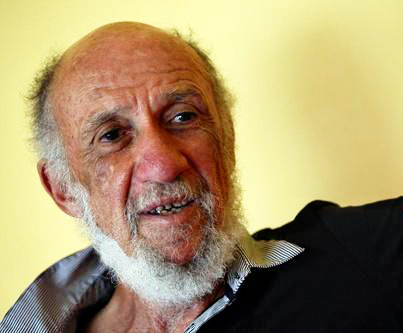
Richard Falk

By Richard Falk

Editor’s note
This is a grand essay on the dimensions, history, structures of the Middle East/Palestine-Israeli-Western conflict over about 100 years. It is extraordinarily rich – but doesn’t cause the reader to drown in too many details. I highly recommend it to any student – young or old, journalist and politician – whose understanding of the issues may be based on the woefully biased, general account in Western mainstream media.
– Jan Oberg

Preliminary Observations

In this period when the centenary of the genocidal victimization of the Armenian people in 1915 is being so widely observed and discussed, it seems especially appropriate to call attention to the comparable victimization of the Palestinian people. This second story of prolonged collective victimization also received its jump start almost a century ago with the issuance by the British Foreign Office of the Balfour Declaration supporting the Zionist movement project of establishing a Jewish national home in historic Palestine.

The most striking difference between these two experiences of severe historical wrongs is that the Armenian people are seeking acknowledgement and apology for what was done to their ancestors a century ago, and possibly seeking reparations, while the Palestinian people may sometime in the future have the opportunity to seek similar redress for the past but now their urgent focus is upon liberation from present daily structures of acute oppression.

This Palestinian situation is tragic, in part, because there is no clear path to liberation, and the devastation of oppressive circumstances have gone on decade after decade with no end in view.

The political puzzle of the Israel/Palestine conflict continues to frustrate American policymakers despite their lengthy diplomatic engagement in the search for a peaceful future that satisfies both peoples. There are significant changes, of course, that have occurred as time unwinds.

Perhaps, the most crucial change has involved the gradual extension of Israeli control over virtually the whole of historic Palestine with American acquiescence. This coincides with a growing and more vivid awareness around the world of how much suffering and humiliation the Palestinian people have endured over the course of the last century, and the degree to which this frozen situation can be blamed on the unlimited willingness of the United States to deploy its geopolitical muscle on Israel’s behalf.

My approach to the Palestinian struggle reflects four points of departure: Read More »