A quick glance at Indonesia-Malaysia

By Johan Galtung

Johan Galtung

Muhammadiyah University – Yogyakarta, Indonesia

Coming from Malaysia, the two neighbors are incredibly different. Indonesia, richer in ancient cultures, larger in territory, an archipelago of thousands of islands, has GDP/capita 3,500 and Malaysia 11,500; three times+ more. Products of brutal Western colonialism, Dutch for Indonesia, English for Malaya, which became Malaysia. Exploited, robbed, impoverished. Both hoped that World War II, fought for democracy-human rights, would end that in 1945, but got wars to keep colonialism instead–till 1949 and 1957, respectively.

Both had been occupied for 3 1/2 years by Japan going south to beat the US-imposed boycott, heading for oil resources in Indonesia (Malaysian oil not yet discovered). There was a difference: Indonesia’s future leader, Soekarno and his no. 2 Mohammad Hatta had lived in Japan, made friends and met the Dutch returning to “their” colony fighting as a free country – no such freedom in Malaya.

So, why the difference? It is almost like a social experiment.

The key is the local Chinese minority, in Malaysia used by the English against the Malay majority, as exploited workers in the tin mines, and as capitalists with their gangs in Penang and Singapore; in Indonesia also in the army and in the PKI, Indonesian Communist Party, the largest outside the Soviet bloc. Hard working, well organized, clever with money, they attracted much of the same hatred and violence as Jews in Germany and Armenians in Turkey – both ending with genocides.

So also in Indonesia, the massacre of 1965-66; planned by US think tanks and the CIA with the Indonesian government. Standard CIA tactic: rumors of imminent coup from the left, perhaps organizing some–the coup against Gorbachev 1991–and then a massive, well prepared, coup from the right. Half a million or so killed, General Suharto in power for three decades, giving USA the free access to the economy they wanted. Pillaging started and lasted; like under Yeltsin in Russia.

Riots came in 1969 to Malaysia, but the reaction was totally different: the New Economic Policy. Forty percent of Muslim Malays lived in misery, 35 percent of the economy was in English, and 20 percent in local Chinese hands. Majority Chinese from Singapore had left in 1965 and now Malaysia has a GDP/cap 55,200 by far no. 1 in ASEAN – some are still in the 1,000s.

The Malaysian government did not turn on the Chinese but lifted the bottom Malays up by positive discrimination – like across race and gender faultlines elsewhere. Read More »
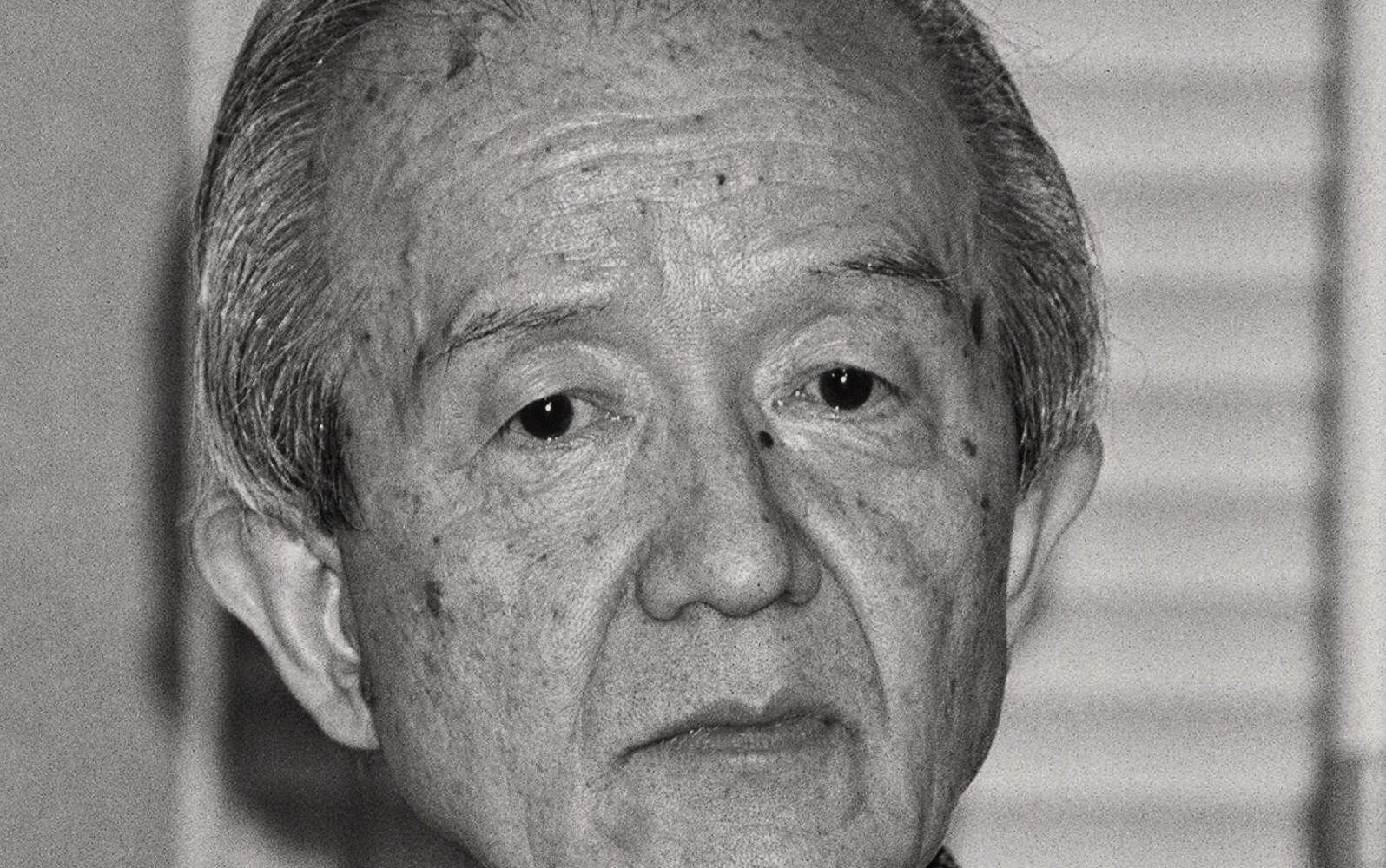
Remembering Yoshikazu Sakamoto 1927-2014 – also former TFF Associate

By Richard Falk

Richard Falk

TFF wants to express its gratitude to Yoshikazu Sakamoto who served for many years as TFF Associate.

Prefatory Note

This post is dedicated to my remembrance of Yoshi Sakamoto who died recently. Yoshi was a deeply valued friend and an important public intellectual in Japan who exerted a strong influence on the post-war generation. His political orientation, rejecting extremes of right and left, while questioning the militarist premises of the Cold War and Japan’s willingness to become America’s Asian poodle, gave him a distinctive political profile.

I am sharing these words of appreciation, and hope that anyone from Japan who comes across this text will contact me, especially if they have a way of putting me in touch with either Yoshi’s family or Japanese media. I would like to believe that ‘an American appreciation’ of Professor Sakamoto would be of interest to those who knew and admired him.

I first met Yoshi in the mid-1960s when he came to visit me at Princeton, expressing his concern about the Vietnam War and knowing of my anti-war activism. We bonded quickly and marched in a peaceful demonstration in New York City a few days later, and somehow managed to keep in fairly consistent contact until Yoshi’s death on October 2nd.

Yoshikazu Sakamoto 1927 - 2014
Read More »

Civilization clashes Occident-Orient?

By Johan Galtung

Johan Galtung

Kuala Lumpur
IAIS-International Institute of Advanced Islamic Studies & IIUM-International Islamic University of Malaysia

Yes, Islam and Christianity are on old Buddhist lands; with Muslim-Buddhist clashes in Sri Lanka, Myanmar.

Occident is the big space of the three Abrahamic religions Judaism-Christianity-Islam, with the secularisms of the first two, excluding each other. Indonesia-Philippines are in the Occident.

Orient is a big space spanned by Buddhism, which does not exclude others, not even violent state power; hence more complex. There are pure Buddhist countries: Sri Lanka, Thailand, Myanmar, Cambodia, Laos, Vietnam; and mixed Buddhist countries, with other non-exclusive world views: in China with Daoism-Confucianism, in Japan with Kami shinto-Confucianism, and in Korea with Confucianism and Christianity.

The world religioscape started with Read More »

Why foreign military intervention usually fails in the 21st century

By Richard Falk

Richard Falk

When Nehru was taking a train on his return to India after studying abroad he read of the Japanese victory over Russia in the 1904-05 Russo Japanese War. At that moment he had an epiphany, realizing the hitherto unthinkable, that the British Empire was vulnerable to Indian nationalism. An earlier understanding of the colonial reality by native peoples generally subscribed to the postulates of hard power primacy making it futile or worse to challenge a colonial master, although throughout history there were always pockets of resistance.

This soft power attribute of colonial hard power by way of intimidation and a façade of invincibility is what made colonialism efficient and profitable for so long at the great expense of colonized peoples.

A traditional colonial occupation assumes that the foreign domineering presence, while oppressive and exploitative, refrains from ethnic cleansing or genocide in relation to the indigenous population.

When settler versions of colonialism emerged in relation to the Western Hemisphere and regions occupied by traditional peoples that were without either population density or some kind of industrial capability, the occupier managed to achieve enduring control Read More »

Al-Baghdadi, Self-Proclaimed Caliph of the Islamic State (Part 2)

By Farhang Jahanpour

Part 1 of this series

A shorter version of this article has been published by IPS

When Ibrahim al-Badri al-Samarrai adopted the name of Abu-Bakr al-Baghdadi al-Husseini al-Quraishi and revealed himself to the world as the Amir al-Mu’minin (the Commander of the Faithful) Caliph Ibrahim of the self-proclaimed Islamic State, the whole world had to sit up and take notice of him.

The choice of the long title that he has chosen for himself is most interesting and symbolic. The title Abu-Bakr clearly refers to the first caliph after Prophet Muhammad’s death, the first of the four “Orthodox Caliphs”.

The term Husseini presumably refers to Imam Hussein, the Prophet’s grandson and Imam Ali’s son, who was martyred in Karbala on 13 October 680. His martyrdom is seen as a turning point in the history of Islam and is mourned in elaborate mourning ceremonies by the Shi’ites throughout the world on the 10th of Muharram each year, which is accompanied with many processions and self-flagellation.

Both Sunnis and Shi’is regard Imam Hussein as a great martyr, and as someone who gave up his life in order to defend Islam and to stand up against tyranny.

Finally, al-Quraishi refers to Quraish, the tribe to which the Prophet of Islam belonged.

Therefore, his chosen title is full of Islamic symbolism.

According to an alleged biography posted on jihadi Internet forums, al-Baghdadi is a direct descendant of the Prophet, but curiously enough his ancestors come from the Shi’a line of the Imams who descended from the Prophet’s daughter Fatimah.

According to this alleged biography, al-Baghdadi derives his lineage directly from nine Shi’a Imams, “Ali Al-Hadi, Muhammad al-Jawad, Ali al-Rida, Musa al-Kazim, Ja’far al-Sadiq, Muhammad al-Baqir, Ali Zayn al-Abidin, Husayn Bin-Ali, Ali Bin Abi-Talib, right up to the Prophet’s daughter Fatimah and ending in Prophet Muhammad himself.”

Despite his great hostility towards the Shi’is, is this genealogy a way of portraying himself as the true son of the descendants of the Prophet, thus appealing to both Shi’is and Sunnis?

According to the same biography, al-Baghdadi was born near Samarra, in Iraq, in 1971. It is alleged that he received BA, MA and PhD degrees in Islamic studies from the Islamic University of Baghdad. It is also suggested that he was a cleric at the Imam Ahmad ibn Hanbal Mosque in Samarra at around the time of the US invasion of Iraq in 2003. (1)

According to a senior Afghan security official, al-Baghdadi went to Afghanistan in the late 1990s, where he received his early jihadi training. He lived with the Jordanian militant fighter Abu Musab al-Zarqarwi in Kabul from 1996-2000. (2)

It is likely that al-Baghdadi fled Afghanistan with leading Taliban fighters after the US invasion of Afghanistan following 9/11.

After the US invasion of Iraq in 2003, Zarqawi and Read More »

Hong Kong and beyond

By Johan Galtung

Johan Galtung

Beijing should listen to its own excellent mantra: “One Country, Two Systems”. A part of that other system is democracy. England never practiced that during 150 years of conquest and colonialism – also fearing Hong Kong might vote themselves into independence from UK – but that low standard is no excuse.

And democracy today rides on an expanding agenda, much more than periodic fair and free multi-party national elections which China does not practice, for its own reasons.

China experiments with local democracy and Hong Kong is local. Democracy today moves in favor of direct election of the Chief Executive; in the Hong Kong case governor, in 2017. That means having a choice among candidates with different visions, not a governor appointed, be that by Beijing or by the governing council of Hong Kong.Read More »

May peace prevail on earth – not only on Peace Day but every day

By Johan Galtung

Johan Galtung

What a good idea, this day! To reflect, take stock, to enjoy peace, to deplore non-peace.21 sep day of peace

And the first reflection is this: peace is the normal condition of humanity, just like health. There is so much plain, simple, decent behavior around, so much mutual aid, a helping hand, companionship, friendship, good neighborhood when bad luck strikes at its worst. And we sense mutuality, unquestioning reciprocity; not always but mostly.

Go to an airport, stay close to where they come out, arrival, and are met by their nearest–watch the embraces, the warmth, the eyes glittering, the smiles, laughter. There we are. Harmony, resonance–with the occasional deep, joint sadness, sorrow; something has struck.

Go to a restaurant, not too stiff, formal–more ordinary eatery. And you see it again, the pleasure, food, drinks, togetherness, the shared pleasure – the jokes, the smiles.

Most of the time – then some incident, issue arises.Read More »

A hard fist inside a velvet glove

By Jonathan Power

Despite Ukraine, Syria, Iraq, Libya, Afghanistan, Israel/Palestine and Southern Sudan the world is a lot more peaceful than it was at the end of the Cold War and shows no sign of returning to the bad old days when there were some 25 wars going on every year. Now it is down to about a dozen.

The task today is to keep that number going down – a difficult job when the outbreak of conflict in Syria, Libya and Ukraine have turned the graph upwards a few notches for the first time.

Protagonists in political quarrels tend to push the non-violent activists to one side – as they have done in Syria, Libya, Gaza and Ukraine.

This is not a good tactic as these situations have clearly shown. In Syria whole parts of cities have been reduced to rubble. Likewise in Gaza. In Ukraine this is starting to happen.

In the current issue of Foreign Affairs Erica Chenoweth and Maria Stephan argue that the prospects for civil resistance to bring about political change are commonly undersold.Read More »

TFF PressInfo 277 – After all this, what?

A couple of messages to NATO’s Summit

By Jan Oberg, TFF co-founder

Jan Oberg

Lund, Sweden September 5, 2014.

Yugoslavia then and now

TFF’s first report from Yugoslavia from September 1991 carried the title, After Yugoslavia – What? It is now one of 127 reports and articles in the huge research and policy blog – Yugoslavia – What Should Have Been Done?

It contains the equivalent of 2000 book pages authored by Johan Galtung, Jan Oberg and Hakan Wiberg. All articles are published as they were written at the time. For anyone to see whose analyses stood the test of time.

We opened this blog two days ago – on the 23rd year of TFF’s first of some 70 peace missions into the war zones.

While it is important to analyse the world, it is more important to criticise it and most important to search – and re-search – alternatives to it. Thus the title. You are kindly invited to browse.

Such work is not only of historical interest. It carries a message for the future – as does all good research.

While inner factors were certainly dominant, the West – in its misguided attempt at playing peace maker – Read More »

Easing up on drugs; toughening up on alcohol

By Jonathan Power

August 19th 2014

Not that long ago in Britain, the great detective Sherlock Holmes, could quite legally sit by the fire with his pipe and sniff cocaine. If friends wanted to join him, without fear of a police raid, they could smoke marijuana. Opium was used for those in unbearable pain. (Alas, most people in poorer countries have never been able to afford any pain relief. Too often they die in agony. Mind you, when the British controlled India they became the largest drug trafficker the world has ever seen, forcing Chinese ports open so they could win opium addicts among the poor.)

Even in Islamic countries alcohol was at one time tolerated. (In Turkey and Egypt it still is.) But in most Islamic societies it was eventually banned and for a while, more than a hundred years ago, so was coffee.

These days, when it comes to drugs and tobacco, in most societies the degree of control is subject to fierce debate and when it comes to drugs, banning them seems to be the majority conviction. But are the priorities right? In the US hundreds of thousands of young men languish behind bars for long sentences, convicted of possessing quite small amounts of drugs. Meanwhile, in American and European hospitals the victims of car crashes caused by alcohol pour through the doors. Tax money often pays the bill. Smokers with their cancers fill many hospital wards and taxpayers pay the billions of dollars it costs. A good idea would be to make drinkers and smokers pay their own hospital bills.

In Britain alcohol consumption is on the rise. David Beckham is teetotal but Read More »