A quick glance at Indonesia-Malaysia

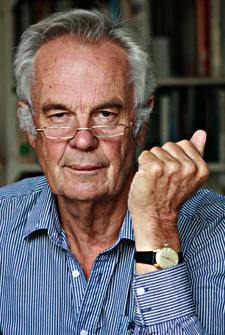
By Johan Galtung

Johan Galtung

Muhammadiyah University – Yogyakarta, Indonesia

Coming from Malaysia, the two neighbors are incredibly different. Indonesia, richer in ancient cultures, larger in territory, an archipelago of thousands of islands, has GDP/capita 3,500 and Malaysia 11,500; three times+ more. Products of brutal Western colonialism, Dutch for Indonesia, English for Malaya, which became Malaysia. Exploited, robbed, impoverished. Both hoped that World War II, fought for democracy-human rights, would end that in 1945, but got wars to keep colonialism instead–till 1949 and 1957, respectively.

Both had been occupied for 3 1/2 years by Japan going south to beat the US-imposed boycott, heading for oil resources in Indonesia (Malaysian oil not yet discovered). There was a difference: Indonesia’s future leader, Soekarno and his no. 2 Mohammad Hatta had lived in Japan, made friends and met the Dutch returning to “their” colony fighting as a free country – no such freedom in Malaya.

So, why the difference? It is almost like a social experiment.

The key is the local Chinese minority, in Malaysia used by the English against the Malay majority, as exploited workers in the tin mines, and as capitalists with their gangs in Penang and Singapore; in Indonesia also in the army and in the PKI, Indonesian Communist Party, the largest outside the Soviet bloc. Hard working, well organized, clever with money, they attracted much of the same hatred and violence as Jews in Germany and Armenians in Turkey – both ending with genocides.

So also in Indonesia, the massacre of 1965-66; planned by US think tanks and the CIA with the Indonesian government. Standard CIA tactic: rumors of imminent coup from the left, perhaps organizing some–the coup against Gorbachev 1991–and then a massive, well prepared, coup from the right. Half a million or so killed, General Suharto in power for three decades, giving USA the free access to the economy they wanted. Pillaging started and lasted; like under Yeltsin in Russia.

Riots came in 1969 to Malaysia, but the reaction was totally different: the New Economic Policy. Forty percent of Muslim Malays lived in misery, 35 percent of the economy was in English, and 20 percent in local Chinese hands. Majority Chinese from Singapore had left in 1965 and now Malaysia has a GDP/cap 55,200 by far no. 1 in ASEAN – some are still in the 1,000s.

The Malaysian government did not turn on the Chinese but lifted the bottom Malays up by positive discrimination – like across race and gender faultlines elsewhere. Read More »
Why foreign military intervention usually fails in the 21st century

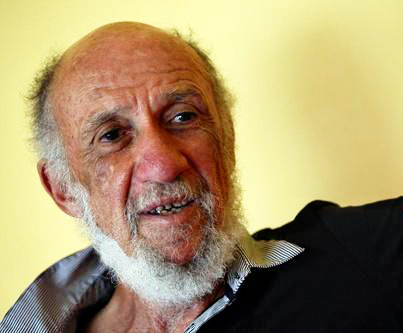
By Richard Falk

Richard Falk

When Nehru was taking a train on his return to India after studying abroad he read of the Japanese victory over Russia in the 1904-05 Russo Japanese War. At that moment he had an epiphany, realizing the hitherto unthinkable, that the British Empire was vulnerable to Indian nationalism. An earlier understanding of the colonial reality by native peoples generally subscribed to the postulates of hard power primacy making it futile or worse to challenge a colonial master, although throughout history there were always pockets of resistance.

This soft power attribute of colonial hard power by way of intimidation and a façade of invincibility is what made colonialism efficient and profitable for so long at the great expense of colonized peoples.

A traditional colonial occupation assumes that the foreign domineering presence, while oppressive and exploitative, refrains from ethnic cleansing or genocide in relation to the indigenous population.

When settler versions of colonialism emerged in relation to the Western Hemisphere and regions occupied by traditional peoples that were without either population density or some kind of industrial capability, the occupier managed to achieve enduring control Read More »

TFF PressInfo 291: Coping With the Loss of a Close Enemy

Perestroika as a Challenge to the West

By Jan Oberg

Jan Oberg

Written April 1990
Published in Bulletin of Peace Proposals 3-1990, pp 287-298 and on TFF’s homepage at the same time

1. Four hypotheses

The West has lost a close enemy, the Soviet Union and Eastern Europe. Which reactions can be discerned and what psycho-political emotions are they indicative of? How did the West cope with the first years of this new post-Cold War situation? Can we mourn the death of an enemy, can we heal ourselves after the loss? How does one learn to live a new life without a close enemy? Has the West done what it ought to do for itself and for the former enemy?

“The West” of course is a term hanging loose. We employ it in this article as meaning interchangeably “NATO, the Western hemisphere, the United States and Western Europe and a few cases, Western or Occidental culture”.

The first hypothesis of this essay is that the West, i.e. the Western part of the Occidental civilization, is traumatized by the loss of its Eastern brother.

The second is that we have discussed far too little what it means for the West and projected all our attention on the Soviet Union, i.e. acted as spectators in a certain sense.

The third hypothesis, therefore, is that the West is increasingly stuck in a self-congratulatory “we have won the cold war and socialism is dead” attitude which only increases the likelihood that it will be taken even more by surprise in the future.

And the fourth hypothesis is that the changes in the Eastern Occidental brother occur simultaneously with a number of challenges within the Western Occidental system and is bound, ultimately, to pose an overwhelming challenge to our own system. There is now an historical opportunity, a new political space and time to be filled by cooperation and exciting visions of a common future. We believe that the West has something to learn from the idea, not the content, of perestroika, i.e. experimenting with deep non-violent change in one’s own system the outcome of which cannot be known with any precision.

Czech playwright and president, Václav Havel, when in January 1990 adressing the Polish sejmen, argued that Eastern Europe should not be seen as a poor dissident or a bewildered prisoner set free but “as someone who has something to offer, namely spiritual and moral inspiration, daring peace initiatives, an unexploited creative potential, an ethos of new freedom and impulses toward bold and quick-moving solutions.” And he rounded off this speech with the following words (author’s translation again): “The most dangerous enemy today is not the dark forces of totalitarianism, intriguers or leagues of gangsters – it is our own dark sides. My program as president is therefore based on the principle of infusing spirituality, moral responsibility, humanity and humility into politics and, thus, insist on there being something higher than we humans, that our deeds shall not disappear into the dark holes of our time but be preserved, somewhere, investigated, evaluated – that we have neither a right nor a reason to maintain that we understand everything or can do everything.”

One may wonder with whom in the West Havel can have a dialogue at this level? Who in the West would respond in these existential and visionary terms? Why is the response of the West first of all Read More »

From Third World to First World – Brazil’s election

By Jonathan Power

Brazil has long lived out its personal fantasy as the archetypal relaxed, tolerant and gregarious country with Copacabana beach, the samba, the carnival and a great deal of sexual freedom. It is now living out in real time its almost forgotten societal dream, an economic-cum-social revolution.

The retired president, Luiz Inacio “Lula” da Silva, bequeathed the nation a vibrant capitalist economy with a human face – an economy that has raised income per head quite substantially (it is now four times that of China), has almost abolished daily hunger and given the large majority of the poor an income supplement in return for families sending their children to school.

Still, after 8 years of Lula and 4 years of his hand-picked successor, Dilma Rousseff, the country struggles to stay ahead of its burgeoning population, the inequities of the feudal land system that cast millions into shanty towns and a murder rate in the slum favelas that is more akin to a war zone than a normal society.

Brazil remains one of the most Read More »

Blame the British for Hong Kong’s democratic deficit

By Jonathan Power

September 9th 2014

When 17 years ago the British lowered the Union Jack on their last remaining important colony, Hong Kong, Chris Patten, the governor, buried his face in his hands for the entire world to see and felt the profoundest sentiment a proud and ambitious politician could experience – failure.

It was indeed a personal failure to be added to his other great misfortune, the timing of elections back home in Britain that made it impossible for him to become prime minister. But on that damp evening it was the people of Hong Kong, those who knew him well could tell, that pierced his conscience. The British had let them down. They were giving up a colony having unaccountably failed not to leave it a functioning democracy.Read More »

Hong Kong and beyond

By Johan Galtung

Johan Galtung

Beijing should listen to its own excellent mantra: “One Country, Two Systems”. A part of that other system is democracy. England never practiced that during 150 years of conquest and colonialism – also fearing Hong Kong might vote themselves into independence from UK – but that low standard is no excuse.

And democracy today rides on an expanding agenda, much more than periodic fair and free multi-party national elections which China does not practice, for its own reasons.

China experiments with local democracy and Hong Kong is local. Democracy today moves in favor of direct election of the Chief Executive; in the Hong Kong case governor, in 2017. That means having a choice among candidates with different visions, not a governor appointed, be that by Beijing or by the governing council of Hong Kong.Read More »

ISIS, militarism and the violent imagination

By Richard Falk

Richard Falk

Before ISIS

The beheading of American and British journalists who were being held hostage by ISIS creates a truly horrifying spectacle, and quite understandably mobilizes the political will to destroy the political actor who so shocks and frightens the Western sensibility, which is far from being free from responsibility for such lurid incidents.

Never in modern times has there been a clearer example of violence begetting violence.

And we need to ask ‘to what end?’ Political leaders in the West are remarkably silent and dishonest about what it is that they wish to achieve in this region beset since 2011 by a quite terrifying outbreak of political extremism, whether from above as in the cases of Syria, Egypt, and Israel or from below as with ISIS and al-Nusra.

It is difficult to recall that at the start of 2011, just three years ago, progressive voices around the world were inspired by the Arab upheavals, especially in Egypt and Tunisia, that burst upon the political scene unexpectedly.

These extraordinary events appeared to repudiate the prevailing patterns of authoritarian, exploitative, and corrupt collaboration between oppressive domestic elites, neoliberal economic forces, and the regional imperial juggernaut that had kept this humanly disastrous reality stable for so long. Yet even during that time of optimism about the Arab future, a closer scrutiny of what was happening disclosed many reasons to be worried. It is helpful to look to this recent past to have some comprehension of the perplexing present.

A Revolutionary Spirit Without Revolutionary Action

The goals of these upheavals were far too ambitious to be realized by such limited challenges directed at the established order. These movements were essentially confined to getting rid of a hated ruler. Read More »

A hard fist inside a velvet glove

By Jonathan Power

Despite Ukraine, Syria, Iraq, Libya, Afghanistan, Israel/Palestine and Southern Sudan the world is a lot more peaceful than it was at the end of the Cold War and shows no sign of returning to the bad old days when there were some 25 wars going on every year. Now it is down to about a dozen.

The task today is to keep that number going down – a difficult job when the outbreak of conflict in Syria, Libya and Ukraine have turned the graph upwards a few notches for the first time.

Protagonists in political quarrels tend to push the non-violent activists to one side – as they have done in Syria, Libya, Gaza and Ukraine.

This is not a good tactic as these situations have clearly shown. In Syria whole parts of cities have been reduced to rubble. Likewise in Gaza. In Ukraine this is starting to happen.

In the current issue of Foreign Affairs Erica Chenoweth and Maria Stephan argue that the prospects for civil resistance to bring about political change are commonly undersold.Read More »

TFF PressInfo 277 – After all this, what?

A couple of messages to NATO’s Summit

By Jan Oberg, TFF co-founder

Jan Oberg

Lund, Sweden September 5, 2014.

Yugoslavia then and now

TFF’s first report from Yugoslavia from September 1991 carried the title, After Yugoslavia – What? It is now one of 127 reports and articles in the huge research and policy blog – Yugoslavia – What Should Have Been Done?

It contains the equivalent of 2000 book pages authored by Johan Galtung, Jan Oberg and Hakan Wiberg. All articles are published as they were written at the time. For anyone to see whose analyses stood the test of time.

We opened this blog two days ago – on the 23rd year of TFF’s first of some 70 peace missions into the war zones.

While it is important to analyse the world, it is more important to criticise it and most important to search – and re-search – alternatives to it. Thus the title. You are kindly invited to browse.

Such work is not only of historical interest. It carries a message for the future – as does all good research.

While inner factors were certainly dominant, the West – in its misguided attempt at playing peace maker – Read More »

The big crises – NATO and demonstrators both fail

By Jonathan Power

September 2nd 2014

Violence should have had its day. Look at its non-achievements: The US/British/French invasions of Iraq, Afghanistan and Libya. The upheavals of the “Arab Spring”. And now Ukraine.

Will we ever learn its limitations?

In Iraq outsiders’ violence overthrew the dictator Saddam Hussein who for all his faults provided stability, safety on the streets, food, a falling infant mortality rate and universal health services. What did it substitute beside the worthwhile job of killing off Saddam?

Mayhem, tens of thousands of deaths of innocents, fear of the street, shortages of food, upheavals in the health services and schools. And an ongoing instability, not least the opening given to ISIS.

In Libya, Read More »