There is no more reliable guardian of entrenched conventional wisdom than The Economist. And so when its cover proclaims ‘the new world order,’ and removes any ambiguity from its intentions, by its portrayal of Putin as a shirtless tank commander with menacing features.
No such iconography accompanied the last notable invocation of the phrase ‘new world order’ by George H. W. Bush in mobilizing support for a forcible response to the Iraqi invasion and annexation of Kuwait in 1990, the dirty work of Saddam Hussein. Read More »
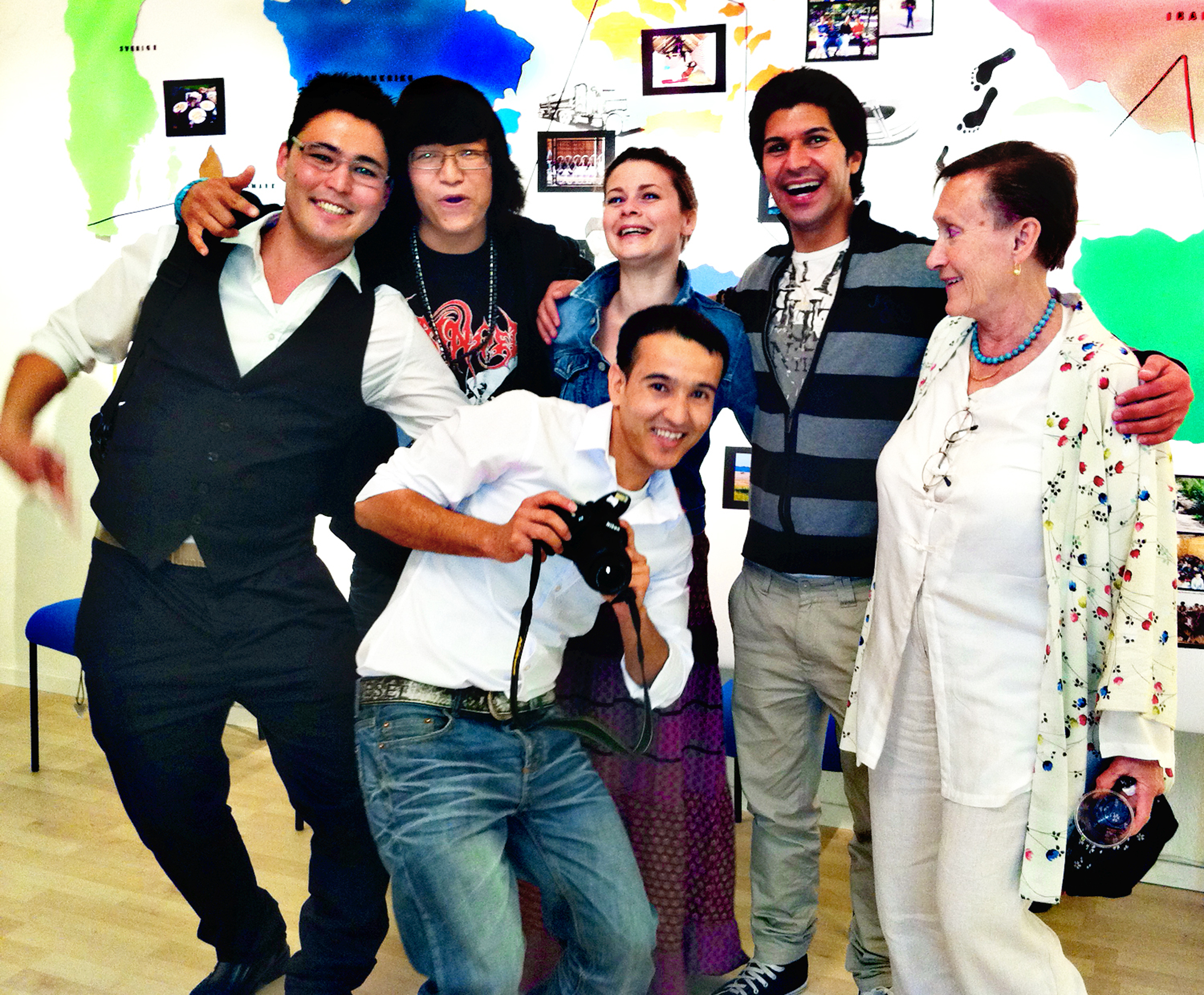
Kanske du associerar TFF med Jugoslavien, Burundi, Irak, Iran, ickevåld och fredsdebatt? Men vi har i tre år också arbetat med frågor kring integration med tonvikten lagd på ensamkommande barn från Afghanistan. Insatsen här har letts av författarna av denna projektsammanfattning.
“När vi åkte gummibåt över Turkiets hav till Samos i Grekland greps vi av Grekiska poliser. Poliserna kastade alla våra kläder i havet och gjorde små hål i vår båt.” Ali
“På kvällen satt vi i en båt. Vi åkte till Grekland. På vägen till Grekland fick vi problem med båten. En polisbåt kom och klippte sönder en del av motorn. Vi paddlade med händerna och fyra åror.” Hassan
Vi lever i en märklig tid. Framför våra ögon pågår en stor migrationsvåg av ensamma barn. Något liknande har inte hänt sedan de finska vinterkrigsbarnen kom till Sverige på 40-talet.
De barn, som utan föräldrar, nu flytt hit undan krigets fasor har gjort en annan resa. De kommer från länder vi inte vet mycket om. Vilka är dessa barn och ungdomar, vad tänker de på och hur är livet i Sverige? Vi har lärt känna och lyssnat till några av dem. De är alla från Afghanistan.
Hur deras berättelser kommit till och vad de har att säga kan man läsa i denna rapport, som summerar tre års projektarbete. Här kan man också få veta hur vi sökt arbetsformer som kan underlätta den svåra etableringsfasen.
Vid öppnandet av en utställning
Vi berör också det komplicerade i att återförenas som familj.
Vi vänder oss till alla som arbetar med barn, ungdomar och föräldrar. Men också till alla som är nyfikna på vad som sker i vår samtid.
Känns läsningen tung – bläddra vidare till pojkarnas berättelser och det öppnas en ny värld.
En av de unga sammanfattar vår tid tillsammans såhär:
– “Jag har fått hjälp, ni har fått hjälp, vi hade kul!”
Som broar över mörka vatten – ett integrationsprojekt har haft som övergripande syfte att stärka människor i övergångsskeden i livet. Målgrupper har varit nyblivna föräldrar, ensamkommande flyktingbarn/ungdomar samt föräldrar som kommit till Sverige som flyktingar eller som anhöriginvandrare till ensamkommande flyktingbarn och ungdomar.
De övergångsskeden som stått i fokus är att bli förälder och att migrera. I det senare fallet handlar det om att bryta upp från ett socialt sammanhang och finna sig till rätta i ett nytt. I migrationsprocessen ingår ofta också att återförenas som familj efter år av splittring.
Of course it is illegal and of course it will be rigged, that referendum in Crimea today. And of course it is a ploy and comes only in the wake of Russia’s (read Putin’s) unprovoked aggression, used as a pretext to build a new Greater Russia.
That is, if you browse the mainstream Western media the last week and on this Sunday morning.
Referendum means referring an issue back to the people. It is – or should be – an important instrument in democracies. And it’s a much better instrument than war and other violence to settle complex conflicts.
Generally, citizens-decided conflict-resolution is likely to last longer and help healing wounds of the past than any type of solution imposed by outside actors.
In Switzerland citizens go and vote on all kinds of issues on many a Sunday throughout the year. Sweden has used it to decide about nuclear energy, Denmark about EU membership and – in 1920 – to solve the conflicts in Schleswig-Holstein and define the future border between Germany and Denmark. Referendums, binding as well as non-binding, are an accepted instrument in many countries.
Why did the West not use referendums?
The West likes to pride itself of its type of democracy whenever and wherever it can. But it doesn’t use the referendum instrument that often. Read More »
“We don’t see things as they are but as we are” – Anais Nin
By Jan Oberg
Lund, Sweden – March 5, 2014
How can we begin to understand the events in Ukraine? Who are the conflict parties and elements?
Here is a quick checklist of 13, just a selection:
1. Ukraine – government (earlier/present), opposition (split), people (19 ethnic groups + Ukrainians abroad). Crimea with its diversity and Ukraine’s relations to neighbours – enough for a doctoral dissertation.
2. Russia – the Commonwealth of Independent States, the Customs Union of Belarus, Kazakhstan and Russia and Russia’s more or less strong partners such as Syria.
3. Europe – the EU and European non-EU countries such as e.g. Turkey
4. The United States – the world’s only empire, with a foreign policy establishment in Washington deeply split in neo-conservatives on the one hand and Obama and the rest on the other.
5. China – with an increasing influence worldwide, including conspicuously in Ukraine
6. BRICS – Brasil, Russia, India, China and South Africa
7. World financial organisations such as the International Monetary Fund, IMF, finance institutions, banksters and those others who influence and can ”pay the bills” (and get to own the property) in Ukraine
8. Inter-governmental organisations – the UN, NATO, OSCE and othersRead More »
As Iran and the world powers resume nuclear talks in Vienna with the hope of reaching a comprehensive agreement over Iran’s nuclear program by mid-July, the Israelis and their lobbyists in Washington are intensifying their efforts to scuttle the talks. In addition to all the efforts in the US Congress to impose additional sanctions on Iran, thus bringing the talks to a premature end, there are indications that Israel and her friends are continuing with various acts of sabotage against Iranian nuclear facilities.
In 2010, the so-called Stuxnet virus temporarily disrupted the operation of thousands of Iranian centrifuges. At least five Iranian nuclear scientists have been assassinated. Iran has also said that it has discovered tiny timed explosives planted on centrifuges but has disabled them before they could go off. On Monday 17 March 2014, Iran said that an alleged attempt to sabotage one of its nuclear facilities had involved foreign intelligence agencies that had tampered with imported pumps. However, in addition to all those acts of sabotage, there seems to be an intensive effort to manufacture a crisis by means of false intelligence.
Prior to the devastating Iraq war that destroyed the country and killed upwards of half a million people, not to say anything of thousands of Coalition forces who were killed and the two trillion dollars that was spent, a number of neocons bent on the invasion of Iraq manufactured various false reports in order to mislead the public and pave the way for the war.
On September 8, 2002, Michael R. Gordon and Judith Miller published a story in the New York Times that openly alleged that Saddam Hussein had intensified his quest for a nuclear bomb. They wrote: “In the last 14 months, Iraq has sought to buy thousands of specially designed aluminum tubes, which American officials believe were intended as components of centrifuges to enrich uranium… Bush administration officials say the quest for thousands of high-strength aluminum tubes is one of several signs that Mr. Hussein is seeking to revamp and accelerate Iraq’s nuclear weapons program.”
The unsuspecting public was misled by that false intelligence and the result was one of the longest and most disastrous wars in US history.
How the manufactured crisis was manufactured
In his latest groundbreaking book, entitled A Manufactured Crisis: The Untold Story of Iran Nuclear Scare, the historian and investigative journalist Gareth Porter catalogs a long list of false reports manufactured by Israeli intelligence agencies in order to mislead the public and pave the way for a war against Iran. (1)
Islamabad, Ministry of Foreign Affairs, 28 Feb 2014
Your Excellencies,
The basic point is that Pakistan will not get that commodity called “peace” in Kashmir, Afghanistan and Central Asia by pursuing the ends and means of Washington and some local elites only. For peace to blossom the goals of other parties also have to be considered; and they are many. The logic of the political games pursued today presupposes some kind of victory or domination of “our side”: neither feasible nor desirable for peace. Hence, the need for some visions for peace politics is Kashmir, Afghanistan and Central Asia for tomorrow or the day after, with the hope that they can be useful when you have come to the end of the road with current policies. Nothing of this is easy; and without visions even impossible.
The fairly detailed, non-dogmatic vision appended (below) was my acceptance speech of the 2011 Abdul Ghaffar Khan International Peace-Builder Award by the Pakistan-American Muslim Association.
However, why do present policies so often seem to be non-starters?
The British empire drew three lines with disastrous effects for Pakistan: the Durand line in 1893, a 1,600-mile wound defining the border with Afghanistan, dividing the Pashtun nation – the biggest nation in the world without a state – into two parts; the McMahon line of 1914 defining the border with China in ways unacceptable to the Chinese; and the Mountbatten line of 1947 leading to the catastrophic violence of the partition. These lines have to be negated, liberating Pakistan from that past. Read More »
The drum beats are already sounding for the soon-to-be-held general election in the world’s largest democracy, India- the country that shows China how it should be done.
There is a sense in the country that the ruling Congress Party and the influential Gandhi/Nehru core of it is on its way out after 10 years of a government that has hit the high points and the lows. To my mind, if the inexperienced Rahul Gandhi steps back from offering his own candidacy for prime minister and his mother, Sonia Gandhi, president of the party, pushes to the fore the very clever finance minister, Palaniappan Chidambaram, Congress is still in with a chance.
If not, the BNP candidate, Narendra Modi, looks like romping home, despite the cloud hanging over him as chief minister of the state of Gujarat at the time of Hindu-Moslem riots in 2002 when, it is said, he didn’t use his authority to halt the rampaging Hindus who slaughtered Muslims. The Supreme Court later absolved him and now the US has lifted its refusal to give him an American visa. Many say he now has a clear run.Read More »
In mid-January there was a vote in Egypt as to whether to approve a constitution drafted by a 50-person committee appointed by the interim government put in place after the military coup carried out on July 3, 2013. The constitution was approved by 98.1% of those who voted, 38.6% of the eligible 53 million Egyptians.
This compares with 63.8% support received by the constitution prepared during the presidency of Mohammed Morsi from the 32.9% of the Egyptian citizenry that participated in the vote. It should be observed that this new constitutional referendum was boycotted by both the Muslim Brotherhood (MB) and various of the youth groups that has been at the forefront of the anti-Mubarak upheaval in 2011.
Also the validity of the vote was further discredited because of the atmosphere of intimidation in Egypt well conveyed by the pro-coup slogan: “You are either with me or with the terrorists.” Not only had the MB been criminalized, its assets seized, its leaders jailed, its media outlets shut down, but anyone of any persuasion who seemed opposed to the leadership and style of General el-Sisi was subject to arrest and abuse.
In the background here are questions about the nature of ‘democracy,’ and how to evaluate the views of people caught in the maelstrom of political conflict. On one level, it might seem that a vote of over 90% for absolutely anything is an expression of extraordinary consensus, and as a result el-Sisi’s constitution is far more popular than Morsi’s constitution, and hence more legitimate. Reflecting on this further makes it seem evident, especially when the oppressive context is to taken into account that the one-sided vote should be interpreted in the opposite manner, making Morsi’s vote more trustworthy because it reached plausible results.
Any vote in a modern society that claims 98.1% support should be automatically disregarded because it must have been contrived and coerced.Read More »
The meeting in Geneva about Syria resumes today. It is destined to become a historic failure. Most observers will blame either of the armed Syrian parties – the government or the rebels – for adhering unbendingly to their mutually exclusive positions.
But that isn’t fair. Those who set themselves up as conflict-managers, mediators, negotiators and peace-makers and called the meeting must also take responsibility for its failure. It is the UN, the Arab League and several governments, various NATO countries and Russia (”facilitators” in the following).
This article is about how to achieve a negotiated peace.
Here follow 8 – out of many more – professional criteria that are useful for an evaluation of Geneva. Summary at the end:
1) How well do the facilitators understand what the conflict is about?
It’s about history, suffering, socio-economic crisis, foreign involvement, traumas and constitutional matters; it’s about vicious cycles of violence and arms traders’ profits.
No conflict is only about one top leader and, as we know from Iraq, Libya and elsewhere, conflicts are not solved by that leader leaving the stage. And no conflict is about only two sides, one with all the good people on one side and one with all the evil ones.
Further it is reasonable to say that Syria is a stage for a much larger conflict being played out: the wider Middle East as well as among actors who are competing for power in tomorrow’s world. Read More »
An optimistic prediction held by some; but what does it mean?
Let us define that “middle” as thousand years, 250-1250, from the start of the West Roman Empire declining (completed in 476 – 500), to the rise of the Hanseatic League transalpina as another Europe (completed around 1500 with protestantisms, Luther-Zwingli-Calvin; Anglicans).
Apart from the Crusades, 1095-1291, an early introduction to the “Modern Period”, this was a peaceful time in Europe due to the integrative forces of the “Holy Roman Empire of the German Nation” – not Holy, not Roman, not German they say – and the Vatican – Holy? – hm; Roman? Yes. 217 of the 266 popes Italian, so far; No. 2: 16 French.
The Kings ruled by intermarriages, and the Popes by theocracy, in harmony till the 11th century investiture conflict: who appoints the bishops!? The war on Islam, the Crusades 1095-1291 (Pope Urban II) was also used to unify Church and State; and also against Orthodox Christians after the schism in Christianity in 1054 (Pope Leo IX).
Europe contracting into about 500 smaller entities, duchies etc., self-centered, self-reliant, self-sufficient, living lives centered on Afterlives through salvation. “Middle”, between what and what?Read More »





 TFF Associates Blog 2011-2017