The Axis of Evil

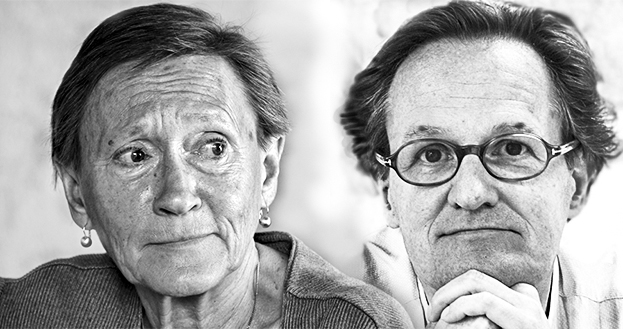
By Johan Galtung

Do you remember the Axis of Evil – Iraq-Iran-North Korea?

George W. Bush, or his speechwriter rather, concocted that axis in 2002 as focus for a global war on terror. The key term is “evil”–not “enemy”, “hostile”–the connotation being “possessed by Satan”. The proof is opposition to a USA chosen by God, as God’s Own People, as “In God we trust”. To exorcise Satan only violence works.

In 1953 North Korea under Kim Il Sung did not capitulate to the USA, only cease-fire, the first US non-victory since 1812. Very evil.

In 1978-79, Iran, by the Khomeini Islamic revolution, decolonized Iran from US dominance and evicted the shah, who had been installed by a US-UK (CIA-MI6) coup in 1953; in fact undoing 1953. Very, very evil.

On 17 May 1987 Saddam Hussein, used by the USA to fight Iran with no gains for Iraq, fired on a US vessel (USS Stark incident). Very, very, very evil.

However, for a USA, never questioning bringing US style democracy and US free market to all countries in the world, this was not seen as others having their own goals. It was seen as exactly that, evil.Read More »

Islam and the West: Roads to peace

By Johan Galtung

Alfàs del Pi, Spain – International Center for Conflict Solution – Seminar 11-13 September

The prospects are dim. Both focus on the worst in the Other, not on the best. Islam justifies terrorist violence – bombs, decapitation – as revenge with moderation; West justifies state terrorist violence – bombing, droning, sharp-shooting all over – as preventive violence. Killing ratio: like 1:99. Both are escalating in a violence race.

West is Christian-secular with secularisms–humanism, liberalism, marxism–sharing with Islam and Christianity occidental singularism and universalism, the only truth, valid for all, at all times. A miracle that we have had only the terrible Crusades 1095-1291.

One reason was geographical, in space: Islam in deserts and on islands, Christianity in the temperate zone; today both are all over. Another reason was historical, in time: Christianity in Antiquity, Islam in the Middle Ages, Christianity-secularism-colonialism-West in Modernity. Enters post-Modernity: Islam’s turn to be predominant.

Empty cathedrals and churches in Western societies with much loneliness and alienation; in Islam overfilled mosques with intense togetherness and direct sharing. The contradiction is bridged by massive conversion to Islam, more so the more loneliness; and by turning against one’s country if it joins the USA killing Muslims.

The predictable emergence of an Islamic State, Read More »

The Pope’s challenge to white America.

By Jonathan Power

September 22nd 2015.

The pope will cause waves in America during his visit this week. Invited to speak before Congress by the Speaker of the House of Representatives, John Boehner, he’ll arrive right at the time that the Republican candidates for president are touting ideas that are anathema to Pope Francis.

He detests the cruder aspects of capitalism and the consumer life style so rife in America. The culture of Wall Street and its banks, in particular their performance in precipitating the crash of 2007 and their rush to avoid culpability, he finds distasteful.

Nor has he much time for those who turn their back on the needs of the poor, the unemployed, the discriminated against, those unnecessarily imprisoned or the migrant.

Nor will American political leaders find him giving any support for the kind of wars fought by the US since 9/11. The Republicans will find him way to the left, except on the issue of abortion.

The Pope is unlikely to rattle through the statistics but I’m sure he knows what the facts are.

The US now ranks lowest among affluent nations in how it spreads its wealth. It has the worst poverty, the lowest life expectancy, the highest rate of infant mortality and the shortest (or non-existent) maternity leave among the world’s richest 21 nations.

It is nearly the worst in its mental health provisions, the degree of child poverty and its numbers of obese.Read More »

Making peace arrive in Ukraine – bring in the UN

By Jonathan Power

September 15th 2015.

On the last day of last month right wing demonstrators, mostly from neo-fascist movements, hurled themselves against the police in Kiev’s Maidan square, the same place where in February 2014 a more heterogeneous group of demonstrators effectively ousted President Viktor Yanokovych. A grenade was thrown and three people died and 120 were hospitalized, mostly policemen.

In an address to the nation President Poroshenko blamed the clashes on nationalistic forces, calling their actions “a stab in the back”. Finally the Western powers raised a voice of condemnation, although over the last year they have made little criticism of the rightist militias and parties.

That is perhaps because it would interfere with their narrative – that the demonstrators that overthrew Yanukovych were of a liberal, democratic hue. The overwhelming majority were. But the ignored fact is that the people who led the crowd and fired the bullets when the demonstrations turned ugly were these very same rightists.

Some of the leaders of the neo-Nazi organisations, especially Svoboda, went on to be appointed to senior positions in government and parliament.

The BBC’s Ukraine correspondent, David Stern, reported on September 1st: “The explosion in Maidan comes weeks after another armed incident involving volunteer militia with ties to the extreme right – a shoot out between members of the so-called Right Sector and the local police in south-western Ukraine. Although the militias have been nominally integrated into government structures, many wonder how much control Kiev actually exercises.”

The main gripe of the protestors is that Read More »

TFF 30th Anniversary Benefit Event

Lund, Sweden, September 5, 2015
Updated September 5 and our apologies if you’ve received this before.
We want to catch all and miss no one over all these years.

Dear friend!

We are happy to invite you to the TFF 30th Anniversary Benefit Event !
September 11-12, 2015

Live Lectures by videostream
Exciting lectures on world affairs and peace over two days – See program below.

This is not an invitation to visit the foundation in person.
It is an online, live video streamed event that you will be able to follow from anywhere in the world
Here is the link and it’ll also be shown via Facebook, Twitter and on our website.
And all the lectures will be available later as videos on our own video channels.

Open House at the foundation
Saturday September 12 at 14:00-17:00
It’s at Vegagatan 25 in Lund, Sweden – deadline for your registration September 7.
1. Lectures on-site with live streaming

We’ll shortly tell you the links where you may see it all and where videos will later be available.

Lecture program

Friday September 11

Live, video streamed:

16:00
September 11: Alternatives to the devastating War On Terror – Jan Oberg

17:00
TFF 30 Perspectives – TFF Associates and Board on the better world we dream of – And cheers!

Saturday September 12

Live, video-streamed 10:00-18:00

10:00
Iran And the Nuclear Issues – Gunnar Westberg

11:00
Integration – Why and how? Example: Afghan Youth In Sweden – Christina Spännar, Sweden

12:00
Nuclear abolition is necessary and possible – Gunnar Westberg, Sweden

13:00
West and East: Ukraine and New Cold War? – Jan Oberg

14:00
Human Rights And War Crimes – Jonathan Power, UK/Sweden

15:00
Women, Self-Esteem and Violence – Annette Schiffmann, Germany

16:00
Yugoslavia – What Should Have Been Done? – Jan Oberg (in Memoriam Håkan Wiberg), DK/Sweden

17:00
Media and Peace – Sören Sommelius, Sweden

18:00
Burundi’s Crisis And Possible Ways Out – Burundi expert

2. Open House hours 14-17
Buffet, drinks, coffee and tea, cakes and other sweets.
You must register your visit by September 7 at the latest at TFF30@transnational.org or call 0046 738 525200.

3. Peace with peaceful means
The day is devoted to the – ongoing – struggle for ”peace by peaceful means“ as the UN Charter puts it. Gandhi said that the “means are goals in-the-making”. To realize that noble goal remains the mission of TFF. Today we show you how and promote all related activites with the help of social media and new video technologies.

4. This is a Benefit Event – Your support to TFF please!

TFF is unique in being totally independent of government and corporate funds. It’s people-financed. No one related to TFF has a salary; we’re all-volunteer.
This provides for truly free research and permit us to be critical and constructive and practise our freedom of expression. Not everyone can boast that today!
Wars, nuclear and conventional arms, bombing raids and occupations etc. are financed by your tax money. Sadly and unfairly, no tax funds go to realise the UN norm above.

We think that people who believe that peace is better than violence should also pay something to the research, education and activism in favour of that UN norm.
If you can come to Lund on our big day or sit somewhere following our rich lecture program, we urge you strongly to make a donation. Every day over 30 years, TFF has given the world something useful.

You can do it right in the middle of our homepage – click the “Give” button or under the headline “Support” in the right-hand column where many options exist, including PayPal. It easy, fast and secure!
Cash – but no cheques – can also be donated at the event.* *

Thank you so much!

5. Videos
We’re proud to present the first two short videos – 3 more to come – in which the founders talk about various aspects of 30 years in the service of peace on the basis of questions asked by board member Annette Schiffmann. Watch, comment and subscribe!

The First

The Second

6. Brand new Online Magazine
The announced online magazine launched to mark our Anniversary is now here!

“Transnational Affairs – TFF Magazine for conflict-resolution, non-violence and peace-building”

Excited as we are, we’ll be back to you soon with more details!

Yours truly

Christina & Jan
Founders

* If you are able to come in person, you must register to TFF30@transnational.org or call 0046 738 525200 by Tuesday September 8 at the latest.

* * This does not apply to you if you have already made a donation in 2015.

Our 30 years with peace – And what happened to world peace? Part II

By Christina Spannar and Jan Oberg, TFF founders

Part 1 here

TFF was established on September 12, 1985. We think that it’s 30th Anniversary is a fitting occasion to reflect on what has happened in the big world and in our lives with the foundation.

It is also a piece of Lund’s research history in general and of peace research and education in particular.

Part 2

Weak aspects of TFF

• Being outside many networks and institutions – it has become more and more difficult to influence the world if you are small, independent and don’t accept governmental and corporate funds.

• A perception that the interest/commitment of TFF is out of sync with the sentiments of times, of the Zeitgeist. In spite of that we maintain the fundamental belief that peace is essential and that we can forget about the rest if major wars or nuclear exchanges take place.

• Too ‘academic’/theoretical to forge deeper, permanent links with public opinion and movements.

• Too ‘radical’ or ‘idealistic’ to be interesting to governments and most mainstream media.

• A constant very hard work load – resting on a small international group and on the founders in Sweden – vulnerability also in the perspective of us having gotten 30 years older.

• The struggle for funds getting more and more tough and we are much more vulnerable than, say, ten years ago. Being all-volunteer, we still have to pay the bills for what enables us to do things: the Internet, computers, travels to conflict areas, insurance, bank fees, fund-raising, phones, sending out mails, using social media, etc. 
The generosity of yesterday has been replaced by a ”stingy” attitude of being entitled to get things free in the affluent Internet-based society. This attitude implies that it is not my responsibility to finance peace, somebody else does (and the somebody else is never me). Few citizens seem to recognise that they are the taxpayers who de facto finance all the weapons and wars. 
The far majority of those who support us are idealists without particular means – while wealthy people for peace a far and few between.

TFF’s stronger sides

• We are still here, operating with amazing TFF Associates around the world who share the commitment to ‘peace by peaceful means’.

• We have remained faithful over all these years to the original ideals, not succumbing to go mainstream/politically correct to achieve more funds or appearing acceptable to the masters of war, i.e. government – neither by the way in Sweden nor Denmark.Read More »

TFF PressInfo # 342 – The iron fist inside a velvet glove

By Jonathan Power

“1789 is an historic date but it is not an historic example”. The French Revolution, violent to its fingertips, began with the highest motives, led by the most inspired and determined of people, but descended step by step into its own self-created inferno where the revolution consumed its own children.

Violence begets violence and, as Martin Luther King said, “The means and the ends must cohere. We will never have peace in the world until men everywhere recognize that ends are not cut off from means, because the means represents the ideal in the making, and the end in process. And, ultimately, you can’t reach your good ends through evil means, because the means represents the seed and the end the tree.”

According Erica Chenoweth and Maria Stephan, writing in the August, 2014, edition of Foreign Affairs, “Between 1900 and 2006 campaigns of nonviolent resistance against authoritarian regimes were twice as likely to succeed as violent movements. Nonviolent resistance also increased the chances that the overthrow of a dictatorship would lead to peace and democratic rule. This was true even in highly authoritarian and repressive countries, where one might expect nonviolent resistance to fail.”

Critics of nonviolence are always swift to cite cases when non-violent campaigns were counterproductive – the student protests in Beijing’s Tiananmen Square in 1989 and the failure of the Arab Spring where non-violent protests were hijacked by extremists, as in Syria, or were self-sabotaged by their leaders who had no strategy for the long term, as in Egypt.

More recently in Ukraine the ferment unleashed by those protesting against the rule of President Viktor Yanukovych while achieving its aim of toppling him has been compromised by the infiltration of extreme rightists which, in turn, worked to provoke Russian military intervention in the east.

All such criticisms are right. But Read More »

Hiroshima and the Dangers of a New Cold War

By Farhang Jahanpour

On the anniversary of the first use of nuclear weapons on Hiroshima and Nagasaki it is important to look back at the reasons for those barbaric acts and to look forward to what needs to be done.
The First and the Second World Wars were the most devastating wars ever waged in history. Nevertheless, although those wars killed tens of millions of human beings and destroyed many cities, the end of the Second World War witnessed the use of a new category of weapons by the United States that have the potential to end human civilization as we know it.

Grotesquely called ‘Little Boy’, the bomb that flattened Hiroshima on 6 August 1945, was a uranium bomb that killed between 130,000-140,000 civilians instantly, and many thousands later. ‘Fat Man’ that blasted Nagasaki three days later, was a plutonium bomb and killed about 70,000 people instantly.

There has been a great deal of debate about whether the use of those bombs was necessary to force Japan’s surrender and to end the war. While these debates seem archaic and a part of history, nevertheless, it is important to see whether those weapons were necessary from a military point of view, or whether they had other purposes, something that would have relevance for us today.

First of all, it is remarkable that those two bombs were dropped on two non-military targets, and the vast majority of those killed were civilians.

The two bombs were of two different types, one was a uranium and the other a plutonium bomb. They constituted the two most horrendous single instances of mass slaughter in the history of the world, yet they have not received the attention that they deserve and appropriate lessons have not been learned. It is important to point out these facts to American citizens who have been kept mainly in the dark regarding their past history.

The Germans have apologized to the Jews and to the Poles for Nazi atrocities. The Japanese have apologized to the Chinese and the Koreans, and even to the United States for failing to break off diplomatic relations before attacking Pearl Harbor. The Russians have apologized to the Poles for atrocities committed against civilians, and to the Japanese for abuse of prisoners.

The Soviet Communist Party even apologized for foreign policy errors that “heightened tension with the West.” Pope John Paul II apologized for the Catholic Church’s past behavior towards the Jews. Britain has apologized for slavery. The Australian prime minister has apologized for the treatment of the aborigines.

Yet up till now there has not been an American apology for those two horrendous acts of genocide in Japan. Read More »

Power grows out of the barrel of a gun – but then…

By Jonathan Power

Why do major powers arise? At a time when we talk about the rise of China and India, the said weakening of the US and the European Union, and the thwarted ambitions of Russia, it is a good time to ponder this question.

Between 1492 and 1914 the Europeans conquered 84% of the globe. The puzzle is why did they rise to the top when for centuries the Chinese, Japanese, Ottomans and South Asians were far more advanced?

The short answer, as Mao Zedong once said, is that “Power grows out of the barrel of a gun”.

Europeans were at the forefront of gunpowder technology for 200+ years.

This may seem odd since firearms and gunpowder originated in China and the rocket in India. Yet by the late 17th century Chinese, Japanese and Ottoman military technology was lagging behind Europe’s.

War was what monarchs did in Europe. Read More »

TPP-TTIP-Tisa: A Tipping Edge from Democracy

By Johan Galtung

Unbelievable but true: Obama, other presidents and governments are seriously contemplating to hand their countries, people and all, over to business to create the largest “free trade areas” in history with NAFTA for North America, TPP for the Pacific, TTIP to the Atlantic and TiSA, services covering some 50 states all over.

Pharmaceuticals, chemicals, textiles, chicken; communications, e-trade, financial services, insurance, what not, negotiate across the oceans how to market each other’s products across oceans, overriding domestic laws, even constitutions that stand in the way of business.

The State-Capital-People, or Government-Investors-Civil Society restructured against not only Civil Society, but Parliament and Law.

The gains for business are obvious; removing the last inter-state tariff and non-tariff barriers, and more importantly: intra-state laws and regulations impeding the free flow of goods and services to protect people and nature; except laws protecting business.

So, imagine what may happen. Read More »