
Jan Oberg’s comments on US Secretary of the Airforce, Deborah James’ advocacy for more NATO arms spending
Category: Democracy – local & global
A Warning against Kaplan’s Argument That “It’s Time to Bring Imperialism Back to the Middle East”

By Johan Galtung and Naakow Hayford
There is much to agree with Robert D. Kaplan’s 25 May 2015 publication in Foreign Policy in his well-informed analysis. And very much to disagree with, especially his wrong remedy.
Kaplan ascribes the present “chaos” – as if major changes can be orderly or take place under old much praised “order” and “stability” – to the break-down of imperialisms, in plural, starting with the collapse of the Ottoman Empire in 1918. And he manages the incredible: not a single word about who gave them that death blow: Sykes-Picot, UK-France, helped by czarist Russia. Analysis?
However, he has much positive to say about the Empire-Caliphate as an order where diverse groups had very few territorial disputes (the millet system). But he does not draw the obvious conclusion: maybe there is a longing in the whole region back to that order–without Istanbul?
True, it is Sunni but do not leave out the possibility of some genius bridging the Sunni-Shia gap by creating a political-economic-military community including both Iran and a new Saudi orientation. Kaplan leaves no opening for any such potential, even though it is desired by millions in the region. More important than ISIS is the yearning for a caliphate. That is the driving force behind ISIS.
Rather, Kaplan sees the rise of the Islamic State as a result of the collapse of the European empire Read More »
How the US Treasury Department promotes Israel’s propaganda lines

By Gareth Porter
In February, a US Department of the Treasury press release announced sanctions on three Lebanese in Africa it said were linked to a “Hezbollah terrorist cell.”
But behind that press release is a story of how the portrayal of the Lebanese by the Treasury Department was based entirely on a case constructed by Israel’s foreign intelligence agency Mossad through its Nigerian clients, and how that Treasury release suppressed publicly available facts, which made it apparent that those claims were false.
It was not the first time the Treasury Department had used its “designations” of foreign individuals and organizations to put out false and misleading information reflecting an Israeli propaganda line.
The Semantics of struggle
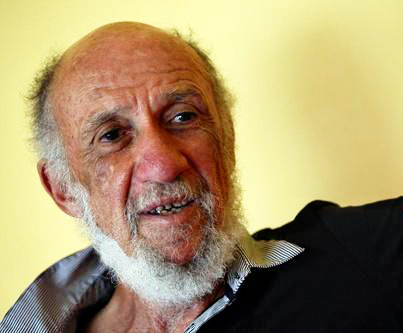
By Richard Falk
Words Against the Grain
While reporting to the UN on Israel’s violation of basic Palestinian rights I became keenly aware of how official language is used to hide inconvenient truths. Language is a tool used by the powerful to keep unpleasant realities confined to shadow lands of incomprehension.
Determined to use the rather modest flashlight at my disposal to illuminate the realities of the Palestinian ordeal as best I could, meant replacing words that obscure ugly realities with words that expose as awkward truths often as possible. My best opportunity to do this was in my annual reports to the UN Human Rights Council in Geneva and the General Assembly in New York.
My courageous predecessor as Special Rapporteur, John Dugard, deserves credit for setting the stage, effectively challenging UN complacency with language that looked at the realities lurking below the oily euphemisms that diplomat seem so fond of.
Of course, I paid a price for such a posture as did Dugard for me. Your name is added to various black lists, and doors once open are quietly closed. If the words used touched enough raw nerves, you become a target of invective and epithets. In my case, this visibility meant being called ‘an anti-Semite,’ even ‘a notorious anti-Semite,’ and on occasion ‘a self-hating Jew.’
Strong Zionist pressures have now been brought to induce legislative bodies in the United States to brand advocacy of BDS or harsh criticism of Israel as prohibited form of ‘hate speech.’ In April of this year pressures broad to bear by the British Jewish Board of Deputies led the University of Southampton to cancel a major academic conference on the Israel/Palestine conflict.
In relation to Israel’s treatment of the Palestinians, the clarifying/offending words are ‘apartheid,’ ‘ethnic cleansing,’ ‘settler colonialism,’ and ‘annexation.’ The UN evades such invasions Read More »
Apartheid and the Palestinian National Struggle
By Richard Falk
Editor’s note
This is a grand essay on the dimensions, history, structures of the Middle East/Palestine-Israeli-Western conflict over about 100 years. It is extraordinarily rich – but doesn’t cause the reader to drown in too many details. I highly recommend it to any student – young or old, journalist and politician – whose understanding of the issues may be based on the woefully biased, general account in Western mainstream media.
– Jan Oberg
Preliminary Observations
In this period when the centenary of the genocidal victimization of the Armenian people in 1915 is being so widely observed and discussed, it seems especially appropriate to call attention to the comparable victimization of the Palestinian people. This second story of prolonged collective victimization also received its jump start almost a century ago with the issuance by the British Foreign Office of the Balfour Declaration supporting the Zionist movement project of establishing a Jewish national home in historic Palestine.
The most striking difference between these two experiences of severe historical wrongs is that the Armenian people are seeking acknowledgement and apology for what was done to their ancestors a century ago, and possibly seeking reparations, while the Palestinian people may sometime in the future have the opportunity to seek similar redress for the past but now their urgent focus is upon liberation from present daily structures of acute oppression.
This Palestinian situation is tragic, in part, because there is no clear path to liberation, and the devastation of oppressive circumstances have gone on decade after decade with no end in view.
The political puzzle of the Israel/Palestine conflict continues to frustrate American policymakers despite their lengthy diplomatic engagement in the search for a peaceful future that satisfies both peoples. There are significant changes, of course, that have occurred as time unwinds.
Perhaps, the most crucial change has involved the gradual extension of Israeli control over virtually the whole of historic Palestine with American acquiescence. This coincides with a growing and more vivid awareness around the world of how much suffering and humiliation the Palestinian people have endured over the course of the last century, and the degree to which this frozen situation can be blamed on the unlimited willingness of the United States to deploy its geopolitical muscle on Israel’s behalf.
My approach to the Palestinian struggle reflects four points of departure: Read More »
TFF PressInfo # 318 – Behind every refugee stands an arms trader

The refugees in the Mediterranean
The European Union members states are trying to look as if they are doing something serious to care for the poor, catastrophe-stricken people who flee from war zones to Europe under the most risky and inhuman conditions. Apart from the lack of genuine humanism and compassion and the cynical intention to uphold the ”deterrence” factor – other features surround these tragic events.
In various media reports and political statements the word ”refugee” is increasingly being replaced by ”migrant” – hardly just a coincidence given the fact that the number of refugees, internally displaced persons and asylum-seekers passed 50 million fellow human beings worldwide last year.
Migrants and refugees
A migrant, according to the UN, is a person who is engaged in (seeking) a remunerative activity in a state of which he or she is not a national. A refugee is an entirely different person who is outside his or her home country because of having suffered (or feared) persecution on account of race, religion, nationality, or political opinion; because he or she is a member of a persecuted social category of persons; or because they are fleeing a war. A refugee has the right to seek asylum and shall not be penalised for his or her illegal entry or stay.
More here.
“Seeking a better life” ?
Add to that the now often repeated but totally misleading wordingRead More »
Gandhi and Mandela: Two South Africans
By Johan Galtung
Mohandas Gandhi invented the nonviolent approach to basic social change, Satyagraha, in South Africa in the early 20th century; Nelson Mandela presided over the birth of a one person-one vote democracy at the end of the century. Both were lawyers, trained in English Common Law; good in the sense of a keen consciousness of what is right and wrong, bad in the sense of a court process identifying who is in the wrong rather than solving underlying conflicts, and wrong in the sense of punishing the wrong-doer; violence rather than cooperation.
Both built on the positive side of law – the indelible rights of the people for whom they were fighting by comparing empirical facts with normative rights; immigrant Indians in the case of Gandhi, original inhabitants in South Africa, the Blacks, in the case of Mandela.
Gandhi (1869-1948) did not live to see equality between Indians and whites in South Africa, but in India, his mother-father land; Mandela (1918-2013) did. They won their struggles – but the societies that emerged still suffer from other and major ones.
A deep culture united them: the culture of law. Read More »
Political freedom – up or down?

By Jonathan Power
Last week democracy won a handsome victory in Nigeria. An election that had everybody on edge for fear of internecine killings involving militants from the two main competing parties, against a backcloth of the war of attrition waged by the nihilist, extremist, Islamist movement, Boko Haram, led pundits to fear the worst. It did not happen. Nigeria gave of its best.
Indeed, the real winner was the looser, the present president, Goodluck Jonathan. He graciously phoned the winner, Muhammadu Buhari, to concede the election. His attitude to his defeat kept the peace.Read More »
Stalin the Communist and Mao the Commune-ist
By Johan Galtung
Churchill and Hitler made history but did not change it; after the war their societies found their old forms. Stalin and Mao changed their much bigger societies basically, and gave the Westphalian state system new fault-lines, alliances: anti-Russia-USSR, anti-China-DPRC.
There was also a short lasting USSR-DPRC alliance 1949-53, when Stalin was alive. But when he was murdered the banner as leader of the rapidly expanding Communist World was not passed on to the biggest country, but stayed in Moscow. The new leader was not Mao Zedong but the colorless Malenkov. Surface level conflict; and important.
But the concept of a monolithic Communist as opposed to a Free world survived in a US mind slow at capturing or admitting deeper aspects of reality, but quick at projecting themselves on the world.
The deep differences between the Western civilization of which Russia was and is a part, and Chinese civilization of course also affected their communisms. So let us explore what happened to these two huge projects.
They were similar on three basic points: ending feudalism in the countryside; capitalism in the cities down; and imperialists – foreign forces – out. This is already a lot, and since the imperialism was mainly Western forces strongly linked to feudal-capitalist economic interests and systems – also culturally in both cases – strong political and military cleavages took shape; with the USA playing double roles.Read More »
Hitler and Stalin: Two Europeans
By Johan Galtung
Hitler was about race, Stalin about class. Their theories were based on one contradiction: Aryans vs non-Aryans for one; workers vs capitalists/landowners for the other. The ills of their countries followed from the contradictions at the top of their verbal pyramids. As Western intellectuals they tried to explain much from one axiom. Thus, to Hitler bolsheviks and plutocrats were both mainly Jewish.
Their utopias were contradiction-free, by cleansing; ethnic for Hitler, class for Stalin. Only Aryans; all others killed-expelled-marginalized by the power of the NSDAP, National-Socialist German Labor Party for one; all capitalists/landowners killed-expelled-marginalized by the power of the vanguard of the proletariat CPSU(B), the Communist Party of the Soviet Union (Bolshevik) for the other.
So similar that one may ask: did they imitate each other? Like armies becoming similar by fighting, so also the machines for reshaping societies in the European civil war 1917-1945 (plus minus some years?).
There is another, better explanation: if the theory is pyramidal, so also the practice, the policy machinery. The ultimate power should be in the hands of those licensed as ultimate truth-holders. Those lower down have to learn the smaller, specific truths and enact them.
That pattern identity, isomorphism, between theory and practice pyramids came from the same source in Germany and Russia: Churches, of two opposed Christianities: truth by revelations, articles of faith, commandments on top; enacted by pyramids with popes-patriarchs on top.
Stalin was even trained as Orthodox priest, changing from Christ revealing the truth about God the Father, to Marx revealing the truth about History. And Hitler? Martin Luther’s rabid anti-Semitism and axiomatic Christianity (catechism) played a major role. Why Germans? Very gifted in axiomatics–dictatorship easily follows by isomorphism.
Two genocidal secularisms poured into old Church bottles.Read More »
 TFF Associates Blog 2011-2017