Aage Bertelsen (1901 – 1980) – Danish educator for peace

By Jan Oberg & Johan Galtung*

Lund and Kuala Lumpur, July 2014

Introduction

He was a tall man and a great man, a visionary, pacifist, civil resister, educator and philosopher. He took life more seriously than most and he could be playful and fun like a child. His life’s guiding principle was ”Engage in your time!” and while he wrote and talked a lot he also did it. His name was Aage Bertelsen, he was born in Denmark in 1901 and died on August 15, 1980.

Bertelsen’s imprint on history is two-fold. First, with his wife Gerda he was a prime mover of one of the groups, the Lyngby Group, which organised the rescue of altogether 7.220 Danish Jews into safety in Sweden in October 1943 during the German occupation of Denmark – more here. The Lyngby Group – Lyngby is north of Copenhagen – got about 1.000 of these in safety by organising their nightly transport onboard small fisher boats over the Sound between Denmark and Sweden.

In this he deserves a place in international contemporary history for its humanity, civil courage and as an example of non-violent struggle against occupation.

Secondly, Bertelsen was an educator of and for peace. His life work educational efforts included his family and friends, his pupils over 22 years at the Aarhus Cathedral School in Aarhus, Denmark, the general public as well as national and international leaders.

He lived in pre-Internet times and very little is publicly available today about this renaissance man. From two rather different, but compatible, perspectives we’ve taken it upon us to remind the world about him – friends and colleagues of his as we happen to be.
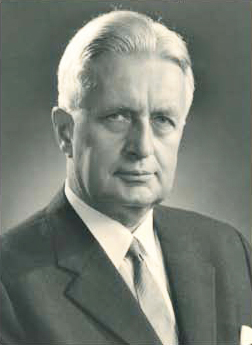
Headmaster Aage Bertelsen in 1961 Photo: Elfeldt, Copenhagen


Why now, over 30 years after his death? Read More »

TFF PressInfo: “The human price of the war on Iraq” Hearing Statement

Comments by Hans-C. von Sponeck
Former UN Assistant Secretary General, UN Humanitarian Coordinator for Iraq & TFF Associate


Hearing at the UK House of Commons, London June 10, 2014

Intro
1. HoC/HoL have repeatedly held Iraq hearings as have British NGOs such as CASI (Campaign Against Sanctions on Iraq) and Stop the War Coalition/UK. In Europe these are considered models for responsible public action.

2. My contribution at this hearing is not about the crimes of dictatorship or the details of Iraqi suffering. For both well researched data is available. The objective of my participation is to make two detailed observations about externally-driven Iraq politics during the period 1990-2014.

Observation 1

3. Today’s tragic Iraq reality can only be understood if the additive impact of the years before and the years following the US/UK Governments’ illegal invasion and occupation is fully taken into account.Read More »

Five Palestinian futures

By Richard Falk

For years, perhaps going back as far as the Madrid Peace Conference of 1991, influential international debate on the future of Palestine has almost exclusively considered variations on the theme of a two-state solution. The American Secretary of State, John Kerry, stampeded the Palestinian Authority and Israel into negotiations that ‘failed’ even before they started a year ago. At least Kerry was prudent enough to warn both sides that this was their do or die moment for resolving the conflict.

It was presumed without dissent in high places anywhere that this two-state outcome was the one and only solution that could bring peace. Besides the parties themselves, the EU, the Arab League, the UN all wagered that a resolution of the conflict required the establishment of a Palestinian state. Even Benjamin Netanyahu became a reluctant subscriber to this mantra in his 2009 speech at Bar-Ilan University, although always in a halfhearted spirit.Read More »

Doing Business with Israel: Increasingly Problematic

By Richard Falk

Note
Published below is a letter prepared by the European Coordination of Committee and Associations for Palestine (ECCP) and endorsed by John Dugard, Michael Mansfield, Eric David, and myself; it urges adherence to guidelines relating to corporate and financial activity with unlawful economic activities in Israel and occupied Palestine, and is guided by principles similar to the BDS campaign; it is notable that today the Presbyterian Church by a close vote (310-303) voted to divest itself of shares in three corporations engaged in legally and morally objectionable activities in Israel. There is a growing momentum associated with this new nonviolent militancy associated with the global solidarity movement supportive of the Palestinian struggle to gain a just peace, including realization of rights under international law.

European Coordination of Committees and Associations for Palestine (ECCP)

On 24-26 June, 37 European companies from 11 EU Member States will travel to Israel as a part of an EU led “Mission for growth” project that aims to “promote partnerships between Israeli and European companies 
active in sectors identified as leading and developing industries in Israel.”

Among Israeli companies participating in the “Mission for growth” are those deeply complicit in Israel’s occupation and apartheid policy. The previous delegation of “Mission for growth” took place on 22-23 October last year in Israel, where 97 european companies from 23 EU Member States meet with 215 Israeli companies from the different industrial sectors.

In this open letter supported by Richard Falk, John Dugard, Michael Mansfield and Eric David, ECCP member organisations call on the European companies to abandon their plans to be involved in the project. Read More »

TFF PressInfo: Democracy’s crisis – 10 points

By Jan Oberg

Democracy is a core feature of Western society, normally understood as representative parliament – i.e. in free elections citizens vote for people to represent their interests for a parliament consisting of parties of which some form the government and some the opposition.

It’s not always included in the definitions that democracy requires a reasonable level of knowledge and information, freely available. For instance, one often hears that India is the world’s biggest democracy but 26% of the people are still illiterate (287 million people).

So the ”world’s largest democracy” also has the world’s largest population who can’t read and write. In comparison, China illiterate citizens make up about 3% and is regularly called a dictatorship.

Also, in a society where the persons running for office are – or have to be – extremely wealthy to pay for their campaign and where large corporations make multi-million dollar contributions to certain candidates (presumably not out of altruism), falls outside a reasonable definition of democracy – even though they may also not be dictatorships; there are many stations in-between the two.

Are young people giving up parliamentary democracy?

When I was in my high-school years – a few decades ago – and wanted to contribute to changing society for the better, the most natural thing to do – and the finest – was to join a political party. Not so today. My students in peace studies around the world often ask me at the end of a course and it is time to say goodbye whether I can help them somehow in making their career. Their career dreams may be to work for the UN, for human rights, the environment or starting their own NGO with a peace profile or set up their own consultancy firm for a better world.

Significantly, over all these years, only one single student asked me what I thought about contributing to peace and development by becoming a politician.

As is well-known, people today engage in social issues mainly through civil society and the use of social media as their primary tool. This is good from most perspectives and holds fascinating prospects for de facto global citizenship and action, but it does something to the old type of representative democracy.

When we talk about global crisis, people think much more of the environment, identity issues or warfare than of democracy being in crisis. I think it is in fundamental crisis for the the following reasons.Read More »

Pope Francis visit to Palestine

By Richard Falk

Pope Francis’ visit to the Holy Land raises one overwhelming question: What is the nature of religious power in our world of the 21st century? Can it have transformative effects’?

Media pundits and most liberal voices from the secular realm approve of this effort by Francis to seek peace through the encouragement of reconciliation, while dutifully reminding us that his impact is only ‘ceremonial’ and ‘symbolic’ and will not, and presumably should not, have any political consequences beyond a temporary cleansing of the political atmosphere.

The June 6th prospect of Mahmoud Abbas and Shimon Peres praying together in the Vatican as a step toward a peaceful end of the long struggle is, I fear, an ambiguous sideshow. For one thing, Peres as President of Israel is about to leave the office, and in any event, his position exerts no discernible influence on the head of state, Benjamin Netanyahu, or the approach taken by Israel in addressing Palestinian concerns.

It has long been appreciated that Peres is less than he seems, and beneath his velvet globe is a steel fist. Also, Abbas, although the formal leader of the Palestinian Authority and Chair of the PLO, is a weak and controversial leader who has yet to establish a unity government that includes Hamas, and finally provides political representation for the long suffering population of the Gaza Strip within global venues.

Yet it would be a mistake to ignore the significance, symbolically and materially, of what Pope Francis’ visit to Palestine heralds. Read More »

Citizenship in the 21st century – reforms versus radical structural change

By Richard Falk

[ This post was previously published online at the website of the Global Transition Initiative, which is dedicated to promoting “Transformative Vision and Praxis.” It responds to an essay on global citizenship written by Professor Robert Paehlke, who cogently advocates the formation of a Global Citizens Movement, including indicating how it might become effective.
What seems important about such dialogue is the recognition that given the realities of this historical period, it is increasingly necessary for political thought and action to proceed by reference to human interests as well as being responsive to national, local, ethnic, and religious interests and values. A feature of modernity that is being rightly questioned from many angles is the presumed radical autonomy of human interests, especially the modernist illusion that the co-evolutionary dependence on nature and the environment was being superseded by the marvels of technological innovation.
One way back to the future is to rethink political community – its boundaries and essential features – from the perspectives of participants, with citizenship being the secular signature of belonging and engagement, and ultimately, the sustainability not just of the community, but of the species.
]

Reading Robert Paehlke’s carefully crafted essay on global citizenship provides the occasion both for an appreciation of his approach and some doubts about its degree of responsiveness to the urgencies of the present or more specifically its adequacy in relation to the call for ‘transformative vision and praxis’ that lies at the heart of the ‘Great Transition Initiative.’

Paehlke is on strong ground when he ventures the opinion that the planetization of citizenship is an indispensable precondition for the establishment of global governance in forms that are both effective and fair. His insistence that global governance to be legitimate must address ethical issues as well as functional ones associated with sustainability is certainly welcome. He is also persuasive in advocating the formation of a global citizens movement (GCM) that takes advantage of the networking and mobilizing potential of the Internet, combining an initial focus on local challenges while nurturing a global perspective.

His deepest sympathies clearly lie with a pluralistic and decentralized GCM that operates, at least for the foreseeable future, without leaders or a common program of action, and as such is likely in his words to be “less threatening” to the established order (p.3). But here is where my analysis and prescriptive horizons departs from his: if a transformative global movement is to emerge from current ferment, then it seems strategic to become more threatening, not less. Flying below the radar is not the kind of praxis that will awaken the human species from its long and increasingly dangerous world order slumber.Read More »

TFF PressInfo: Psyko-politik i tiden för imperiets nedgång

Av Jan Öberg

Lund , Sverige – 23 maj 2014

Tiden för rationell politik, om begreppet någonsin funnits, är över .

”Realpolitik” har blivit en blandning av marknadsförda ord, propaganda och ledare som gör uttalanden som gränsar till absurd teater. Tunnare och tunnare länkar till Realiteten.

Detta är vad som händer när man förnekar nedgången.

Alla imperier går ner. Det amerikanska imperiet är på nedgång. Makrohistoriker (se t.ex. British Arnold Toynbee’s 12–volymarbete 1934-1961) berättar att det finns många skäl till att imperier faller:

• militarism med konstant krigföring;

• överutvidgning – försöka kontrollera mer än vad du kan hantera;

• förlust av legitimitet i andras ögon;

• strukturella ekonomiska kriser;

• moraliskt förfall;

• förlust av intellektuell och teknisk innovation;

• andra maktstrukturer ökar i styrka över tid och göra saker på nya, kreativa sätt .

Efter 1945 ansågs USA vara starkt på en rad olika maktdimensioner: militär, ekonomi, politik, legitimitet, kultur, innovation. Idag är de bara nummer ett på den militära dimensionen. När alla andra indikationer går ner, blir militären en stor börda som bara accelererar nedgången.

USA är på tillbakagång och i förnekelse. Så är även de flesta av dess allierade och sympatisörer .

Deras utrikes politiska beslutsfattare verkar tro att allt är bra och de kan ändå leda och forma världen enligt deras intresse och världsbild. Det är fortfarande i grunden en missionär .

Här är några delar av vad den består av:Read More »

TFF PressInfo: Psycho politics in the age of imperial decline

By Jan Oberg

Lund, Sweden – May 23, 2014

The time of rational politics, if it ever existed, is over.

”Realpolitik” has become a mixture of marketing soundbites, propaganda and leaders making statement that borders on the Theatre of the Absurd. Thinner and thinner links to Real-ity.

This is what happens when decline in being denied.

All empires go down. The U.S. empire is in decline. Macro historians (see e.g. British Arnold Toynbee’s 12-volume work 1934-61) tell that there are many reasons when empires fall:

• militarism with constant warfare;

• overextension – trying to control more than you can manage;

• loss of legitimacy in the eyes of others;

• structural economic crisis;

• moral decay;
• loss of intellectual and technological innovation and

• simply other powers gaining strength over time and doing things in new, creative ways.

After 1945 the U.S. was considered strong on many power dimensions: military, economics, politics, legitimacy, culture, innovation. Today, it is only clearly Number One on the military dimension. When all the other indicators go down, the military becomes a huge burden and only accelerates the decline.

The U.S. is in decline and denial. So are most of its allies and sympathizers.

Its foreign policy-makers seem to assume that everything is fine and they can still lead and shape the world according to their interest and worldview. It remains fundamentally a missionary.

Here is some elements of what it consists of:Read More »

TFF PressInfo: Sverige – inte längre aktör för en bättre värld

Av Jan Öberg
Dr.hc., direktör för TFF
4 maj 2014

Eliten i Sverige är mer lojal mot Nato, USA och EU än mot sitt folk

• Under de senaste 25-30 åren har Sveriges militära, säkerhets- och utrikespolitiska elit vridit Sveriges politik 180 grader.

• Dessa grundläggande förändringar inleddes av den socialdemokratiska regeringen under Göran Persson och utrikesminister Anna Lindh och har genomförts praktiskt taget utan offentlig debatt.

• Omsvängningen till interventionism, militarism och USA/Nato på alla områden har planerats gradvis, i smyg och ohederligt – kort sagt på ett sätt som är ovärdigt en demokrati.

• Denna elit är mer lojal mot Bryssel och Washington än mot svenskarna.

• Om din bild av Sverige är att det är ett progressivt, förnyande och fredsfrämjande land med global inställning som försvarar folkrätten så är den – tråkigt nog – föråldrad.

Hur Sverige har förändrats

Sverige är inte längre neutralt och det är bara formellt alliansfritt; det finns ingen mer närstående bundsförvant än USA/Nato. Landet har upphört att utveckla en egen politik och positionerar istället sig inom ramen för EU och Nato. Landet bidrar inte längre med betydelsefullt nytt tänkande – det sista var Olof Palmes kommission om gemensam säkerhet (1982).Read More »