University cooperation for equity and empathy

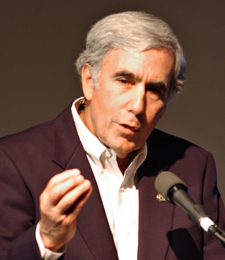
By Johan Galtung

China Three Gorges University, Yichang, 23 Apr 2014

A great honor to open the 11th university cooperation conference of N.E.W.S–North-East-West-South—founded in 1993 at the Freie Universität, Berlin by S.P. Park.

Classical university cooperation across borders has professors teaching in one country students from other countries. Thus, when Copenhagen ruled Denmark-Norway 1397-1814 Norwegians studied at the University of Copenhagen, founded in 1479. The University in Oslo came in 1811, but the asymmetry continued; some of it necessary and useful, but not ideal. Missing was equity, “I learn from you, you from me”; missing was empathy, “You learn about me, I about you”. The teaching country is superior in power, shaping the minds in the learning country. But the learning country learns about the deeper features of the teaching country, not vice versa.

A colonial relation. The colonialist leader, England – also in Scotland-Wales-Ireland – imports raw students for processing at huge fees, and exports English as patented commodity with no processing rights. Major industries both; but learning nothing about the world. Of course old knowledge must flow from those with more to those with less, even if professors often exaggerate their own importance: students may learn more together and by self-study–maybe 10%-40%-50%. But professors monopolize exams and diplomas, so better absorb well.Read More »

Nonviolent Geopolitics: Law, Politics, and 21st Century Security*

By Richard Falk

In this short essay, my attempt will be to articulate a conception of a world order premised on nonviolent geopolitics, as well as to consider some obstacles to its realization. By focusing on the interplay of “law” and “geopolitics” the intention is to consider the role played both by normative traditions of law and morality and the “geopolitical” orientation that continue to guide dominant political actors on the global stage.

Such an approach challenges the major premise of realism that security, leadership, stability, and influence in the 21st century continue to rest primarily on military power, or what is sometimes described as “hard power” capabilities. [1]

From such a perspective international law plays a marginal role, useful for challenging the behavior of adversaries, but not to be relied upon in calculating the national interest of one’s own country. As such, the principal contribution of international law, aside from its utility in facilitating cooperation in situations where national interests converge, is to provide rhetoric that rationalizes controversial foreign policy initiatives undertaken by one’s own country and to demonize comparable behavior by an enemy state. This discursive role is not to be minimized, but neither should it be confused with exerting norms of restraint in a consistent and fair manner.

My intention is to do three things:

• to show the degree to which the victors in World War II crafted via the UN Charter essentially a world order, which if behaviorally implemented, would have marginalized war, and encoded by indirection a system of nonviolent geopolitics; in other words, the constitutional and institutional foundations already exist, but inert form;

• to provide a critique of the realist paradigm that never relinquished its hold over the imagination of dominant political elites, and an approach has not acknowledged the obsolescence and dangers associated with the war system;

• and, finally, to consider some trends in international life that make it rational to work toward the embodiment of nonviolent geopolitics in practice and belief, as well as in the formalities of international law.Read More »

Peace Economics: Making Money Doesn’t Need to Hurt

By Jelena Mair

Business and Peace are not mutually exclusive. Business does play a crucial role in society. More so, business impacts and depends upon its surrounding. It impacts the
social well-being of people and planet, whether intentionally or unintentionally, both locally and globally through the chosen ways of operation and production.

Equally, does business play a key role in contributing to economic development, peace and stability in the areas where it operates. Business provides jobs and revenue to local markets; sets examples of sustainable business practices and can provide support for various social programs through strategic social investment.

In short, business is an inherent aspect of our society, and therefore, if we are striving for a more peaceful and sustainable world, for-profit private enterprises are the most crucial actors in achieving this goal. Read More »

The obsolescence of ideology: Debating Syria and Ukraine

By Richard Falk

I have been struck by the unhelpfulness of ideology to my own efforts to think through the complexities of recommended or preferred policy in relation to Syria, and more recently, the Ukraine. There is no obvious posture to be struck by referencing a ‘left’ or ‘right’ identity. A convincing policy proposal depends on sensitivity to context and the particulars of the conflict.

To insist that the left/right distinction obscures more than it reveals is not the end of the story. To contend that ideology is unhelpful as a guide for action is not the same as saying that it is irrelevant to the public debate. In the American context, to be on the left generally implies an anti-interventionist stance, while being on the right is usually associated with being pro-interventionist. Yet, these first approximations can be misleading, even ideologically. Liberals, who are deliberately and consigned to the left by the mainstream media, often favor intervention if the rationale for military force is primarily humanitarian.

Likewise, the neocon right is often opposed to intervention if it is not persuasively justified on the basis of strategic interests, which could include promoting ideological affinities. The neocon leitmotif is global leadership via military strength, force projection, friends and enemies, and the assertion and enforcement of red lines. When Obama failed to bomb Syria in 2013 after earlier declaring that the use of chemical weapons by the Assad regime was for him a red line this supposedly undermined the credibility of American power.

My point is that ideology remains a helpful predictor of how people line up with respect to controversial uses of force, although relying on ideology is a lazy way to think if the purpose is to decide on the best course of action to take, which requires a sensitivity to the concrete realities of a particular situation. Such an analysis depends on context, and may include acknowledging the difficulties of intervention, and the moral unacceptability of nonintervention. Read More »

Why do I persist?

By Richard Falk

I have been asked recently why do I persist in working hard for the things that I believe in, knowing that I will die in the next several years, and am almost certain not to be around for the catastrophic future that seems to cast its dark shadow across the road ahead, and can only be removed by a major transnational movement of the peoples of the world.

Similarly, why do I accept the defamation and related unpleasantness that accompanies my efforts to be a truthful witness of the sufferings endured by the Palestinian people in the course of their struggle for freedom and in violation of their fundamental rights? Some friends pointedly suggest ‘why don’t you just sit back, enjoy the pleasures of an easy life, and if still restless and alert enough, devote yourself to the narcissisms of producing a memoir?’

Or at least, why not at least indulge the self-exploratory pleasures of proving to myself that I am a decent poet or that I can still improve my chess or that, appearances to the contrary, I am still not too old to learn Turkish? At worst, I could continue to write barbed comments on the passing scene from the relative safety and comfort of the blogosphere, and to relieve the monotony of a virtual life, take occasional cruises to exotic destinations seeking out ‘ships of fools.’

Several prominent philosophers have attempted to answer such generic questions in a book recently published with the alluring title of Death and the Afterlife (Oxford University Press, 2013). It contains three lectures given by Samuel Scheffler, two at the Berkeley campus of the University of California and the third at the University of Utah, as well as a series of generally laudatory commentaries by four other distinguished philosophers and a response at the end by Scheffler.

The core argument developed by Scheffler is that human beings care more about the collective survival of humanity than they do about either their own personal immortality or even about the survival of those that they love and befriend, that is, those who are closest to us in our present life.

This rather novel line of inquiry investigates the implications of a thought experiment that supposes the extinction of the human species either due to ‘a doomsday scenario’ in which life on the planet is brought to an end or ‘an infertility scenario’ in which all women stop having the capacity to bear children. Read More »

Breaking free: Choosing a better human future

By Richard Falk

I have long believed that prospects for a hopeful human future depend on radical and visionary feelings, thought, and action. Such an outlook reflects my view that the major challenges of our time cannot be met by thinking within the box, or implementing the realist agenda of doing what it is feasible while disregarding what is necessary and desirable. For instance, with respect to climate change such a conventional approach avoids asking what needs to be done to give future generations positive life prospects, but seeks, at best, to do what seems politically feasible at the moment, that is, far too little.

This means not putting a cap on energy or water use, not limiting carbon emissions or prohibiting fracking, continuing to encourage economic growth, and refusing to question consumerism. In effect, this conventional approach does not meet challenges, but at most seeks to defer and mitigate harmful effects to the extent possible. In effect, it opts for a worse human future, and remains in bondage to the deformities wrought by clearly deficient neoliberal prescriptions for human fulfillment.

Against this background, it was a personal breakthrough to meet Jeff Wilson who is, Read More »

Syria: What to do now?

By Richard Falk

There is a new mood of moral desperation associated with the ongoing strife in Syria that has resulted in at least 135,000 deaths, 9.3 millions Syrians displaced, countless atrocities, Palestinian refugee communities attacked, blockaded, and dispersed, and urban sieges designed to starve civilians perceived to be hostile.

As the second round of negotiations in Geneva-2 ended as fruitlessly as the earlier round, there is a sense that diplomacy is a performance ritual without any serious intent to engage in conflict-resolving negotiations. Expectations couldn’t be lower for the as yet unscheduled, but still planned, third round of this Geneva-2 process.

The Damascus regime wants an end to armed opposition, while the insurgency insists upon setting up a transition process that is independently administered and committed to the election of a new political leadership. The gap between the parties is too big, and getting bigger, especially as the Damascus government correctly perceives the combat tide as turning in its favor, leading the main opposition forces seemingly to seek to achieve politically and diplomatically what they appear unable to do militarily. Also, it is unclear whether the opposition presence in Geneva has the authority to speak on behalf of several opposition groups in the field in Syria.

In light of these frustrations it is not surprising to observe an acrimonious debate unfolding between American interventionists who believe that only force, or at least its threat, can thread the needle of hope. Read More »

TFF PressInfo: Institute a course for all on what confront humanity in the 21st century

Open Letter to College and University Presidents Re: Global Security 101

By David Krieger

You are in a unique position of leadership to influence today’s youth to achieve a better tomorrow for America and the world. I am writing to enlist your help in educating young people to understand the survival challenges that face humanity in the 21st century.
Education is driven by values. Young people must learn to live with reverence for life, as did Albert Schweitzer, and to support equitable and nonviolent solutions to social problems, as did Gandhi and Martin Luther King, Jr. Young people must be imbued with compassion, commitment and courage. They must learn to use their imaginations to find creative and cooperative solutions to the great issues of our time. And they must find joy in the process and take time to celebrate the miracle of living on the only planet we know of in the universe that supports life. Continue here…

Humorous nonviolent actions

By Majken Sørensen

Photo Jonas Jonzon

During martial law in the early 1980’s in Poland, graffiti in favour of the illegal trade union Solidarity was quickly painted over by the authorities. This left “blobs” on the walls, so that everyone knew that this was covered graffiti. Activists who identified with a new group called Orange Alternative started to work on these “blobs” by giving them arms and legs so that they became little elves. According to Kenney, who has written about the Orange Alternative and its place in the fall of the communist regimes in central Europe, elves made passers-by “consider the point of the struggle over wall space, and wonder why little elves were threatening to the communists”.(1)

Several years later, the elves came to life at an Orange Alternative happening on Children’s day, 1 June 1987, one of the happenings which became what Kenney calls a “catalyst” for the Orange Alternative. An invitation to the happening was distributed at schools and universities around the city of Wroclaw, and almost 1,000 young people showed up. There they got a red cap, and then they were elves.

Since it was Children’s day, the elves handed out candy to people, danced and sang children’s songs. When the police started to take some of the elves to the police cars they followed without protesting, kissing the police and throwing candy out through the windows. Then the crowd started to shout “Elves are real”. Accounts of this surreal celebration of Children’s day went around Poland in the underground press, providing new images of what protest could look like. (2)

Are activists more creative now?

Sometimes I hear people say that there is so much more humour and creativity in activism now than there was previously. Maybe they are right, but I’m not convinced. The more you start to look for humour and talk to experienced activists about it, the more your will find, also 40 years ago. However, humour is fleeting and difficult to catch.Read More »

Reconciliation and agitation in Macedonia: Success or failure of the RECOM initiative?

By Biljana Vankovska

Biljana Vankovska has decided to resign from the post of public advocate due to the obstacles she has faced as described below.

Strangely enough, it appears that the Republic of Macedonia, once the southernmost and poorest republic of the former Yugoslavia, has always lagged behind the rest, in weal or woe. If one considers the achievements of the states in the region, when success is measured by the degree of their integration into the EU, one gets the impression that, while the rest of them, including Kosovo, are making steps forward, Macedonia is retrogressing.

The violent conflict in 2001 was the last episode in the succession of wars and internal armed conflicts on the territory of the former common state. It was an unusual conflict by Yugoslav standards: in terms of duration, number of casualties and degree of destruction, as well as of the rapidity of the recovery.
When violence broke out in this former ‘oasis of peace’, as Macedonia was called in international circles during the bloodshed in Croatia or the genocide in Bosnia and Herzegovina, some observers were alarmed and feared that an escalation without precedent would involve neighbouring states too (i.e. those that were not part of the SFRY).

Others, who looked at things with a cooler head, soon came to the conclusion that the conflict was the “biggest set-up in these parts since the war in Slovenia”. Be that as it may, its consequences for the people and the society in general are not negligible even today, although they have never been the subject of any serious public debate and concern. Read More »