Blog ethics and politics

By Richard Falk

During this apprentice period as a blogger I have learned and relearned how difficult it is to reconcile my interest in constructive dialogue on highly contested subject-matters with sustaining a tone of civility. Especially with respect to the Palestine/Israel struggle I have periodically failed, angering especially those who feel that their support of Israel is either inappropriately rejected or ignored. This anger is turned in the direction of personal insults directed either at me or at writers of comments, which induces those at the receiving end to reply in kind, and the result is a loss of civility, which alienates many other readers who tire of such futile and mean-spirited arguments.

By way of clarification, let me acknowledge that I regards two types of interaction as satisfying my goal of ‘constructive dialogue’: conversations between like-minded on matters of shared interest; exchange of views between those who adopt antagonistic positions on an array of concerns ranging from cultural assessment to political analysis. To favor conversations with like-minded means favoring those who share my convictions with respect to the themes addressed in posts, and is viewed as ‘bias’ by those who do not share these convictions. I feel unapologetic about this encouragement of conversation among the like-minded.

Some of my harshest critics complain that I am one-sided or stifle the freedom of expression of those whose comments I exclude on grounds of civility, Read More »

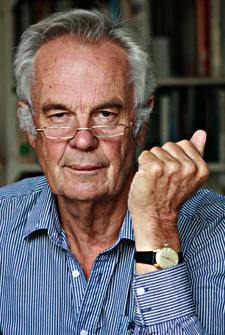
Today the world was blessed with a new hero: Edward Snowden

By Jan Oberg

Spontaneous thoughts at having seen this interview three times in a row.

One moral individual standing up for true democracy and freedom against one of the most evil systems the world has ever seen.

The Guardian: “Snowden will go down in history as one of America’s most consequential whistleblowers, alongside Daniel Ellsberg and Bradley Manning. He is responsible for handing over material from one of the world’s most secretive organisations – the NSA.

In a note accompanying the first set of documents he provided, he wrote: “I understand that I will be made to suffer for my actions,” but “I will be satisfied if the federation of secret law, unequal pardon and irresistible executive powers that rule the world that I love are revealed even for an instant.”

I am deeply moved by Edward Snowden. Very deeply. Such civil courage. Such moral awareness. Such knowledge. Such intellectual clarity. Such determination combined with the humility of serving a higher cause.

Do I at all understand what this one single, determined individual is up against? How he dares? No, I don’t think I do. It is too great, too unique, too rare in a world of so much opportunism and “somebody else must do what must be done”.

I’m reminded of Gandhi’s dictum that “A burning passion coupled with absolute detachment is the key to all success.”

Today the world was blessed with a hero of such proportions that it is hard to believe it is true. As long as there is an Ellsberg, a Manning and now a Snowden – and thousands of other courageous unsung heroes fighting for a better world, I will not abandon my hope.

For years I have ended my courses and public lectures by saying that I don’t believe much in peace movements but I believe that every human being is, potentially, a peace movement. Snowden is yet another living proof of this.

– Jan Oberg

Who is left? Who is right?

By Jonathan Power

It goes back to the French revolution of 1789. At the Revolutionary Convention the most radical of the insurgents decided to seat themselves on the left side. “Why not on the other side, the right side, the place of rectitude, where law and the higher right resided, when man’s best hand could be raised in righteous honour?” wrote Melvin Lasky in Britain’s intellectual monthly, Encounter. “Anyway they went left, and man’s political passions have never been the same.”

When Oskar Lafontaine, the West German finance minister, broke with Chancellor Gerhard Schroder in the early days of the last Social Democratic government, he explained it was “because my heart beats on the left.” The right could never say that, even David Cameron, prime minister of Britain, who likes to make out that he is liberal, at least on the environment and foreign aid. When Humpty-Dumpty insisted on his own “master-meanings” he reassured Alice, “When I make a word do a lot of work like that, I always pay it extra…….”

Those who want to study the ambiguities and contradictions of intellectual leftists Read More »

Open Letter – about the blogosphere and free speech

By Richard Falk

I have had a recurrent struggle to set boundaries on the comments section of this blog. At first, I was determined to have an open forum welcoming critical commentary on any issue, excluding only those comments that seemed struck me as clear instances of hate speech.

This approach seemed to work okay except with respect to Israel/Palestine, which increasingly attracted either long argumentative comments posing a list of rhetorical questions or angry serial comment contributors that insulted me as well as others who had submitted comments that were interpreted by them as being pro-Palestinian or hostile to Israel and Zionism.

There was no symmetry in the sense the blog received no serial or long provocative comments written by those who more or less supportive of the Palestinian struggle for justice. From blog readers I received mixed reactions, but I was most persuaded by those who expressed dismay about the tendency to fill the comments section with insults and counter-insults or with argumentative views that did not invite serious dialogue.Read More »

The Iraq War – 10 years later

By Richard Falk

After a decade of combat, casualties, massive displacement, persisting violence, enhanced sectarian tension and violence between Shi’ias and Sunnis, periodic suicide bombings, and autocratic governance, a negative assessment of the Iraq War as a strategic move by the United States, United Kingdom, and a few of their secondary allies, including Japan, seems near universal.

Not only the regionally destabilizing outcome, including the blowback effect of perversely adding weight to Iran’s overall diplomatic influence, but the reputational costs in the Middle East associated with an imprudent, destructive, and failed military intervention make the Iraq War the worst American foreign policy disaster since its defeat in Vietnam in the 1970s, and undertaken with an even less persuasive legal, moral, and political rationale.

Most geopolitical accounting assessments do not bother to consider the damage to the United Nations and international law arising from an aggressive use of force in flagrant violation of the UN Charter, Read More »

Envisioning a world without nuclear weapons

By Richard Falk

Book Review

ZERO: THE CASE FOR NUCLEAR WEAPONS ABOLITION
By David Krieger (published in 2013 by the Nuclear Age Peace Foundation); $14.95

I have known David Krieger for the past twenty-five years, and he has never wavered, even for a day, from his lifelong journey dedicated to ridding the world of nuclear weapons and the threat of nuclear war. If I were given to categorization, I would label such an extraordinary engagement with a cause as an instance of ‘benign fanaticism.’

Unfortunately, from the perspective of the human future, it is a rather rare condition, posing the puzzle as to why Krieger should be so intensely inclined, given his seemingly untraumatized background. He traces his own obsession back to his mother’s principled refusal to install a bomb shelter in the backyard of their Los Angeles home when he was 12 years old. He comments in the Preface to ZERO that even at the time he “hadn’t expected” her to take such a stand, which he experienced as “a powerful lesson in compassion,” was especially moved by her unwillingness “to buy into saving herself at the expense of humanity.” (xiv).

Nine years later after Krieger graduated from college his mother was again an instrumental force, giving him as a graduation present a trip to Japan to witness first-hand “what two nuclear weapons had done to the cities of Hiroshima and Nagasaki.” (xiv) The rest is, as they say, ‘history.’ Or as Krieger puts it in characteristic understatement, “[t]hose visits changed my life.” (xiv)Read More »

Pope Benedict, good or bad?

By Jonathan Power

Dean Acheson, the distinguished US Secretary of State who coined such phrases as “Britain has lost an empire but not yet found a role” also once said: “Moral talk is fine preaching for the Final Day of Judgement, but it was not a view I could entertain as a public servant.” No wonder he could justify the use of the nuclear bomb on Japan.

The last four Popes, including Benedict who has just announced his retirement, would never have supported the Hiroshima bombing. Neither did they support the wars in Vietnam, Iraq and Afghanistan. They believed in moral talk here and now.

“Moral talk” led Pope John Paul to wage a long and successful fight against communism in his homeland, Poland. Indeed, many say that victory was the catalyst for the fall of communism in the rest of Eastern Europe and the Soviet Union itself.

“Moral talk” led to Pope John, the great reformer, to use his position to tell President Lyndon Johnson to his face that the Vietnam war was immoral.

Benedict is cut of the same cloth, with some interesting shades of emphasis. Read More »

Slavery, colonialism and the church

By Johan Galtung

From Liverpool-UK, 31 Jan 2013

The uncontested center of the world slave trade, 40%, well documented in the International Slavery Museum in the port where slave ships docked.

The trade was triangular: from Liverpool (Bristol, London) with Manchester textiles, metals, beads, alcohol and guns for slave traders in the Bay of Guinea; with slaves from there to the Caribbean, the Middle Passage; and from there with sugar, coffee and cotton grown by slaves back to England.

To stealing people, 2/3 young men ages 15-25, and killing their societies, they added stealing raw materials in return for cheap manufactures. Hand in hand they went; from the beginning by the Portuguese in 1502 till the slave trade was forbidden in England in 1807–continued in other ways, also today.

We talk about millions of slaves landed in the arch from Rio to Washington with the point of gravity in the Caribbean, and some south of Rio, north of Washington and around the coast to the Pacific side of Latin America. An unspeakable crime against humanity.

Another unspeakable crime to remember, the shoa, has its Holocaust Memorial Day on 27 January; but somebody else’s, Germany’s, enemy of England, comes easier. No Slavery Memorial Day, no Colonialism Memorial Day. Nor any memorial to the 10 million killed in King Leopold’s Congo, in Antwerp, the port for shipping guns to Africa in return for rubber. More easily understood than manufactured goods converted into slaves converted into commodities.
Read More »

A New Year’s wish: Go beyond !

By Johan Galtung

Yes, go beyond, transcend! That is our message, New Year or not.

Take the US school shootings. The National Rifle Association’s vice president on TV: “the only person who can stop a bad person with a gun is a good person with a gun”. That statement struck many cords.

There is the deep US culture of Dualism – two kinds of people – and Manicheism – one bad, one good. There is Armageddon in the class room, the teacher or resident police pulling out the gun–bigger, better, more accurate–for the final battle, for the final and only solution. The NRA is riding on this DMA (Dualism/Manicheism/Armageddon) ground swell from below, and so are millions of others. It is concrete, feasible, and could start January 2013.

There is confirmation from above: this is US foreign policy. The only way to stop a bad country with arms is a good country with arms; the only way to stop evil terrorism from below is good state terrorism from above. Balance of power, countless bases, search and destroy.

We agree about the critical focus: school shootings–the USA committing suicide! – must not happen. But what do we know empirically to be constructive, creative? The answer is wrapped in ambiguity.Read More »

New Year resolutions on drugs, alcohol and tobacco

By Jonathan Power

After the orgy of food, drink and presents at Christmas we will have a week to think of our sins before the New Year arrives and we have to make our promises to be better human beings in 2013. What resolutions will you make?

For each person there are probably a good dozen of things to consider but my humble suggestion is that we concentrate on drink, smoking and drugs. Should our governments ban them or limit them or shrug their shoulders and say this is a free society and you do what you want, as long as you only harm yourself?Read More »