Our 30 years with peace – And what happened to world peace? Part II

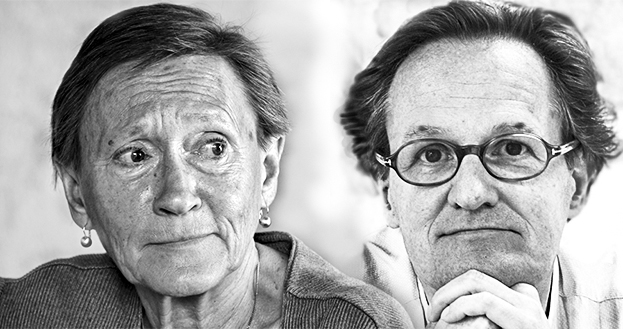
By Christina Spannar and Jan Oberg, TFF founders

Part 1 here

TFF was established on September 12, 1985. We think that it’s 30th Anniversary is a fitting occasion to reflect on what has happened in the big world and in our lives with the foundation.

It is also a piece of Lund’s research history in general and of peace research and education in particular.

Part 2

Weak aspects of TFF

• Being outside many networks and institutions – it has become more and more difficult to influence the world if you are small, independent and don’t accept governmental and corporate funds.

• A perception that the interest/commitment of TFF is out of sync with the sentiments of times, of the Zeitgeist. In spite of that we maintain the fundamental belief that peace is essential and that we can forget about the rest if major wars or nuclear exchanges take place.

• Too ‘academic’/theoretical to forge deeper, permanent links with public opinion and movements.

• Too ‘radical’ or ‘idealistic’ to be interesting to governments and most mainstream media.

• A constant very hard work load – resting on a small international group and on the founders in Sweden – vulnerability also in the perspective of us having gotten 30 years older.

• The struggle for funds getting more and more tough and we are much more vulnerable than, say, ten years ago. Being all-volunteer, we still have to pay the bills for what enables us to do things: the Internet, computers, travels to conflict areas, insurance, bank fees, fund-raising, phones, sending out mails, using social media, etc. 
The generosity of yesterday has been replaced by a ”stingy” attitude of being entitled to get things free in the affluent Internet-based society. This attitude implies that it is not my responsibility to finance peace, somebody else does (and the somebody else is never me). Few citizens seem to recognise that they are the taxpayers who de facto finance all the weapons and wars. 
The far majority of those who support us are idealists without particular means – while wealthy people for peace a far and few between.

TFF’s stronger sides

• We are still here, operating with amazing TFF Associates around the world who share the commitment to ‘peace by peaceful means’.

• We have remained faithful over all these years to the original ideals, not succumbing to go mainstream/politically correct to achieve more funds or appearing acceptable to the masters of war, i.e. government – neither by the way in Sweden nor Denmark.Read More »

Our 30 years with peace – And what happened to world peace? Part I

By Christina Spannar & Jan Oberg, TFF founders

Part I

TFF was established on September 12, 1985. We think that it’s 30th Anniversary is a fitting occasion to reflect on what has happened in the big world and in our lives with the foundation.

It is also a piece of Lund’s research history in general and of peace research and education in particular.

Motivation

The 1980s was a decade of gross changes in Europe, the struggle against nuclear weapons in particular.

Lund University was predominantly about education and single research projects – while TFF could be more of an experimental playground. We wanted to do truly free research and not negotiate with higher levels at, say, the university what to do where, in which countries to work and what to say to the media.

Peace has always been controversial and there were – and remain – enough examples of places that become ‘mainstream’ and routine – rather than experimental and radically ’alternative.’

What we did not know back in 1985 was that Lund University wanted to get rid of all inter-disciplinary academic endeavours – women, environmental, human rights and peace studies – and closed down the Lund University Peace Research Institute of which Jan had been the director since 1983, in November 1989.

Being a private undertaking

The HQ is the first floor of a two-family house in a villa area of Lund. Visitors, board members etc. have held seminars there, eaten and often stayed with us. Board members were colleagues and personal friends and new board members were recruited from Associates who were also personal friends, like-minded colleagues or mentors one way or the other.
Our children and other friends were often involved in the things TFF did – including printing newsletters in the basement, gathering them, putting them in envelopes and fix address labels.

Goals

The permanent top priority has been to promote the UN Charter norm that ‘peace shall be created by peaceful means’ (Article 1).
This was promoted through traditional book-based research and later field work – i.e. conflict analyses and mediation and peace plans – in conflict zones, but also through intense public outreach/education such as newsletters, media participation, press releases – and, from 1997, the Internet and then social media.

Secondly, we wanted to integrate theory and practice. While it is good to do basic research in the laboratory, what is peace research really worth if it is never applied to real life’s tough situations?

The first five years we did book projects like everybody else in the trade. But in September 1991 TFF went on its first peace mission to former Yugoslavia. It is safe to say that we were among the first to embark on that in-the-field philosophy and practice it – with all the problems and risks that it entailed.

Foundation and management

The word ‘foundation’ does not mean that we had an endowment to start out with – and funding has been a constant problem every day and year ever since. And getting worse over time.
But it meant flexibility and – being and remaining small – quickly adapting to a changing world.

Being our own and not part of Lund University was another advantage – and a drawback in terms of finding funds. TFF had to build its own reputation from scratch rather than piggyback on that of the university’s. It was quite tough but also more rewarding in the long run.Read More »

The nemesis of race

By Johan Galtung

We have been revisited, not only Charleston SC, not only the USA; the whole world by the shocking massacre in the iconic Emanuel Church. It hit this aging Norwegian male deep in the heart; once a young man, sociology professor at Columbia University, NY, as American as any with that passport, deeply involved in the desegregation conflict in Charlottesville, VA. Like millions others now trying to come to grips with this enormity of history moving backward to comprehend, searching for “how could it have been avoided”; any solution anywhere?

Using an old tested method, “what does this remind me of”, Anders Behring Breivik, a fellow Norwegian, came up. On 22 July 2011, first a bomb at a government building killing seven, then a massacre of young laborites at an island, killing 69 more. Having researched the case, I see him located in a triangle with his pure, blond and blue-eyed Norway of believers in true Christianity in one corner, threatened by Muslim invasion; the traitors to that society–the Labor government, the laborites in the second, and in the third corner those who stand up, do something against the Muslim menace: Israel, the hard Zionists.

Obsessed, it worked in and on him till the calling comes, only I have understood this, it falls upon me to do the unspeakable, to unleash history from its shackles by forcing people to see the Truth, starting with the enemy in our own camp, not Muslims, the traitors.

The psycho-pathology driving him was not childhood traumas but conflict polarization, Read More »

TFF PressInfo # 327 – Burundi heading for catastrophe with the world’s eyes wide shut

By Jan Oberg

The elections taking place in Burundi are no elections. The African Union, the European Union, NATO, BRICS and everybody else must know that by now. They are all turning their heads, pretending they just don’t see. When it comes to Burundi, the much celebrated Western concern about human rights and democracy is conventiently put aside.

However, since April developments in Burundi have taken only one direction: towards dictatorship and civil war and, in the worst of cases, a new genocide. If Burundi avoids that it’ll be by miracle and I shall be happy beyond words to be proven wrong.

Had this country had oil, important minerals or a significant strategic position – or had Burundi been situated in Europe – I am in no doubt that NATO countries would have conducted a “humanitarian” intervention already.

Now when a genuine humanitarian intervention is urgently needed to stop the descent into a hell and save about 10 million people from it, no one is doing anything but issuing hand-wringing, lame and woefully inadequate statements and appeals.

And by staying away from monitoring these “elections” and documenting the fraud they lend de facto support the emerging dictatorship.

Across social media TFF has so far posted 87 Burundi Warnings based on media reports. It has as issued its own warnings (see below) based on an long-term experience with Burundi that few have. Of among 4000 media recipients, two have shown any interest.

TFF has been engaged over 13 years (1999-2012) in that country. It’s work has covered a series of projects with leading civil society organisations, teaching at a university, work with media and consultancy with the Ministries of Higher Education and of Foreign Affairs.

That was when there was hope.

We did it because the rest of the world was interested only in neighbouring Rwanda, gave it all the attention and aid, the important embassies, Hollywood movies and books and because the world commemorated only its genocide, not Burundi’s. The two countries were once one and the problems the same.

And we did it because the peace process in Burundi was promising – at the time much more promising than Rwanda’s.

I met Pierre Nkurunziza shortly after he became President. At the time Read More »

Pope Francis: Spiritual, Liberating Theology

By Johan Galtung

What a gift to humanity, this Pope!

To choose global climate change as a major theme of his papacy is in the spirit of the times. What is revolutionary, and he uses that word often, is the focus on the poor. Climate change–including the long trend global warming over and above some lulls and local variations–has a clear class address, goes beyond making him the spiritual world leader.

The Pope talks about filth covering the earth, and about greed stimulated by corporate capitalism and consumerism as major causes underlying the technicality of CO2 release. The Pope also mentions the freshness of the gospels, including the unambiguous stand of Jesus for the poor in Matt 6:24–God vs Mammon–Matt 13:12–our economic system, and Matt 19:20-24 about giving one’s riches to the poor.

Pope Francis follows in his footsteps. Simply beautiful.

But there is more to it: a general theological discourse from the same continent as this non-Italian Pope: Liberation Theology. Gustavo Gutiérrez, Leonardo Boff, Miguel d’Escoto–Peruvian, Brazilian, Nicaraguan, from the major parts of the Latin Americas–now in their 80s have been rehabilitated. D’Escoto was foreign minister of the Sandinista government and one-year president of the UN General Assembly.

However, the rehabilitation has moved on, into the Caribbean, to the Latin American country that made world history, Cuba, and to the two Castros. Read More »

America at its best is – strange

By Richard Falk

America even at its best is a strange place, alive with contradictions, a Teflon political culture that has an unshakable faith in its innocent and virtuous national character and its overall impact on the world, impervious to the ghosts of slavery and of ethnic cleansing of native Americans that should be tormenting our sleep and darkening our dreams, comfortable with its robust gun culture, and with its promiscuous reliance on rogue drones engineered to kill on command and on the brutal happenings that take place in black sites immorally situated in countries whose leaders agree to avert their gaze from the dirty work taking place.

Looked at from a short distance this is not a pretty picture.

Yet there are still those rare moments when this unsavory national profile seems not to be telling the whole story. For instance, I felt heartened by a recent news item reporting that the conservative Nebraska Legislature voted to abolish capital punishment, and in doing so went so far as to override the governor’s veto. That’s right, Nebraska!

Unfortunately, the welcome Nebraska move may not survive the backlash in the making. The Republican state governor, Pete Ricketts, vows to overturn the new law: “My words cannot express how appalled I am that we have lost a critical law to protect law enforcement and Nebraska families.” He is supported in this lethal passion by a pro-capital punishment legislator Read More »

The Value of Values to Build a World for the Common Good

By Kamran Mofid

Lecture at World Congress of Faiths, Annual General Meeting, London School of Economics, University of London, May 20, 2015

Thank you for inviting me to speak to you today, and for giving me the opportunity to share with you my journey for the common good, a journey which I began many years ago, when as a young man I left Iran for England in 1972 in my search for life’s bigger picture.

Friends, I very much like to set the scene by reading a short statement, giving you a brief background to my presentation, my abstract, if you will:

First:

This presentation is dedicated to the youth of the world, our children and grand- children, who are the unfolding story of the decades ahead. May they rise to the challenge of leading our troubled world, with hope and wisdom in the interest of the common good to a better future

Second:

Our country, the United Kingdom, like all nations of the world, despite many good works, deeds and actions by so many individuals, organisations, civil societies and more, is facing a number of major socio-economic, political, ecological, moral, ethical and spiritual crises.

However, I wish to argue that:

Our crises can only be addressed, reversed and resolved, and our goals can only be achieved, if we change direction, adopt new values and become concerned with life’s bigger questions. We must reconnect ourselves with nature and with our true human and spiritual values. Moreover, as members of the household of humanity, we must provide security, sanctuary and constructive engagement for all of our human family. Sustained by the bounty of all, called by the Sacred, and animated into action by the Spirit of peace, Justice, and Reverence for All Life, we must be guided by values and take action in the interest of the common good, empowering each other to build a better world, for all of us.

Continued here.

TFF PressInfo # 325 – Breaking the promise to Russia

By Jonathan Power

The Russian European dreamers have included Pushkin, Lenin, Gorbachev and, until relatively recently, President Vladimir Putin. They have all seen their country’s future as part of the “European house”. But history and events have not been kind to Russia. Napoleon’s invasion, revolution, two world wars, Stalin’s communism and, most recently, the expansion of NATO, have shattered the dream again and again.

At the end of the Cold War and with agreement on the NATO-Russia Founding Act it seemed that big steps towards that goal were being taken. First, Russia would have a seat at NATO’s table. Later it would join NATO. Later still, the European Union. Some said this would happen over ten years, others 20.

Then, smash, the dream came to an end as President Bill Clinton, bucking America’s academic foreign policy elite, decided to expand NATO’s membership to former members of the Soviet Union’s Warsaw Pact. George Kennan, America’s elder statesman on Russian issues, commented, “It shows so little understanding of Russian and Soviet history. Of course there is going to be a bad reaction from Russia, and then the NATO expanders will say that we always told you that is how the Russians are – but this is just wrong.” He characterized it as the most dangerous foreign policy decision that the US had made since the end of the Second World War.

Defending Clinton and, later, George W. Bush and Barack Obama who continued the NATO expansion policy, their supporters have said that in expanding NATO eastward the West did not break its promise to Moscow not to.

But it did.Read More »

Re-connect the world’s children with Nature

By Kamran Mofid

Here, this Blog, I am calling upon families, educators and community leaders worldwide to become as children and rediscover the benefits of paying attention to nature, and to take action to strengthen children’s connections to nature.

As adults, we should be opening the doors and providing the children and the youth opportunities that fully connect them to the natural environment so they can gain an understanding of the natural world in as many educational and recreational settings as possible. We cannot start too soon!

Today’s children and families often have limited opportunities to connect with the natural environment. Richard Louv called this phenomenon, ‘nature-deficit disorder’ in his influential book, The Last Child in the Woods, and opened our eyes to the developmental effects that nature has on our children.

Continue reading on Mofid’s blog – Globalisation For The Common Good Initiative.

Political freedom – up or down?

By Jonathan Power

Last week democracy won a handsome victory in Nigeria. An election that had everybody on edge for fear of internecine killings involving militants from the two main competing parties, against a backcloth of the war of attrition waged by the nihilist, extremist, Islamist movement, Boko Haram, led pundits to fear the worst. It did not happen. Nigeria gave of its best.

Indeed, the real winner was the looser, the present president, Goodluck Jonathan. He graciously phoned the winner, Muhammadu Buhari, to concede the election. His attitude to his defeat kept the peace.Read More »