Ukrainian crisis isn’t worth a new Cold War

By Jonathan Power

Both the West and Russia have a responsibility to make sure they don’t throw the baby out with the bath water as their quarrel over Ukraine continues. So much has been achieved since the end of the Cold War. Why throw it away because of Ukraine?

Ukraine is a marginal country. The tail should never be allowed to wag the dog. Ukraine has never really counted in world affairs in the 200 years of its existence. Only unthought through politics can inflate a misdemeanor into a capital offence.

Instead, front and centre of their minds, Russia and the Nato countries should think over what they achieved in the years immediately following the Cold War – nothing less than laying the bedrock of a global security system.

There were major agreements concluded to ensure control over nuclear and conventional weapons and to guarantee non-proliferation and liquidation of weapons of mass destruction. The UN began to play a much greater role in peacekeeping operations – of 49 deployments carried out before 2000 36 were carried out in the post Cold War 1990s. The number of international conflicts decreased quite significantly. Russia and China and other former socialist countries, despite differences in their political systems, were integrated into one global and financial economic system.

Several attempts were made to legally formalize the new balance of power – Read More »

The year 2015: First third report

By Johan Galtung

In my columns, “The Year 2015-What Are We in For?”, I identified four unfolding, dramatic processes: the West will continue fighting unsuccessfully and violently to keep their world grip; Eurasia will expand and consolidate successfully and nonviolently; Islam will expand and consolidate partly violently; Latin America and Africa will expand and consolidate, spearheaded by Brazil, South Africa, BRICS.

A third of the year 2015 has now passed; let us take stock.

Headlines in the International New York Times tell the story:

18-19 April 2015: “U.S. is said to risk losing economic leadership”; “–a divided nation shedding hard-won clout”, “We’re withdrawing from the central place we had on the world stage”.

And for the UK: 29 April: “Britain’s drift from the world stage looms over the vote”.

These are statements about leadership, about being the center as a model to emulate; controlling world stage politics; not about economic growth. Losing leadership and drifting away may actually increase growth: control is a costly, non-productive endeavor for most businesses. Sensing that may accelerate the decline as world power.Read More »

TFF PressInfo 321 – Today’s V-Day as a lost opportunity for peace-making

Jan Oberg

By Jan Oberg

Today, May 9, the citizens and government of Russia commemorate V-Day – that it is 70 years ago they won over Nazi Germany. The price they paid were 20-26 million human beings of which 9 million soldiers. – in other European countries the victory has been celebrated this past week. The total casualties of the Second World War was at least 60 million, depending on how you count.

People and governments care about our own history and sacrifices. The implicit message of course is: Pay respect to those who sacrificed their lives and may it never ever happen again. And the world knows everything about the Holocaust/Shoah that cost the lives of 6 million Jews.

However, the world knows much less about the huge concentration camp in Jasenovac, Croatia, where at least 100.000 Serbs, Jews and Romas was exterminated. Serb suffering didn’t fit the Western narrative during the Yugoslav dissolution wars in which Crotia was only a historically innocent victim and Serbs the cause of it all.

The almost incomprehensible suffering of the Russian and other peoples in the Soviet Union also doesn’t fit the present Western narrative about Ukraine and the new Cold War-like period we are in Read More »

TFF PressInfo 319 – Burundi: Early warning and violence prevention

Jan Oberg

By Jan Oberg

See also TFF PressInfo 320.

The world’s leading countries are busy with ongoing conflicts and wars in areas of strategic importance to them. Organisations that work with humanitarian issues and post-war healing have exhausted their capacities long ago. It’s repair work but it must be done.

So there is hardly any capacity in the world to do what would be much more productive: Prevention of violence (yes, not of conflict but of violence). For decades there has been talk of early warning – but if it works at all, there is little or no early listening and even less early action.

If it all worked as it ought to, the world would have a violence-prevention machinery in place and it would, these very days, plan what to do before a catastrophe descends upon a small, beautiful African country – poor, mal-developed and of no strategic significance to bigger powers. That is, it would do a genuine humanitarian intervention to save lives in time.

The world’s neglect of Burundi

Since the genocide in the two neighbouring countries, Rwanda has probably been mentioned 100 times when Burundi was mentioned 1. Rwanda got the diplomatic attention, the investments, the aid, the Hollywood movies and books. Annually when the world commemorated the genocide that took place in both countries, everybody talked about Rwanda as if Burundi didn’t exist. One reason apart from sheer ignorance is that ”only” 300.000 were killed in Burundi’s genocidal civil war while three times more in Rwanda. About Burundi’s civil war.

Children in Muramviya, Burundi © Jan Oberg

Every year the development aid given to Burundi was around or less than 50% of what donor countries had pledged. Today, the two capitals Bujumbura and Kigali are like two different worlds. The best the world has done for Burundi was the remarkable UN mission which, regrettably, the Burundian government always wanted somehow to get rid of.

It can be argued the consequences of this relative neglect by the world are now becoming visible.

Combine that with the last few days of rioting against President Nkurunziza’s extremely dangerous manoeuvring to be elected for a third term and you have a situation that may soon present itself as yet another major human tragedy the world failed to do anything about before it was too late.

With the accumulated experience from TFF’s projects in Burundi from 1999-2012*, I believe there are extremely strong reasons to produce not only lame, standard diplomatic statements but to take action to prevent a new catastrophe.Read More »

The West against itself

Johan Galtung

By Johan Galtung

Jondal, Bergen, Kristiansund – Norway

The West – North America and Europe to somewhere in Mexico and Ukraine – declines, outcompeted economically, defeated militarily, confronted politically, contested culturally. But still strong on all four, with much to offer in a more egalitarian world. There should be no need to fall further by working against itself.

Take the 70th anniversary demarcation of the victory over nazism, take thousands of Africans drowning in the waters around Lampedusa, Italy, take the Islamic State, take Ukraine – and a country up there in the high North of Europe, Norway. Elections have moved the country from “red-green” to “blue-blue” coloring of the same color blind foreign policy: follow Washington, Our Father, lest Satan should come.

Yes, the Red Army came and liberated Kirkenes 25 October 1944, the northernmost city. Everybody knows Operation Barbarossa, Hitler’s three-pronged attack toward Leningrad (the siege), Moscow (to beat–Napoleon?) and Caucasus (oil); but not the war for the ice-free harbor of Murmask, from Kirkenes. King Haakon VII, a Dane elected king in 1905, made a remarkable speech in London, distributed in leaflets through the air:

“Fear of Russians is not a recent phenomenon. New was the fear of bolshevism, added after the Russian revolution. But up till this date we are missing the slightest proof that Russia has had aggressive designs on Norway.

What we are not missing are the proofs that the fear of Russians and bolshevism is propagated by powers and groups that themselves had aggressive designs on Russia. The proofs are abundant in the political history from 1918 till today.”

Poland lost 20% of its population; the Soviet Union 27.1 million, 16%, with 1,710 cities and 70,000 villages erased; UK 1.1%; USA 0.4%; Norway 0.32%. The Soviet Union may have lost more soldiers close to Kirkenes against Nazism than Norway all over Norway during the war.Read More »

TFF PressInfo # 318 – Behind every refugee stands an arms trader

Jan Oberg

The refugees in the Mediterranean

The European Union members states are trying to look as if they are doing something serious to care for the poor, catastrophe-stricken people who flee from war zones to Europe under the most risky and inhuman conditions. Apart from the lack of genuine humanism and compassion and the cynical intention to uphold the ”deterrence” factor – other features surround these tragic events.

In various media reports and political statements the word ”refugee” is increasingly being replaced by ”migrant” – hardly just a coincidence given the fact that the number of refugees, internally displaced persons and asylum-seekers passed 50 million fellow human beings worldwide last year.

Migrants and refugees

A migrant, according to the UN, is a person who is engaged in (seeking) a remunerative activity in a state of which he or she is not a national. A refugee is an entirely different person who is outside his or her home country because of having suffered (or feared) persecution on account of race, religion, nationality, or political opinion; because he or she is a member of a persecuted social category of persons; or because they are fleeing a war. A refugee has the right to seek asylum and shall not be penalised for his or her illegal entry or stay.
More here.

“Seeking a better life” ?

Add to that the now often repeated but totally misleading wordingRead More »

On the links between refugees and warfare

By Jan Oberg

It’s our wars, stupid!
A short interview on Russia Today about Europe’s woefully inadequate understanding of why refugees come here.
Towards a solution: Deal with conflicts early and by peaceful means, criminalise arms trade and abolish war and you’ve solved most of the world’s refugee problems!

Interview on YouTube with RT International (700 million viewers worldwide and broadcast repeatedly on April 20, 2015).

Opposing impunity for geopolitical criminality

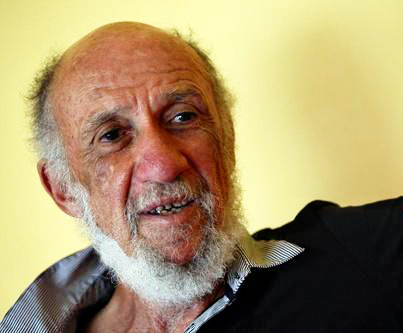
Richard Falk

By Richard Falk

Responding to intense pressure from the usual sources William Schabas, a prominent and respected expert on international criminal law, recently resigned as Chair of the UN expert commission of inquiry into war crimes allegations arising from the massive Israeli military operations in Gaza during July and August of 2014.

These issues relating to international criminal accountability have also received recent prominence due to Palestine’s adherence to the Rome Treaty making it a party to the International Criminal Court, an initiative that generated an enraged punitive reaction on the part of Israel as well as an angry denunciation by Washington. On display in these instances is the struggle between extending the rule of law to international state crimes and the geopolitical resistance to such an effort whenever accountability to law is in tension with the pursuit of strategic interests.

Imposing international criminal responsibility upon political leaders and military commanders that occur in the aftermath of wars possesses a dual character from a geopolitical perspective: to vindicate major military undertakings of liberal democratic states and to ensure impunity for the leaders of these same states in the event that their behavior or that of their allies are alleged to be international crimes.

These efforts at vindication are associated with strengthening the global rule of law and validating the established order, while impunity is invoked to insulate powerful individuals and their governments from criminal accountability. The resulting pattern in international life is one of double standards at the level of implementation and hypocritical rhetoric about the importance of a global rule of law based on its universal applicability.

Contemporary experience with these issues is grounded in the aftermath of World War II.

In 1945 Read More »

Hitler and Stalin: Two Europeans

Johan Galtung

By Johan Galtung

Hitler was about race, Stalin about class. Their theories were based on one contradiction: Aryans vs non-Aryans for one; workers vs capitalists/landowners for the other. The ills of their countries followed from the contradictions at the top of their verbal pyramids. As Western intellectuals they tried to explain much from one axiom. Thus, to Hitler bolsheviks and plutocrats were both mainly Jewish.

Their utopias were contradiction-free, by cleansing; ethnic for Hitler, class for Stalin. Only Aryans; all others killed-expelled-marginalized by the power of the NSDAP, National-Socialist German Labor Party for one; all capitalists/landowners killed-expelled-marginalized by the power of the vanguard of the proletariat CPSU(B), the Communist Party of the Soviet Union (Bolshevik) for the other.

So similar that one may ask: did they imitate each other? Like armies becoming similar by fighting, so also the machines for reshaping societies in the European civil war 1917-1945 (plus minus some years?).

There is another, better explanation: if the theory is pyramidal, so also the practice, the policy machinery. The ultimate power should be in the hands of those licensed as ultimate truth-holders. Those lower down have to learn the smaller, specific truths and enact them.

That pattern identity, isomorphism, between theory and practice pyramids came from the same source in Germany and Russia: Churches, of two opposed Christianities: truth by revelations, articles of faith, commandments on top; enacted by pyramids with popes-patriarchs on top.

Stalin was even trained as Orthodox priest, changing from Christ revealing the truth about God the Father, to Marx revealing the truth about History. And Hitler? Martin Luther’s rabid anti-Semitism and axiomatic Christianity (catechism) played a major role. Why Germans? Very gifted in axiomatics–dictatorship easily follows by isomorphism.

Two genocidal secularisms poured into old Church bottles.Read More »

Churchill and Hitler – Two Europeans

Johan Galtung

By Johan Galtung

Who wrote this?

“The Aryan stock is bound to triumph”.

“The Dictator of the Red Citadel (Petrograd) – all Jews”

“The same evil prominence was obtained by Jews – in Hungary”

“The same phenomenon has been presented in Germany–preying”

“-the schemes of the international Jews /against/ spiritual hopes”

“-this worldwide conspiracy for the overthrow of civilization”

“-it played recognizable part in the tragedy of the French Revolution”

“-the mainspring in every subversive movement in the 19th century”

Churchill did. Here quoted from Robert Barsocchini in Countercurrents in February 2015. His point was not that Jews were active in many places, the point is that for Churchill they were the cause of all the revolutions, the root of evil, not, for instance, feudalism gone mad.

What does Churchill, a top politician, believe in? (same source):

“-the British Empire and its Commonwealth last for a thousand years”

“-100,000 degenerate Britons sterilized /to save the/ British race”

“-the increasingly rapid growth of the feeble-minded insane classes”

“Two fifths of Cubans fighting Spanish are negroes–a black republic”

“Gandhi ought to be lain bound hand and foot at the gates of Delhi, and trampled upon by an enormous elephant with the Viceroy seated”

Three million starved to death due to Empire policy. Churchill:

“why isn’t Gandhi dead yet?”Read More »