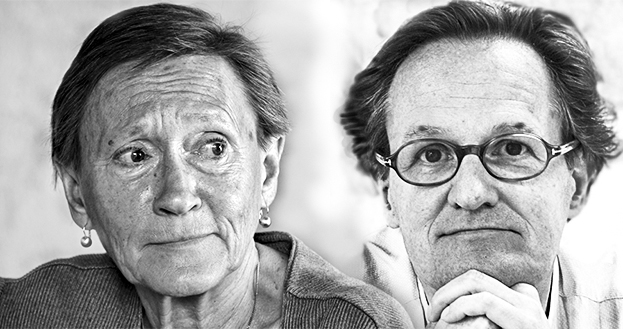
Peace Studies Epistemology: Descartes-Vico-Daoism; And Europe

By Johan Galtung

Keynote, European Peace Research Association – Tromsö, Norway, 7 Sep 2015

Epistemology is the branch of philosophy dealing with valid knowledge; and the focus of this conference is peace in Europe. We live in a wonderful world blessed with many civilizations each with an epistemology, and in a continent with rich diversity. My task is to draw on some of this, and apply it to the peace politics of Europe.

René Descartes, in Discours de la Méthode, Leiden 1637, had four basic rules; accepted, mainly unwittingly, by (North)Western science:

1. never to accept anything for true not clearly known to be such;
2. to divide difficulties examined into as many parts as possible;
3. start with the simplest and easiest, ascend to the more complex, pay attention to the asymmetric relation of antecedence and sequence;
4. make enumerations and reviews to assure that nothing was omitted.

Giambattista Vico, in Scienza Nuova, Napoli 1725: anti-Descartes for only reflecting empirical reality, not human ability to create new reality. Vico is a macro-historian, inspiring Marx, with three stages in human history, divine-heroic-human, envisaged by “poets” in the Greek sense of “creators”. He became the guru of historians, easily making the mistake of focusing only on the creativity of the powerful.

Daoism, thousands of years old, views reality in terms of holism and dialectics:…

Continued here.

Making peace arrive in Ukraine – bring in the UN

By Jonathan Power

September 15th 2015.

On the last day of last month right wing demonstrators, mostly from neo-fascist movements, hurled themselves against the police in Kiev’s Maidan square, the same place where in February 2014 a more heterogeneous group of demonstrators effectively ousted President Viktor Yanokovych. A grenade was thrown and three people died and 120 were hospitalized, mostly policemen.

In an address to the nation President Poroshenko blamed the clashes on nationalistic forces, calling their actions “a stab in the back”. Finally the Western powers raised a voice of condemnation, although over the last year they have made little criticism of the rightist militias and parties.

That is perhaps because it would interfere with their narrative – that the demonstrators that overthrew Yanukovych were of a liberal, democratic hue. The overwhelming majority were. But the ignored fact is that the people who led the crowd and fired the bullets when the demonstrations turned ugly were these very same rightists.

Some of the leaders of the neo-Nazi organisations, especially Svoboda, went on to be appointed to senior positions in government and parliament.

The BBC’s Ukraine correspondent, David Stern, reported on September 1st: “The explosion in Maidan comes weeks after another armed incident involving volunteer militia with ties to the extreme right – a shoot out between members of the so-called Right Sector and the local police in south-western Ukraine. Although the militias have been nominally integrated into government structures, many wonder how much control Kiev actually exercises.”

The main gripe of the protestors is that Read More »

Our 30 years with peace – And what happened to world peace? Part II

By Christina Spannar and Jan Oberg, TFF founders

Part 1 here

TFF was established on September 12, 1985. We think that it’s 30th Anniversary is a fitting occasion to reflect on what has happened in the big world and in our lives with the foundation.

It is also a piece of Lund’s research history in general and of peace research and education in particular.

Part 2

Weak aspects of TFF

• Being outside many networks and institutions – it has become more and more difficult to influence the world if you are small, independent and don’t accept governmental and corporate funds.

• A perception that the interest/commitment of TFF is out of sync with the sentiments of times, of the Zeitgeist. In spite of that we maintain the fundamental belief that peace is essential and that we can forget about the rest if major wars or nuclear exchanges take place.

• Too ‘academic’/theoretical to forge deeper, permanent links with public opinion and movements.

• Too ‘radical’ or ‘idealistic’ to be interesting to governments and most mainstream media.

• A constant very hard work load – resting on a small international group and on the founders in Sweden – vulnerability also in the perspective of us having gotten 30 years older.

• The struggle for funds getting more and more tough and we are much more vulnerable than, say, ten years ago. Being all-volunteer, we still have to pay the bills for what enables us to do things: the Internet, computers, travels to conflict areas, insurance, bank fees, fund-raising, phones, sending out mails, using social media, etc. 
The generosity of yesterday has been replaced by a ”stingy” attitude of being entitled to get things free in the affluent Internet-based society. This attitude implies that it is not my responsibility to finance peace, somebody else does (and the somebody else is never me). Few citizens seem to recognise that they are the taxpayers who de facto finance all the weapons and wars. 
The far majority of those who support us are idealists without particular means – while wealthy people for peace a far and few between.

TFF’s stronger sides

• We are still here, operating with amazing TFF Associates around the world who share the commitment to ‘peace by peaceful means’.

• We have remained faithful over all these years to the original ideals, not succumbing to go mainstream/politically correct to achieve more funds or appearing acceptable to the masters of war, i.e. government – neither by the way in Sweden nor Denmark.Read More »

TFF PressInfo # 333 – Look at nuclear weapons in new ways!

By Jan Oberg

It’s absolutely necessary to remember what happened 70 years ago in Hiroshima and Nagasaki, see the movies from then, listen to the survivors, the hibakusa. But it isn’t enough for us to rid the world of these crimes-against-humanity weapons. And that we must.

Hiroshima and Nagasaki is history and it is also the essence of the age you and I live in – the nuclear age. If the hypothesis is that by showing these films, we create opinion against nuclear weapons, 70 years of every more nuclearism should be enough to conclude that that hypothesis is plain wrong.

There is a need for a frontal attack on not only the weapons but on the nuclearism – the thinking/ideology on which they are based and made to look ‘necessary’ for security and peace.

Nuclear weapons – only for terrorists

At its core, terrorism is about harming or killing innocent people and not only combatants. Any country that possesses nukes is aware that nukes can’t be used without killing millions of innocent people – infinitely more lethal than Al-Qaeda, ISIS etc. Since 9/11 governments and media have conveniently promoted the idea that terrorism is only about small non-governmental groups and thus tried to make us forget that the nuclear ‘haves’ themselves practise state terrorism and hold the humanity hostage to potential civilizational genocide (omnicide).

Dictatorship

No nuclear state has ever dared to hold a referendum and ask its citizens: Do you or do you not accept to be defended by a nuclear arsenal? Nuclear weapons with the omnicidal -kill all and everything – characteristics is pure dictatorship, incompatible with both parliamentary and direct democracy. And freedom.

Citizens generally have more, or better, morals than governments and do not wish to see themselves, their neighbours or fellow human beings around the world burn up in a process that would make the Holocaust look like a cozy afternoon tea party. In short, nuclear weapons states either arrange referendums or must accept the label dictatorship.

The idea that a few hundred politicians and military people in the world’s nuclear states have a self-appointed right to play God and decide whether project humankind shall continue or not belongs to the realm of the civilisational perverse or the Theatre of the Absurd. Such people must run on the assumption, deep down, that they are Chosen People with a higher mission. Gandhi rightly called Western civilisation diluted fascism.

Unethical

Why? Because – simply – there can be no political or other goal that justifies the use of this doomsday weapon and the killing of millions of people, or making the earth uninhabitable.

Possession versus proliferation

The trick played on us all since 1945 is that there are some ‘responsible’ – predominantly Christian, Western – countries that can, should, or must, have nuclear weapons and then there are some irresponsible governments/leaders elsewhere that must be prevented by all means from acquiring them. In other words, that proliferation rather than possession is the problem. However, it is built into the Non-Proliferation Treaty, NPT, that those who don’t have nuclear weapons shall abstain from acquiring them as a quid pro quo for the nuclear-haves to disarm theirs completely.

That is, the whole world shall become a nuclear-weapons-free zone (NWFZ).

Those who have nuclear weapons provoke others to get them too. Possession leads to proliferation.

The recent negotiations with Iran is a good example of this bizarre world view: the five nuclear terrorist states, sitting on enough nukes to blow up the world several times over and who have systematically violated international law in general and the NPT in particular, tell Iran – which abides by the NPT and doesn’t want nuclear weapons – that it must never obtain nuclear weapons. Simultaneously, they turn a blind eye to nuclear terrorist state, Israel’s 50+ years old nuclear arsenals.

And it is all actively assisted by mainstram media who seem to lack the knowledge and/or intellectual capacity to challenge this whole set-up – including the racist belief structure that “we have a God-given right and are more responsible than everybody else – particularly non-Christians…”

But what about deterrence?

You’ve heard the philosophical nonsense repatedly over 70 years: Nuclear weapons are good to deter everyone from starting the ‘third world war’. That nukes are here to never be used. That no one would start that war because he/she would know that there would be a mass murder on one’s own population in a second strike, retaliation. But think! Two small, simple counterarguments:

a) You cannot deter anyone from doing something unless you are willing to implement your threat, your deterrent. If A knows that B would never use his nukes, A would not be afraid of the retaliation. Thus, every nuclear weapons state is ready to use nukes under some defined circumstance; if not there is no deterrence whatsoever.

b) The United States has long ago done two things (as the only one on earth): 1) decided on a doctrine in which the use of small nukes in a conventional role is fundamental, thus blurring the distinction between conventional and nuclear weapons; 2) its missile defence (that it also wants in Europe) is about preventing a second strike back – shooting down retaliatory missiles – so it can start, fight and win a nuclear war without being harmed itself. Or so it can hope.

There are many other aspects – but let’s mention just one more:

Nuclear weapons have already caused wars

The war on Iraq is a good example. If Iran will be bombed – which can’t be excluded at all – it’s about nuclear weapons. Ukraine is about expanding nuclear-based NATO and nuclear-based EU right up to the border of Russia. The enemy image of North Korea – where war can also not be excluded in the future – is mainly about it being a nuclear weapons state. The conflicts surrounding Israel are intimately connected with its nuclear weapons threatening everyone – non-nuclear – around it.

Hope

No, let’s rid the world of this civilisational mistake. Nuclearism and nuclear deterrence is the world most dangerous ideology comparable to slavery, absolute monarchy and cannibalism that we have decided – because we are humans and civilised and can think and feel – to put behind us.

There is no co-existence possible between nuclear weapons on the one hand and democracy, peace and civilisation on the other.

It’s time to regai hope by looking at all the – civilised – non-nuclear countries and follow their example. Thus, 99% of the southern hemisphere landmass is nuclear weapons free. 60% of the 193 states, with 33% of the world population, are included in this free zone.

And here are the countries which have contemplated to obtain – but decided to abstain from – nuclear weapons (including those who have had them and gotten rid of them): Sweden, Switzerland, Yugoslavia, South Africa, Libya, Austria, Mongolia, Ukraine, Kazakhstan, Japan, Antartica, the Seabed, Outer Space. Finally, dozens of countries have the technical capacity but would not dream of joining the nuclear club.

The West, the U.S. in particular, that started the terrible Nuclear Age should now follow the far majority of humanity, apologise for its nuclearism and move to zero.

TFF PressInfo # 330 – Iran’s Nuclear Deal: A great achievement, but hard work ahead

By Farhang Jahanpour

The announcement of the nuclear deal between Iran and six world powers is a rare moment in history that gives us hope and provides a basis for optimism.

By contemplating what the alternative would have entailed, any agreement, no matter how defective, is a great achievement and has to be welcomed.

However, the indications are that, as the Iranian Foreign Minister Mohammad Javad Zarif has declared at a joint press conference with the EU High Representative for Foreign Affairs, there has been a win-win agreement that will benefit everyone. In short, they have made history.

Ms. Mogherini said: “It is a decision that can open the way to a new chapter in international relations. I think this is a sign of hope for the entire world.” The Iranian foreign minister echoed those sentiments and described the deal as “a historic moment”.

He continued: “Today could have been the end of hope, but now we are starting a new chapter of hope.” Zarif rightly pointed out that the deal has ended an unnecessary conflict. As the TFF Associate Gareth Porter has shown in his book of the same title, it was in fact “A Manufactured Crisis”.

It should be remembered that Iran had been ready since 2003 to reach a nuclear deal when she agreed to ratify the Additional Protocol and voluntarily suspended enrichment for two years. The Bush Administration killed that deal by illegally stating that, contrary to the NPT regulations, Iran was not allowed to have any enrichment on her soil. Read More »

Oxi or Nai? Oxi !

By Johan Galtung

At the time of starting writing this editorial the referendum is on, so is the TV. Those two Greek words are all over. But the outcome is unknown; it will be known at the time of finishing the editorial.

However, could the most important aspect of the referendum be the referendum itself, not the outcome? The idea of asking people, the very demos in a democracy, even at the risk of losing, resigning?

The most aggressive creditor against Greece, Germany, did not dare to do that over the Euro entry. They decided for a people they knew were against, hiding behind Hitler’s use of a referendum as demagogy.

Any OXI-NAI outcome means a new departure. With no party below, say, 1/3, serious attention has to be paid to both sides’ narratives.

Let us be clinical about that bad EU-Greece relation.

There is a deep culture: another Christianity, with “optimism in the longer run”, another alphabet. They relate across deep gaps.

There is a deep structure: the division ofRead More »

TFF PressInfo # 327 – Burundi heading for catastrophe with the world’s eyes wide shut

By Jan Oberg

The elections taking place in Burundi are no elections. The African Union, the European Union, NATO, BRICS and everybody else must know that by now. They are all turning their heads, pretending they just don’t see. When it comes to Burundi, the much celebrated Western concern about human rights and democracy is conventiently put aside.

However, since April developments in Burundi have taken only one direction: towards dictatorship and civil war and, in the worst of cases, a new genocide. If Burundi avoids that it’ll be by miracle and I shall be happy beyond words to be proven wrong.

Had this country had oil, important minerals or a significant strategic position – or had Burundi been situated in Europe – I am in no doubt that NATO countries would have conducted a “humanitarian” intervention already.

Now when a genuine humanitarian intervention is urgently needed to stop the descent into a hell and save about 10 million people from it, no one is doing anything but issuing hand-wringing, lame and woefully inadequate statements and appeals.

And by staying away from monitoring these “elections” and documenting the fraud they lend de facto support the emerging dictatorship.

Across social media TFF has so far posted 87 Burundi Warnings based on media reports. It has as issued its own warnings (see below) based on an long-term experience with Burundi that few have. Of among 4000 media recipients, two have shown any interest.

TFF has been engaged over 13 years (1999-2012) in that country. It’s work has covered a series of projects with leading civil society organisations, teaching at a university, work with media and consultancy with the Ministries of Higher Education and of Foreign Affairs.

That was when there was hope.

We did it because the rest of the world was interested only in neighbouring Rwanda, gave it all the attention and aid, the important embassies, Hollywood movies and books and because the world commemorated only its genocide, not Burundi’s. The two countries were once one and the problems the same.

And we did it because the peace process in Burundi was promising – at the time much more promising than Rwanda’s.

I met Pierre Nkurunziza shortly after he became President. At the time Read More »

A Warning against Kaplan’s Argument That “It’s Time to Bring Imperialism Back to the Middle East”

By Johan Galtung and Naakow Hayford

There is much to agree with Robert D. Kaplan’s 25 May 2015 publication in Foreign Policy in his well-informed analysis. And very much to disagree with, especially his wrong remedy.

Kaplan ascribes the present “chaos” – as if major changes can be orderly or take place under old much praised “order” and “stability” – to the break-down of imperialisms, in plural, starting with the collapse of the Ottoman Empire in 1918. And he manages the incredible: not a single word about who gave them that death blow: Sykes-Picot, UK-France, helped by czarist Russia. Analysis?

However, he has much positive to say about the Empire-Caliphate as an order where diverse groups had very few territorial disputes (the millet system). But he does not draw the obvious conclusion: maybe there is a longing in the whole region back to that order–without Istanbul?

True, it is Sunni but do not leave out the possibility of some genius bridging the Sunni-Shia gap by creating a political-economic-military community including both Iran and a new Saudi orientation. Kaplan leaves no opening for any such potential, even though it is desired by millions in the region. More important than ISIS is the yearning for a caliphate. That is the driving force behind ISIS.

Rather, Kaplan sees the rise of the Islamic State as a result of the collapse of the European empire Read More »