Obama’s line on the Iran nuclear deal: A second false narrative

By Gareth Porter*

I’m glad that the United States and Iran reached an agreement in Vienna after nearly two years of negotiations and 35 years of enmity. A failure to do so under present political conditions would certainly have left a festering conflict with unpredictably bad consequences.

And the successful negotiation of such a far-reaching agreement in which both sides made significant concessions should help to moderate the extreme hostility that has been building up in the United States over the years.

But my enthusiasm for the agreement is tempered by the fact that the US political process surrounding the Congressional consideration of the agreement is going to have the opposite effect. And a big part of the problem is that the Obama administration is not going to do anything to refute the extremist view of Iran as determined to get nuclear weapons. Instead the administration is integrating the idea of Iran as rogue nuclear state into its messaging on the agreement.

Secretary of State John Kerry’s testimony before the Senate Foreign Relations Committee on Thursday makes the administration’s political strategy very clear. In two sentences, Kerry managed to combine the images of Iranian-supported terrorism and sectarian violence across the entire region and Iranian determination to get nuclear weapons.

He told the committee about the administration’s plans to “push back against Iran’s other activities – against terrorism support, its contribution to sectarian violence in the Middle East,” which he called “unacceptable”. Then he added: “But pushing back against an Iran with nuclear weapons is very different from pushing back against Iran without one.”

The administration’s determination to be just as alarmist about Iran’s alleged nuclear ambitions as its opponents creates Read More »

TFF PressInfo # 326 – Outrageus attempt at killing a deal with Iran

By Jan Oberg

Internal elite power games in Washington are now putting Middle Eastern and global stability and peace at stake.

Here is the latest attempt at killing a deal with Iran that, to the sensitive reader with a minimum of knowledge of foreign policy and of the Iranian civilization, is little but one long argument for warfare on Iran in nobody’s interest – certainly also not in the interest of the citizens of Israel. 

Is it just because it is summer time that intellectuals, media commentators and diplomats as well as friends and allies of the US conveniently keep generally silent at such irresponsible statements – and the many before it?

Don’t they understand that the nuclear issue as such – not proliferation but possession – is humanity’s most important and that Iran has been the object of revengeful harrassment since 1953 and punished for years for not having nuclear weapons?Read More »

A Warning against Kaplan’s Argument That “It’s Time to Bring Imperialism Back to the Middle East”

By Johan Galtung and Naakow Hayford

There is much to agree with Robert D. Kaplan’s 25 May 2015 publication in Foreign Policy in his well-informed analysis. And very much to disagree with, especially his wrong remedy.

Kaplan ascribes the present “chaos” – as if major changes can be orderly or take place under old much praised “order” and “stability” – to the break-down of imperialisms, in plural, starting with the collapse of the Ottoman Empire in 1918. And he manages the incredible: not a single word about who gave them that death blow: Sykes-Picot, UK-France, helped by czarist Russia. Analysis?

However, he has much positive to say about the Empire-Caliphate as an order where diverse groups had very few territorial disputes (the millet system). But he does not draw the obvious conclusion: maybe there is a longing in the whole region back to that order–without Istanbul?

True, it is Sunni but do not leave out the possibility of some genius bridging the Sunni-Shia gap by creating a political-economic-military community including both Iran and a new Saudi orientation. Kaplan leaves no opening for any such potential, even though it is desired by millions in the region. More important than ISIS is the yearning for a caliphate. That is the driving force behind ISIS.

Rather, Kaplan sees the rise of the Islamic State as a result of the collapse of the European empire Read More »

The West against itself

Johan Galtung

By Johan Galtung

Jondal, Bergen, Kristiansund – Norway

The West – North America and Europe to somewhere in Mexico and Ukraine – declines, outcompeted economically, defeated militarily, confronted politically, contested culturally. But still strong on all four, with much to offer in a more egalitarian world. There should be no need to fall further by working against itself.

Take the 70th anniversary demarcation of the victory over nazism, take thousands of Africans drowning in the waters around Lampedusa, Italy, take the Islamic State, take Ukraine – and a country up there in the high North of Europe, Norway. Elections have moved the country from “red-green” to “blue-blue” coloring of the same color blind foreign policy: follow Washington, Our Father, lest Satan should come.

Yes, the Red Army came and liberated Kirkenes 25 October 1944, the northernmost city. Everybody knows Operation Barbarossa, Hitler’s three-pronged attack toward Leningrad (the siege), Moscow (to beat–Napoleon?) and Caucasus (oil); but not the war for the ice-free harbor of Murmask, from Kirkenes. King Haakon VII, a Dane elected king in 1905, made a remarkable speech in London, distributed in leaflets through the air:

“Fear of Russians is not a recent phenomenon. New was the fear of bolshevism, added after the Russian revolution. But up till this date we are missing the slightest proof that Russia has had aggressive designs on Norway.

What we are not missing are the proofs that the fear of Russians and bolshevism is propagated by powers and groups that themselves had aggressive designs on Russia. The proofs are abundant in the political history from 1918 till today.”

Poland lost 20% of its population; the Soviet Union 27.1 million, 16%, with 1,710 cities and 70,000 villages erased; UK 1.1%; USA 0.4%; Norway 0.32%. The Soviet Union may have lost more soldiers close to Kirkenes against Nazism than Norway all over Norway during the war.Read More »

TFF PressInfo # 318 – Behind every refugee stands an arms trader

Jan Oberg

The refugees in the Mediterranean

The European Union members states are trying to look as if they are doing something serious to care for the poor, catastrophe-stricken people who flee from war zones to Europe under the most risky and inhuman conditions. Apart from the lack of genuine humanism and compassion and the cynical intention to uphold the ”deterrence” factor – other features surround these tragic events.

In various media reports and political statements the word ”refugee” is increasingly being replaced by ”migrant” – hardly just a coincidence given the fact that the number of refugees, internally displaced persons and asylum-seekers passed 50 million fellow human beings worldwide last year.

Migrants and refugees

A migrant, according to the UN, is a person who is engaged in (seeking) a remunerative activity in a state of which he or she is not a national. A refugee is an entirely different person who is outside his or her home country because of having suffered (or feared) persecution on account of race, religion, nationality, or political opinion; because he or she is a member of a persecuted social category of persons; or because they are fleeing a war. A refugee has the right to seek asylum and shall not be penalised for his or her illegal entry or stay.
More here.

“Seeking a better life” ?

Add to that the now often repeated but totally misleading wordingRead More »

Re-connect the world’s children with Nature

By Kamran Mofid

Here, this Blog, I am calling upon families, educators and community leaders worldwide to become as children and rediscover the benefits of paying attention to nature, and to take action to strengthen children’s connections to nature.

As adults, we should be opening the doors and providing the children and the youth opportunities that fully connect them to the natural environment so they can gain an understanding of the natural world in as many educational and recreational settings as possible. We cannot start too soon!

Today’s children and families often have limited opportunities to connect with the natural environment. Richard Louv called this phenomenon, ‘nature-deficit disorder’ in his influential book, The Last Child in the Woods, and opened our eyes to the developmental effects that nature has on our children.

Continue reading on Mofid’s blog – Globalisation For The Common Good Initiative.

Political freedom – up or down?

By Jonathan Power

Last week democracy won a handsome victory in Nigeria. An election that had everybody on edge for fear of internecine killings involving militants from the two main competing parties, against a backcloth of the war of attrition waged by the nihilist, extremist, Islamist movement, Boko Haram, led pundits to fear the worst. It did not happen. Nigeria gave of its best.

Indeed, the real winner was the looser, the present president, Goodluck Jonathan. He graciously phoned the winner, Muhammadu Buhari, to concede the election. His attitude to his defeat kept the peace.Read More »

Opposing impunity for geopolitical criminality

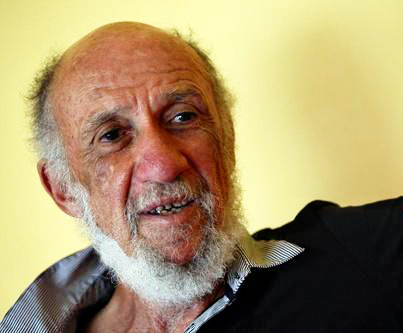
Richard Falk

By Richard Falk

Responding to intense pressure from the usual sources William Schabas, a prominent and respected expert on international criminal law, recently resigned as Chair of the UN expert commission of inquiry into war crimes allegations arising from the massive Israeli military operations in Gaza during July and August of 2014.

These issues relating to international criminal accountability have also received recent prominence due to Palestine’s adherence to the Rome Treaty making it a party to the International Criminal Court, an initiative that generated an enraged punitive reaction on the part of Israel as well as an angry denunciation by Washington. On display in these instances is the struggle between extending the rule of law to international state crimes and the geopolitical resistance to such an effort whenever accountability to law is in tension with the pursuit of strategic interests.

Imposing international criminal responsibility upon political leaders and military commanders that occur in the aftermath of wars possesses a dual character from a geopolitical perspective: to vindicate major military undertakings of liberal democratic states and to ensure impunity for the leaders of these same states in the event that their behavior or that of their allies are alleged to be international crimes.

These efforts at vindication are associated with strengthening the global rule of law and validating the established order, while impunity is invoked to insulate powerful individuals and their governments from criminal accountability. The resulting pattern in international life is one of double standards at the level of implementation and hypocritical rhetoric about the importance of a global rule of law based on its universal applicability.

Contemporary experience with these issues is grounded in the aftermath of World War II.

In 1945 Read More »

Hitler and Stalin: Two Europeans

Johan Galtung

By Johan Galtung

Hitler was about race, Stalin about class. Their theories were based on one contradiction: Aryans vs non-Aryans for one; workers vs capitalists/landowners for the other. The ills of their countries followed from the contradictions at the top of their verbal pyramids. As Western intellectuals they tried to explain much from one axiom. Thus, to Hitler bolsheviks and plutocrats were both mainly Jewish.

Their utopias were contradiction-free, by cleansing; ethnic for Hitler, class for Stalin. Only Aryans; all others killed-expelled-marginalized by the power of the NSDAP, National-Socialist German Labor Party for one; all capitalists/landowners killed-expelled-marginalized by the power of the vanguard of the proletariat CPSU(B), the Communist Party of the Soviet Union (Bolshevik) for the other.

So similar that one may ask: did they imitate each other? Like armies becoming similar by fighting, so also the machines for reshaping societies in the European civil war 1917-1945 (plus minus some years?).

There is another, better explanation: if the theory is pyramidal, so also the practice, the policy machinery. The ultimate power should be in the hands of those licensed as ultimate truth-holders. Those lower down have to learn the smaller, specific truths and enact them.

That pattern identity, isomorphism, between theory and practice pyramids came from the same source in Germany and Russia: Churches, of two opposed Christianities: truth by revelations, articles of faith, commandments on top; enacted by pyramids with popes-patriarchs on top.

Stalin was even trained as Orthodox priest, changing from Christ revealing the truth about God the Father, to Marx revealing the truth about History. And Hitler? Martin Luther’s rabid anti-Semitism and axiomatic Christianity (catechism) played a major role. Why Germans? Very gifted in axiomatics–dictatorship easily follows by isomorphism.

Two genocidal secularisms poured into old Church bottles.Read More »