TFF PressInfo # 354: Open Letter – Political responsibility in the Nuclear Age

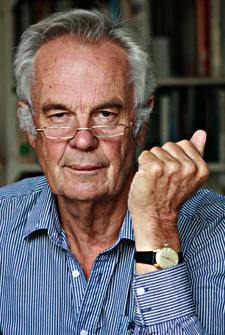
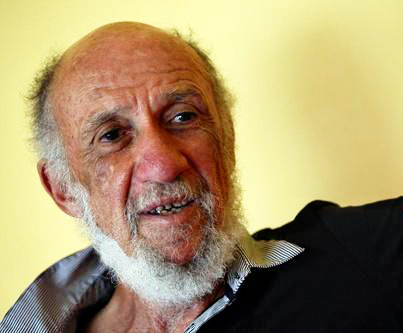
By Richard Falk, David Krieger and Robert Laney

Prefatory Note
What follows here is An Open Letter to the American People: Political Responsibility in the Nuclear Age. It was jointly written by Richard Falk in collaboration with David Krieger and Robert Laney. The three of us have been long connected with the Nuclear Age Peace Foundation, NAPF.

The NAPF focuses its effort on the menace posed by nuclear weaponry and the urgency of seeking nuclear disarmament. The nuclear agreement with Iran and the North Korean nuclear test explosion are reminders of the gravity of the issue, and should serve as warnings against the persistence of complacency, which seems to be the prevailing political mood judging from the policy debates that have taken place during the early stages of the 2016 presidential campaign.

This complacency is encouraged by the media that seems to have forgotten about nuclear dangers since the end of the Cold War, except for those concerned with proliferation of the weaponry to countries hostile to the United States and the West (Iran, North Korea).

Our letter proceeds on the assumption that the core of the problem is associated with the possession, development, and deployment of the weaponry, that is, with the nine nuclear weapons states. The essence of a solution is to eliminate existing nuclear weapons arsenals through a phased, verified process of nuclear disarmament as legally mandated by Article VI of the Non-Proliferation Treaty (1968).

We would be grateful if you could help us reach the widest possible audience through reposting and dissemination via social media networks.*

• •

Dear fellow citizens:

By their purported test of a hydrogen bomb early in 2016, North Korea reminded the world that nuclear dangers are not an abstraction, but a continuing menace that the governments and peoples of the world ignore at their peril. Even if the test were not of a hydrogen bomb but of a smaller atomic weapon, as many experts suggest, we are still reminded that we live in the Nuclear Age, an age in which accident, miscalculation, insanity or intention could lead to devastating nuclear catastrophe.

What is most notable about the Nuclear Age is that we humans, by our scientific and technological ingenuity, have created the means of our own demise. The world currently is confronted by many threats to human wellbeing, and even civilizational survival, but we focus here on the particular grave dangers posed by nuclear weapons and nuclear war.

Even a relatively small nuclear exchange between India and Pakistan, with each country using 50 Hiroshima-size nuclear weapons on the other side’s cities, could result in a nuclear famine killing some two billion of the most vulnerable people on the planet. A nuclear war between the U.S. and Russia could destroy civilization in a single afternoon and send temperatures on Earth plummeting into a new ice age.

Such a war could destroy most complex life on the planet. Despite the gravity of such threats, they are being ignored, which is morally reprehensible and politically irresponsible.

We in the United States are in the midst of hotly contested campaigns to determine the candidates of both major political parties in the 2016 presidential faceoff, and yet none of the frontrunners for the nominations have even voiced concern about the nuclear war dangers we face. This is an appalling oversight. It reflects the underlying situation of denial and complacency that disconnects the American people as a whole from the risks of use of nuclear weapons in the years ahead.

This menacing disconnect is reinforced by the media, Read More »

Improving democracy

By Johan Galtung

Democracy is rule–decision-making–by the consent of the people, the demos. There is a very good argument: the people will suffer the consequences. Hence rule of, by, and for the people.

But the problem is: which level dominates the decision-making?

Level [4] national (government-parliament-courts); [3] regional (provinces-departments), [2] local (LAs, municipalities), level [1] individuals?

In theory [1] is primary, basic, sovereign; in practice level [4]. Through elected representatives, packaged in electoral districts; representing individual preferences, packaged in party programs.

Comment, from Germany: “The sovereignty comes from the people – and never comes back” (“vom Volke raus, und kommt niemals zurück“).

The representatives kindly open a window every 4 years or so, 8-12 hours, 1-2 days, for the people to confirm or disconfirm the government. so the degree of democracy looks like 1-2 days out 4 x 365 = 1460 (+1): around 1 per mille.Read More »

Wibisono, UN Special Rapporteur on Occupied Palestine, resigns

By Richard Falk

This post appeared on January 5th under a different title in the Electronic Intifada. It is published here in a slightly modified and extended form.

Makarim Wibisono announced his resignation as UN Special Rapporteur on Occupied Palestine, to take effect on March 31, 2016. This is position I held for six years, completing my second term in June 2014.

The prominent Indonesian diplomat says that he could not fulfill his mandate because Israel has adamantly refused to give him access to the Palestinian people living under its military occupation in the West Bank and Gaza Strip.

“Unfortunately, my efforts to help improve the lives of Palestinian victims of violations under the Israeli occupation have been frustrated every step of the way,” Wibisono explains.

His resignation reminds me in a strange way of Richard Goldstone’s retraction a few years ago of the main finding in the UN-commissioned Goldstone report, that Israel intentionally targeted civilians in the course of Operation Cast Lead, its massive attack on Gaza at the end of 2008.

At the time I responded to media inquiries by saying that I was shocked, but not surprised. Shocked because the evidence was overwhelming and the other three distinguished members of the UN fact-finding commission stuck by the finding. Yet I was not surprised because I knew Goldstone – a former judge of the South African constitutional court – to be a man of strong ambition and weak character, a terrible mix for public figures who wander into controversial territory.

In Wibisono’s case I am surprised, but not shocked. Surprised because Read More »

ISIS and the Sykes-Picot backlash

By Richard Falk

Part 1

One of the seemingly permanent contributions of Europe to the manner of organizing international society was to create a strong consensus in support of the idea that only a territorially delimited sovereign state is entitled to the full privileges of membership. The United Nations, the institutional embodiment of international society recognizes this principle by limiting membership in the Organization to ‘states.’

Of course, there is an enormous variation in the size, population, military capabilities, resource endowments, and de facto autonomy among states. At one extreme are gigantic states such as China and India with populations of over 1 billion, while at the other are such tiny countries such as Liechtenstein or Vanuatu that mostly rely on diplomacy and police rather than gun powder and armies for security.

All four of these political entities have the same single vote when it comes to action in the General Assembly or as participants at global conferences such at the recently concluded Paris Summit on climate change, although the geopolitics is supreme in the Security Council and the corridors outside the meeting rooms.

From the point of view of international law and organizational theory we continue to live in a state-centric world order early in the 21st century. At the same time, the juridical notion of the equality of states that is the foundation of diplomatic protocol should not lead us astray.

The shaping of world order remains mainly the work of the heavyweight states that act on the basis of geopolitical calculations with respect for international law and morality displayed only as convenient. Yet the political monoculture of territorial states remains formally the exclusive foundation of world order, but its political reality is being challenged in various settings, and no where more so than in the Middle East.

This is somewhat surprising. It might have been Read More »

The common roots of our faiths: Return to our collective consciousness – Iran and Christmas

By Farhang Jahanpour

While Christians celebrate Christmas on Dec. 25th, the Persians celebrate one of their oldest and most festive celebrations on Dec. 21st, the eve of winter solstice, the longest night and the shortest day of the year. In Iran this night is called “Shab-e Yalda”, the night of the birth or nativity of the sun, or Mithra the Sun-god.

According to Orthodox Christians, the Armenians and the Eastern churches, Jesus Christ was born on January 6, and the celebration of his birthday on December 25th, may in fact be born out of the Persian Mithraic influence. In ancient Persian mythology, Mitra (Mithra, Mehr), the God of love, friendship, and light, or the sun-god, was miraculously born from a rock by a river or stream on this longest night of the year.

In his fifth volume of the collected works, Symbols of Transformation, Carl Jung, the famous Swiss psychiatrist, has extensively discussed the influence of Mithraism on Christianity and has portrayed its images and symbols. In praise of the Mithraic sun-god, Jung states:

“The sun. . . is the truly ‘rational’ image of God, whether we adopt the standpoint of the primitive savage or of modern science. In either case Father-God from whom all living things draw life; he is the fructifier and the creator, the source of energy into our world. The discord into which the human soul has fallen can be harmoniously resolved through the sun as a natural object which knows no inner conflict . . . It shines equally on the just and the unjust, and allows useful creatures to flourish as well as the harmful. Therefore the sun is perfectly suited to represent the visible God of this world, i.e., the creative power of our own soul, which we call libido, and whose nature it is to bring forth the useful and the harmful, the good and the bad. That this comparison is not just a matter of words can be seen from the teachings of the mystics: when they descend into the depths of their own being, they find “in their heart” the image of the sun, they find their own life-force which they call the “sun” for a legitimate and, I would say, a physical reason, because our source of energy and life actually is the sun. Our physiological life, regarded as an energy process, is entirely solar (para. 176).”

Soon, Mithraism spread its wings from Persia to the ancient-civilized world in Rome and many European countries. Consequently, in Europe as in Persia, Read More »

Edward Said’s humanism versus the US State Department’s Anti-semitism

By Richard Falk

Prefatory Note
This post consists of my written text for a public presentation on the theme of “Edward Said’s Humanism and the Rejection of the State Department’s Definition of Anti-Semitism” at a conference at Fresno State University, Nov. 6, 2015 bearing the title “Universities at the Crossroads: The Assault on Academic Freedom,” which was the last event of the “Edward Said Lecture Series” organized by Professor Vida Samiian of the Department of Linguistics at FSU. My talk as given departed considerably from this text.

In these remarks, I will present the following analysis:

(1) The most ardent Zionist forces have longed tried to conflate criticism of Israel and Zionism with hatred of Jews, the traditional understanding of anti-Semitism, but this effort has intensified recently, and even has been endorsed by the US Government and is currently under consideration by the University of California and elsewhere;

(2) Examine the definition of anti-Semitism adopted by the U.S. State Department, and discuss briefly why it has pernicious implications for academic freedom, and indeed even for an understanding of the genuine nature of anti-Semitism;

(3) Show why Edward Said despite his intense opposition to anti-Semitism would nevertheless be vulnerable to allegations of being an anti-Semite if the State Department definition were to be applied to his writings and activities;

(4) And finally to point out that according to the imperatives most influentially expressed by Noam Chomsky and Said, the ‘responsibility of the intellectual’ would perversely require them to be ‘anti-Semitic’ according to this pernicious wider conception.

My personal experience with this theme of anti-Semitism and Israel can be summarized by recalling two different occasions:

The first was in Greek Cyprus more than a decade ago at a meeting of the Inter-Action Council (composed of ex-heads of states) devoted to conflict resolution in the Middle East. I had been invited as a resource person. At a session devoted to Israel/Palestine the Israeli ambassador to Greece spoke at some length, insisting that it was anti-Semitic to express strong criticisms of Israel and Zionism. As the only other Jew at the table I felt it to be almost a duty to clarify what I believed to be a mischievous manipulation of ideas.

In my intervention I explained that Zionism was a project or ideology, Israel was a state, and that Jews were a people or persons. I attempted to explain that to disagree with Zionism or to criticize Israeli policies and practices as a state was not at all anti-Semitic, but to exhibit hostility, hatred, and discrimination against Jews as a people or as individuals was indeed anti-Semitism. Recall that Hitler did not persecute Jews for being Zionists, but for being Jews, for partaking of a race or ethnicity.

After the meeting recessed, several participants thanked me for my comments, indicating that only a Jew could offer this kind of clarification, which they found persuasive.

In contrast, the Israeli ambassador and his NGO sidekick Read More »

Slouching toward global disaster

By Richard Falk

There are many disturbing signs that the West is creating conditions in the Middle East and Asia that could produce a wider war, most likely a new Cold War, containing, as well, menacing risks of World War III. The reckless confrontation with Russia along its borders, reinforced by provocative weapons deployments in several NATO countries and the promotion of governing regimes hostile to Russia in such countries as Ukraine and Georgia seems to exhibit Cold War nostalgia, and is certainly not the way to preserve peace.

Add to this the increasingly belligerent approach recently taken by the United States naval officers and defense officials to China with respect to island disputes and navigational rights in the South China Seas. Such posturing has all the ingredients needed for intensifying international conflict, giving a militarist signature to Obama’s ‘pivot to Asia.’

These developments are happening during the supposedly conflict averse Obama presidency. Looking ahead to new leadership, even the most optimistic scenario that brings Hillary Clinton to the White House is sure to make these pre-war drum beats even louder.

From a more detached perspective it is fair to observe that Obama seems rather peace-oriented only because American political leaders and the Beltway/media mainstream have become so accustomed to relying on military solutions whether successful or not, whether dangerous and wasteful or not, that is, only by comparison with more hawkish alternatives.

The current paranoid political atmosphere in the United States is a further relevant concern, calling for police state governmental authority at home, increased weapons budgets, and the continuing militarization of policing and law enforcement.

Such moves encourage an even more militaristic approach to foreign challenges that seem aimed at American and Israeli interests by ISIS, Iran, and China. Read More »

Russia and its radicalizing Muslims

By Jonathan Power

Russia stands at a major cross roads as it works out how exactly to deal with the 14.5 million ethnic Muslims that live inside its borders. If added to this are the migrant workers from Central Asia and Azerbaijan the total is around 20 million. Compare this with Germany which has 5 million and France which has 6 million Muslims.

This is quite a cupful to swallow. The Kremlin has struggled for decades to deal with Muslim ways and demands. When communism collapsed it was relatively easy to restore the Orthodox Church to its traditional preeminence. But dealing with the Muslims is much less straightforward. Besides being a religion they are a political force.

The relationship between the power of the Kremlin and the developing power of Islam was seriously put to the test in the 1990s by the wars for independence in the southern Muslim states of Chechnya and Dagestan. Today stability is threatened by the growing appeal of the Islamic State, ISIS, among disaffected Islamic youth.

If Chechyna (now pacified) was the catalyst for the initial spread of militant Islamism, IS is now the threat that can spear the soft underbelly of southern Russia.Read More »

Responding to Megaterrorism after Paris

By Richard Falk

Prefatory Note
The article below is based on an opinion piece published by Middle East Eye on December 1, 2015 under the title “A Different Response to ISIS after Paris.” My modified text places its focus on the originality of megaterrorism and its distinctive challenges, suggesting that the choice of response needs to be extended beyond the iron cage of militarism and vengeance. Also, it is essential for analysts and leaders to envision the response to the response as well as being preoccupied with how best to hit back. Increasingly, American politicians treat the challenge as if playing poker whereas the realities of the situation call for a chess players’ natural disposition to think ahead as many moves as possible. Finally, given the religious and civilizational dimensions of current versions of megaterrorism, it is vital to guard against various manifestations of Islamophobia.

What separates megaterrorism from other more customary forms of terrorism is the theme of this post. It is not possible to give a precise definition of megaterrorism by pointing to a threshold of casualties or the magnitude of response. Each megaterrorist event is decisively shaped by its distinctive sociopolitical and psychological context.

The focus here is to take account of this radical new category of threat posed in a variety of settings, critique the ‘war’ reflex and the war/crime binary, briefly consider alternate paths of response, and recommend risk and cost assessments that take into account adversary responses to the prescribed response. The 21st century experience with responding to megaterrorist events does not create confidence in either most conceptualizations of the challenges being posed or the responsive strategies chosen to be implemented.

The horrific Paris attacks of November 13th challenge the West more deeply in some ways than did the 9/11 attacks 14 years ago. Read More »

TFF PressInfo # 350 – The West will lose to ISIS – too

By Jan Oberg

Lund, Sweden, November 30, 2015

French president Hollande has declared war – war on terror, George W. Bush style. Like September 11, 2001 wasn’t a war, Paris November 13 wasn’t a war. It was a criminal act.

The war on terror has been an exceptionally stupid war.

In the years before 9/11 about 400 people died worldwide by terrorist attack. The Global Terror Index informs us that 32.600 died in 2014 – 80 times more!

And, still, the only answer everywhere is: More war on terror.

The only – intelligent – exception is Italy whose PM has announced that Italy is going to counter terrorism by investing billions of Euros in culture, art and creativity – showing the world what civilisation is.

Politicians and the mainstream media seemingly try to make us believe – as if we were uneducated – that we in the West are the main victims and innocent victims at that. We are neither.Read More »