TFF PressInfo # 326 – Outrageus attempt at killing a deal with Iran

By Jan Oberg

Internal elite power games in Washington are now putting Middle Eastern and global stability and peace at stake.

Here is the latest attempt at killing a deal with Iran that, to the sensitive reader with a minimum of knowledge of foreign policy and of the Iranian civilization, is little but one long argument for warfare on Iran in nobody’s interest – certainly also not in the interest of the citizens of Israel. 

Is it just because it is summer time that intellectuals, media commentators and diplomats as well as friends and allies of the US conveniently keep generally silent at such irresponsible statements – and the many before it?

Don’t they understand that the nuclear issue as such – not proliferation but possession – is humanity’s most important and that Iran has been the object of revengeful harrassment since 1953 and punished for years for not having nuclear weapons?Read More »

The US’s wrong priorities on terrorism

By Jonathan Power

Were the killings in the church in Charleston terrorism, meant to intimidate the black population of America? Of course they were. Moreover, they were a reflection of the still widespread white hatred for America’s first black president, Barack Obama.

Indeed, as the New York Times editorialized last week, “The main terrorist threat in the US is not from violent Muslim extremists, but from right-wing extremists. (Many of them anti-black.) Just ask the police”. The New York Times has studied 382 police forces and 74% reported extremism by whites. Severe Muslim extremism was only 3% of the total.

The number of violent plots carried out by international terrorists remains very low and most attempts were disrupted. ‘

Last year not one US citizen at home died from international terrorism.Read More »

Pope Francis: Spiritual, Liberating Theology

By Johan Galtung

What a gift to humanity, this Pope!

To choose global climate change as a major theme of his papacy is in the spirit of the times. What is revolutionary, and he uses that word often, is the focus on the poor. Climate change–including the long trend global warming over and above some lulls and local variations–has a clear class address, goes beyond making him the spiritual world leader.

The Pope talks about filth covering the earth, and about greed stimulated by corporate capitalism and consumerism as major causes underlying the technicality of CO2 release. The Pope also mentions the freshness of the gospels, including the unambiguous stand of Jesus for the poor in Matt 6:24–God vs Mammon–Matt 13:12–our economic system, and Matt 19:20-24 about giving one’s riches to the poor.

Pope Francis follows in his footsteps. Simply beautiful.

But there is more to it: a general theological discourse from the same continent as this non-Italian Pope: Liberation Theology. Gustavo Gutiérrez, Leonardo Boff, Miguel d’Escoto–Peruvian, Brazilian, Nicaraguan, from the major parts of the Latin Americas–now in their 80s have been rehabilitated. D’Escoto was foreign minister of the Sandinista government and one-year president of the UN General Assembly.

However, the rehabilitation has moved on, into the Caribbean, to the Latin American country that made world history, Cuba, and to the two Castros. Read More »

America at its best is – strange

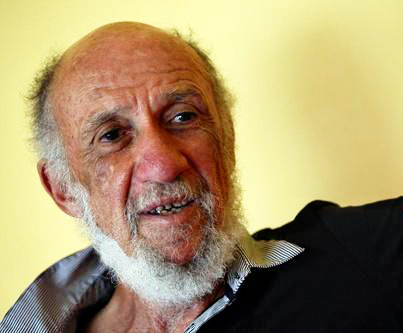
By Richard Falk

America even at its best is a strange place, alive with contradictions, a Teflon political culture that has an unshakable faith in its innocent and virtuous national character and its overall impact on the world, impervious to the ghosts of slavery and of ethnic cleansing of native Americans that should be tormenting our sleep and darkening our dreams, comfortable with its robust gun culture, and with its promiscuous reliance on rogue drones engineered to kill on command and on the brutal happenings that take place in black sites immorally situated in countries whose leaders agree to avert their gaze from the dirty work taking place.

Looked at from a short distance this is not a pretty picture.

Yet there are still those rare moments when this unsavory national profile seems not to be telling the whole story. For instance, I felt heartened by a recent news item reporting that the conservative Nebraska Legislature voted to abolish capital punishment, and in doing so went so far as to override the governor’s veto. That’s right, Nebraska!

Unfortunately, the welcome Nebraska move may not survive the backlash in the making. The Republican state governor, Pete Ricketts, vows to overturn the new law: “My words cannot express how appalled I am that we have lost a critical law to protect law enforcement and Nebraska families.” He is supported in this lethal passion by a pro-capital punishment legislator Read More »

The Value of Values to Build a World for the Common Good

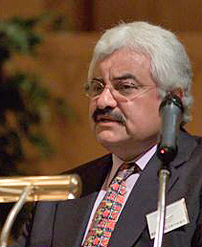
By Kamran Mofid

Lecture at World Congress of Faiths, Annual General Meeting, London School of Economics, University of London, May 20, 2015

Thank you for inviting me to speak to you today, and for giving me the opportunity to share with you my journey for the common good, a journey which I began many years ago, when as a young man I left Iran for England in 1972 in my search for life’s bigger picture.

Friends, I very much like to set the scene by reading a short statement, giving you a brief background to my presentation, my abstract, if you will:

First:

This presentation is dedicated to the youth of the world, our children and grand- children, who are the unfolding story of the decades ahead. May they rise to the challenge of leading our troubled world, with hope and wisdom in the interest of the common good to a better future

Second:

Our country, the United Kingdom, like all nations of the world, despite many good works, deeds and actions by so many individuals, organisations, civil societies and more, is facing a number of major socio-economic, political, ecological, moral, ethical and spiritual crises.

However, I wish to argue that:

Our crises can only be addressed, reversed and resolved, and our goals can only be achieved, if we change direction, adopt new values and become concerned with life’s bigger questions. We must reconnect ourselves with nature and with our true human and spiritual values. Moreover, as members of the household of humanity, we must provide security, sanctuary and constructive engagement for all of our human family. Sustained by the bounty of all, called by the Sacred, and animated into action by the Spirit of peace, Justice, and Reverence for All Life, we must be guided by values and take action in the interest of the common good, empowering each other to build a better world, for all of us.

Continued here.

TFF PressInfo # 322 – Burundi: Plan genuine humanitarian intervention now!

By Jan Oberg

When I put things together in the early morning of May 15 – mainstream media reports, Twitter, Facebook and info from Burundi and my 13 years of experience there – Chapter One of the Burundi crisis is over. Another very bleak chapter is opening. Everything is worse now in Burundi.

The coup d’etat of May 13 has failed, its masters being arrested. President Nkurunziza who was in Tanzania when ousted will return as soon as he feels he can trust enough loyalists; there may well be increased repression of the people everywhere and violence between loyalists and opposition. Toward civil war? Toward genocide?

PressInfo 319 was an early warning. PressInfo 320 dealt with some hopes and possible outcomes – in which a coup d’etat was predicted. However, neither hopes nor denials make a policy and certainly don’t save lives.

The international so-called community’s response so far has, no exception, been woefully inefficient.

The African Union which ought to have action capacity and serve as mediator came out with the usual diplomatic appeals to all sides about showing restraint (echoing an equally lame UN Secretary-General). Incredibly, it condemned only the coup makers but not the massive brutality with which Burundi’s political and military leadership have attacked every citizen-democratic protest the last weeks – protest against the President’s arrogant violation of both the Arusha agreements and the Burundian constitution.

The UN Security Council at least “condemned both those who facilitate violence of any kind against civilians and those who seek to seize power by unlawful means.” In essence, neither the AU nor the UN understands a democratic citizens’ perspective.Read More »

The Semantics of struggle

Richard Falk

By Richard Falk

Words Against the Grain

While reporting to the UN on Israel’s violation of basic Palestinian rights I became keenly aware of how official language is used to hide inconvenient truths. Language is a tool used by the powerful to keep unpleasant realities confined to shadow lands of incomprehension.

Determined to use the rather modest flashlight at my disposal to illuminate the realities of the Palestinian ordeal as best I could, meant replacing words that obscure ugly realities with words that expose as awkward truths often as possible. My best opportunity to do this was in my annual reports to the UN Human Rights Council in Geneva and the General Assembly in New York.

My courageous predecessor as Special Rapporteur, John Dugard, deserves credit for setting the stage, effectively challenging UN complacency with language that looked at the realities lurking below the oily euphemisms that diplomat seem so fond of.

Of course, I paid a price for such a posture as did Dugard for me. Your name is added to various black lists, and doors once open are quietly closed. If the words used touched enough raw nerves, you become a target of invective and epithets. In my case, this visibility meant being called ‘an anti-Semite,’ even ‘a notorious anti-Semite,’ and on occasion ‘a self-hating Jew.’

Strong Zionist pressures have now been brought to induce legislative bodies in the United States to brand advocacy of BDS or harsh criticism of Israel as prohibited form of ‘hate speech.’ In April of this year pressures broad to bear by the British Jewish Board of Deputies led the University of Southampton to cancel a major academic conference on the Israel/Palestine conflict.

In relation to Israel’s treatment of the Palestinians, the clarifying/offending words are ‘apartheid,’ ‘ethnic cleansing,’ ‘settler colonialism,’ and ‘annexation.’ The UN evades such invasions Read More »

Apartheid and the Palestinian National Struggle

Richard Falk

By Richard Falk

Editor’s note
This is a grand essay on the dimensions, history, structures of the Middle East/Palestine-Israeli-Western conflict over about 100 years. It is extraordinarily rich – but doesn’t cause the reader to drown in too many details. I highly recommend it to any student – young or old, journalist and politician – whose understanding of the issues may be based on the woefully biased, general account in Western mainstream media.
– Jan Oberg

Preliminary Observations

In this period when the centenary of the genocidal victimization of the Armenian people in 1915 is being so widely observed and discussed, it seems especially appropriate to call attention to the comparable victimization of the Palestinian people. This second story of prolonged collective victimization also received its jump start almost a century ago with the issuance by the British Foreign Office of the Balfour Declaration supporting the Zionist movement project of establishing a Jewish national home in historic Palestine.

The most striking difference between these two experiences of severe historical wrongs is that the Armenian people are seeking acknowledgement and apology for what was done to their ancestors a century ago, and possibly seeking reparations, while the Palestinian people may sometime in the future have the opportunity to seek similar redress for the past but now their urgent focus is upon liberation from present daily structures of acute oppression.

This Palestinian situation is tragic, in part, because there is no clear path to liberation, and the devastation of oppressive circumstances have gone on decade after decade with no end in view.

The political puzzle of the Israel/Palestine conflict continues to frustrate American policymakers despite their lengthy diplomatic engagement in the search for a peaceful future that satisfies both peoples. There are significant changes, of course, that have occurred as time unwinds.

Perhaps, the most crucial change has involved the gradual extension of Israeli control over virtually the whole of historic Palestine with American acquiescence. This coincides with a growing and more vivid awareness around the world of how much suffering and humiliation the Palestinian people have endured over the course of the last century, and the degree to which this frozen situation can be blamed on the unlimited willingness of the United States to deploy its geopolitical muscle on Israel’s behalf.

My approach to the Palestinian struggle reflects four points of departure: Read More »

TFF PressInfo 321 – Today’s V-Day as a lost opportunity for peace-making

Jan Oberg

By Jan Oberg

Today, May 9, the citizens and government of Russia commemorate V-Day – that it is 70 years ago they won over Nazi Germany. The price they paid were 20-26 million human beings of which 9 million soldiers. – in other European countries the victory has been celebrated this past week. The total casualties of the Second World War was at least 60 million, depending on how you count.

People and governments care about our own history and sacrifices. The implicit message of course is: Pay respect to those who sacrificed their lives and may it never ever happen again. And the world knows everything about the Holocaust/Shoah that cost the lives of 6 million Jews.

However, the world knows much less about the huge concentration camp in Jasenovac, Croatia, where at least 100.000 Serbs, Jews and Romas was exterminated. Serb suffering didn’t fit the Western narrative during the Yugoslav dissolution wars in which Crotia was only a historically innocent victim and Serbs the cause of it all.

The almost incomprehensible suffering of the Russian and other peoples in the Soviet Union also doesn’t fit the present Western narrative about Ukraine and the new Cold War-like period we are in Read More »

TFF PressInfo # 320 – Burundi: Denying or hoping won’t do

Jan Oberg

By Jan Oberg

Virtually everyone with an expertise in humanitarian crisis has warned about the unfolding catastrophe these very days in Burundi – the head of UNHCR, former UN Humanitarian chief Jan Egeland, the UN Secretary-General and his envoy, the International Crisis Group, specialists on Burundi, human rights organisations such as Human Rights Watch, civil society organisations inside Burundi, etc. TFF did it in PressInfo 319 of April 29, 2015.

Everyone who cares will see all the red lamps and hear the alarm bells. We have a history of genocide in this country and neighbouring Rwanda just a few years ago. There is something to build our early warnings on. But who is listening? Who is taking action, serious political action?

There have been meetings in the capital Bujumbura, regional leaders, the UN Envoy and a US Ambassador have met with the president and put pressure, urged, expressed concern or appealed. Unfortunately, it seems to be a display of powerlessness and lack of real political will.

This tired diplomacy might even convince the Burundian president that he can safey continue his stubborn policies because – and that’s his advantage – the country called Burundi is of so little real interest to anyone that those who could do something turn their heads and pretend they just don’t see.

We may of course sit and wait. Hoping it will all miraculously be good again tomorrow. Here are some more or less realistic hopes: Read More »