Why foreign military intervention usually fails in the 21st century

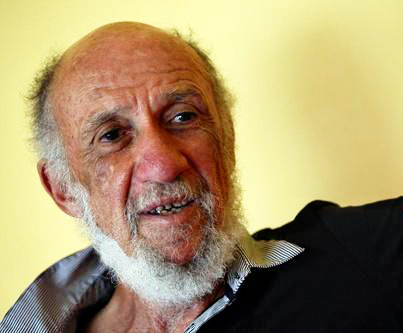
By Richard Falk

Richard Falk

When Nehru was taking a train on his return to India after studying abroad he read of the Japanese victory over Russia in the 1904-05 Russo Japanese War. At that moment he had an epiphany, realizing the hitherto unthinkable, that the British Empire was vulnerable to Indian nationalism. An earlier understanding of the colonial reality by native peoples generally subscribed to the postulates of hard power primacy making it futile or worse to challenge a colonial master, although throughout history there were always pockets of resistance.

This soft power attribute of colonial hard power by way of intimidation and a façade of invincibility is what made colonialism efficient and profitable for so long at the great expense of colonized peoples.

A traditional colonial occupation assumes that the foreign domineering presence, while oppressive and exploitative, refrains from ethnic cleansing or genocide in relation to the indigenous population.

When settler versions of colonialism emerged in relation to the Western Hemisphere and regions occupied by traditional peoples that were without either population density or some kind of industrial capability, the occupier managed to achieve enduring control Read More »

Obama’s report card

By Jonathan Power

Will the real Barack Obama be allowed to stand up? The New York Times’ columnist and Nobel Prize winner for economics, Paul Krugman, writes in “Rolling Stone, “Obama has emerged as one of the most consequential presidents in American history”.

You wouldn’t know this if you observed the swing towards the Republicans in the recent Congressional elections – the same Republican Party that has implemented a scorched-earth policy against many of Obama’s initiatives.

The truth is he’s made more of a go of it than much of the media has reported.

He came into power inheriting the worst financial crisis since the Great Depression of the 1930s. He has emerged as the only full-bloodied KeynesianRead More »

Christianity vs Islam: Countercyclicity?

By Johan Galtung

Johan Galtung

“Countercyclicity” means that both move through history in cycles, up and down; with one moving up when the other moves down.

Christianity started with its founder crucified, like the first pope St Peter; Christians were tortured, killed, expelled from Jewish Palestine. But then indeed up, as religio licita in the Roman Empire in 313, defined in Nicaea in 325 by Emperor Constantine. The Empire split in 395, with a Catholic Church in the West – contracting, monastic after the Western Empire fell in 476 – and an Orthodox Church in the East, till Constantinople became Istanbul in 1453 – Moscow became “the Third Rome”.

Islam started with the Prophet’s hizrat, migration from Mecca to Medina as city-state under Mohammed till he died in 632. From then till the end of the umayyad Damascus dynasty in 750, Islam covered the lands from Iberia (not Asturias) as the caliphate of Cordoba in 711, to Iran. Moving on, the abassid Baghdad dynasty till the 1258 massacre by Mongols, the sultanates of Delhi in 1192, Pattani now Thailand, Aceh in Sumatra; Sulu and Maguindanao in Mindanao, Philippines in 1405, 1490s.

Ahead of expansionist Christian Magellan 1520-21. After Columbus 1492 – the arch-year of Christian expansion – Read More »

The US and torture

By Jonathan Power

October 28th 2014

A soon-to-be released report of the US Senate criticizes the CIA under President George W. Bush of conducting torture of Al Qaeda suspects. However, it doesn’t assess the responsibility of Bush himself nor his vice president, Dick Cheney.

According to the Senate Intelligence Committee’s chairwoman, Dianne Feinstein, the 6,000 page report is “one of the most significant oversight efforts in the history of the US.”

The report shows that the CIA did not provide accurate information to Congress and also provided misleading information. The report also concludes that the CIA impeded effective White House oversight and decision-making. While the report was being prepared the CIA penetrated the Senate Committee’s computers, arousing the fury of its members.

Bush and Cheney were deeply involved in initiating the torture program. Read More »

TFF PressInfo # 288 – Where it all went wrong and lessons were never learnt

By Jan Oberg

Jan Oberg

On November 9, it is 25 years the Berlin Wall came down. Seventeen months later, Yugoslavia’s dissolution began and various concepts and policies were introduced that fundamentally changed international politics ever since – more so than the fall of the Wall.

These features can be seen in the conflict (mis)management in later conflicts.

By now we should have accumulated enough evidence of how effective the various ”teatments” of the ”patient” called Yugoslavia were. To put it crudely: A unique country was destroyed – yes from the inside too, but that doesn’t reduce the responsibility of the West/NATO in its role as ”peacemaker”.

Today, Croatia is ethnically much more clean; Kosovo remains a failed state; the constituencies of the Dayton Accords for Bosnia (1995) still won’t live together as one state, as elections have just shown us. Macedonia’s problems have only deepened. The split between Serbia and Montenegro was enigmatic. Today’s Slovenia is the only unit that can be said to be in a better situation now than when part of Yugoslavia.

It is high time we get a critical discussion going of what the international so-called community chose to actually do – no matter the stated intentions – to help bring about peace in former Yugoslavia.

All of it must be re-assessed and lessons must be learned for governments to introduce a little modesty and recognise that they are not born peacemakers but rather war makers. And we need such a debate to go down another road than the one we took since 1999.

TFF maintains that the crisis in and around Yugoslavia is much more significant for international affairs than hitherto assumed because e.g.:

• The international so-called community’s attempt at being self-appointed conflict analysers and peacemakers with no prior education or training right after being Cold War warriors led to miserable results on the ground.

• Closely related: the amateurish idea that conflicts could be understood and treated as two parties, one good and one bad. The bad guys were the Serbs, of course, and Slobodan Milosevic became the new ”Hitler of Europe” after the West had used him as an ally.

• During this crisis Russia was sidetracked and humiliated. But in the Soviet Union era no one would have dared touch the Yugoslav space. Now the West could do what it wanted and Russia could do nothing to oppose it.

Violent humanitarian intervention was introduced and persuaded many,Read More »

Al-Baghdadi, Self-Proclaimed Caliph of the Islamic State (Part 2)

By Farhang Jahanpour

Part 1 of this series

A shorter version of this article has been published by IPS

When Ibrahim al-Badri al-Samarrai adopted the name of Abu-Bakr al-Baghdadi al-Husseini al-Quraishi and revealed himself to the world as the Amir al-Mu’minin (the Commander of the Faithful) Caliph Ibrahim of the self-proclaimed Islamic State, the whole world had to sit up and take notice of him.

The choice of the long title that he has chosen for himself is most interesting and symbolic. The title Abu-Bakr clearly refers to the first caliph after Prophet Muhammad’s death, the first of the four “Orthodox Caliphs”.

The term Husseini presumably refers to Imam Hussein, the Prophet’s grandson and Imam Ali’s son, who was martyred in Karbala on 13 October 680. His martyrdom is seen as a turning point in the history of Islam and is mourned in elaborate mourning ceremonies by the Shi’ites throughout the world on the 10th of Muharram each year, which is accompanied with many processions and self-flagellation.

Both Sunnis and Shi’is regard Imam Hussein as a great martyr, and as someone who gave up his life in order to defend Islam and to stand up against tyranny.

Finally, al-Quraishi refers to Quraish, the tribe to which the Prophet of Islam belonged.

Therefore, his chosen title is full of Islamic symbolism.

According to an alleged biography posted on jihadi Internet forums, al-Baghdadi is a direct descendant of the Prophet, but curiously enough his ancestors come from the Shi’a line of the Imams who descended from the Prophet’s daughter Fatimah.

According to this alleged biography, al-Baghdadi derives his lineage directly from nine Shi’a Imams, “Ali Al-Hadi, Muhammad al-Jawad, Ali al-Rida, Musa al-Kazim, Ja’far al-Sadiq, Muhammad al-Baqir, Ali Zayn al-Abidin, Husayn Bin-Ali, Ali Bin Abi-Talib, right up to the Prophet’s daughter Fatimah and ending in Prophet Muhammad himself.”

Despite his great hostility towards the Shi’is, is this genealogy a way of portraying himself as the true son of the descendants of the Prophet, thus appealing to both Shi’is and Sunnis?

According to the same biography, al-Baghdadi was born near Samarra, in Iraq, in 1971. It is alleged that he received BA, MA and PhD degrees in Islamic studies from the Islamic University of Baghdad. It is also suggested that he was a cleric at the Imam Ahmad ibn Hanbal Mosque in Samarra at around the time of the US invasion of Iraq in 2003. (1)

According to a senior Afghan security official, al-Baghdadi went to Afghanistan in the late 1990s, where he received his early jihadi training. He lived with the Jordanian militant fighter Abu Musab al-Zarqarwi in Kabul from 1996-2000. (2)

It is likely that al-Baghdadi fled Afghanistan with leading Taliban fighters after the US invasion of Afghanistan following 9/11.

After the US invasion of Iraq in 2003, Zarqawi and Read More »

Did Israel commit genocide in Gaza?

By Richard Falk

Richard Falk

Prefatory Note
The post below is a somewhat revised version of a text published by The Nation. I should also point out that in these proceedings in Brussels under the auspices of the Russell Tribunal I served as a member of the jury.

In a special session of the Russell Tribunal held in Brussels on September 24th, Israel’s military operation Protective Edge was critically scrutinized from the perspective of international law, including the core allegation of genocide. The process featured a series of testimonies by legal and weapons experts, health workers, journalists and others most of whom had experienced the 50 days of military assault.

A jury composed of prominent individuals from around the world, known for their moral engagement with issues of the day that concerned their societies, and also the wellbeing of humanity, assessed the evidence with the help of an expert legal team of volunteers that helped with the preparation of the findings and analysis for consideration by the jury, which deliberated and debated all relevant issues of fact and law, above all the question of how to respond to the charge of genocide.

It should be acknowledged that this undertaking was never intended to be a neutral inquiry without any predispositions. It was brought into being because of the enormity of the devastation caused by Protective Edge and the spectacle of horror associated with deploying a high technology weaponry to attack a vulnerable civilian population of Gaza locked into the combat zone that left no place to hide.

It also responded to the failures of the international community to Read More »

Blame the British for Hong Kong’s democratic deficit

By Jonathan Power

September 9th 2014

When 17 years ago the British lowered the Union Jack on their last remaining important colony, Hong Kong, Chris Patten, the governor, buried his face in his hands for the entire world to see and felt the profoundest sentiment a proud and ambitious politician could experience – failure.

It was indeed a personal failure to be added to his other great misfortune, the timing of elections back home in Britain that made it impossible for him to become prime minister. But on that damp evening it was the people of Hong Kong, those who knew him well could tell, that pierced his conscience. The British had let them down. They were giving up a colony having unaccountably failed not to leave it a functioning democracy.Read More »

4+ logics of living together on Planet Earth

By Richard Falk

Richard Falk

It is misleading to describe ‘world order’ as consisting exclusively of sovereign territorial states. This misimpression is further encouraged by the structure of the United Nations, whose members are states, and only states. The UN was established in 1945 in the aftermath of World War II, reflecting a West-centric orientation that emerged at the time, quickly morphing into the Cold War rivalry between the two states that were geopolitically dominant and ideologically antagonistic: the United States and Soviet Union.

Even in the UN, however, this surface allegiance to statism is misleading. The geopolitical dimension was highlighted in the UN Charter by conferring a veto power on five winners in the recently concluded war, which amounted to the grant of a right of exception with respect to international law.

But there are differences in hard and soft power that make the interactions among states within the UN exhibit more inequality than is suggested by this still prevailing Westphalian myth of the equality among sovereign states. Some states contribute far more to the UN budget than others, and their views carry more weight; others are richer, bigger, more informed about some issues, are better at lobbying for support, and some play above their diplomatic weight by clever political maneuvers. And there are several kinds of non-states active behind the scenes that exert varying degrees of influence depending on the subject-matter.

Global policy is mainly shaped outside the UN by a bewildering array of formal and informal actors that participate in a bewildering variety of ways in international life. The world economy is substantially controlled by business oriented alignments such as the World Economic Forum that meets annually in Davos, Switzerland, or the gatherings of economically powerful states grouped together as the G-7, later becoming the G-8, and more recently the G-20 to accommodate shifts in trade and investment patterns, and give recognition to such new alignments as the BRICs.

As such, the shorthand designation of world order by reference to the 1648 Treaties of Westphalia that brought the Thirty Years War to an end serves as a convenient starting point for understanding the way authority and power are deployed in the world.

Yet it must be supplemented by the recognition that Read More »

ISIS, militarism and the violent imagination

By Richard Falk

Richard Falk

Before ISIS

The beheading of American and British journalists who were being held hostage by ISIS creates a truly horrifying spectacle, and quite understandably mobilizes the political will to destroy the political actor who so shocks and frightens the Western sensibility, which is far from being free from responsibility for such lurid incidents.

Never in modern times has there been a clearer example of violence begetting violence.

And we need to ask ‘to what end?’ Political leaders in the West are remarkably silent and dishonest about what it is that they wish to achieve in this region beset since 2011 by a quite terrifying outbreak of political extremism, whether from above as in the cases of Syria, Egypt, and Israel or from below as with ISIS and al-Nusra.

It is difficult to recall that at the start of 2011, just three years ago, progressive voices around the world were inspired by the Arab upheavals, especially in Egypt and Tunisia, that burst upon the political scene unexpectedly.

These extraordinary events appeared to repudiate the prevailing patterns of authoritarian, exploitative, and corrupt collaboration between oppressive domestic elites, neoliberal economic forces, and the regional imperial juggernaut that had kept this humanly disastrous reality stable for so long. Yet even during that time of optimism about the Arab future, a closer scrutiny of what was happening disclosed many reasons to be worried. It is helpful to look to this recent past to have some comprehension of the perplexing present.

A Revolutionary Spirit Without Revolutionary Action

The goals of these upheavals were far too ambitious to be realized by such limited challenges directed at the established order. These movements were essentially confined to getting rid of a hated ruler. Read More »