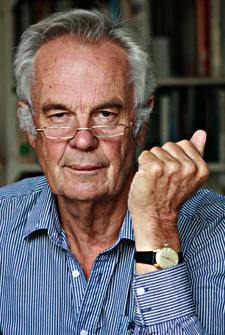
Who was Ariel Sharon?

By Jonathan Power

The Middle East has been living a nightmare, partly because of a man of Russian origin who became Israel’s greatest general and, later, prime minister of Israel: Ariel Sharon. What were the inner thoughts of this man? This is what Amos Oz, an acclaimed Israeli journalist, writer and novelist, with a world-wide reputation, helped us to discover in an interview published by the Israeli daily, Davar, in December 17, 1982.

“Call Israel by any name you like, call it a Judeo-Nazi state. Better a live Judeo-Nazi than a dead saint. I don’t care whether I am like Gaddafi. I am not after the admiration of the gentiles. ….I will destroy anyone who will raise a hand against my children, I will destroy him and his children, with or without our famous purity of arms…..

“We’ll hear no more of that nonsense about the unique Jewish morality, the moral lessons of the Holocaust or about the Jews who were supposed to have emerged from the gas chambers pure. As for Eyn Hilwe [Lebanon’s largest refugee camp] it’s a pity we did not wipe out that hornet’s nest completely.”

Sharon first stirred up controversy with the massacre at Qibiya, a Palestinian village. Read More »
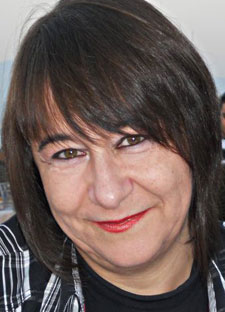
Reconciliation and agitation in Macedonia: Success or failure of the RECOM initiative?

By Biljana Vankovska

Biljana Vankovska has decided to resign from the post of public advocate due to the obstacles she has faced as described below.

Strangely enough, it appears that the Republic of Macedonia, once the southernmost and poorest republic of the former Yugoslavia, has always lagged behind the rest, in weal or woe. If one considers the achievements of the states in the region, when success is measured by the degree of their integration into the EU, one gets the impression that, while the rest of them, including Kosovo, are making steps forward, Macedonia is retrogressing.

The violent conflict in 2001 was the last episode in the succession of wars and internal armed conflicts on the territory of the former common state. It was an unusual conflict by Yugoslav standards: in terms of duration, number of casualties and degree of destruction, as well as of the rapidity of the recovery.
When violence broke out in this former ‘oasis of peace’, as Macedonia was called in international circles during the bloodshed in Croatia or the genocide in Bosnia and Herzegovina, some observers were alarmed and feared that an escalation without precedent would involve neighbouring states too (i.e. those that were not part of the SFRY).

Others, who looked at things with a cooler head, soon came to the conclusion that the conflict was the “biggest set-up in these parts since the war in Slovenia”. Be that as it may, its consequences for the people and the society in general are not negligible even today, although they have never been the subject of any serious public debate and concern. Read More »

Beholding 2014

By Richard Falk
Written on December 31, 2013

2013 was not a happy year in the chronicles of human history, yet there were a few moves in the directions of peace and justice.

What follows are some notes that respond to the mingling of light and shadows that are flickering on the global stage, with a spotlight placed on the main war zone of the 21st century – the Middle East, recalling that Europe had this negative honor for most of the modern era except for the long 19th century, and that the several killing fields of sub-Saharan Africa are located at the periphery of political vision, and thus their reality remains blurred for distant observers. Read More »

Legalizing opium in Afghanistan

By Jonathan Power

Hippocrates, the father of modern medicine who lived 460-357 BC, concluded that diseases were naturally caused and were cured by natural remedies. Opium, he wrote, was one of the latter. But he was also of the opinion that it should be used sparingly and under control.

If only our governments today could take such a sanguine and informed view of the use of opiates in medicine today.

No one needs a more enlightened attitude than the Western forces now operating in Afghanistan where for years they have been committed to destroying the peasants’ main source of income. Afghanistan produces more opium that anywhere else in the world.

Some observers say this eradication programme has done much to push country people into the Taliban camp. The West has long been shooting itself in the foot.Read More »

2014 International Year of Solidarity with the Palestinian People

By Richard Falk

In a little noted initiative the General Assembly on November 26, 2013 voted to proclaim 2014 the International Year of Solidarity with the Palestinian People. The UN Committee on the Exercise of the Inalienable Rights of the Palestinian People was requested to organize relevant activities in cooperation with governments, the UN system, intergovernmental organizations, and significantly, civil society.

The vote was 110-7, with 56 abstentions, which is more or less reflective of the sentiments now present in international society. Among the seven opponents of the initiative, in addition to Israel, were unsurprisingly its three staunchest supporters, each once a British colony: the United States, Canada, Australia, with the addition of such international heavyweight states as Micronesia, Palau, and the Marshall Islands. Europe and assorted states around the world were among the 56 abstentions, with virtually the entire non-West solidly behind the idea of highlighting solidarity with the Palestinian people in their struggle for peace with justice based on rights under international law.

Three initial observations:

• Those governments that are willing to stand unabashedly with Israel in opposition to the tide of world public opinion are increasingly isolated, and these governments are under mounting public pressure from their own civil societies that seeks a balanced approach that is rights based rather than power dominated.

• The West, in general, is dominated by the abstaining governments that seek the lowest possible profile of being seen as neither for or against, and in those countries where civil society should now be capable of mobilizing more support for the Palestinian struggle.

• The non-West that is, as has long been the case, rhetorically in solidarity with the Palestinian people, but have yet to match their words with deeds, and seem ready to be pushed.

What is also revealing is the argumentation of UN Watch, and others, that denounce this latest UN initiative because it unfairly singles out Israel and ignores those countries that have worse human rights records. Always forgotten here are two elements of the Israel/Palestine conflict Read More »

Samer Issawi, hunger strikes, and the Palestinian struggle

By Richard Falk

For the last three years Palestinian prisoners, mainly unlawfully detained in Israeli jails, have been engaged in a series of life threatening hunger strikes to protest administrative detention imprisonment (that is,without indictment, charges, and access to allegedly incriminating evidence), abusive arrest procedures (including nighttime arrests involving brutality in the presence of family members, detention for prolonged interrogations violating international standards, e.g. 22 hours at a time, sleep deprivation), and deplorable prison conditions (including unlawful transfer to Israeli prisons, denial of family visits, solitary confinement for prolonged periods).

No recent Palestinian prisoner has received more attention among the Palestinian than Samer Issawi, released a few days ago after reaching an extraordinary bargain with prison officials last April. He agreed then to stop his hunger strike, which had lasted an incredible 266 days, either partially or completely, in exchange for an Israeli pledge to release him in eight months at the end of 2013.

Notably, Issawi had rejected Israeli earlier offers Read More »

Good cheer at the end of the year – 2013

By Jonathan Power

We have a lot to be thankful for in 2013.

Look at the protests now going on in Bangkok. After some initial clashes at the beginning both sides have become non-violent. One can praise the government of Prime Minister Yingluck Shinawatra for this. She ordered the gates and doors of the ministry of the interior, of the police and the Thai equivalent of Scotland Yard/FBI to be opened. The protesters poured into the buildings and then left – bored.

In the Ukraine after a couple of nights of police brutality President Vikto Yanukovych ordered the police to restrain themselves. Both sides now use peaceful tactics.

Non-violence à la Gandhi and Martin Luther King doesn’t always achieve its objectives, but it keeps the political temperature down and avoids many deaths. It is more likely to work when there is a grave injustice. This is not the case either in Thailand or Ukraine. Indeed in Thailand it is the middle class protesting at the government’s policies of favouring the poor and the rural peasantry, although the demonstrators are not trying to take away the progress the poor have already made. Read More »

A Christian peace?

By Johan Galtung

What a Christmas gift to all of us from that amazing Pope Francis, his first Message for the World Day of Peace, Fraternity, the Foundation and Pathway to Peace. A tightly reasoned statement in ten sections; here is an effort to summarize some key points:

1. An irrepressible wish for fraternity enables us to see others not as enemies or rivals, but as brothers and sisters. However, reference to a common Father is needed; otherwise it becomes “a mere do ut des /I give so that you give/ which is both pragmatic and selfish”.

2. The story of Cain and Abel /the first brothers, sons of the first couple, Adam and Eve/ “teaches that we have an inherent calling to fraternity, but also the tragic capacity to betray that calling”: Cain killed Abel out of jealousy because God preferred Abel.

3. Human fraternity is regenerated in and by Jesus Christ through his death and resurrection–the Cross is the definitive foundational focus of that fraternity-/no/ separation between the people of the Covenant and the Gentiles–not party to the pact of the Promise.

4. Fraternity is the foundation and pathway–peace is work, an opus solidaritatis, a duty of solidarity, of social justice, of universal charity, of a more human and sustainable development.Read More »

Escaping the abusive state: the Snowden and Lynne Stewart cases

By Richard Falk

The more contact one has with the modern state, even in those societies that have long constitutional traditions entrenching civil liberties, the more grounds there are for deep and growing concern. I suppose that the most dramatic exhibition of the dangers being posed as 2014 approaches, and we are reminded that this will be 30 years after 1984, are associated with Edward Snowden’s extraordinary disclosures of the global network of surveillance being operated by the National Security Agency in the United States (NSA).

Such a network presupposes that we are all, that is, every inhabitant on the planet to be regarded as worth investigating as potential terrorist threats, and along the way establishing a huge data bank of information that can be used for nefarious purposes at any point to disempower and subvert protest movements or even blackmail anyone seen to be obstructing projects dear to the government or any special interest group that has the government’s ear on matters it cares about.

In important respects more disturbing than the Snowden revelations was the rabid response of the supposedly liberal government presided over by Barack Obama. No stone was left unturned, other than assassination or kidnapping, in the effort to gain physical custody over Snowden evidently with the intention of prosecuting him to the full extent of the law as an odious criminal offender. Foreign governments were badgered to cooperate in the pursuit, a plane carrying the Bolivian president was improperly denied access to the airspace of several European countries and forced to land in Vienna, because it was suspected of carrying Snowden.

Such an enforcement dynamic completely overlooked the political nature of Snowden’s crimes,Read More »

Chile beats a path on the murder rate

By Jonathan Power

Chile has moved to the left. With Michelle Bachelet’s overwhelming victory in the presidential poll she now has the freedom to legislate as she wants. Poverty reduction, income re-distribution and education are the sharp end of her political program.

But of all Latin American presidents she is perhaps the most fortunate. Despite his draconian suppression of human rights, the dictator, General Augusto Pinochet, who ruled in the 1970s and 80s, not only engineered high economic growth he also kept deep poverty at bay.Read More »