Reading these Palestinian prison diaries: A moral obligation

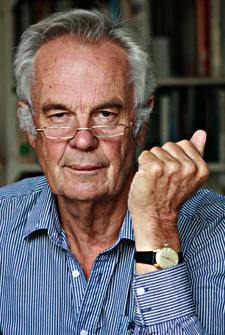
By Richard Falk

The Prisoners’ Diaries: Palestinian Voices from the Israeli Gulag
Edited by Norma Hashim, in close collaboration with the Centre for Political & Development Studies, Gaza, 2013.

Download the pdf version of Prison Diaries for USD1.99. The printed book will be available at http://www.palestinemall.net from 17 April 2013.

There are many moving passages that can be found in these excerpts from prison diaries and recollections of 22 Palestinians. What is most compelling is how much the material expresses the shared concerns of these prisoners despite great variations in writing style and background. A few keywords dominate the texts: pain, God or Allah, love, dream, homeland, steadfastness, tears, freedom, dream, prayer.

My reading of these diaries exposed me to the distinct personal struggles of each prisoner to survive with as much dignity as possible in a dank and poorly lit circumstances of isolation, humiliation, acute hostility on the part of the prison staff, including abusive neglect by the medical personnel. The diaries also confirmed that even prolonged captivity had not diluted the spirit of Palestinian resistance to Israeli occupation, but on the contrary had intensified it.

A strong impression of the overall illegitimacy of Israel’s encroachment on the most fundamental rights of the Palestinian people is also present on virtually every page.

Although not professional writers, the sentiments expressed have a special kind of eloquence arising from their authenticity and passion. A female prisoner, Sana’a Shihada, on learning that her family had been spared the demolition of their family home, describes the ordeal of her interrogation in a poetic idiom: “..the anger of the interrogators was like snow and peace to me [an Arabic saying that conveys a sense of being ‘soothing’]. I felt the pride of the Palestinians, the glory of Muslims, and the brightness of honesty. I knelt to Allah, thankfully. My tears fell on the floor of the cell, and I am sure they dug a path which those later imprisoned will be able to see.” Read More »
Middle East economies are unable to shift into top gear

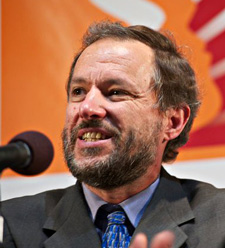
By Jonathan Power

Dateline: Doha, Qatar.

It has always been one of the mysteries of history why it is that the Muslim world of the Middle East was once so far ahead of Europe in science, medicine, astronomy and mathematics yet by the 16th century started to fall behind.

Not only did most of it never industrialize, if it hadn’t been for nearly all its countries having oil in abundance they would still be living in the poverty and torpor that was their lot at the beginning of the twentieth century. Even today as modernism takes over and cities are built like this one and its neighbours, reaching for the sky, the foundations are industries of the newer kind – tourism and banking. According to the UN’s annual Human Development Report most of them, Abu Dhabi apart, compared with countries of equal income per head, are low down in the world rankings on education, health, scientific prowess and the status of women.

But why did the Muslim world lose its momentum? If it had kept going at the pace it did in the first millennium after Mohammed it would now be one of the world’s leaders.Read More »

What was wrong with Obama’s speech in Jerusalem

By Richard Falk

It was master-crafted as an ingratiating speech by the world’s most important leader and the government that has most consistently championed Israel’s cause over the decades. Enthusiastically received by the audience of Israeli youth, and especially by liberal Jews around the world. Despite the venue, President Obama’s words in Jerusalem on March 21st seemed primarily intended to clear the air somewhat in Washington. Obama may now have a slightly better chance to succeed in his second legacy-building presidential term despite a deeply polarized U.S. Congress, and a struggling American economy if assessed from the perspective of workers’ distress rather than on the basis of robust corporate profits. Read More »

Democrats share the blame for tragedy of Iraq War

By Stephen Zunes

The Democrats who voted to support the war and rationalized that vote by making false claims about Iraq’s WMD programs – a minority of Democrats, but much over-represented in Democratic leadership councils – were responsible for allowing the Bush administration to get away with lying about Iraq’s alleged threat.

Here on the tenth anniversary of the Iraq War, it is important to remember that it was not just those in the Bush White House who were responsible for the tragedy, but leading members of Congress as well, some of whom are now in senior positions in the Obama administration.

Continue reading at truthout

Remembering those responsible on the 10th anniversary of the Iraq War

By Stephen Zunes

This March 19 marks the 10th anniversary of the start of the U.S. invasion of Iraq.

The U.S. war and occupation has resulted in the deaths of up to half a million Iraqis, the vast majority of whom are civilians, leaving over 600,000 orphans.

More than 1.3 million Iraqis have been internally displaced and nearly twice that many have fled into exile.

Almost 4,500 Americans were killed and thousands more have received serious physical and emotional injuries which will plague them for the rest of their lives.Read More »

The Iraq War – 10 years later

By Richard Falk

After a decade of combat, casualties, massive displacement, persisting violence, enhanced sectarian tension and violence between Shi’ias and Sunnis, periodic suicide bombings, and autocratic governance, a negative assessment of the Iraq War as a strategic move by the United States, United Kingdom, and a few of their secondary allies, including Japan, seems near universal.

Not only the regionally destabilizing outcome, including the blowback effect of perversely adding weight to Iran’s overall diplomatic influence, but the reputational costs in the Middle East associated with an imprudent, destructive, and failed military intervention make the Iraq War the worst American foreign policy disaster since its defeat in Vietnam in the 1970s, and undertaken with an even less persuasive legal, moral, and political rationale.

Most geopolitical accounting assessments do not bother to consider the damage to the United Nations and international law arising from an aggressive use of force in flagrant violation of the UN Charter, Read More »

Iraq and the betrayal of a people – Impunity forever?

By Hans von Sponeck

Iraq’s recent history includes two far reaching events, on the 2 August 1990 Iraq’s invasion into Kuwait and on 19 March 2003 the US/UK invasion into Iraq. Whether political leaders will draw lessons from these events will be, at best, questionable. Iraqis continue to be wronged. Danger to life and turmoil remain a cruel part of Iraq’s reality in early 2013. The collective suffering of a nation is visibly all pervasive. It can not be hidden.

The Iraqi puzzle of life confirms an endless number of tragedies
Ethnic tension and sectarianism have become a major element in Iraqi politics since the US/UK invasion of 2003, a polarization of inter-group relations  Iraqis had not known before. This explains much of the existing hideous crime including murder, kidnapping, property destruction and, most noteworthy, the deteriorating relationships between Baghdad and the three northern Kurdish governorates.

Since the years of war, sanctions and occupation, Iraq’s once state-of-the-art medical system has all but collapsed. Malnutrition and diseases, almost forgotten in Iraq, such as respiratory infections; measles; typhoid fever and tuberculosis have re-emerged on a large scale. The planned destruction of water and sanitation facilities, especially in the 1991 war, and recurrent drug shortages, throughout the period of sanctions and after the 2003 invasion, promoted significantly ill-being, morbidity and mortality in the country (WHO). Read More »

Cambodia leaves the darkness behind

By Jonathan Power

Dateline: Phnom Penh, Cambodia, March 5th 2013

Cambodia has lain for too long under the black umbrella of its past. But Cambodia is waking up, has looked the evil one in its eye and, re-born, found its strength.

Cambodia has been to hell and back – 2 million of its people killed out of population of 8 million, with 500,000 of them executed, the consequence of a fanatical communist movement, the Khmer Rouge, led by Pol Pot and a group of henchmen now being tried in the UN War Crimes Court. (Pol Pot himself is dead.)

The Khmer Rouge violently took power in 1975 and fell in 1979. They wanted a classless society. They abolished money, property and religious practices. Family relationships were criticised and people were forbidden from even showing the slightest affection. The work day in the fields was 12 hours long without pause. Torture and the bullet were the instant punishment for deviance. Anybody educated was singled out for death.Read More »

Cambodia’s War Crimes Court at snail pace

By Jonathan Power

Dateline: Phnom Penh, Cambodia.

At the end of World War 2, when the three allies, Britain, the US and the Soviet Union, were considering what to do with the top German political and military leaders, Winston Churchill had no compunction in saying they should be taken out of their cells and shot. Franklin Roosevelt persuaded him that a trial was more in order. Stalin went along with this.

A trial it was with judges from the three powers – the first war crimes’ trial in history. It tried 23 of the German hierarchy and it took only 13 months to complete the trial.

The trial in Cambodia, organised jointly by the UN and the Cambodian government, has had only five people in the dock but has taken 7 years and is not likely to finish before the end of the summer or even early next year. (One was convicted in 2010 and one, the only woman, has been released on health grounds.) I asked senior Western diplomats and two of the judges on the court why so long and they all found it difficult to answer. Some talked about the investigation part of the trial taking too long, yet the evidence was growing on trees.Read More »

Room for optimism in Iran and the P5-plus-1 talks

By Farhang Jahanpour*

Iran and the P5-plus-1, which includes the United States, will meet again on 26 February in Kazakhstan. This is the first time that the two sides will meet in an atmosphere of continuing mutual suspicion since the third round of talks held in Moscow on 18-19 June 2012 ended in stalemate.

Iran believes that the West, particularly the United States, is using the talks as a pretext to increase the sanctions until Tehran bends to its will; whereas Washington holds that Iran is prolonging the talks in order to continue its uranium enrichment with the aim of producing a nuclear weapon. The fact of the matter is that neither side is sincere in their remarks and both sides are engaged in a cat and mouse game trying to use the talks for domestic purposes and for pursuing other goals, rather than finding a mutually acceptable solution to Iran’s nuclear program.Read More »