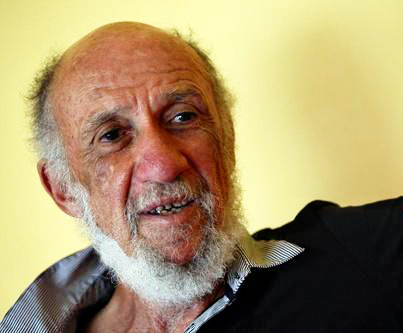
Review of Jeff Halper’s “War Against The People: Israel, the Palestinians and Global Pacification”

By Richard Falk

Prefatory Note
The review below was published in the current issue of Journal of the Society for Contemporary Thought and Islamic World. I am posting it here because I believe that Jeff Halper’s book deserves the widest possible reading. It explains clearly and convincingly one of the deepest and least understood roots of Israel’s diplomatic support throughout the world, which is its role as a niche arms supplier and influential tactical specialist in waging wars against peoples who dare offer resistance to state power as variously deployed against them.
The Israeli experience in exerting oppressive control of the Palestinian people provides the foundation of Israel’s international credibility and perceptions of effectiveness in disseminating for economic and political profit its hardware and software associated with managing and suppressing the resistance of popular movements fighting for their rights.
The Israeli stress on pacification rather than victory exposes the true nature of what Halper identifies so vividly and comprehensively as the distinctive character of waging ‘war against the people.’

Jeff Halper
War Against the People: Israel, the Palestinians and Global Pacification
Pluto Press, 2015, 296 pp.,
$25.00 US (pbk), ISBN 9780745334301.

Jeff Halper is an unusual hybrid presence on both the scholarly and political scene. He describes himself as an “activist-scholar” (6), which adopts a controversial self-identification. The conventional stance erects a high wall between scholarship and activism.

To his credit and for our benefit, Halper excels almost equally in both roles. He is one of the most lucid speakers on the lecture circuit combining clarity with wisdom and a rich fund of information and firsthand experience, and his work as a writer is influential and widely known.

His activist credentials have been built up over many years, especially in his work as co-founder and leader of the Israeli Committee Against House Demolitions, which has bravely confronted Israeli demolition crews and IDF soldiers, helped Palestinians on multiple occasions to rebuild their destroyed homes, thereby responding humanely to one of Israel’s cruelest occupation practices, an instance of unlawful collective punishment.

Halper has estimated that less than 2% of demolitions can lay claim to a credible security justification (the respected Israeli human rights NGO, B’Tselem, estimates 1.3% of demolitions are justified by security, while the rest are punitive or 621 of 47,000 since 1967). As an author his main prior book makes an unsurprisingly strong pitch for activism as the most reliable foundation for analysis and prescription.

His important and incisive title gave the theme away – An Israeli in Palestine: Resisting Dispossession, Redeeming Israel.1 This earlier book remains valuable as testimony by a progressive Zionist in Israel that with good faith Jews and Palestinians might yet learn to live together, including finding a formula for sharing the land.

Halper’s own life experience makes this blend of scholarship and activism particularly compelling. He is an American born Jew who grew up in the Midwest and studied anthropology in Wisconsin, taught at a Quaker university for several years, and then moved to Israel where he married an Israeli and has three grown children. What particularly sets Halper apart from most other principled Jews in the ranks of critics of Israel is the striking combination of the radicalism of his opposition to the policies and practices of the Israeli state together with his evident commitment to remain in Israel no matter how far right the governing process drifts.

Most other prominent Jewish critics of Israel have remained outside the country throughout their life (e.g. Noam Chomsky) or were born in Israel and then chose to become expatriate critical voices (e.g. Daniel Levy, Ilan Pappé, Gilad Azmun). There are a few internationally prominent Israeli journalists and cultural figures who have sustained sharply critical commentary (e.g. Gideon Levy, Amira Hass) and kept their Israeli residence despite harassment and threats.

In the book under review Halper broadens his own distinctive identity while enlarging the apertures of perception by which he views the Israeli state.

He focuses attention on the Israeli arms industry, security doctrines, and policies, and examines Israel’s acquisition of formidable diplomatic influence grossly disproportionate to its size and capabilities. It is this gap between Israel’s significant impact on current world history and the modest scale of its territorial reality and its outsider status in most global settings that is the core mystery being explicated by Halper.

He starts the book with some provocative questions that put the underlying puzzle before us in vivid language: “How does Israel get away with it? In a decidedly post-colonial age, how is Israel able to sustain a half-century occupation over the Palestinians, a people violently displaced in 1948, in the face of almost unanimous international opposition” (1)?

He indicates that this phenomenon cannot be adequately “explained by normal international relations” nor by the strength of the Israel lobby in the United States nor by strong Israeli pushback to discredit critics by invoking the Holocaust as an indefinite source of impunity (3).

What the book demonstrates very persuasively is that Israeli influence is a result of its extraordinary, partially hidden and understated role as arms supplier to more than 130 countries and as an increasingly significant mentor of national police forces and counter-terrorist operations and practices in many countries, including the United States.

Israel as Arms Merchant and Pacification Ideologue

Without exaggeration, War Against the People, is really three books in one.Read More »

John Avery’s CV

John Scales Avery

John Scales Avery received a B.Sc. in theoretical physics from MIT and an M.Sc. from the University of Chicago. He later studied theoretical chemistry at the University of London, and was awarded a Ph.D. there in 1965.

He is now Lektor Emeritus, Associate Professor, at the Department of Chemistry, University of Copenhagen.

Fellowships, memberships in societies
Since 1990 he has been the Contact Person in Denmark for Pugwash Conferences on Science and World Affairs. Member of the Danish Peace Commission of 1998. Technical Advisor, World Health Organization, Regional Office for Europe (1988- 1997). Chairman of the Danish Peace Academy, April 2004-.

You’ll find a lot about this eminent scholar at Wikipedia. Avery is also a leading peace researcher and activist – “Since 1990, Avery has been the Contact Person for Denmark the Pugwash Conferences on Science and World Affairs. In 1995, Avery was part of a group that shared in the Nobel Peace Prize for their work in the 1990s in organizing the Pugwash Conferences on Science and World Affairs.

In 1998, Avery was elected to the Danish Peace Commission. During the years 1988-97, Avery was the Technical Advisor at the World Health Organization, Regional Office for Europe. In 2004, Avery became the Chairman of the Danish Peace Academy.

In his usual humble and plain style John tells the story of his life – his personal life, his scholarly life and his peace life – here.

Publications
Dr. Avery seems to have ben writing day and night throughout his life – here is his amazing list of books, chapters and articles on world affairs.

In early 2016, Irene Publishing – run by TFF Associates Jørgen Johansen and Majken Jul Sørensen – published Avery’s Collected Essays as well as The Need For A New Economic System.

John joined TFF as TFF Associate in March 2016.

Danmark skal heller ikke bombe i Syrien – 6 artikler

Af Jan Øberg

Posted on 18 April, 2016 on Jan Oberg’s blog

Den 19. april 2016 havde Folketinget 2. behandling af forslaget om også at bombe og indsætte specialstyrker i Syrien.

Jeg mener at sagen er fundamentalt vigtig for Danmark, danskerne og vor fremtidige rolle og ‘image’ ude i verden.

Desuden finder jeg at beslutningsgrundlaget, mediedækningen og den offentlige debat giver anledning til den største bekymring.

At gå i krig er den vigtigste beslutning en regering kan tage og en befolkning bakke op om. Men det er som om dette at deltage i krig stort set rager både ministre, folketingsmedlemmer, journalister og befolkning en forårsblomst.

Med en vis fortvivlelse skrev jeg derfor 6 artikler med forskellige temaer og producerede en video, der også foreslår hvad vi kunne gøre i stedet.

Jeg ville have disse ting sagt og spredt inden beslutningen blev taget.

Herunder findes de én for én som jeg har skrevet dem med en lille kommentar til publiceringsprocessen, som også i et vist omfang vidner – for mig i hvert fald – om mærkelige prioriteringer hvad angår tidspunkt og længde.

Alt andet lige bliver redaktionerne ikke oversvømmet af kvalificerede, kritiske og konstruktive artikler af denne type – men det er dog kun meget korte ting, man kan få ind. Om overhovedet…

1. Dansk krigsdeltagelse i Syrien vil være landsskadelig

Politiken 16. april 2016. Problemfri publicering.

Den 19. april skal folketinget have 2. behandling af forslaget om at Danmark skal deltage i krigen over Syrien og endog have specialstyrker på landjorden.

Det vil i så fald være sjette krigsdeltagelse siden 1999 – Serbien, Afghanistan, Irak 2003-2007, Libyen, Irak igen.

Der synes desværre at være flertal for krigspolitikken uanset det faktum at samtlige krige har været fiaskoer på deres egne præmisser og ud fra et fredsskabende synspunkt.

Politikere og andre mennesker, der støtter det krigsførende Danmark gang på gang, må vel efterhånden kunne blive stillet til ansvar for deres holdning til massedrab på uskyldige. Kan det være rigtigt at dette er så uproblematisk som den ringe offentlige debat tyder på at det er så let at beordre mord på andre mennesker?

Internationale rapporter gør gældende at den vestlige verden kan have dræbt op til 4 millioner muslimer siden 1990.Read More »

Mediation by Judges, by the Police

By Johan Galtung

Alfaz, Spain

Police? The judges have more social status but the police know better the local situation and possible lawbreakers.logo mediation desk

What is happening right now, in front of our eyes, for instance in Vila Real, north of Valencia, 13-15 April 2016–“II Ibero-American Conference on Police Mediation” is police revolting against the judges.

“We use force to arrest the suspects, deliver them with evidence to the courts, many are found guilty, sentenced to prison, after some time released, presumably born anew–and after some more time we have to rearrest them; old or new crimes, same people.

“The theory of individual and general prevention does not work. We must remove the roots, in them and in the local context causing the crimes. We want to add mediation, prevention, to force and arrest”.

What happens in prisons? This author spent half a year in prison in Oslo many years ago; connected to conscientious objection to military service for NATO, I wanted peace service as alternative service.

The central hypothesis of my Ph.D. thesis about the prison community is that it serves prisoners in reducing, eliminating any sense of guilt. Fifteen ways of escaping from the reality of crime-guilt-punishment were identified into a reality they could accept. By far the most important was their use of social class: “those up there” commit far worse crimes than they accuse us of doing, but they get off scot free, or at least without doing time in prison. By and large that is correct.

However, that does not make them innocent, but “those up there” guilty of corruption, of selling permits to the highest bidder, enriching themselves immensely at the cost of “those down there”, claiming market legitimacy. “We need more theft, more violence till they understand that this rotten society does not work.” Class struggle.

Worse than a crime school – for most lower class crimes schooling is not needed – the prison serves to eliminate the idea of crime by reducing the sense of guilt,Read More »

TFF PressInfo # 369 – A Sunni-Salafist-Zionist Coalition Changing Middle East?

By Jan Oberg

Please try Google “Gulf states want nuclear weapons against Iran – Israel “ and only one Western mainstream media will appear, an excellent article by The Telegraph’s Raf Sanchez in Jerusalem.

The only other media carrying the story is Russia Today and Vigilant Citizen and MintPress News also carries the story and offers a wider background

What is this about?A new coalition?

So the usual Western media filter, meaning it must be interesting. And it is a quite sensational story: Saudi Arabia and Israel are up to a nuclear mischief against a country that has just been prevented from acquiring nuclear weapons by means of a huge legally binding document, UN Security Council endorsement and extremely tight monitoring mechanism. What’s it about?

It’s about Israel’s defence minister Moshe Ya’alon saying in public at the recent Munich conference that Arab states are “not willing to sit quietly with Iran on the brink of a nuclear bomb”.

He thinks that Iran was liable to break the agreement as their economic situation improves with the lifting of international sanctions. Ya’alon is quoted as saying that “I speak about the Gulf states and North African states too…For them, Iran and the Muslim Brotherhood are the enemy. Iran is the bad guy for us and for the Sunni regimes. They are not shaking hands [with Israelis] in public, but we meet in closed rooms.”

So not only Jordan’s monarchy and Egypt’s dictatorship but also Gulf and North African states: A coalition lead by Saudi Arabia and Israel – Israel as the only nuclear weapons power in the region and Saudi Arabia as the most likely next nuclear weapons state.

For much too long the world’s attention has been on Iran’s imagined nuclear weapons, not on the dozens or hundreds real nukes that Israel possesses as a non-member of which is the Non-Proliferation Treaty (NPT).

One can say that Israel and Saudi Arabia lost the political battle against the nuclear deal with Iran concluded with the five permanent UNSC members and Germany last year – and now will do their utmost to use Iran’s non-nuclear weapons status as a pretext for others going nuclear against, predominantly, Iran.

Propaganda hysteria dominates in an age where knowledge plays a diminishing role

The problem for them, however, is that Iran will be difficult to sell as a real threat – but we live of course in Read More »

TFF PressInfo # 368: Reflections after Brussels

Lund, Sweden, March 29, 2016

Recommended reading…

The general post-Brussels mainstream media discourse has shown the same profile as virtually all others since September 11, 2001:

• Emphasis on who did it, the circumstances where it happened and how the crime was carried out;

• The fate of the victims, the mourning of the nearest relations and the memorial;

• Much larger coverage than more devastating attacks outside the West.

• Absence of relevant and intellectually challenging questions related to the big WHY – Why do some people hate us so intensely, willing to die for it?

• And absence of discussions about possible historical causes and action-reaction perspective – the only reason offered is that they are evil people/Muslims and evil acts must be met with force – Francois Hollande who never misses an opportunity to puff himself up talks about all of Europe being hit – 35 people killed out of 508 million to be precise.

• The underlying, tacit ‘narrative’ of course is that we Europeans are simply innocent victims – more important, that is, than the roughly 1 million Iraqis who died thanks to the European participation in 13 years of sanctions and an illegal war and occupation led by the US. And, as is well-known, victim psychology often legitimates disproportionate responses – to be seen.

• Finally, the complete loss of perceptive proportions in a war that has resulted so far in 350.000 dead Syrians, 4,6 million Syrian refugees and 6,6 million Syrian internally displaced and destruction of yet another Middle Eastern country and its culture – among other things thanks to arms trade to all fractions and thousands upon thousands of bombing sorties – the far majority of which orchestrated by the US/NATO/EU countries over the last 5 years.

We believe there are different perspectives that deserve our attention – based on complex analyses, a moral standpoint and an intense desire to help stop this – for all self-defeating – vicious spiral.

We invite you to browse these and share them in your circles:Read More »

Reflections on the Brussels attack

By Richard Falk

Prefatory Note
A much abbreviated version of this post was published in Al Jazeera English on March 24, 2016. Although the essential analysis is the same, the reasoning here is greatly elaborated. The themes addressed and the policies proposed are advanced in a tentative spirit. Debate and reflection are urgently needed with respect to the political violence that is being unleashed in various forms in the West and non-West.

This latest terrorist outrage for which ISIS claimed responsibility exhibits the new face of 21st century warfare for which there are no front lines, no path to military victory, and acute civilian vulnerability. As such, it represents a radical challenge to our traditional understanding of warfare, and unless responses are shaped by these realities, it could drive Western democracies step by step into an enthused political embrace and revived actuality of fascist politics.

Already the virulence of the fascist virus dormant in every body politic in the West has disclosed its potency in the surprisingly robust Trump/Cruz run to become the Republican candidate in the next American presidential election.

Perhaps, the most important dimension of this 21st century pattern of warfare, especially as it is playing out in the Middle East, is the will and capacity of violent extremists to extend the battlefield to those perceived to be their enemies, and to rely on acutely alienated Europeans and North Americans to undertake the suicidal bloody tasks.

The British Independent struck the right note in its commentary, Read More »

Boko Haram in Nigeria

By Jonathan Power

If there is one man in Africa who combines kindness, authoritarianism of right and rationed proportions with nevertheless a deep commitment to democracy, business proficiency learnt on his now large-scale farms, political nous that outsmarts all competitors, a demanding Christian belief, honed while he was in prison for 3 years under the military dictatorship and a not overdone portion of charisma, it is Olusegun Obasanjo, the man who returned Nigeria, Africa’s most populated country and largest economy, to democracy twice and was himself the elected president for 8 years from 1999 to 2007.

No wonder a majority of Nigerians consider the Obasanjo years as the best in Nigeria’s history.

I have to say in my 40 years of being a writer on foreign affairs and interviewing over 60 heads of government he is the one who has impressed me the most, for sheer brainpower, idealism and wisdom.

Boko Haram, the Islamic fundamentalist group who has terrified the poor northern part of Nigeria – and are believed to have close contact with ISIS – came on to the scene after Obasanjo was out of office. Still, he has been very much in touch with the situation and twice, at least, tried to arbitrate between the movement and the government. This is what he had to say to me recently about the situation:

“Boko Haram is not simply a menace based on religion or one directed to frustrate anybody’s political ambition. It is essentially a socio-economic problemRead More »
