TFF PressInfo 317: Yemen – The mainstream narrative is grossly misleading

By Jan Oberg, TFF director

Lund, Sweden, April 24, 2015

Double standards

A coalition led by Saudi-Arabia and supported by Western leaders has been bombing Yemen for about a month; it’s a clearcut international aggression and an extremely a-symmetric conflict.

But we’ve heard no calls for a ‘humanitarian intervention’ by NATO or a no-fly zone to prevent the now more than 1500 bombing raids from contining and hitting also civilian targets.

It’s not that international law is blatantly violated; sadly that has been seen before. It is the roaring absence of a clear condemnation by the UN, EU/NATO countries – usually calling themselves ‘the international community’ – and by the Western mainstream media.

Substance plays a minor role. What is right or wrong depends on who is doing what. This war is OK because the Saudi dictatorship and its coalition members are Western allies and armed by NATO countries.

The convenient but wrong narrative

Furthermore, the narrative has twisted this into a proxy war between Saudi-Arabia and the West on the one side and Iran, alone, on the other side blaming the latter for its alleged support to the Houthis.

It is no wonder that a group of eminent scholars on Yemen have published an open letter in Washington Post in which, among other things, they condemn the Saudi-led war on Yemen.Read More »

The World Must Stop the Saudi Massacre of the Yemenis

By Farhang Jahanpour

After four weeks of savage bombing of their impoverished neighbor, Yemen, the Saudis declared “Mission Accomplished”, and promised to halt their aerial bombardment at midnight on 22 April 2015. Yet only three hours later, they resumed their attacks with greater intensity from the sea and the air.

Although the conflict in Yemen has been going on for four years, it was the new 79-year old Saudi King Salman and his young son Muhammad bin Salman (believed to be between 27 and 33 years old) who has been appointed defense minister as well as running the royal court and the newly formed Economic and Development Affairs Council, in addition to being a member of the Political and Security Affairs Council, another key decision-making body, who decided to start the aerial bombing of Yemen.

The Saudis turning Yemen into another Libya or Syria
After having helped the attacks on Libya that resulted in the ouster of Mu’ammar Qadhafi and the mayhem that has followed, after supporting the Sunni insurgents to fight against the Iraqi Shi’a-led government causing tens of thousands of casualties as the result of suicide bombings, organizing and supporting terrorists to oust President Bashar Asad in Syria that have morphed into the terrorist group ISIS that has destabilized both Syria and Iraq and the entire region, and after sending forces to Bahrain to put down the pro-democracy movement in that country, it seems now it is Yemen’s turn to be turned into a failed state.

During the first four weeks of air strikes the Saudis have pummelled 18 of Yemen’s 22 provinces, striking schools, homes, refugee camps, crowded residential areas, power and water infrastructure, dairy factories and humanitarian aid supply, as well as blowing up a large part of Sanaa which is a world heritage site.

According to World Health Organization, at least 944 people were killed and 3,500 wounded in the first four weeks of the air strikes (some put the figures much higher). Hospitals are short of electricity and there is acute shortage of medicine to take care of thousands of wounded Yemenis who are in urgent need of treatment.

Furthermore, the entire country is without power, Read More »

Powerful nonviolent resistance to armed conflict in Yemen

By Stephen Zunes and Noor Al-Haidary

As with the initial uprising against the Saleh regime four years ago, an unarmed civil society movement rises up to challenge the Huthi militia.

While media coverage of the tragic situation unfolding in Yemen in recent months has focused on armed clashes and other violence, there has also been widespread and ongoing nonviolent civil resistance employed by a number of different actors.

In fact, the most significant setbacks to the Huthi militia in their march southward across the country in recent months have come not from the remnants of the Yemeni army or Saudi air strikes, but from massive resistance by unarmed civilians which has thus far prevented their capture of Taiz, the country’s third largest city, and other urban areas. The resistance efforts have also pressed the Houthis to withdraw their forces from a number of previously-held areas, including universities, residential neighborhoods, and even military bases. This kind of nonviolent resistance by ordinary people is remarkable, but it is not new in Yemen.

Continued here…

Weakening the UN: The mission of Israeli Quasi-Governmental Organisations

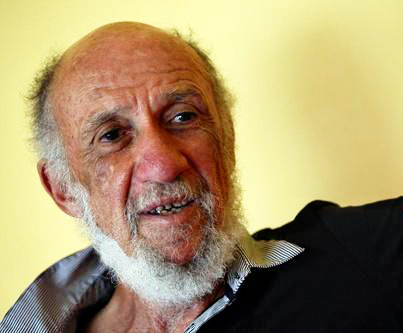
Richard Falk

By Richard Falk

Prefatory Note
This post is the full text of my presentation at an excellent conference “The Israeli Lobby: Is it good for US? Is it Good for Israel?” National Press Club, Washington, D.C., April 10, 2015.
The conference was sponsored and organized by the editorial leadership of the magazine Washington Report, which brings together some of the best writing on the Israel/Palestine struggle. I encourage readers of this blog to look at the full conference either at the YouTube website or the audio recording at http://www.israellobbyus.org Although there were many illuminating presentations during the day, and I would call particular attention to the memorable remarks of two highly informed Israelis, Gideon Levy and – another TFF Associate – Miko Peled
.

There are no better texts for assessing the damage done to the role and reputation of the UN by the Israeli Lobby than to consider Secretary of State John Kerry’s recent statements boasting about the U.S. success in protecting Israel from criticisms arising from its non-fulfillment of responsibilities under international law and as a member of the United Nations. It should be understood that the lobby does not act in a vacuum, and its leverage is greatly enhanced in global settings to the considerable extent that its priorities overlap with the strategic and economic interests of the United States in the Middle East.

Despite the tensions with the White House associated with Netanyahu’s March speech to Congress, Kerry proudly informed an ABC TV news boradcast: “We have intervened on Israel’s behalf..a couple of hundred times in over 75 different fora.” [“This Week,” Feb. 28, 2015]. And then when addressing the Human Rights Council Kerry included a statement that could just as well been drafted by AIPAC or Israel’s ambassador to the UN: “It must be said that the HRC’s obsession with Israel actually risks undermining the credibility of the entire organization.”

And further, “we will oppose any effort by any group or participant in the UN system to arbitrarily and regularly delegitimize or isolate Israel, not just in the HRC but wherever it occurs.” [Remarks, Palais des Nations, Geneva, March 2, 2015]

What is striking about these kinds of statements by our highest ranking government officials dealing with foreign policy is the disconnect between these reassurances of unconditional support and Israel’s record of persistent disregard of its obligation under international law and with respect to the authority of the UN.Read More »

Iran’s nuclear program: Diplomacy, war, and (in)security in the Nuclear Age

Richard Falk

By Richard Falk
March 18, 2015

Perhaps, Netanyahu deserves some words of appreciation, at least from the Israeli hard right, for the temporary erasure of the Palestinian ordeal from national, regional, and global policy agendas. Many are distracted by the Republican recriminations directed at Obama’s diplomatic initiative to close a deal that exchanges a loosening of sanctions imposed on Iran for an agreement by Tehran to accept intrusive inspections of their nuclear program and strict limits on the amount of enriched uranium of weapons grade that can be produced or retained.

We can only wonder about the stability and future prospects of the United States if 47 Republican senators can irresponsibly further jeopardize the peace of the Middle East and the world by writing an outrageous Open Letter to the leadership of Iran.

In this reckless political maneuver the government of Iran is provocatively reminded that whatever agreement may be reached by the two governments will in all likelihood be disowned if a Republican is elected president in 2016, or short of that, by nullifying actions taken by a Republican-controlled Congress.

Mr. Netanyahu must be smiling whenever he looks at a mirror, astonished by his own ability to get the better of reason and self-interest in America, by his pyrotechnic display of ill-informed belligerence in his March 2nd address to Congress. Surely, political theater of sorts, but unlike a performance artist, Netanyahu is a political player whose past antics have brought death and destruction and now mindlessly and bombastically risk far worse in the future.

What interests and disturbs me even more than the fallout from Netanyahu’s partisan speech, are several unexamined presuppositions that falsely and misleadingly frame the wider debate Read More »

TFF PressInfo # 314: From preventing to making peace in Ukraine

By Jan Oberg

Jan Oberg

Lund, Sweden, March 13, 2015

If the parties continue this way, there will be no peace in Ukraine but probably war in Europe. With a little out-of-the-box thinking, we could move in a safer direction.

You’ve heard everybody involved in the Ukraine conflict solemnly declare that there is no military solution.

And what do they all do? Right, they militarise the situation further, use bellicose language, speak bad about each other, take provocative steps, use propaganda and flex their military muscles. It’s thoughtprovokingly thoughtless.

These men – sorry, but the are all men – who are competent in war and other violence run our world. They are conflict and peace illiterates embedded with MIMACs – Military-Industrial-Media-Academic Complexes – which exist in both Russia, EU, NATO and the U.S.

It’s not about evil – they are probably all good spouses, nice to their children or grandchildren and enjoy literature, painting or music in their few hours of leisure. But the system they operate inside is as evil as it is dangerous for us all, for the world’s future.

Their problem – and thus your and my problem – is that they just don’t have a clue about peace-making. No education, institutions or advisers in civilian conflict-management.

And since they lack that they fall back on the convenient but proven illusion that peace will come if we just force “the other” to back down.

And since there is no lack of (tax payers’) money to fund weapons (only to fund social and cultural development) and these weapons are on the government shelves that’s what they use – instead of their intelligence and empathy. 

Far fetched?

If you think so, take a look at these facts:Read More »

On anti-semitism, criticizing Israel and Netanyahu – and blaming Jews and Muslims

By Gunnar Westberg

The following question was asked to the ambassador of Israel to Sweden in one of the most respected programs on the Swedish Broadcasting (Sveriges Radio): “Do the Jews themselves carry any responsibility for the anti-Semitism we now see growing?”. (Translated by me from its official website). The ambassador refused to answer.

At the end of the program the responsible editor expressed a profound apology: “We wholeheartedly apologize for the question. It leads in the wrong direction and puts the guilt on individuals and unexposed groups”. The section was cut from the program recording although the original is stored in a public archive.

It seems like almost everyone in the media world agrees with this apology: “You should not ask such a question.” I agree. But we should ask “Does Israel carry any responsibility for the growing anti-Semitism?” Read More »

Eastern Europe is the opposite of Ukraine

By Jonathan Power

Economically Ukraine continues to go down the chute. No other East European has messed up its economic potential, as has Ukraine. During Soviet times Ukraine with its industrial prowess and wonderful fertile soil, making it the Soviet Union’s breadbasket, was a success (by communist standards). Now 25 years of political upheaval, economic mismanagement and greed by the oligarchs have taken a dreadful tool on living standards. The stoicism of ordinary people is to be wondered at. One reason why many easterners want to return to Russia is because they think they will have higher living standards.

In an essay in the December, 2014, issue of Foreign Affairs Andrei Shleifer, a professor of economics at Harvard and Daniel Treisman, a professor of political science at the university of California have presented an analysis of what went right in the other east European countries, and, a for a time, in Russia under President Vladimir Putin. They write: “The East European countries have transformed their militarized, over industrialized and state-dominated systems into service-orientated market economies based on private ownership and integrated into global commercial networks. No longer distorted to fit Marxist blueprints, their economic institutions, trade, and regulatory environments today look much like those of other countries at similar income levels.

These changes notwithstanding, observers often blame post-communist reforms for poor economic performance. Two common charges are Read More »

On the North Carolina killings

Interview with Richard Falk

Richard Falk

Prefatory Note
A short interview on how to interpret the ghastly murder of three young Muslims living in the North Carolina university town of Chapel Hill. Should such a grisly event be viewed as a tragic response of a deranged neighbor whose emotions took a violent turn after a dispute over parking in their common residential community or is it better understood as one more indication of the toxic realities associated with the interplay of gun culture and Islamophobia?

My responses seek to give reasons for adopting this wider understanding of why such incidents, although horrible on their own, are also bringing death to canaries in the mines of American society. As such the embrace of the movie American Sniper can be seen as another dimension of how ‘the long war’ unleashed after 9/11 to satisfy a range of global ambitions is increasingly casting its dark shadow across the domestic life of the country.

We are, indeed, living in a globalizing world where the wrongs done without will be in due course superseded by the wrongs done within. I thank Dan Falcone for his questions that gave me the opportunity to offer these responses.

Dan Falcone
In light of the recent shooting of Muslims in North Carolina, Russian Television was pondering if the killings would have received a quicker, more widespread and more responsive media reaction had the perpetrator been a Muslim, instead of victims, as seen in this case. My thought is that this question is beyond the hypothetical. What are your thoughts?

Response
I think there is every reason to believeRead More »

I am not a Dane

By Jan Oberg

Jan Oberg

NO to being included in the Denmark of the Government and Parliament

Written in the wake of the official Danish reactions to the tragic, horrific murders in Copenhagen of a Danish film director and a Jewish Danish guard outside the synagogue in Copenhagen on Saturday February 14 – a crime committed by a 22 years old Danish Muslim with a heavy criminal record and one foot in Denmark and one in a Palestinian refugee camp in Jordan.

I’m a Danish citizen. I’ve worked for the UN Charter norm of peace by peaceful means for 40 years. Have been a member of the Danish government’s Commission for Disarmament and Security all through the 1980s. I’ve worked in war and conflict zones in Somalia, all parts of Yugoslavia, Burundi, Iraq, Georgia, Iran.

I have friends and colleagues in many countries and cultures. I know things can be seen in more than one way – and how the West may also be perceived from the outside.

I will use my freedom of expression and wisdom of expression and our democracy to struggle against the warring Denmark which Prime Minister Helle Thorning-Schmidt insists that we Danes shall all be united around.

Denmark is not only a victim. It has also caused many victims.

It has violated international law and participated in mass murders on the Iraqi and other people, innocent people. On the initiative of then prime minister Fogh Rasmussen it has fought a cultural battle (kulturkamp) not with but against other cultures – related to the Muhamad caricatures. His government was also responsible for dragging Denmark into being an occupation power during four dark years in Iraq – and thus co-responsible for today’s situation there. Likewise in Afghanistan and Libya.

Over a couple of decades Denmark has developed a political xenophobia which I would never have thought even remotely possible a couple of decades ago because of basic values such as welfare for all, solidarity, equality, peoples’ colleges, philosopher poet Grundtvig, disarmament, the compassion for the Jews in October 1943, the fundamental belief in human dignity and tolerance.

The Danmark which the Prime Minister demagogically includes ”all we Danes” in and insists that we all be united around in her misplaced, all-motherly manner, is not the Denmark I want to be included in.

If so, I am not a Dane these days.

I want a Denmark for peace by peaceful means – and in that struggle we dissidents may meet, however few or many we seem to be.

But I draw my line at a national(istic) forced inclusion in the warring, xenophobic and segregated Denmark that has been created the last few years.

And this is not easy for me to write.