TFF PressInfo # 303: Visit Iran in 2015 and see it for yourself

By Jan Oberg & Farhang Jahanpour

January 23, 2018
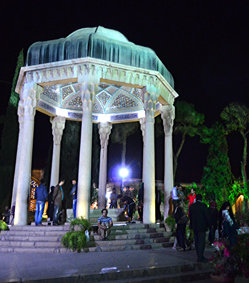
It’s a civilization of its own, very diverse and immensely rich, proud and hospitable.

It’s a country for lovers of history, architecture, religion, classical or contemporary art, literature, films, nature and landscapes – and, most of all, fellow human beings.

The Iranians are easy to get in contact with anywhere you go, also no animosity against Westerners. They are eager to talk politics and culture and if you are open yourself you’ll soon find yourself at a family table. And the food is high quality, things taste nature more than industry.

You’ll get much more value for your foreign currency in Iran than in most other countries.

It is safe – as safe as any European country and much safer than the rest in the Middle East. It is comparatively cheap. You may obtain your tourist visa at the local embassy but also upon arrival. (Special procedure for U.S. citizens, though).

By just going there you’ll get a more balanced view of Iran than you can possibly get from your media.

You’ll build people-to-people bridges and gain mutual respect and – for sure – make friends. And – who knows? – make a little peace too.

So, we’ve put together just a few of links to a diversity of aspects of what the visitor is likely to experience – just to wet your appetite…

UNESCO World Heritage sites in Iran

Rick Steves – the most surprising country…

Life in the streets of Tehran

Scenary and landscapes

Why is Rumi the best-selling poet in the U.S.?

Tehran’s longest avenue

Persian cuisine

Isfahan – beauty and history

Panoramic views of Shiraz

Classical music

Dick Davis, author, “The Face of Love: Hafez and the Poets of Shiraz

Love and Pomegranates – Artists and Wayfarers on Iran

Life in Iran – An Australian journalists explorations

The luxurious Iranians

Yazd – centre of Zoroastrian culture
UNESCO world heritage – Tabriz Basar complex

Teahouses and coffee shopsRead More »

TFF PressInfo # 302: Interview with “Iran Review” – and a word about intellectual freedom

By Jan Oberg

Jan Oberg

Lund, Sweden, January 21, 2015

I visited Iran for a third time in December last year, participating in the international UN-endorsed conference, WAVE – World Against Violence and Extremism.

I gave interviews to some ten agencies and media but the longest was this exclusive one by a passionate and very professional 24-year old Iranian journalist, Kourosh Ziabari, for the esteemed Iran Review.

The distorted image of Iran

TFF has been engaged with an in Iran the last three years. We believe that the general image in Western media – covering almost only Iran’s nuclear program, human rights violations and Iran as a threat to the world – is neither objective nor fair.

It conveniently omits the harmful effects on the Iranian society of Western policies since the days of the US-UK coup d’etat against the democratically elected President of Iran, Dr. Mossadegh, in 1953.

Whether intended or not, this type of media coverage risks contributing to deeper conflict and legitimise future violence – rather than mutual understanding and peace.

It is therefore imperative to go there and see for yourself. More about that in the next TFF PressInfo.

What TFF tries to do in Iran

TFF has these aims with its work in Iran:

a) Fact-finding: to simply learn first-hand about its history, culture, people and how they think on all levels; by traveling around and interviewing people, as many and different as possible.

b) To influence the image in the West of IranRead More »

TFF PressInfo # 300: “We Are All Charlie” – but is that story so simple?

By Jan Oberg

Jan Oberg

Eleven points as a reflection on the terror in Paris and – not the least – the reactions to it*:

1. What was this an attack on?
Was that attack an attack on freedom of speech as such, on democracy, even on the whole Western culture and lifestyle, as was maintained throughout? Or was it, more limited, a revenge directed at one weekly magazine for what some perceive as blasphemy?

2. Is freedom of expression practised or curtailed for various reasons?
How real is that freedom in the West? Just a couple of days before the Paris massacre PEN in the U.S. published a report – Global Chilling – finding that about 75% of writers report that they are influenced by the NSA listening and abstain from taking up certain subjects or perspectives? Self-censorship, in other words. Finally, most of the political leaders marching in Paris on Sunday January 11 have clamped down on media, such as Turkey and Egypt.

I must admit that I have experienced limitations in the practise of that freedom in my own work with Western media and it is decades ago I draw the conclusion that things like political correctness, ownership, commercial/market considerations and journalists’ need for good relations with power – e.g. to obtain interviews – play a role.

I’ve been on the ground in conflict zones and returned home to see reports so biased to tell very little of what I’ve seen myself. And we’ve recently seen lots of cases from the U.S. academic world where there’s been a clampdown on certain views, pulications, courses and professors – not the least in relation to the Israel-Palestine conflict. Or, you look at the proportions between government fund available for peace research and military research in virtually every Western society; free research is a vital element in the self-understanding of the West. But how much of do we have?

3. Freedom doesn’t mean duty.
Is freedom of expression really 100% irrespective of how much the practise of that freedom is hurtful, offending, humiliating or discriminatory against other peoples, religions and cultures? Even if you can express your opinions freely it is not always what we should do.

I can still abstain from making a remark about somebody’s religious or political beliefs because I see no point in offending that person in regard to something he or she holds dear, even part of the identity. But, sure, I have the right to do so.

Using a right to the maximum isn’t necessarily the wisest or most mature thing to do. I draw the distinction between issues that touch personal identity – e.g. religion, nationality, gende – and other issues. It is neither fun nor wise to make satire on what people are.

One must indeed ask in the – chilling – times we live: What happened to words such as solidarity, respect, empathy and to the values of common humanity? There can be no rights without duties as Mohandas K. Gandhi briliantly expressed it.

4. Are anti-Semitic cartoons OK now?
Why is it so important to some media people and Je Suis Charlie people to accept or practise disdain, blasphemy, ridicule or depict (even naked) Muhamad when we know that Read More »

Putin’s Media?

By Jonathan Power

Moscow, November 18th 2014.

The English language “Moscow News” newspaper doesn’t worry much about censorship. It goes for the jugular on a regular basis. But it is doubtful if President Vladimir Putin gives it a thought. Its audience is almost entirely expatriate businessmen, diplomats and journalists.

For the Russian-language papers and broadcasting channels it is a different story. Over recent years the state has taken over more and more. Still there are chinks of light- sizeable ones, although admittedly Putin could shut these off if he wanted to. One of these is the internet, which suffers only from the censorship of a handful of personal sites and would be impossible to stifle completely given the way “close-downs” can be circumvented.

A contributor to The Moscow News made a good point: Read More »

TFF PressInfo # 292: Brisbane – A show of Western weakness

By Jan Oberg

Jan Oberg

No matter what you may think of Putin and Russia this is simply not the way international politics should be conducted, particularly not at the personal level. If it wasn’t an offence to children, one would aptly characterise it as childish behaviour.

Western leaders ignored a brilliant opportunity to meet face-to-face with Vladimir Putin and move forward towards mutual understanding instead of signalling that they want a new Cold War.

Western leaders tell us that Russia is a ”threat to the world”. That obviously serves other purposes because you don’t bully someone you genuinely fear.

The G20 Brisbane should be remembered for its show of Western leaders’ personal display of weakness and conflict illiteracy.

Pummelled Putin punching bag

CNN reports that, during the meeting, Putin took ”pummelling” and was treated as a ”punching bag” by Western leaders from he set foot on Australian soil where his Australian host had sent a deputy minister of defence to receive him.

The Guardian reports that the Russian president approached Canadian Prime Minister Harper with his hand outstretched. Harper reluctantly shook it, then said “Well I guess I’ll shake your hand, but I only have one thing to say to you: you need to get out of Ukraine.” ”Bold words” – media called it.

Footage shows Putin sitting alone at a lunch table – like a naughty school boy put in the corner as by his teachers.

President Obama said that we are ”opposing Russia’s aggression in Ukraine which is a threat to the world as we saw in the appalling shoot down in the MH-17”.Read More »

TFF PressInfo # 285: What submarine in Sweden?

By Jan Oberg

Jan Oberg

You have heard that Sweden is hunting a ”submarine” and that it is ”presumed to be Russian”. Here is an example, Financial Times of October 21 – which incidentally also announces that the Swedish Prime Minister vows to increase defence spending.

Not the slightest evidence

There are only three problems with this:

1) There is not the slightest evidence of there being anything military, neither that it is a submarine nor that, whatever the object might be, it is Russian.

2) Even with CNN, BBC and AlJazeera this is nothing but speculative low-grade yellow press journalism. This is possible in the field of defence, security and peace because much less is required of journalists when they write about these matters than when they write about, say, domestic politics, economics, sports, books or food and wine. In these fields you are expected to have some knowledge and media consumers are able to check.Read More »

Demand swells for straight answers on plane in Ukraine

By David Krieger and others

A long list of prominent individuals has signed, a number of organizations will be promoting next week, and you can be one of the first to sign right now, a petition titled “Call For Independent Inquiry of the Airplane Crash in Ukraine and its Catastrophic Aftermath.”

The petition is directed to “All the heads of states of NATO countries, and of Russia and the Ukraine, to Ban-ki Moon and the heads of states of countries on the UN Security Council.” And it will be delivered to each of them.

The petition reads . . continue here. And please sign it!

At last the sword of justice has fallen in Cambodia

By Jonathan Power

Finally, finally the over-long, seven year trial of the leaders of the murderous Khmer Rouge leadership of Cambodia, is over. The two defendants, Nuon Chea and Khieu Samphan, were each given a life sentence.

Of the other three that were tried, one, the ex-foreign minister, Ieng Sary died in 2013, one, Ieng Thirith, the wife of Ieng Sary, was too ill with Alzheimer’s to appear and one, Kaing Guek Eav (“Duch”), voluntarily confessed three years ago and was sent to jail for 35 years.Read More »

Rusland, EU og sanktionerne

Af Jens Jørgen Nielsen

Betragtninger 7. august, 2014

Vi lever i en interessant tid. Og den er ikke kedelig. Mange faste forestillinger ændrer sig. Det slår mig, at EU politikere og ditto amerikanske ved meget lidt om både Rusland og verden. Som EU borger kan jeg med beklagelse konstatere, at EU ikke har nogen politik i forhold til Rusland. Og højstemt forargelse og at snakke amerikanerne efter munden tæller ikke som en egentlig politik.

Hvilke forestillinger har EU politikerne haft om slutspillet i Ukraine? Hvilke forestillinger har de haft om virkningerne af sanktionerne? Hvilken viden og forståelse af hvilket land Rusland er, har de samme politikere haft?

Det er som om dæmonisering af Putin har gjort det ud for en politik. Jeg opfordrer ikke her til at man skal elske Putin. Men jeg opfordrer for det første til at finde ud af, hvad man ønsker med Rusland og for den sags skyld også med Ukraine. For det andet, at man gør sig overvejelser over, hvad sanktionerne betyder på både det lange og korte sigt.

Hvad har mangelen på overvejelser over egne interesser og mangelen på analyse af sanktionernes virkning ført til? Read More »

Putins Rusland er ikke som Sovjet

Af Jens Jørgen Nielsen

Billedet af Rusland i de vestlige medier er i dag næsten mere dystert end under den kolde krig. Mange tror, at russerne lever i fattigdom og ufrihed i evig angst for Putins rædselsregime, præget af få censurerede medier. Rusland skulle angiveligt være ved at falde sammen og borgerne længes efter de friheder, som vesten kan tilbyde.

Putin skulle angiveligt være nervøs for, at den ukrainske ’demokratiske’ revolution skulle sprede sig til Rusland. Derfor skal vi i vesten entydigt støtte Kiev regeringen og den ikke-parlamentariske opposition i Rusland. Mange vestlige politikere mener, at vi økonomisk skal isolere Rusland.

EU og USA fokuserer i disse tider på at straffe Rusland og Read More »