When BBC calls, don’t answer…

By Richard Falk

Richard Falk

That is, don’t answer, if you are a certified critic of Israeli policies and practices.

The siren lure of big time media is partly a romancing of the ego, partly a rare moment to intrude a moment or two of truthfulness into the endless spinning of the Israel’s narrative that stresses its extravagantly humane response to Hamas flurries of rockets and alleged human shield tactics.

Four times in the past week I have received invitations to be a guest on BBC programs dealing with Israel’s military operations in Gaza. Each time the female producer, with charming British intonation, expressed her strong interest in arranging my participation at such and such a time.

And each time I agreed, although Read More »

TFF PressInfo: Use Malaysia’s MH17 to make peace instead

By Jan Oberg, TFF director

Jan Oberg

Tragic misuse of a tragedy

The government of Ukraine as well as the separatists, NATO/U.S. and very many leading Western mainstream media seem all to know who has caused the tragedy. Putin believes it was caused indirectly by the West.

Given the fact that very few, if any, people or institutions can know who did it with enough details, data and precision to accuse anyone, the MH17 tragedy has been misused to an extent that can itself only be termed tragic.

The misuse is tragic because it is a catastrophe for close to 300 people, their relatives and friends. Silence – of both verbal and military weapons – and empathy would have been appropriate.

Anyone pointing fingers and calling it a terrorist act at this point is irresponsibly or should present convincing evidence.

Secondly, the blame game makes the necessary road to peace and security even more difficult.

An All Party Peace Process should come out of MH17 and the civil war

It would have been so much more civilised to use the MH 17 tragedy to say:Read More »

Some people are exceptional

By Jan Oberg

Jan Oberg

July 20, 2014 – 12 days after Israel launched Operation Protective Edge, after Shejaiya and after 400 people on the Palestinian side have been killed.

Some people condemned what they called a planned Serb genocide on Albanians in Kosovo.

Some people were very upset about the siege of Sarajevo. And the massacre at Srebrenica.

Some people believed that the Yugoslav Army occupied Croatia and tried to create a Greater Serbia.

Some people condemned what was then called ethnic cleansing.Read More »

Three elections, three reactions: Ukraine, Egypt and Syria

By Farhang Jahanpour
On Friday 27 June, Ukraine’s new president Petro Poroshenko signed a trade and economic pact with the European Union. It was the same deal that his predecessor, Viktor Yanukovych, was prepared to sign in November 2013 provided that he could also maintain economic links with Russia, but he eventually backed out from signing it due to US and EU insistence that he had to choose between the two.

That event led to violent street demonstrations that forced Yanukovych to flee, pushing his troubled country towards upheaval and a virtual civil war.

On Thursday 26 June, President Obama requested $500 million from Congress to train and arm what the White House called “appropriately vetted” members of the Syrian opposition to fight against President Bashar Assad.

This is despite the fact that the insurgents fighting in Syria have morphed into Al-Qaeda-affiliated Jabhat al-Nusra and even into ISIS, the Islamic State in Syria and Sham or greater Syria that has overrun parts of both Syria and Iraq and has been even disowned by Al-Qaeda for being too violent!

A week earlier, during a tour of the Middle East, US Secretary of State John Kerry met with the new Egyptian President, the former Army Chief, General Abdel Fattah el-Sisi, pledging American help and support for his government. Officials accompanying Kerry on the trip told reporters that Washington had quietly restored all but about 78 million dollars of the 650 million dollars of US aid to Egypt earlier this month.

Kerry told reporters in Cairo after meeting Sisi that he was “absolutely confident” that all of the aid would soon be restored. (1) Washington has provided Cairo with an average of about 1.3 million dollars in military aid annually over the past three decades as part of the Camp David Accord signed by the late President Muhammad Anwar Sadat and the late Israeli Prime Minister Menachem Begin at Camp David under President Jimmy Carter.

As it happens, there have been elections in all the three countries in June, and it is useful to study the circumstances surrounding those elections and the West’s reactions to those elections.Read More »

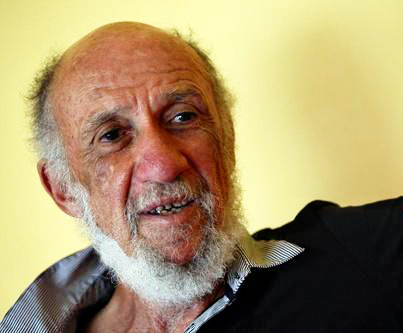
Israel-Palestine: Beyond the liberal imaginary

By Richard Falk

Prefatory Note:
What follows is a letter to the NY Times responding to their editorial of June 6, 2014, which was not accepted for publication. I publish it here as a post because I believe it identifies some of the continuing ways in which public opinion on the relationship between Israel and Palestine continues to be distorted on Israel’s behalf in American media sources that have the undeserved reputation of being objective and trustworthy. The New York Times has long ranked high on this list, if not at its top!

This letter is particularly concerned with the misleading characterizations of Hamas, and the failure to pass judgment on the Netanyahu leadership as ‘extremist.’

*****************

To the Editor, New York Time

Re “Israeli-Palestinian Collision Course” (editorial, June 6, text reproduced below):

You are correct that this is an opportune time to take account of Israel-Palestine peace prospects in light of failed direct negotiations and subsequent developments. It is misleading, however, to equate Israel’s accelerated expansion of settlements with the formation of the Fatah-Hamas unity government. Israeli action continues a pattern of flagrant violation of the 4th Geneva Convention while the Palestinian action is a constructive move that could finally make diplomacy on behalf of all Palestinians legitimate and effective.Read More »

Force-feeding Palestinian hunger strikers

By Richard Falk

Palestine Hunger Strike and Israeli Force-Feeding Pending Legislation

The highly respected Israeli human rights NGO, Adalah, has issued an urgent appeal on behalf of a reported 125 Palestinian prisoners who are engaged in a hunger strike protesting their being held in Israeli jails on the basis of ‘administrative detention’ procedures.

It is the longest collective hunger strike in Palestinian history.

Administrative detention is an objectionable practice by which individuals are held in prison, sometime for months or even years, without being informed of charges or facing trial. According to international law reliance on administrative detention is regarded as prohibited unless there are overwhelming reasons in the form of imminent and severe security threats to justify the failure to produce criminal charges and hold a trial.

Israel has made no such appeal, and appears to use administrative detention procedures routinely and against individuals who cannot be considered security threats.

The current hunger strike commenced on April 24, over 50 days ago. Continue reading here.

Homage to International New York Times

By Johan Galtung

On the table are some old clippings mainly from that remarkable paper; in my mind the International Herald Tribune, IHT, from 1857 and a part of my reality for about fifty years. Maybe an addiction? Hard to live without. The recent name change to International New York Times was understandable but too specific geographically, not global. The Honolulu papers, well located, are often more global.

Why homage? Not for the news coverage; usually the news “fit to print”. The news that do not contradict too openly the world views carried by US and Israeli foreign policies, even if this has improved considerably recently. Nor for the editorials, they are usually on the same line and also, sorry, frankly, often boring.

No, the homage is for the articles, essays even, at a very high level in what is after all a newspaper, a paper with news. Those essays often carry discourses that are wide ranging, way back into the past, far into the future. We are not talking about agree-disagree but about broadness, openness, even globally.

Take William Safire 30 September, 1991Read More »

TFF PressInfo: Sverige – inte längre aktör för en bättre värld

Av Jan Öberg
Dr.hc., direktör för TFF
4 maj 2014

Eliten i Sverige är mer lojal mot Nato, USA och EU än mot sitt folk

• Under de senaste 25-30 åren har Sveriges militära, säkerhets- och utrikespolitiska elit vridit Sveriges politik 180 grader.

• Dessa grundläggande förändringar inleddes av den socialdemokratiska regeringen under Göran Persson och utrikesminister Anna Lindh och har genomförts praktiskt taget utan offentlig debatt.

• Omsvängningen till interventionism, militarism och USA/Nato på alla områden har planerats gradvis, i smyg och ohederligt – kort sagt på ett sätt som är ovärdigt en demokrati.

• Denna elit är mer lojal mot Bryssel och Washington än mot svenskarna.

• Om din bild av Sverige är att det är ett progressivt, förnyande och fredsfrämjande land med global inställning som försvarar folkrätten så är den – tråkigt nog – föråldrad.

Hur Sverige har förändrats

Sverige är inte längre neutralt och det är bara formellt alliansfritt; det finns ingen mer närstående bundsförvant än USA/Nato. Landet har upphört att utveckla en egen politik och positionerar istället sig inom ramen för EU och Nato. Landet bidrar inte längre med betydelsefullt nytt tänkande – det sista var Olof Palmes kommission om gemensam säkerhet (1982).Read More »

The New World Order?

By Richard Falk

There is no more reliable guardian of entrenched conventional wisdom than The Economist. And so when its cover proclaims ‘the new world order,’ and removes any ambiguity from its intentions, by its portrayal of Putin as a shirtless tank commander with menacing features.

No such iconography accompanied the last notable invocation of the phrase ‘new world order’ by George H. W. Bush in mobilizing support for a forcible response to the Iraqi invasion and annexation of Kuwait in 1990, the dirty work of Saddam Hussein. Read More »

Putin and his Crimea speech

By Jonathan Power

March 25th 2014

President Vladimir Putin’s speech to both houses of the Russian parliament last week got bad notices. Anne Applebaum, the experienced Russian-watcher, wrote in her column in the Washington Post that it was “an imperial rant” and went on to say that “Nato should moves its forces from Germany to the alliance’s eastern borders”. Most Western governments also gave their own misleading interpretations of Putin’s speech.

In this column I’m not going to defend Putin up and down the hill. I profoundly reject the way the absorption of Crimea into Russia was carried out. One can’t mount a referendum on an issue as important as this with two weeks’ notice – the Scots have been discussing their planned referendum, set for later this year, for years.

Moreover, this referendum only had two questions: whether the voters wanted to go back to Russia or whether they wanted increased autonomy. It didn’t ask if voters wanted to remain part of Ukraine.Read More »
