A presumption against intervention

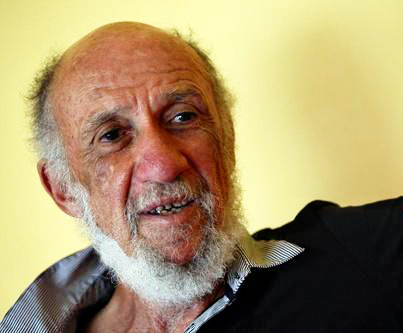
Richard Falk

By Richard Falk

Prefatory Note: The post below is a revised and modified version of my chapter in David Held & Kyle McNally, eds., Intervention in the 21st Century – Online by Durham, UK: published by Smashwords for Global Policy Journal, 2015]

Participating in the intervention debates that have raged periodically ever since the Vietnam War in the 1960’s, and of course earlier in less contested settings, I have been struck by the defining encounter between those who are dogmatically opposed to intervention per se and those who rarely confront a call for intervention that they do not feel persuaded by, limiting any doubts as to matters of feasibility and strategic interest.

The traditional focus of policy discussion proceeds on the assumption that it is about forcible intervention by governmental actors to coerce some kind of change in a foreign sovereign state. Those in favor usually rely, at least in part, on a rationale that such an undertaking is necessary and desirable as it would rescue a captive people from a regime responsible for massive crimes against humanity or genocide, or operate as counter intervention (currently the controversy over intervening in the Ukraine to offset and discourage alleged Russian intervention) or as in relation to ISIS where the stated objective of the American led coalition is to destroy or defeat a non-political actor that is exercising governmental control over territory in portions of Iraq and Syria.

Systemic Developments

Four developments over the course of the last half-century are radically reshaping the debate on the viability and advisability of forcible intervention as a diplomatic option.

The first and most important, is the collapse of European colonialism, which has often motivated the West, and especially the United States, to assert its goalsf and protect their interests by way of intervention in what were formerly colonies or states whose sovereignty was curtailed by hegemonic authority. A feature of this post-colonial global setting is that the intervening state, if Western, will tend to justify its actions by setting forth an altruistic and self-justifying argument with strong moralizing overtones.

Related to this matter of motivation on the side of the intervener is the prospect of effective and persevering national resistance creating formidable obstacles to succeeding with an intervention even with the benefit of military dominance. The combination of motivation and anticipated resistance helps explain why so few major interventions have been viewed as successful. One notable continuity linking colonial memories to post-colonial realities is the invariable geographical location of the intervening political actor in the West and that of the target society being in the non-West.

The second development is the rise of human rights Read More »

TFF PressInfo # 314: From preventing to making peace in Ukraine

By Jan Oberg

Jan Oberg

Lund, Sweden, March 13, 2015

If the parties continue this way, there will be no peace in Ukraine but probably war in Europe. With a little out-of-the-box thinking, we could move in a safer direction.

You’ve heard everybody involved in the Ukraine conflict solemnly declare that there is no military solution.

And what do they all do? Right, they militarise the situation further, use bellicose language, speak bad about each other, take provocative steps, use propaganda and flex their military muscles. It’s thoughtprovokingly thoughtless.

These men – sorry, but the are all men – who are competent in war and other violence run our world. They are conflict and peace illiterates embedded with MIMACs – Military-Industrial-Media-Academic Complexes – which exist in both Russia, EU, NATO and the U.S.

It’s not about evil – they are probably all good spouses, nice to their children or grandchildren and enjoy literature, painting or music in their few hours of leisure. But the system they operate inside is as evil as it is dangerous for us all, for the world’s future.

Their problem – and thus your and my problem – is that they just don’t have a clue about peace-making. No education, institutions or advisers in civilian conflict-management.

And since they lack that they fall back on the convenient but proven illusion that peace will come if we just force “the other” to back down.

And since there is no lack of (tax payers’) money to fund weapons (only to fund social and cultural development) and these weapons are on the government shelves that’s what they use – instead of their intelligence and empathy. 

Far fetched?

If you think so, take a look at these facts:Read More »

On anti-semitism, criticizing Israel and Netanyahu – and blaming Jews and Muslims

By Gunnar Westberg

The following question was asked to the ambassador of Israel to Sweden in one of the most respected programs on the Swedish Broadcasting (Sveriges Radio): “Do the Jews themselves carry any responsibility for the anti-Semitism we now see growing?”. (Translated by me from its official website). The ambassador refused to answer.

At the end of the program the responsible editor expressed a profound apology: “We wholeheartedly apologize for the question. It leads in the wrong direction and puts the guilt on individuals and unexposed groups”. The section was cut from the program recording although the original is stored in a public archive.

It seems like almost everyone in the media world agrees with this apology: “You should not ask such a question.” I agree. But we should ask “Does Israel carry any responsibility for the growing anti-Semitism?” Read More »

The long history of Israel gaming the ‘Iranian Threat’*

Gareth Porter

By Gareth Porter

Western news media has feasted on Prime Minister Netanyahu’s talk and the reactions to it as a rare political spectacle rich in personalities in conflict. But the real story of Netanyahu’s speech is that he is continuing a long tradition in Israeli politics of demonising Iran to advance domestic and foreign policy interests.

The history of that practice, in which Netanyahu has played a central role going back nearly two decades, shows that it has been based on a conscious strategy of vastly exaggerating the threat from Iran.

In conjuring the spectre of Iranian genocide against Israelis, Netanyahu was playing two political games simultaneously. He was exploiting the fears of the Israeli population associated with the Holocaust to boost his electoral prospects while at the same time exploiting the readiness of most members of US Congress to support whatever Netanyahu orders on Iran policy.Read More »

TFF PressInfo # 311 – Nobel Peace Prize Watch launched

By Jan Oberg

Jan Oberg

On March 3, 2015, The Telegraph and a few other major news surces broke the quite extraordinary story that the chairman of the Nobel Peace Prize Committee – the body that decides who is awarded the Prize – former Norwegian PM Thorbjoern Jagland had been demoted; it’s the first time it has ever happened.

It was during his chairmanship the will of Alfred Nobel was ignored most systematically – e.g. by awarding the world’s allegedly most prestigious prize to President Obama, the EU and Chinese human rights (but pro-war) Liu Xiaobo.

It’s about 7 years ago that a small group of Scandinavian scholars decided to investigate how this prize is managed. The basic research can be found in a book by Norwegian lawyer and author, Fredrik S. Heffermehl, The Nobel Peace Prize: What Nobel Really Wanted which was the first major result of the group’s work. It documents how this prize is “prestigious” only for those who either a) have never read Alfred Nobe’s will; b) don’t believe it should be interpreted with respect for his motives and goals and c) have very little knowledge about peace and peace research.

Nobel’s formulation in his will is short and clear – the Peace Prize shall go “to the person who shall have done the most or the best work for fraternity between nations, for the abolition or reduction of standing armies and for the holding and promotion of peace congresses.” He calls such people “champions of peace”. More here.

Thus, the Nobel Peace Prize is not a do-good prize, not a human rights or environmental prize and not a pro-war prize. But it is a reward work for disarmament, anti-militarism and the abolition of warfare and people – be it politicians, scholars, activists – who are pro-peace, champions of peace. The legal challenges that the Nobel Peace Prize Watch has raised over the years can be found here.

The Nobel Peace Prize Watch

Over the years, the criticism of the Nobel Peace Prize Committee’s work has increased. Seven years ago, I cannot remember that any journalist who interviewed me about the Prize had read the will. Now about 75% of them seem to have before they call.

Fredrik Heffermehl, Oslo, and Tomas Magnusson, Gothenburg, have now established the Lay Down Your Arms Association which was incorporated and registered in Gothenburg, Sweden in 2014 with a Scandinavian and an International Advisory Board. The Association’s first project has been to set up the Nobel Peace Prize Watch where you can acquaint yourself with the Prize, its history, background, the criticism over time, etc.Read More »

On Netanyahu’s visit to the United States

By Richard Falk

Richard Falk

It is far too simple to be merely outraged by the arrogant presumptuousness of today’s speech by the Israeli Prime Minister to a joint session of Congress two weeks prior to national elections in Israel. The Netanyahu visit has encouraged various forms of wishful thinking.

Perhaps, the most common one is to suppose that bump in the road of U.S./Israeli relations will lead to a foreign policy reset that is more in accord with American national interests (in the spirit of the Mearsheimer/Walt critique of the baneful influence of the Israeli lobby) or that it signifies the death knell of AIPAC or the permanent alienation of the Democratic Party from its knee jerk support for Israel.

In my view, none of these developments will happen in the wake of Netanyahu visit, no matter how obnoxious or divisive or inappropriate as his presence appears to be.

First of all, it is important to separate three main dimensions of the Netanyahu speech to Congress: Read More »

TFF PressInfo # 310: Terrorism – small dot in a larger picture

By Jan Oberg

Jan Oberg

What is terrorism? Why do we talk much more about that than other types of deaths? Why is the word misused? What has nuclear weapons – that politicians and media hardly ever talk about – got to do with terror? Why should we all be careful not to exaggerate the phenomenon of terror?

10 x more terrorism than before 9/11

Tell you what: I’ve been critical of the ”war on terror” since September 12, 2001 and particularly since 10/7 when the war on Afghanistan started. If the War on Terror was the answer to 9/11, the U.S. and its friends asked the wrong questions.

Because, what has been the result?

According to U.S. statistics at the time, in the years up to the horrific crime in New York, about 1,000-1,500 people were hit by terror per year worldwide; 1/3 of whom died, the rest were wounded. Most of it happened in South America, some in Europe; small groups such as Baader-Meinhof.

Almost 3,000 were killed on 9/11, many nationalities, far from only American citizens. (About 30,000 die annually from shooting each other).

Today? About 18,000 were killed in terror in 2013.
Although data may not be directly comparable or definitions be the same, the difference between 1,500 and 18,000 cannot be explained by methodological and other variations.Read More »

Eastern Europe is the opposite of Ukraine

By Jonathan Power

Economically Ukraine continues to go down the chute. No other East European has messed up its economic potential, as has Ukraine. During Soviet times Ukraine with its industrial prowess and wonderful fertile soil, making it the Soviet Union’s breadbasket, was a success (by communist standards). Now 25 years of political upheaval, economic mismanagement and greed by the oligarchs have taken a dreadful tool on living standards. The stoicism of ordinary people is to be wondered at. One reason why many easterners want to return to Russia is because they think they will have higher living standards.

In an essay in the December, 2014, issue of Foreign Affairs Andrei Shleifer, a professor of economics at Harvard and Daniel Treisman, a professor of political science at the university of California have presented an analysis of what went right in the other east European countries, and, a for a time, in Russia under President Vladimir Putin. They write: “The East European countries have transformed their militarized, over industrialized and state-dominated systems into service-orientated market economies based on private ownership and integrated into global commercial networks. No longer distorted to fit Marxist blueprints, their economic institutions, trade, and regulatory environments today look much like those of other countries at similar income levels.

These changes notwithstanding, observers often blame post-communist reforms for poor economic performance. Two common charges are Read More »

On the North Carolina killings

Interview with Richard Falk

Richard Falk

Prefatory Note
A short interview on how to interpret the ghastly murder of three young Muslims living in the North Carolina university town of Chapel Hill. Should such a grisly event be viewed as a tragic response of a deranged neighbor whose emotions took a violent turn after a dispute over parking in their common residential community or is it better understood as one more indication of the toxic realities associated with the interplay of gun culture and Islamophobia?

My responses seek to give reasons for adopting this wider understanding of why such incidents, although horrible on their own, are also bringing death to canaries in the mines of American society. As such the embrace of the movie American Sniper can be seen as another dimension of how ‘the long war’ unleashed after 9/11 to satisfy a range of global ambitions is increasingly casting its dark shadow across the domestic life of the country.

We are, indeed, living in a globalizing world where the wrongs done without will be in due course superseded by the wrongs done within. I thank Dan Falcone for his questions that gave me the opportunity to offer these responses.

Dan Falcone
In light of the recent shooting of Muslims in North Carolina, Russian Television was pondering if the killings would have received a quicker, more widespread and more responsive media reaction had the perpetrator been a Muslim, instead of victims, as seen in this case. My thought is that this question is beyond the hypothetical. What are your thoughts?

Response
I think there is every reason to believeRead More »

I am not a Dane

By Jan Oberg

Jan Oberg

NO to being included in the Denmark of the Government and Parliament

Written in the wake of the official Danish reactions to the tragic, horrific murders in Copenhagen of a Danish film director and a Jewish Danish guard outside the synagogue in Copenhagen on Saturday February 14 – a crime committed by a 22 years old Danish Muslim with a heavy criminal record and one foot in Denmark and one in a Palestinian refugee camp in Jordan.

I’m a Danish citizen. I’ve worked for the UN Charter norm of peace by peaceful means for 40 years. Have been a member of the Danish government’s Commission for Disarmament and Security all through the 1980s. I’ve worked in war and conflict zones in Somalia, all parts of Yugoslavia, Burundi, Iraq, Georgia, Iran.

I have friends and colleagues in many countries and cultures. I know things can be seen in more than one way – and how the West may also be perceived from the outside.

I will use my freedom of expression and wisdom of expression and our democracy to struggle against the warring Denmark which Prime Minister Helle Thorning-Schmidt insists that we Danes shall all be united around.

Denmark is not only a victim. It has also caused many victims.

It has violated international law and participated in mass murders on the Iraqi and other people, innocent people. On the initiative of then prime minister Fogh Rasmussen it has fought a cultural battle (kulturkamp) not with but against other cultures – related to the Muhamad caricatures. His government was also responsible for dragging Denmark into being an occupation power during four dark years in Iraq – and thus co-responsible for today’s situation there. Likewise in Afghanistan and Libya.

Over a couple of decades Denmark has developed a political xenophobia which I would never have thought even remotely possible a couple of decades ago because of basic values such as welfare for all, solidarity, equality, peoples’ colleges, philosopher poet Grundtvig, disarmament, the compassion for the Jews in October 1943, the fundamental belief in human dignity and tolerance.

The Danmark which the Prime Minister demagogically includes ”all we Danes” in and insists that we all be united around in her misplaced, all-motherly manner, is not the Denmark I want to be included in.

If so, I am not a Dane these days.

I want a Denmark for peace by peaceful means – and in that struggle we dissidents may meet, however few or many we seem to be.

But I draw my line at a national(istic) forced inclusion in the warring, xenophobic and segregated Denmark that has been created the last few years.

And this is not easy for me to write.
