Pope Francis, Salman Rusdie, and Charlie Hebdo

By Richard Falk

Richard Falk

Prefatory Note
This post is a much modified piece published a few days ago in AlJazeera English, and republished elsewhere on line. As many have now done it tries to enlarge the context in which the Charlie Hebdo events are understood beyond a highlight film clip in ‘the war on terror.’ The alleged link between the Chouachi brothers and Al Qaeda of the Arabian Peninsula (AQAP) allows the attack on Charlie Hebdo to be experienced as the French 9/11, and with this a return of France to a status of post-colonial geopolitical relevance.
Without grasping the relevance of how the dominant treat the dominated within our societies and throughout the world, we are consigning ourselves to many repetitions of the private and public horrors experienced in France on January 7, 2015.

There is some common ground, but not much. The killings in Paris last week were horrifying crimes that expose the vulnerability of democratic societies to lethal vigilante violence, whether facilitated from outside or as a spontaneous expression of homegrown psychopathic alienation. Beyond this naked, morbid reality associated with the murder of the Charlie Hebdo cartoonists, police officers, and the supermarket hostages there is nothing but darkness, and in that darkness some dangerous monsters lurk.

We can be again thankful for the moral clarity of Pope Francis who a few days ago in the impromptu setting of a plane taking him from Sri Lanka to Manila shined a light upon the darkness. Unlike those who so ardently wielded the slogan “Je suis Charlie” the Pope understood that free speech without limits is an invitation to indulge the worst negative impulses that will then operate as viruses destroying the vital organs of the body politic.

What Pope Francis underscored was the impossibility of reconciling dignity with hurtful insults,Read More »
TFF PressInfo # 303: Visit Iran in 2015 and see it for yourself

By Jan Oberg & Farhang Jahanpour

January 23, 2018

It’s a civilization of its own, very diverse and immensely rich, proud and hospitable.

It’s a country for lovers of history, architecture, religion, classical or contemporary art, literature, films, nature and landscapes – and, most of all, fellow human beings.

The Iranians are easy to get in contact with anywhere you go, also no animosity against Westerners. They are eager to talk politics and culture and if you are open yourself you’ll soon find yourself at a family table. And the food is high quality, things taste nature more than industry.

You’ll get much more value for your foreign currency in Iran than in most other countries.

It is safe – as safe as any European country and much safer than the rest in the Middle East. It is comparatively cheap. You may obtain your tourist visa at the local embassy but also upon arrival. (Special procedure for U.S. citizens, though).

By just going there you’ll get a more balanced view of Iran than you can possibly get from your media.

You’ll build people-to-people bridges and gain mutual respect and – for sure – make friends. And – who knows? – make a little peace too.

So, we’ve put together just a few of links to a diversity of aspects of what the visitor is likely to experience – just to wet your appetite…

UNESCO World Heritage sites in Iran

Rick Steves – the most surprising country…

Life in the streets of Tehran

Scenary and landscapes

Why is Rumi the best-selling poet in the U.S.?

Tehran’s longest avenue

Persian cuisine

Isfahan – beauty and history

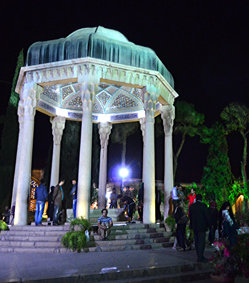
Panoramic views of Shiraz

Classical music

Dick Davis, author, “The Face of Love: Hafez and the Poets of Shiraz

Love and Pomegranates – Artists and Wayfarers on Iran

Life in Iran – An Australian journalists explorations

The luxurious Iranians

Yazd – centre of Zoroastrian culture

UNESCO world heritage – Tabriz Basar complex

Teahouses and coffee shopsRead More »

Misunderstood fundamentalism

By Jonathan Power

January 20th 2015

In his book “Faith and Power” Edward Mortimer, the former foreign affairs columnist for the Financial Times, when writing about Rishid Rida, the great Islamic intellectual of the first half of the twentieth century, asked himself if Rida was “fundamentalist” since he was an admirer of the militant Wahhabi puritans of Saudi Arabia. “I do not think so”, concluded Mortimer, “although I must admit that the precise meaning of this word when used in the context of Islam eludes me.”

At a time when the West is again aroused – because of the attack on Charlie Hebdo – by the actions of extreme Islamic fundamentalists we should note that it is astonishingly difficult to define fundamentalism either in Islam or Christianity. If it means “an effort to define the fundamentals of one’s religion and a refusal to budge from them once defined then surely anybody with serious religious beliefs of any sort must be fundamentalist in this sense”.

In Christianity there are many strains of fundamentalism. The Catholic Church, which abhors Enlightenment liberalism, is clearly fundamentalist when it comes toRead More »

TFF PressInfo # 302: Interview with “Iran Review” – and a word about intellectual freedom

By Jan Oberg

Jan Oberg

Lund, Sweden, January 21, 2015

I visited Iran for a third time in December last year, participating in the international UN-endorsed conference, WAVE – World Against Violence and Extremism.

I gave interviews to some ten agencies and media but the longest was this exclusive one by a passionate and very professional 24-year old Iranian journalist, Kourosh Ziabari, for the esteemed Iran Review.

The distorted image of Iran

TFF has been engaged with an in Iran the last three years. We believe that the general image in Western media – covering almost only Iran’s nuclear program, human rights violations and Iran as a threat to the world – is neither objective nor fair.

It conveniently omits the harmful effects on the Iranian society of Western policies since the days of the US-UK coup d’etat against the democratically elected President of Iran, Dr. Mossadegh, in 1953.

Whether intended or not, this type of media coverage risks contributing to deeper conflict and legitimise future violence – rather than mutual understanding and peace.

It is therefore imperative to go there and see for yourself. More about that in the next TFF PressInfo.

What TFF tries to do in Iran

TFF has these aims with its work in Iran:

a) Fact-finding: to simply learn first-hand about its history, culture, people and how they think on all levels; by traveling around and interviewing people, as many and different as possible.

b) To influence the image in the West of IranRead More »

Could it be the world is getting better?

By Jonathan Power

January 13th 2015.

We have much to be glum about at the onset of 2015- the latest is the killings by ultra Islamists of the cartoonists in Paris. But we are brainwashed with bad news. “If it bleeds it leads”. One plane crash is worth more airtime than news that we are winning the fight against early death.

The World Health Organization has some telling facts. Over the last two decades infant deaths have fallen by a half. Measle deaths by three-quarters and both tuberculosis and maternal deaths by a half. AIDs-related illnesses have been cut by over a quarter. In 1960 one in five children died before the age of 5. Today it is one in 20, and falling.

Developing countries have caught up far more quickly in health than in wealth. For instance, Vietnam has the same health as the US had in 1980 but at present the same income per head as the US had in 1920.

Despite the Great Recession of the last six years poverty has plummeted. Although most of that drop has happened in China and India it has also happened in most Third World countries.

Population growth is slowing. Read More »

Paris – and then?

By Johan Galtung

Johan Galtung

January 12, 2015

What happened–known all over the world–is totally unacceptable and inexcusable. As inexcusable as 9/11, the coming Western attack and the Islamist retaliation, wherever. As inexcusable as the Western coups and mega-violence on Muslim lands since Iran 1953, massacring people as endowed with personality and identity as French cartoonists. But to the West they are not even statistics; “military secrets”.

However, the unacceptable is not unexplainable.

In this tragic saga of West-Islam violence, spiraling downwards, the way out is to identify the conflict, what is this violence about, and search for solutions. I wonder how many now pontificating on Paris–a city so deep in our hearts–have taken the trouble to sit down with someone identified with Al Qaeda, simply asking, “what does the world look like where you would like to live?” I always get the same answer: “a world where Islam is not trampled upon but respected.”

“Trampled upon” sounds physically violent. But there are two types of direct violence intended to harm, hurt: physical violence with arm-arms-army; and verbal violence, with words, symbols. For instance with cartoons, with a touch of art giving them some impunity; for some. A human being–body, mind, spirit–can be hit somatically, mentally, spiritually. Maybe symbolic violence even hits more deeply?

The naiveté in blaming the secret police for not having uncovered the brothers on time is crying to the heavens. What happened to Charlie Hebdo was as predictable Read More »

In defense of freedom of expression

By Farhang Jahanpour

The Wednesday edition of Charlie Hebdo (a week after the barbaric attack by two deranged terrorists on its premises) carried a cartoon of Prophet Muhammad, with a caption “Je Suis Charlie”, with a tear drop on his face announcing, “all is forgiven”. It is not clear who is forgiven and for what, but if it refers to the terrorists it certainly is not appropriate.

This time the magazine did not publish only 60,000 copies as it usually does, but three million copies, thanks to the generous help that it has received from various sources and also with the help of cartoonists from all over the world.

Richard Malka, a Sephardic Jew, who saw ten colleagues and four of his co-religionists massacred on that dreadful day, was one of the first to call for the magazine to continue functioning. When asked whether they would publish more cartoons of Muhammad, he replied in an interview with France Info radio on Monday: “Naturally. We will not give in, otherwise all this won’t have meant anything.”

Free speech tops all other considerations

This is as it should be, because in the final analysis freedom of expression tops all other considerations, as it is at the root of all other liberties and the quality of life that we enjoy in democratic societies.

More than three million people demonstrated in Paris and other French cities on Sunday, carrying the sign “Je Suis Charlie”. This did not mean that they agreed with everything that Charlie Hebdo stood for, but they wished to uphold the right of that satirical magazine to express itself freely.

Only a few days before the attacks in Paris, Pen America published a disturbing report on “Global Chilling. The Impact of Mass Surveillance on International Writers”, showing that mass surveillance by the United States and other governments had produced a very negative effect on free expression, leading to self-censorship. It further showed that concern about surveillance was almost as high among writers living in democracies (75%) as it was among those living in non-democratic states (80%). It would be tragic if the killing of a few journalists in Paris were allowed to result in greater self-censorship and to curtail freedom of expression.

The terrorists and those who wish to limit freedom of expression by violent means should learn that far from forcing others to silence, their acts will backfire and will have the opposite effect. If the terrorists intended to help the cause of Muslims in the world, it has had precisely the opposite effect and has intensified a climate of suspicion and cultural clash between Islam and the West.

It should be added that the terrorist outrage was not an Islamic act against Christians, Jews and secularists. It was the act of two terrorists against Muslims, Christians, Jews and people of no faith.

That vile act had nothing to do with Islam

In fact, after the carnage and the resulting anger, it is important to remember that Read More »

TFF PressInfo # 300: “We Are All Charlie” – but is that story so simple?

By Jan Oberg

Jan Oberg

Eleven points as a reflection on the terror in Paris and – not the least – the reactions to it*:

1. What was this an attack on?
Was that attack an attack on freedom of speech as such, on democracy, even on the whole Western culture and lifestyle, as was maintained throughout? Or was it, more limited, a revenge directed at one weekly magazine for what some perceive as blasphemy?

2. Is freedom of expression practised or curtailed for various reasons?
How real is that freedom in the West? Just a couple of days before the Paris massacre PEN in the U.S. published a report – Global Chilling – finding that about 75% of writers report that they are influenced by the NSA listening and abstain from taking up certain subjects or perspectives? Self-censorship, in other words. Finally, most of the political leaders marching in Paris on Sunday January 11 have clamped down on media, such as Turkey and Egypt.

I must admit that I have experienced limitations in the practise of that freedom in my own work with Western media and it is decades ago I draw the conclusion that things like political correctness, ownership, commercial/market considerations and journalists’ need for good relations with power – e.g. to obtain interviews – play a role.

I’ve been on the ground in conflict zones and returned home to see reports so biased to tell very little of what I’ve seen myself. And we’ve recently seen lots of cases from the U.S. academic world where there’s been a clampdown on certain views, pulications, courses and professors – not the least in relation to the Israel-Palestine conflict. Or, you look at the proportions between government fund available for peace research and military research in virtually every Western society; free research is a vital element in the self-understanding of the West. But how much of do we have?

3. Freedom doesn’t mean duty.
Is freedom of expression really 100% irrespective of how much the practise of that freedom is hurtful, offending, humiliating or discriminatory against other peoples, religions and cultures? Even if you can express your opinions freely it is not always what we should do.

I can still abstain from making a remark about somebody’s religious or political beliefs because I see no point in offending that person in regard to something he or she holds dear, even part of the identity. But, sure, I have the right to do so.

Using a right to the maximum isn’t necessarily the wisest or most mature thing to do. I draw the distinction between issues that touch personal identity – e.g. religion, nationality, gende – and other issues. It is neither fun nor wise to make satire on what people are.

One must indeed ask in the – chilling – times we live: What happened to words such as solidarity, respect, empathy and to the values of common humanity? There can be no rights without duties as Mohandas K. Gandhi briliantly expressed it.

4. Are anti-Semitic cartoons OK now?
Why is it so important to some media people and Je Suis Charlie people to accept or practise disdain, blasphemy, ridicule or depict (even naked) Muhamad when we know that Read More »

TFF PressInfo # 299: 2014 no good! May all good forces unite in 2015!

By Johan Galtung

Johan Galtung

Here is a list of 15 current conflicts-violence relations, avoiding identifying conflicts with violent conflict arenas:

USA-Japan-South Korea vs North Korea vs China

USA-ASEAN vs China-Taiwan and Japan vs Korea over China Sea islands

USA-NATO-Japan vs China-Russia-SCO over encircling

USA-EU vs Russia over Ukraine-Georgia membership in NATO-EU

USA-led coalition/NATO vs Many, diverse parties in Afghanistan

USA-led coalition/NATO vs Many, diverse parties in Iraq

USA-Shia-Iran(?) vs Arabia-Sunni-caliphate/ISIS-Turkey(?)

Kurds vs Turkey-Syria-Iraq-Iran over autonomy

Israel vs Palestine over The Holy Land/Cana’an

USA-Israel vs Arab-Muslim countries over Israel vs Palestine

USA vs 134 states over terrorism using state torture-sniping-droning

USA-UK-Canada-Australia-New Zealand (“Five eyes”) vs the World, spying

USA vs China (USA-EU vs Eurasia) over the shape of geopolitics

USA-UK-France-Italy-Norway vs Libya-Mali-Sudan-Somalia etc. in Africa

USA vs Latin America/Caribbean over equality of the Americas

The most striking feature is, indeed, the presence of one country, USA, in almost all of them. Why? Read More »

Remembering 2014 (Badly)

By Richard Falk

Richard Falk

Considering the year that is about to end is a time to pause long enough to take stock of what went wrong. In the United States not much went right aside from Barack Obama’s surprising initiative to normalize relations with Cuba after more than 60 years of hostile and punitive interaction. Although the sleazy logic of domestic politics kept this remnant of the worst features of Cold War diplomacy in being for a couple of extra decades, it is still worth celebrating Obama’s move, which when compared to the rest of his record, seems bold and courageous.

As well, Obama exhibited a strong commitment to doing more than previously on climate change, using his executive authority to circumvent Congressional unwillingness to act responsibly. Obama’s immigration reform proposals also seem on balance to be positive, although whether they will be implemented remains an open question.

Drifting Toward Cold War II: Remembering World War I

There are several signs of a worsening global setting that seemed to gain an ominous momentum during 2014. Perhaps, worst of all, is a steady drumbeat of anti-Russian rhetoric backed up by Western sanctions, that seems almost designed to produce Cold War II. Read More »
