The “Possible Military Dimensions” Bomb That Could Blow Up the Iran Deal

Gareth Porter

By Gareth Porter

The United States and Iran may have agreed on a vague framework for resolving remaining issues between them, including the lifting of sanctions, but the final stage of the negotiations will bring a diplomatic confrontation over the sequence and timing of lifting sanctions.

And the most difficult issue in the coming talks will be how the “Possible Military Dimensions” or “PMD” – the allegations of Iranian nuclear weapons work that have been at the center of the entire Iran nuclear crisis for several years – is to be linked to lifting certain UN Security Council sanctions.

On that linkage Iran will insist that its cooperation in providing access to the International Atomic Energy Agency must be reciprocated with the lifting of certain sanctions on an agreed-upon timetable, regardless of how long the International Atomic Energy Agency (IAEA) takes to make up its mind and what judgment it renders, according to a source in close contact with the Iranian negotiating team.

The US “fact sheet” on the “parameters” of an agreement says, “All past United Nations Security Council resolutions on the Iran nuclear issue will be lifted simultaneously with the completion by Iran of nuclear related activities addressing all key concerns,” and the list that follows includes “PMD.”

However, nothing was officially agreed on in Lausanne on how Iranian cooperation with the International Atomic Energy Agency (IAEA) on the PMD issue would be linked to sanctions relief, according to the source close to the Iranian negotiators. But the source said that Read More »

TFF PressInfo # 317 – Will Iran kill the nuclear bomb deal?

By Jonathan Power

Iran will find it easier to kill the nuclear bomb deal than will the Republicans in Congress. Why? Because the Republicans need some Democratic senators on their side to override a veto by President Barack Obama of a vote to bury the accord, whereas in Iran all that is needed is the decision of one man, the Supreme Leader, Ayatollah Ali Khamenei.

Iran is not a dictatorship – voters, parliament and president carry enormous weight but when it comes to the very big decisions it is Khamenei who decides. He has already said there is “no guarantee” of a final deal with the world powers, the US, the EU, Russia and China, who agreed the deal. President Hassan Rouhani, a liberally minded man, has also said that Iran would not sign up unless sanctions were lifted “on the first day” of implementation.

There is enough evidence around to suggest that Khamenei is unhappy with the Americans. Soon after the accord was publicized after the marathon negotiations in Lausanne, he tweeted, “Hours after the talks the Americans offered a fact sheet (of explanation of the terms of the agreement) – most of it was contrary to what was agreed. They always deceive and breach promises.”

To understand where Khamenei is coming from we have to separate the question Read More »

Iran won upfront sanctions relief, but with potential snags

Gareth Porter

By Gareth Porter, TFF Associate*

The framework agreement reached on Thursday night clearly gives the P5+1 a combination of constraints on Iran’s nuclear programme that should reassure all but the most bellicose opponents of diplomacy. It also provides the basis for at least a minimum of sanctions relief in the early phase of its implementation that Iran required, but some of the conditions on that relief are likely create new issue between Iran and the Western powers over the process.

The agreement’s dependence on decisions by the International Atomic Energy Agency (IAEA) and the penchant of Israeli intelligence for discovering new evidence of illicit Iranian activities will encourage moves to delay or obstruct relief of sanctions.

US and European officials had been telling reporters that they would phase out their sanctions on oil and banking in return for Iranian actions to modify its programme only gradually over several years, and made it clear that the purpose of this strategy was to maintain “leverage” on Iran.

Iran, however, was demanding that those sanctions be lifted immediately upon delivering on their commitments under agreement. Read More »

TFF PressInfo # 316: Iran nuclear deal – They’ve done it!

By Farhang Jahanpour*

At last they have done it! After 36 years of hostility between Iran and the West, 12 years of nuclear negotiations initially between Iran and the European Troika (Britain, France and Germany), followed by talks between Iran and the P5+1, finally the two sides have agreed on a framework for a final, comprehensive agreement before the end of June.

It is clear that this agreement falls short of both side’s maximum expectations. It will be strongly opposed by the hardliners in Iran who believe that, as an NPT member, Iran is entitled to the full range of nuclear activities and, therefore, they will accuse the Iranian negotiators of a sell out.

On the other hand, the Israeli Prime Minister and his supporters in the US Congress, who are not satisfied with any agreement with Iran short of the cessation of all forms of nuclear enrichment in Iran, even at the cost of a war, will blame the Obama Administration of appeasement.

It is also clear that both sides have achieved their minimum demands. The West can be sure that Iran will not Read More »

Iran Nuclear Deal: Can One Dare Hope?

By Farhang Jahanpour

After 36 years of hostility between Iran and the West and 13 years of nuclear negotiations, first involving Iran and the European Troika (Britain, France and Germany), followed by the P5+1 (the above countries plus the United States, Russia and China), it seems that finally one can start to be optimistic and hope that a long, dark chapter will come to an end.

The next few days up to the end of March are the most crucial days in this long road, but after many ups and downs and many false hopes the end may be in sight. To be sure, nothing is certain until the final announcement has been made. Still powerful forces are hard at work to prevent the success of the talks, but there is some room for optimism. The important point to bear in mind is that talks with Iran were never only about Iran’s nuclear program.

The victory of the Islamic revolution toppled the staunchly pro-Western Mohammad Reza Shah who was acting as the gendarme of the region on behalf of the West, and replaced him with intensely anti-Western Ayatollah Khomeini who wanted to spread the Islamic revolution and replace the existing order with a religious theocracy. The revolution created the biggest upset in the history of the Middle East since the end of the First World War, the collapse of the Ottoman Empire and the Sykes-Picot division of the Middle East among various European colonial powers.

With the start of the Cold War and the rise of the American superpower, the Middle East was divided between the two blocs, with some countries such as Egypt, Syria, Iraq, Libya and Algeria leaning towards the East and other countries such as Iran, Turkey and Persian Gulf monarchies leaning towards the West. Despite occasional upsets, that situation had remained fairly stable until the victory of the Iranian revolution.Read More »

TFF PressInfo 315: Happy Norooz – peace in the new year?

Jan Oberg

By Jan Oberg

Today is New Year – Norooz – for 300 million people. It is Equinox. It is International Day of Happiness – and it is the 12th Anniversary of the US-led war on Iraq

The nuclear deal and Israel

One must hope that the new year brings a fair deal concerning the nuclear issues between Iran and the members of the UN Security Council + Germany.

If the U.S. will not sign because it insists that the counterproductive and unfair sanctions shall not be lifted completely and as soon as technically possible, the deal should be signed with the other parties. The US must have no monopoly on this.

One must also hope that Israel will not attack Iran – but with the re-election of PM Netanyahu that risk has increased.

He seems to be obsessed about a threat from Iran, a country that has not invaded any other country for more than 250 years, has no nuclear weapons and considers nuclear weapons “haram” – strictly forbidden.

With a 10 times larger population Iran has roughly the same military expenditures as Israel.Read More »

Iran’s nuclear program: Diplomacy, war, and (in)security in the Nuclear Age

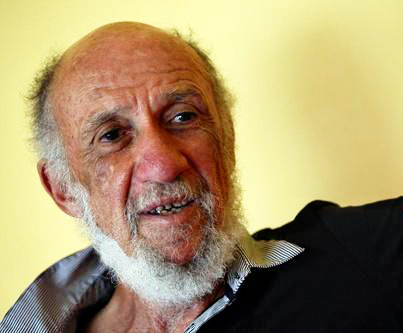
Richard Falk

By Richard Falk
March 18, 2015

Perhaps, Netanyahu deserves some words of appreciation, at least from the Israeli hard right, for the temporary erasure of the Palestinian ordeal from national, regional, and global policy agendas. Many are distracted by the Republican recriminations directed at Obama’s diplomatic initiative to close a deal that exchanges a loosening of sanctions imposed on Iran for an agreement by Tehran to accept intrusive inspections of their nuclear program and strict limits on the amount of enriched uranium of weapons grade that can be produced or retained.

We can only wonder about the stability and future prospects of the United States if 47 Republican senators can irresponsibly further jeopardize the peace of the Middle East and the world by writing an outrageous Open Letter to the leadership of Iran.

In this reckless political maneuver the government of Iran is provocatively reminded that whatever agreement may be reached by the two governments will in all likelihood be disowned if a Republican is elected president in 2016, or short of that, by nullifying actions taken by a Republican-controlled Congress.

Mr. Netanyahu must be smiling whenever he looks at a mirror, astonished by his own ability to get the better of reason and self-interest in America, by his pyrotechnic display of ill-informed belligerence in his March 2nd address to Congress. Surely, political theater of sorts, but unlike a performance artist, Netanyahu is a political player whose past antics have brought death and destruction and now mindlessly and bombastically risk far worse in the future.

What interests and disturbs me even more than the fallout from Netanyahu’s partisan speech, are several unexamined presuppositions that falsely and misleadingly frame the wider debate Read More »