The world right now: A Mid-Year Report

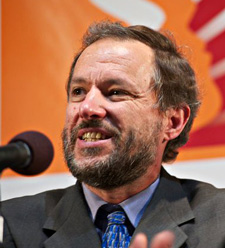
By Johan Galtung

Time to take stock. The shot in Sarajevo 100 years ago inspires narratives of 19-year old Gavrilo Princip killing the successor to the throne of an empire and his pregnant wife as the event unleashing mutual mass murder (INYT, FAZ 28-29 June 2014). Not the empire annexing Bosnia-Herzegovina on October 6, 1908 (Art. 25 of the 1878 Berlin Congress of “great powers”).

Maybe the inhabitants did not like it?

Moral of that stock-taking: watch out for terrorism, not for empires and occupation-colonialism; and protect leaders, not people.

ISIS (Islamic State of Iraq and the Levant, alternatively translated as Islamic State of Iraq and Syria and Islamic State of Iraq and al-Sham) comes up. TIME 30 June: The End of Iraq. Maybe Iraq – that highly artificial English colonial entity encasing Shia Arabs, Sunni Arabs and Sunni Kurds–never started?

Like its French colonial neighbor Syria – adding Alawite Arabs, Christians, Jews and others? Ever heard about Sykes-Picot and their czarist Russian allies?

Can such crimes just pass, with no counter-forces?

Watch out, a key point about ISIS – now comprising a major part of IS – is as a bridge over the English-French colonial divide, in favor of a Sunni Arab caliphate. Like it or not, these are very strong forces from the past in the daylight of the present. Read More »

TFF PressInfo: What to do now in Iraq?

By Jonathan Power

June 17th 2014

Is it “you reap what you sow”? The US electorate that voted twice for President George W. Bush should ask itself the question. The growing strength of ISIS and Jabhat al-Nusra, represents a grave threat to the future of the Middle East and the US has no one to blame but itself.

ISIS (The Islamic State of Iraq and al-Sham), it is being said, could eventually reconfigure the Middle East if it is able to seize significant chunks of Iraq and Syria, the Arab world’s two strategic centrepieces, spanning the Mediterranean to the Persian Gulf.

ISIS has begun setting up a proto-state in parts of Syria and Iraq, with its own courts, police and public services. According to the well-informed Middle East watcher, Robin Wright, “ISIS has become the most aggressive and ambitious extremist movement in the world. It is also the most deadly and the most accomplished, dwarfing its parent, al-Qaeda, in influence and impact”.

US policymakers understand from painful experience that military aid will not simply pressure Iraq’s Shia prime minister, Nurial al-Maliki, with his autocratic sectarianism, to make serious concessions to Iraqi Sunnis, and thus help dry up the waters in which ISIS swims.

But what else can President Barack Obama do? Read More »

TFF PressInfo: GCC Military Command or a More Open Society

By Farhang Jahanpour*

Short e-mail PressInfo version here.

Saudi Military exercises

On 30th April 2014, Saudi Arabia staged its largest-ever military exercises codenamed “Abdullah’s Shield” after the kingdom’s 91-year old ruler and coinciding with the ninth anniversary of his ascension to the throne. The exercises involved 130,000 Saudi troops and showcased some of the latest weapons purchased by the kingdom from the United States and China, including the Chinese CSS-2 intermediate-range ballistic missiles with a range of 2,650 kilometers (1,646 miles) which are capable of carrying nuclear warheads. The Chinese version of these missiles is already equipped with nuclear warheads. This was the first time that these missiles had been seen in public in Saudi Arabia.

Crown Prince Salman presided over the exercises, which were also watched by a number of prominent foreign guests, including King Hamad of Bahrain and more pointedly by Gen. Raheel Sharif, the Pakistani chief of the army Staff. There have been persistent rumors over many decades that in return for Saudi funding of the Pakistani nuclear weapons’ program, Pakistan had committed to provide nuclear warheads for CSS-2 missiles, should Saudi Arabia decide to have them. Earlier in the year when Prince Salman visited Pakistan, he personally invited Gen. Sharif to be his guest at the exercises. Pakistani media stressed the point that Gen. Sharif had gone to Jeddah “on the invitation of Crown Prince Salman bin Abdulaziz al Saud to witness the military exercise…” (1)

With the exception of Bahrain’s ruler, none of the other GCC rulers watched the exercises. The guests included the crown prince of the UAE, the prime minister of Jordan and military commanders from some GCC states, but Qatar pointedly did not send any representatives. This was yet another sign of a growing rift between Saudi Arabia and Qatar.

A unified GCC Command and Monetary Union

At the GCC summit held in Kuwait in December 2013, the Saudis called for a unified GCC military command to have 100,000 forces, half of which would be contributed by the Saudis. (2) However, other GCC members opposed the idea as they saw it as a way of consolidating Saudi domination of other GCC states and affirming Saudi Arabia’s position as the big brother. Many smaller GCC states value their independence, and while they would like to cooperate with other GCC members, they do not wish to be absorbed into a unified military alliance as junior partners. Oman openly expressed its opposition to the proposal and Qatar and Kuwait also followed suit. Read More »

TFF PressInfo: Sverige – inte längre aktör för en bättre värld

Av Jan Öberg
Dr.hc., direktör för TFF
4 maj 2014

Eliten i Sverige är mer lojal mot Nato, USA och EU än mot sitt folk

• Under de senaste 25-30 åren har Sveriges militära, säkerhets- och utrikespolitiska elit vridit Sveriges politik 180 grader.

• Dessa grundläggande förändringar inleddes av den socialdemokratiska regeringen under Göran Persson och utrikesminister Anna Lindh och har genomförts praktiskt taget utan offentlig debatt.

• Omsvängningen till interventionism, militarism och USA/Nato på alla områden har planerats gradvis, i smyg och ohederligt – kort sagt på ett sätt som är ovärdigt en demokrati.

• Denna elit är mer lojal mot Bryssel och Washington än mot svenskarna.

• Om din bild av Sverige är att det är ett progressivt, förnyande och fredsfrämjande land med global inställning som försvarar folkrätten så är den – tråkigt nog – föråldrad.

Hur Sverige har förändrats

Sverige är inte längre neutralt och det är bara formellt alliansfritt; det finns ingen mer närstående bundsförvant än USA/Nato. Landet har upphört att utveckla en egen politik och positionerar istället sig inom ramen för EU och Nato. Landet bidrar inte längre med betydelsefullt nytt tänkande – det sista var Olof Palmes kommission om gemensam säkerhet (1982).Read More »

TFF PressInfo – The West’s hypocrisy in Ukraine

By Jonathan Power

April 29th 2014

When it comes to Ukraine the US and the EU are adopting a holier than thou attitude which, unfortunately, leads them not to worship at the alter of truth.

Take the issue of the fuss made over alleged soldiers wearing Russian uniforms. They are not dressed in the smart fatigues of the unmarked Russian soldiers in Crimea, about which President Vladimir Putin has acknowledged he misled us. What these soldiers, leading the Russian-speaking revolt, are wearing can be bought in any army surplus store. As for the photos Western intelligence has persuaded much of the media to use as evidence, they are hazy and would not be admissible in a court of law.

The Ukranian Security Agency announced that it captured 20 of its Russian counterparts. But then it reduced the number to 10 and then to 3. But the last figure received much less highlighting from Western governments and media than the first.

How all this “Russian interference” compares with the post Cold War expansion by Nato forces up to Russia’s borders, senior Western politicians’ (including the US ambassador) provocative support for a revolutionary movement that included a healthy contingent of neo-fascists who now have seats in the Ukrainian cabinet, and the funding of opposition forces and NGOs, is to be wondered at. (I’ve long been surprised at the tolerance for Western NGOs based in Russia and China. Imagine the reverse.)Read More »

The New World Order?

By Richard Falk

There is no more reliable guardian of entrenched conventional wisdom than The Economist. And so when its cover proclaims ‘the new world order,’ and removes any ambiguity from its intentions, by its portrayal of Putin as a shirtless tank commander with menacing features.

No such iconography accompanied the last notable invocation of the phrase ‘new world order’ by George H. W. Bush in mobilizing support for a forcible response to the Iraqi invasion and annexation of Kuwait in 1990, the dirty work of Saddam Hussein. Read More »

The obsolescence of ideology: Debating Syria and Ukraine

By Richard Falk

I have been struck by the unhelpfulness of ideology to my own efforts to think through the complexities of recommended or preferred policy in relation to Syria, and more recently, the Ukraine. There is no obvious posture to be struck by referencing a ‘left’ or ‘right’ identity. A convincing policy proposal depends on sensitivity to context and the particulars of the conflict.

To insist that the left/right distinction obscures more than it reveals is not the end of the story. To contend that ideology is unhelpful as a guide for action is not the same as saying that it is irrelevant to the public debate. In the American context, to be on the left generally implies an anti-interventionist stance, while being on the right is usually associated with being pro-interventionist. Yet, these first approximations can be misleading, even ideologically. Liberals, who are deliberately and consigned to the left by the mainstream media, often favor intervention if the rationale for military force is primarily humanitarian.

Likewise, the neocon right is often opposed to intervention if it is not persuasively justified on the basis of strategic interests, which could include promoting ideological affinities. The neocon leitmotif is global leadership via military strength, force projection, friends and enemies, and the assertion and enforcement of red lines. When Obama failed to bomb Syria in 2013 after earlier declaring that the use of chemical weapons by the Assad regime was for him a red line this supposedly undermined the credibility of American power.

My point is that ideology remains a helpful predictor of how people line up with respect to controversial uses of force, although relying on ideology is a lazy way to think if the purpose is to decide on the best course of action to take, which requires a sensitivity to the concrete realities of a particular situation. Such an analysis depends on context, and may include acknowledging the difficulties of intervention, and the moral unacceptability of nonintervention. Read More »

TFF PressInfo: The manufactured story about Iran’s nuclear program

By Farhang Jahanpour

As Iran and the world powers resume nuclear talks in Vienna with the hope of reaching a comprehensive agreement over Iran’s nuclear program by mid-July, the Israelis and their lobbyists in Washington are intensifying their efforts to scuttle the talks. In addition to all the efforts in the US Congress to impose additional sanctions on Iran, thus bringing the talks to a premature end, there are indications that Israel and her friends are continuing with various acts of sabotage against Iranian nuclear facilities.

In 2010, the so-called Stuxnet virus temporarily disrupted the operation of thousands of Iranian centrifuges. At least five Iranian nuclear scientists have been assassinated. Iran has also said that it has discovered tiny timed explosives planted on centrifuges but has disabled them before they could go off. On Monday 17 March 2014, Iran said that an alleged attempt to sabotage one of its nuclear facilities had involved foreign intelligence agencies that had tampered with imported pumps. However, in addition to all those acts of sabotage, there seems to be an intensive effort to manufacture a crisis by means of false intelligence.

Prior to the devastating Iraq war that destroyed the country and killed upwards of half a million people, not to say anything of thousands of Coalition forces who were killed and the two trillion dollars that was spent, a number of neocons bent on the invasion of Iraq manufactured various false reports in order to mislead the public and pave the way for the war.

On September 8, 2002, Michael R. Gordon and Judith Miller published a story in the New York Times that openly alleged that Saddam Hussein had intensified his quest for a nuclear bomb. They wrote: “In the last 14 months, Iraq has sought to buy thousands of specially designed aluminum tubes, which American officials believe were intended as components of centrifuges to enrich uranium… Bush administration officials say the quest for thousands of high-strength aluminum tubes is one of several signs that Mr. Hussein is seeking to revamp and accelerate Iraq’s nuclear weapons program.”

The unsuspecting public was misled by that false intelligence and the result was one of the longest and most disastrous wars in US history.

How the manufactured crisis was manufactured

In his latest groundbreaking book, entitled A Manufactured Crisis: The Untold Story of Iran Nuclear Scare, the historian and investigative journalist Gareth Porter catalogs a long list of false reports manufactured by Israeli intelligence agencies in order to mislead the public and pave the way for a war against Iran. (1)

Read More »

Saddam, Osama, Gaddafi, Chavez – and Obama

By Johan Galtung

Contemporary reality, but what is real? Two of the above were killed under Obama’s watch; Osama executed by Obama extra-judicially, in cold blood, the other two by proxies (Chávez: we do not quite know). Two of them were dictators; Osama had no state, Chávez had, but won elections apparently not more rigged than Florida 2004, Ohio 2008.

What were the problems, how might they have been solved?Read More »