
Commenting on PressTv on July 22, 2016 after yet another tragedy in the Mediterranean.
But how much did the media cover that in comparison with the Nice tragedy – and Hollande’s killing of 120 innocent civilians as revenge for Nice (which at the time was not known to have any connections to ISIS or similar)?
Category: Middle East
Horror in Nice and elsewhere
Jan Oberg comments on Iranian PressTV (July 19, 2016) some 11 minutes into this program.
“The War On Terror is history’s most stupid and counterproductive. If the terrorism problem has increased about 80 times since 2001 we should be intellectual and decent enough to ask ourselves: What are we doing wrong? Nobody asks this question and it will end us up in hell.”

Turkey’s coup – One more problem for NATO
By Jan Oberg
Commenting on Russia Today
July 16, 2016
Tony Blair- Evil big enough to be charged for war crimes

By Jonathan Power
The crime of aggression (“planning, preparation, initiation or waging of a war of aggression”) was described by the Nuremberg Tribunal that tried Nazi leaders as “the supreme international crime differing only from other war crimes in that it contains within itself the accumulated evil of the whole”.
President George W. Bush and British prime minister, Tony Blair, have been accused by many as war criminals for starting the war against Iraq and, second, for not watching carefully enough to make sure that war crimes carried out by individual soldiers were not covered up, and for the torture that Bush initiated and Blair appeared to tolerate.
Did Blair lie over the reason for going to war with Iraq – the supposed stockpile of weapons of mass destruction that Iraq possessed? It depends how you define lie. If you define lie as saying this cat is black when in fact it’s white he didn’t on the big issues. But what he did do was to give the impression the cat was assuredly white when in fact it was a sort of greyish.
But as the just published government commissioned report made by a distinguished civil servant, John Chilcot, has made clear the caveats were left out of intelligence briefings and the presentation was polished by the prime minister’s office.
We in the public didn’t have the pre-polished version but Blair did and he must have known in his mind, if not his heart, he was taking a gamble with the evidence. Read More »
The Chilcot Report and the basic question: Why?

By Gunnar Westberg
After the terrorist attack on the World Trade Centre in New York on the 11th of September 2001 President George W. Bush felt the need for revenge. Since years back, the US had developed plans to attack Iraq. Its dictator Saddam Hussein had been left in power after the First Gulf War in 1991, a war which the father of George W. Bush had left unfinished.
The real reasons for this renewed war on Iraq are not known.
Saddam Hussein had previously had a program to produce nuclear weapons. After thorough investigations lead by the UN representatives Rolf Ekéus and Hans Blix it became clear that all weapons of mass destruction had been eliminated. There were no nuclear weapons.
However, Saddam Hussein could of course start the production of nuclear weapons at some point in the future. And the US leaders choose to disregard the reports by the UN inspectors. “I do not want the smoking gun to be a nuclear detonation over Manhattan” said Condoleezza Rice, Secretary of State, and on the TV screen a mushroom cloud rose over New York. That picture spoke more strongly than the reports by Hans Blix.
The UN Security Council did not support an attack on Iraq. There were demonstrations against the war, in the USA and in the world, probably the biggest peace and pre-war demonstrations in the world at any time. But the decision to go to war seems to have been taken, unchangeable.Read More »
Are we heading toward global autocracy, ecological collapse and political malaise?
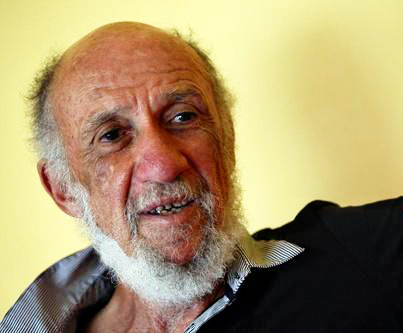
By Richard Falk
What follows are preliminary reactions to both the BREXIT vote and the world according to Trump, but also a commentary on the related alienation of large segments of the public that are being badly served by both the established elites and their demagogic adversaries.
The failures of neoliberalism, the successes of digitization, the scourge of random violence, and more broadly, the dilemmas posed by late modernity are among the root causes of this global crisis of legitimate governance, which is deepened while being mishandled by unprecedented ecological challenges, extremely irresponsible geopolitical leadership, and a variety of ultra-nationalist backlashes against the encroachments of economic globalization.
Imagining the World After the Cold War
After the end of the Cold War there were various projections that tried to anticipate the likely future of the world in broad interpretative strokes. Three of the most influential conjectures by three prominent American authors received attention in the public sphere: those of Francis Fukuyama, Samuel Huntington, and Robert Kaplan.
Fukuyama challenged conventional political imagination with his provocative claim that with the collapse of the Soviet version of state socialism and the triumph of capitalist liberalism the world had reached ‘the end of history.’ It was also somewhat dubious that Fukuyama validated his views by reference to the Hegelian contention that history is made by the march and interplay of ideas rather than through the agency of material forces.
In this respect history came to a supposedly glorious end because there was no grander possible political vision than that of market-based constitutionalism, epitomized by the American political system. Even the most casual observer of the global scene must have noticed the befogged Western optic through which Fukuyama saw the world.
Huntington, no less provocative or biased, although less comforting for the West, anticipated a ‘the clash of civilizations’ as the sequel to the Cold War, especially stressing the confrontation between the liberal West and the non-West or simply ‘the rest.’ His suggestive emphasis was on blood-soaked fault lines between states, civilizations, and peoples associated with Islam and the Western polities descending from the Enlightenment tradition as it unfolded in Europe, taking root in North America and elsewhere.
Kaplan, also punctured the Fukuyama triumphalist tone of geopolitical serenity, by writing Read More »
Russia and China right now

By Johan Galtung
The background is the two major communist parties in the world. Russia Communist Party-Bolshevik made the November 1917 revolution; from 1922 the Communist Party of the Soviet Union, CPSU(b). CPC, the Communist Party of China, now celebrating its 95th anniversary, made the 1 October 1949 revolution. World-shaking events; in the world’s biggest state in area and in the world’s biggest state in population.
The revolutions cut into the modernity contradictions in the State-Capital-People triangle by conquering State-military and police. Two lasting achievements of CPSU(b): State Planning of the economy – maybe five years at the time, pjatiletka – now found in most countries; and lifting some bottom up to meet basic needs, surprisingly quickly. But CPSU(b) exercised gross structural violence in the countryside. And CPC, imitating CPSU(b), made the same mistake to start with.
Then they became different. Russia got stuck with the Party on top of the State, for some people, but not by the people. CPC, like CPSU, did not – and still does not – permit FAFE, fair and free elections at the national level. But China gave People a voice in the 70,000 People’s Communes, helping them lift themselves up when in misery.
China did not see State and Capital as either-or; like Bolshevik Russia opting for State through expropriation, and neo-liberal USA for Capital through privatization, manipulating and spying on the People. China opened for the neither-nor local level, for the compromise of some welfare state, and for the both-and of their capi-communism.
This intellectual-political flexibility, rooted in daoist holism and an unending force-counter-force dialectic, not in Western faith in a final state, Endzustand, opened for two very different “communisms”.
How are they doing these days, those two communist parties?
The Russian party is out for the time being; and in came capitalism. But over and above that discourse looms the history of a huge Russian Orthodox empire attacked by Vikings, Mongols-Tatars, Turks, Napoleon and Hitler, Catholic Christianity, and Cold Wars with extremist US evangelism, now over Ukraine too.
Yeltsin – hated by Gorbachev (INYT, 3 Jun 2016) – gave the West what they wanted.
Popular Putin tries to build autonomous Russia without Western-capitalist imperialism, probably successful in the longer run. However, in Russia the long run is very long.Read More »
The Chilcot Inquiry must tell the truth

By Mairead Maguire
The long awaited Chilcot report (5 years) on the Invasion of Iraq will finally be released on 6th July, 2016.
The Report is to be welcomed and the hope expressed that this inquiry will tell the truth of what happened to the Iraqi people and clarify the UKs involvement, through an official Government recognition of facts of the wars, sanctions and invasion of Iraq and for transparency, accountability and reparation to be paid to the Iraqi people by the UK Government who participated in these illegal and immoral genocidal wars.
The story of what was done to the Iraqi people by UK and Western allies is shocking and deeply disturbing.
The two wars, the imposition of economic sanctions, causing the slow deaths of thousands of people, were indeed crimes against humanity, war crimes, breaking all international obligations and conducted with no respect for human life or the Iraqi people’s rights.
The UK/USA acted unilaterally ignoring the principal of multilateralism and irrespective of the enormous opposition to war against Iraq, articulated by millions of people around the world.
The invasion was carried out by US/UK NATO forces on the basis of a ‘lie’ that Iraq had nuclear weapons and was a threat to the US.
The foreign policy of the US/UK governments were for regime change and about Iraqi oil; the methods used were Read More »
TFF PressInfo # 380: Brex’it. So Be’it – And now what?
By Johan Galtung
The vote turned out like the two referenda held in Norway in 1972 and 1994. And much for the same reason: Protestant break with Rome – Catholic, imperial – Henry VIII made himself head of the Anglican Church in 1534.
Religion was not the only reason, there are Protestant Nordic members of EU, closer to the continent and closer to Russia. World history, a short while after Pope Francis – Patriarch Kirill also made world history, bridging the Catholic-Orthodox 395-1054 gap.
The Disunited Queendom is now London with surroundings; England. The implications are enormous, for UK-GB and the British Isles in general, for EU and Europe in general, USA and the world in general.
The US Trojan horse decided to leave the EU on 23 June 2016.
UK-GB and the British Isles in general:
Goodbye United Kingdom, UK, we may get United Ireland, UI, instead.
Goodbye Great Britain, GB, we may get Scotland in EU instead.
Welcome to Britain of England-Wales, if they care for that vocabulary.
Welcome to new-born England, 23 June being the Day of Independence.
Independence?
Washington, having lost its inside-EU ally,Read More »
“Peace, Conflict, Democracy”
The West leaves, a multi-polar world comes
Jan Øberg Part 1/3
 TFF Associates Blog 2011-2017