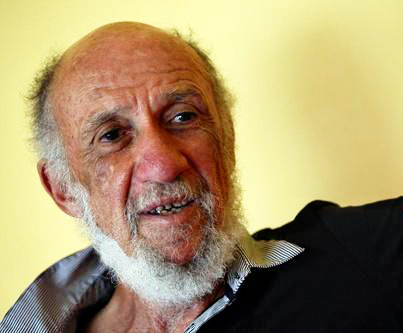
UN Gaza Report Part II: Israel’s Counterinsurgency Apologist: Colonel Richard Kemp

By Richard Falk

Retired British colonel, Richard Kemp, has been an ardent supporter of Israel’s three major military operations in Gaza conducted over the last six years. He has collaborated on several occasions with the two notoriously pro-Israeli NGOs, UN Watch and NGO Monitor, serving on the Advisory Board of the latter and appearing as star witness under such auspices at the UN, most recently at a two-day side event at UN Headquarters in Geneva devoted to condemning the UN Commission of Inquiry Report on the Gaza War of 2014.

There is no doubt that Col. Kemp has the credentials to speak as a counterinsurgency specialist, having served as commander of British forces in Afghanistan and elsewhere, where he acknowledges close cooperation with Mossad and the influence of Israeli tactics. In fairness, Kemp writes from such a militarist view with little effort to assess the relevance of international humanitarian law, treating ‘military effectiveness’ as determined by military commanders as the defining criterion of legality for a challenged battlefield practice. In his own words, “[i]t’s the dispassionate military perspective that I bring.”

Of course, such an outlook ignores the relevance of international criminal law, which is to superimpose accountability as a constraining framework Read More »

UN Report on War Crimes during Israel’s 51 Day Assault on Gaza

By Richard Falk

Exactly a year ago, for 51 days between July 7 and August 26 Israel carried out its third major military assault (2008-09; 2012; 2014) on Gaza in the past six years.

This last one, code named Operation Protective Edge by Israeli Defense Forces, was the most vicious, killing 2,251 Palestinians, of which 1,462 were civilians, and included 299 women and 551 children, as well as injuring 11,231, a number that includes 3,436 children, 10% of whom have permanent disabilities, and another 1,500 have been orphaned.

Israel also suffered casualties: 73 killed of whom 67 were military personnel, and 1,600 injured.

Additional to the human casualties, 18,000 Palestinian housing units were destroyed, along with substantial damage to Gaza’s electricity and sanitation systems, 500,000 Palestinians (almost 1/3 of Gaza’s population) were forcibly displaced during the military operations and 100,000 remain so a year later, and 73 medical facilities and ambulances were destroyed or damaged.

Due to the Israeli blockade, the aftermath of this onslaught has prevented a normal recovery, extending the period of suffering endured by the entire Gazan population. The magnitude of the Palestinian losses, as well as the comparison with Israeli losses, and the comparative ratio of civilians to military killed on the two sides, by itself suggests that the essential character of this Israeli undertaking is best understood as ‘state terror’ directed at Gaza’s population as a whole.

Such conclusions are reinforced by Israel’s provocations during the month prior to the launch of the attack and by the refusal of its government even to consider frequent proposals by Hamas to establish long-term internationally supervised ceasefire proposals.

This one-sided impression of the events is not conveyed by the much anticipated UN Report of the Commission of Inquiry (COI) set up by the Human Rights Council to investigate violations of international human rights and international humanitarian law in July of 2014 that were occurring during Operation Protective Edge.

The Commission wasRead More »

Aesthetics as One Road to Peace?

By Johan Galtung

The eminent historian of Central and South India, William Dalrymple, had a remarkable article in The New York Review of Books (June 25, 2015): “The Renaissance of the Sultans”. Being a fan myself, this editorial column is very much based on that eye-opener.

The focus is on one Sultan, Ibrahim Adil Shah II, of the central Indian kingdom of Bijapur, between Mumbai and Goa; we are talking about early 17th century. The Sultan is described as “an erudite scholar, a lute player, poet, singer, calligrapher, chess master and aesthete”. How different from Western rulers with military-political skills; how similar to many Chinese rulers, emperors, mandarins with poetry, calligraphy and more as indelible part of their legitimacy.

However, the point of the story, as told by Dalrymple on the basis of the impressive works he reviews, goes far beyond describing what must have been a remarkable ruler. That ruler himself also goes beyond, even beyond this statement that “the two most beautiful things in the world are a lute and a beautiful woman”. He has a theory:

“Bringing together Hindu and Muslim traditions in an atmosphere of heterodox learning, and uniting Persians, Africans and Europeans in a cosmopolitan artistic meritocracy, Ibrahim presided over a free-thinking court in which art was a defining passion. For Ibrahim was literally obsessed with the power of art. In his poems he dwells on its ability to bring people together, and on the way that art, and particularly music, acted on the body and was capable of moving an individual to tears, or ecstasy, or a deep melancholic sadness”.

How true. We notice that he is not only bridging geographical gaps but also gaps in the body, seeking to reconcile “the old Greek medical ideas of the humors of the body” with Hindu ideas of reaching the human spirit through aesthetic appreciation.

Moreover, “through music and art he believed that his people could learn to look at each other with mutual understanding: They speak different languages, But they feel the same thing, The Turk and the Brahmin.”

Well, they hardly feel “the same thing”; but they feel, and good art engenders good feelings, visible to each other.

Nevertheless, art bringing people together Read More »

TFF PressInfo # 331- How a weaker Iran got the hegemon to lift sanctions

By Gareth Porter

Iranian counter-pressure on the US, through its nuclear programme, finally compelled the Obama administration to begin negotiations.

Now that Iran nuclear deal is completed, the attention of western news media and political commentators is predictably focused overwhelmingly on the opposition to the agreement within the US Congress and from Israel and the Saudi-led Sunni Arab coalition.

That media lens misses the real significance of the Joint Comprehensive Plan of Action, which is that Iran succeeded in negotiating an agreement with the United States that upheld its national right to a nuclear programme despite the obvious vast disparity in power between the two states.

That power disparity between the global hegemon and a militarily weak but politically influential regional “middle power” has shaped not just the negotiating strategies of the two sides during the negotiations but, more importantly, how they came about in the first place.

The news media have adopted the Obama administration’s view that negotiations were the result of Iran responding to international sanctions. The problem with that conventional view is not that Iran wasn’t eager to get the sanctions removed, but that it was motivated to do so long before the United States was willing to negotiate.

In fact, Iran had long viewed its nuclear programme not only in terms of energy and scientific advancement but also as a way of inducing the United States to negotiate an end to the extraordinary legal status in which Iran has been placed for so long. Read More »

TFF PressInfo # 330 – Iran’s Nuclear Deal: A great achievement, but hard work ahead

By Farhang Jahanpour

The announcement of the nuclear deal between Iran and six world powers is a rare moment in history that gives us hope and provides a basis for optimism.

By contemplating what the alternative would have entailed, any agreement, no matter how defective, is a great achievement and has to be welcomed.

However, the indications are that, as the Iranian Foreign Minister Mohammad Javad Zarif has declared at a joint press conference with the EU High Representative for Foreign Affairs, there has been a win-win agreement that will benefit everyone. In short, they have made history.

Ms. Mogherini said: “It is a decision that can open the way to a new chapter in international relations. I think this is a sign of hope for the entire world.” The Iranian foreign minister echoed those sentiments and described the deal as “a historic moment”.

He continued: “Today could have been the end of hope, but now we are starting a new chapter of hope.” Zarif rightly pointed out that the deal has ended an unnecessary conflict. As the TFF Associate Gareth Porter has shown in his book of the same title, it was in fact “A Manufactured Crisis”.

It should be remembered that Iran had been ready since 2003 to reach a nuclear deal when she agreed to ratify the Additional Protocol and voluntarily suspended enrichment for two years. The Bush Administration killed that deal by illegally stating that, contrary to the NPT regulations, Iran was not allowed to have any enrichment on her soil. Read More »

TFF PressInfo # 329: Congratulations and thank you, Iran!

By Jan Oberg

Much better on the 14th of July, the French Revolution Day, than the 13th would have been. And it is a kind of revolution – namely, solving problems at the table rather than through yet another failed, counterproductive and self-defeating Western war on a Middle Eastern country.

A victory for non-violence and intelligence over violence and human folly.

Truly a victory for civilisation, for civilised manners – and with the “object” itself being a civilisation.

Javad Zarif – Iran’s brilliant foreign minister, perhaps the most professional and with the most friendly body language, including smiles, among peers anywhere – and his team achieved the impossible, namely to get a deal in an extremely a-symmetric conflict and negotiation set-up.

A-symmetry? Yes, to the trained conflict eye.

There’s been the Western bullying of Iran since the CIA-led US and UK coup d’etat against Iran’s democratic leader in 1953.

There has been Read More »

A deal with Iran this week?

By Jonathan Power
June 30th 2015.

According to the New York Times, “Ayatollah Ali Khamenei, who has the final word on all public matters in Iran, last week demanded that most sanctions be lifted before Tehran has dismantled part of its nuclear infrastructure and before international inspectors verify that the country is beginning to meet its commitments.”

“US Secretary of State John Kerry says the United States was prepared to ease sanctions before it fully resolves what, exactly, Iran’s nuclear scientists have been working on in secret for more than a decade.

‘We’re not fixated on Iran specifically accounting for what they did at one point in time or another,” Mr. Kerry said. “It’s critical to us to know that going forward, those activities have been stopped, and that we can account for that in a legitimate way.’”

So in the final days of negotiations on Iran’s nuclear program – meant to have been concluded on Tuesday but Read More »
