
By Jan Oberg
Category: Middle East
TFF PressInfo # 317 – Will Iran kill the nuclear bomb deal?

By Jonathan Power
Iran will find it easier to kill the nuclear bomb deal than will the Republicans in Congress. Why? Because the Republicans need some Democratic senators on their side to override a veto by President Barack Obama of a vote to bury the accord, whereas in Iran all that is needed is the decision of one man, the Supreme Leader, Ayatollah Ali Khamenei.
Iran is not a dictatorship – voters, parliament and president carry enormous weight but when it comes to the very big decisions it is Khamenei who decides. He has already said there is “no guarantee” of a final deal with the world powers, the US, the EU, Russia and China, who agreed the deal. President Hassan Rouhani, a liberally minded man, has also said that Iran would not sign up unless sanctions were lifted “on the first day” of implementation.
There is enough evidence around to suggest that Khamenei is unhappy with the Americans. Soon after the accord was publicized after the marathon negotiations in Lausanne, he tweeted, “Hours after the talks the Americans offered a fact sheet (of explanation of the terms of the agreement) – most of it was contrary to what was agreed. They always deceive and breach promises.”
To understand where Khamenei is coming from we have to separate the question Read More »
Political freedom – up or down?
By Jonathan Power
Last week democracy won a handsome victory in Nigeria. An election that had everybody on edge for fear of internecine killings involving militants from the two main competing parties, against a backcloth of the war of attrition waged by the nihilist, extremist, Islamist movement, Boko Haram, led pundits to fear the worst. It did not happen. Nigeria gave of its best.
Indeed, the real winner was the looser, the present president, Goodluck Jonathan. He graciously phoned the winner, Muhammadu Buhari, to concede the election. His attitude to his defeat kept the peace.Read More »
Opposing impunity for geopolitical criminality
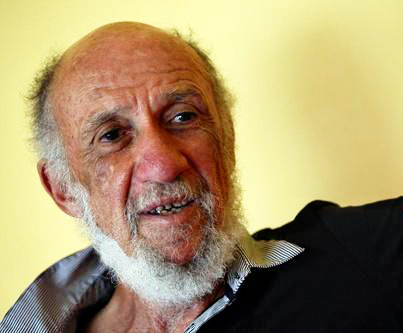
By Richard Falk
Responding to intense pressure from the usual sources William Schabas, a prominent and respected expert on international criminal law, recently resigned as Chair of the UN expert commission of inquiry into war crimes allegations arising from the massive Israeli military operations in Gaza during July and August of 2014.
These issues relating to international criminal accountability have also received recent prominence due to Palestine’s adherence to the Rome Treaty making it a party to the International Criminal Court, an initiative that generated an enraged punitive reaction on the part of Israel as well as an angry denunciation by Washington. On display in these instances is the struggle between extending the rule of law to international state crimes and the geopolitical resistance to such an effort whenever accountability to law is in tension with the pursuit of strategic interests.
Imposing international criminal responsibility upon political leaders and military commanders that occur in the aftermath of wars possesses a dual character from a geopolitical perspective: to vindicate major military undertakings of liberal democratic states and to ensure impunity for the leaders of these same states in the event that their behavior or that of their allies are alleged to be international crimes.
These efforts at vindication are associated with strengthening the global rule of law and validating the established order, while impunity is invoked to insulate powerful individuals and their governments from criminal accountability. The resulting pattern in international life is one of double standards at the level of implementation and hypocritical rhetoric about the importance of a global rule of law based on its universal applicability.
Contemporary experience with these issues is grounded in the aftermath of World War II.
In 1945 Read More »
Why recognising a Palestinian state is not progressive
By Miko Peled, TFF Associate
Time to give Palestinians their country back

By Miko Peled, TFF Associate
More than the threat of war on Iran, Netanyahu’s re-election is a call for war on Palestinians everywhere.
It is a call for war on human rights and international law. It is a mandate for the Israeli government to murder Palestinians. It gives Netanyahu license to continue Israel’s seven-decade policy of racism and apartheid towards the people from whom they stole the land.
It is also a call for people of conscience to impose boycotts and sanctions to divest and to isolation Israel. No more business as usual – it is time for outrage, for action, the type of action that brought down apartheid in South Africa.
It is a call to finally allow Palestinians to have their country back.
Continued reading in The Hill. Congress Blog
Iran won upfront sanctions relief, but with potential snags

By Gareth Porter, TFF Associate*
The framework agreement reached on Thursday night clearly gives the P5+1 a combination of constraints on Iran’s nuclear programme that should reassure all but the most bellicose opponents of diplomacy. It also provides the basis for at least a minimum of sanctions relief in the early phase of its implementation that Iran required, but some of the conditions on that relief are likely create new issue between Iran and the Western powers over the process.
The agreement’s dependence on decisions by the International Atomic Energy Agency (IAEA) and the penchant of Israeli intelligence for discovering new evidence of illicit Iranian activities will encourage moves to delay or obstruct relief of sanctions.
US and European officials had been telling reporters that they would phase out their sanctions on oil and banking in return for Iranian actions to modify its programme only gradually over several years, and made it clear that the purpose of this strategy was to maintain “leverage” on Iran.
Iran, however, was demanding that those sanctions be lifted immediately upon delivering on their commitments under agreement. Read More »
Obama’s Middle East retreat – Remember Libya
By Jonathan Power
American Middle East interventionists chide President Barack Obama for not doing more. Why is the US running away from Yemen, why didn’t the US go into Syria and depose President Bashar al-Assad, why did Obama pull troops out of Iraq prematurely, why isn’t he putting “boots on the ground” in the fight against the Islamic State (ISIS)? Why, in short, doesn’t the US use its military might to subdue the stormy parts of the Middle East?
The first answer must be that he does not have to be George W. Bush’s surrogate. It was Bush who triggered much of the upheavals with his invasion of Iraq – although ex-President Jimmy Carter bears the responsibility for arming the Taliban and thus the establishment of Al Qaeda in Afghanistan. Why should Obama want to continue to try and mop up after Bush’s dirty work, especially as more intervention is likely to up the ante rather than calming the situation?
That said Obama made his own serious mistake of intervening to depose Muammar al-Qaddafi in Arab Libya. Although the UK and France led from the front the US was backing them up in every wayRead More »
Iran nuclear deal – on the road to peace
Jan Oberg commenting on Iranian President Rouhani: “Tehran abides by commitments, if P5 1 fulfills promises” – YouTube/PressTV http://ow.ly/LbX3d
In spite of the deal’s negative sides, Iran has chosen peace to the benefit of the world.
In that perspective it is much more than a nuclear deal, it’s – potentially – a road to peace.
TFF PressInfo # 316: Iran nuclear deal – They’ve done it!

By Farhang Jahanpour*
At last they have done it! After 36 years of hostility between Iran and the West, 12 years of nuclear negotiations initially between Iran and the European Troika (Britain, France and Germany), followed by talks between Iran and the P5+1, finally the two sides have agreed on a framework for a final, comprehensive agreement before the end of June.
It is clear that this agreement falls short of both side’s maximum expectations. It will be strongly opposed by the hardliners in Iran who believe that, as an NPT member, Iran is entitled to the full range of nuclear activities and, therefore, they will accuse the Iranian negotiators of a sell out.
On the other hand, the Israeli Prime Minister and his supporters in the US Congress, who are not satisfied with any agreement with Iran short of the cessation of all forms of nuclear enrichment in Iran, even at the cost of a war, will blame the Obama Administration of appeasement.
It is also clear that both sides have achieved their minimum demands. The West can be sure that Iran will not Read More »
 TFF Associates Blog 2011-2017