
TFF PressInfo 297: Misleading the world on Iran’s “bomb”

By Jonathan Power

December 23, 2014

The negotiations over Iran’s supposed nuclear bomb-building abilities seem to be stuck in a rut. Given the detailed undertakings by Iran incorporated in the interim agreement made last year it should have only been a hop, skip and a jump to forge a final agreement.

In reality it hasn’t been so easy. Over many years the US with European connivance most – not always – of the time manufactured and manipulated the whole crisis. To overcome the suspicions aroused by that, now past, tactic is not easy. That is not just my opinion after following this subject for 30 years. It is that of the former vice-chair of the US National Intelligence Council, Graham Fuller.

Now a new book, “Manufactured Crisis” by the astute investigative journalist, Gareth Porter, has taken the lid off the attempt by the US, often in collusion with Israel, to paint Iran into a corner, whilst shunning any effort by Iran to resolve the dispute.

But before we get into that I want to make one point about the Islamic sense of morality. Ayatollahs Khomeini and Khamenei, the successive top clerics and paramount leaders of the country, have made it clear on a number of occasions that for their country to build a nuclear bomb would go against Islamic belief and jurisprudence.

I don’t find this difficult to believe – during the bitter and savage war with Saddam Hussein’s Iraq in 1980 when Iran lost 2 million people Iran refused to deploy chemical weapons even though Iraq did. They too were regarded as un-Islamic. Iran has been consistent in its morality. Iran’s religious practice today is about as far away from the Islamic State or Pakistan’s Taliban as you can get.Read More »
TFF PressInfo # 296: The dead end of the post-Oslo diplomacy: What next?

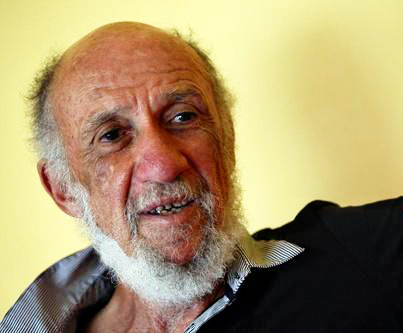
By Richard Falk

Richard Falk

The Latest Diplomatic Gambit

There are reports that the Palestinian Authority will seek a vote in the Security Council on a resolution mandating Israel’s military withdrawal from Occupied Palestine no later than November 2016. Such a resolution has been condemned by the Israeli Prime Minister as bringing ‘terrorism’ to the outskirts of Tel Aviv, and this will never be allowed to happen.

The United States is, as usual, maneuvering in such a way as to avoid seeming an outlier by vetoing such a resolution, even if it has less stringent language, and asks the PA to postpone the vote until after the Israeli elections scheduled for 2015.

Embedded in this initiative are various diversionary moves to put the dying Oslo Approach (direct negotiations between Israel and the PA, with the U.S. as the intermediary) on track.

The French want a resolution that includes a revival of these currently defunct resolutions, with a mandated goal of achieving a permanent peace within a period of two years based on the establishment of a Palestinian state, immediate full membership of Palestine in the UN, and language objecting to settlement activity as an obstruction to peace.

Overall, European governments are exerting pressure to resume direct negotiations, exhibiting their concern about a deteriorating situation on the ground along with a growing hostility to Israeli behavior that has reached new heights since the merciless 51-day onslaught mounted by Israel against Gaza last summer.Read More »

An Octagon world: Conflict or cooperation. What can we learn from each other?

By Johan Galtung

Johan Galtung

“They can choose to focus on the worst in others, criticizing, building on paranoia and worst case analysis, “security”. Or choose to focus on the best, with cooperation as dominant mode, conflict as recessive. They can cooperate for mutual and equal benefit like in good trade, exploring each others’ comparative political-cultural advantages. They can do it.”

Read this unusual global analysis here.

TFF PressInfo # 294 – Change the Iran policy now

By Jan Oberg
TFF director

Jan Oberg

Tehran Dec 9, 2014

The First Conference on ”World Against Violence and Extremism” is inaugurated here in Tehran this morning by President Rouhani. His idea was endorsed unanimously by the UN General Assembly last year. This PressInfo was written before I came to Iran.

The last round of negotiations between Iran and the Five Permanent Members of the UN Security Council + Germany about the future possibility that Iran would acquire nuclear weapons should have resulted in no agreement but a 7 months postponement. It is a waste of everybody’s time in one of the most urgent issues on the international agenda.

An a-symmetric conflict

Here are 5 countries bristling with thousands of nuclear weapons themselves and planning to spend trillions of dollars on more and more sophisticated nukes – unanimous in telling a country that does not have nukes to not acquire them: ”What we can’t live without thou shall never have”.

Everybody knows but conveniently omit mention of the fact that Israel is a nuclear weapons power over 50 years with at least 200 nukes in contravention of UN resolutions that the whole region shall be free from such weapons. And it has not signed the Non-Proliferation Treaty.

In rough terms, Iran’s military expenditures is 2-3% of the United States’; with a population ten times that of Israel it spends about the same, and 4% of its GDP where Israel spends 6.

Israel is number 1 Read More »

Blowback of the foreign jihadists?

By Jonathan Power

Over 15,000 foreign jihadists from 80 countries are believed to be fighting alongside militants in Syria, the CIA says. The Syrian war is estimated to have mobilized more European Islamists than all the foreign wars of the last 20 years combined.

What to do when the jihadists try to return home?

Many of them might be trained to wage jihad against their home countries. The danger is, as Daniel Byman and Jeremy Shapiro write in the current issue of Foreign Affairs, “the returned fighter seasoned by battle acquires a new authority among his old friends and followers on social media – a street cred that allows him to recruit and radicalize others and send them into the fray.”

On the other hand because of the use of social media where the returnee sometimes brags about his exploits and adventures it becomes easy for the intelligence services both to track him down and know who he is trying to reach.

The threat posed by returning jihadists is too often hyped by both Western politicians and the media. Read More »

Obama’s report card

By Jonathan Power

Will the real Barack Obama be allowed to stand up? The New York Times’ columnist and Nobel Prize winner for economics, Paul Krugman, writes in “Rolling Stone, “Obama has emerged as one of the most consequential presidents in American history”.

You wouldn’t know this if you observed the swing towards the Republicans in the recent Congressional elections – the same Republican Party that has implemented a scorched-earth policy against many of Obama’s initiatives.

The truth is he’s made more of a go of it than much of the media has reported.

He came into power inheriting the worst financial crisis since the Great Depression of the 1930s. He has emerged as the only full-bloodied KeynesianRead More »

The Future of Mediation

By Johan Galtung

Johan Galtung

Ludwigsburg, German Mediation Congress

Dear Colleagues; the future of mediation is to make ourselves redundant by spreading a conflict solution culture at all levels of social organization, enabling people to handle conflicts themselves. There will be counter-forces from professional mediators to monopolize the job and countercounter-forces from others to become ever better, to be ahead. The latter will win.

Model: the health professions.

Incredible gains were made in human health enabling people to take better care of their bodies: protection against contagious diseases through hygiene, washing hands, brushing teeth; keeping fit with adequate food, water, moving-walking –but care with jogging, unnatural, in the direction of a hospital– against the climate through adequate clothing and housing; against sepsis in wounds adequate cleaning: a minimum of health education. More than the complexities of surgery this gave us 25 more years of life.

For children and adolescents: watch the pathogens bringing illness from the outside as micro-organisms and violent encounters, shocks, excessive heat and cold, fire. After that come structural diseases–malignant tumors, cardiovascular, mental disorders–also rooted in the inside, with genetic predispositions. Too little adequate food and exercise; too much smoking, alcohol and other drugs can be handled with some will to get better. Equally important: an overload of stress and strain, problems and conflicts not handled: our task. Physicians have shared with people washing hands and brushing teeth as hygiene; it is our task to share conflict hygiene with everybody.Read More »

TFF PressInfo # 292: Brisbane – A show of Western weakness

By Jan Oberg

Jan Oberg

No matter what you may think of Putin and Russia this is simply not the way international politics should be conducted, particularly not at the personal level. If it wasn’t an offence to children, one would aptly characterise it as childish behaviour.

Western leaders ignored a brilliant opportunity to meet face-to-face with Vladimir Putin and move forward towards mutual understanding instead of signalling that they want a new Cold War.

Western leaders tell us that Russia is a ”threat to the world”. That obviously serves other purposes because you don’t bully someone you genuinely fear.

The G20 Brisbane should be remembered for its show of Western leaders’ personal display of weakness and conflict illiteracy.

Pummelled Putin punching bag

CNN reports that, during the meeting, Putin took ”pummelling” and was treated as a ”punching bag” by Western leaders from he set foot on Australian soil where his Australian host had sent a deputy minister of defence to receive him.

The Guardian reports that the Russian president approached Canadian Prime Minister Harper with his hand outstretched. Harper reluctantly shook it, then said “Well I guess I’ll shake your hand, but I only have one thing to say to you: you need to get out of Ukraine.” ”Bold words” – media called it.

Footage shows Putin sitting alone at a lunch table – like a naughty school boy put in the corner as by his teachers.

President Obama said that we are ”opposing Russia’s aggression in Ukraine which is a threat to the world as we saw in the appalling shoot down in the MH-17”.Read More »

ISIS in a Sunni-Shia perspective

By Farhang Jahanpour

A shorter version of this article has been published by IPS

When ISIS suddenly emerged in Iraq it declared as one of its first targets the Shi’is and what it called the Safavids. The Safavid dynasty (1501-1736) was one of the most powerful Iranian dynasties after the Islamic conquest.

At its height, it ruled an area nearly twice the size of modern Iran, including large parts of modern Iraq, Kuwait, Bahrain, Eastern parts of Turkey and Syria, and large areas of Western Afghanistan and Baluchestan, the North Caucasus, as well as parts of Turkmenistan and Uzbekistan.

However, what irks the Sunni jihadists most is the fact that the Safavids made the Twelver School of Shi’ism Iran’s official religion, something that has continued to the present time.

The interesting point is that the Safavid dynasty had its origin in a Sunni Sufi order, but at some point they converted to Shi’ism and then used their new zeal as a way of subduing most of Iran. Although there had been some minor Shi’a dynasties in the past, nearly all other major Iranian dynasties, as well as the bulk of the Iranian population, had been Sunnis. Indeed, when the Safavids came to power there were so few Shi’a scholars and clerics in Iran that they had to import some from Lebanon.

The Shi’a zeal of the Safavids was partly due to the fact that they were fighting against the Sunni Ottoman Empire, and therefore their adherence to Shi’ism was mainly political, in order to set them apart from the Ottomans who also carried the title of Sunni caliphs. The Safavids made their capital, Isfahan, into one of the most beautiful cities in Iran and the Middle East as a whole.

The Iranian Constitutional Revolution (1905-11) laid the foundations of modern Iran, with a constitutional monarchy. The two Pahlavi kings (1925-1979), while ruling as absolute monarchs, were militantly secular and tried to modernize Iran and turn it into a Western-style country.

The 1979 Revolution in Iran

However, not only did the 1979 Islamic revolution end that period of secular reforms, but it also put an end to a 2,600 year-old Iranian monarchy, and replaced it with a clerical regime based on the principle of Velayat-e Faqih, or the guardianship of Shi’a jurisprudent.

What makes the Islamic revolution unique is that for the first time in the history of Iran, and indeed in the history of Islam, it brought clerics to power.Read More »

Christianity vs Islam: Countercyclicity?

By Johan Galtung

Johan Galtung

“Countercyclicity” means that both move through history in cycles, up and down; with one moving up when the other moves down.

Christianity started with its founder crucified, like the first pope St Peter; Christians were tortured, killed, expelled from Jewish Palestine. But then indeed up, as religio licita in the Roman Empire in 313, defined in Nicaea in 325 by Emperor Constantine. The Empire split in 395, with a Catholic Church in the West – contracting, monastic after the Western Empire fell in 476 – and an Orthodox Church in the East, till Constantinople became Istanbul in 1453 – Moscow became “the Third Rome”.

Islam started with the Prophet’s hizrat, migration from Mecca to Medina as city-state under Mohammed till he died in 632. From then till the end of the umayyad Damascus dynasty in 750, Islam covered the lands from Iberia (not Asturias) as the caliphate of Cordoba in 711, to Iran. Moving on, the abassid Baghdad dynasty till the 1258 massacre by Mongols, the sultanates of Delhi in 1192, Pattani now Thailand, Aceh in Sumatra; Sulu and Maguindanao in Mindanao, Philippines in 1405, 1490s.

Ahead of expansionist Christian Magellan 1520-21. After Columbus 1492 – the arch-year of Christian expansion – Read More »